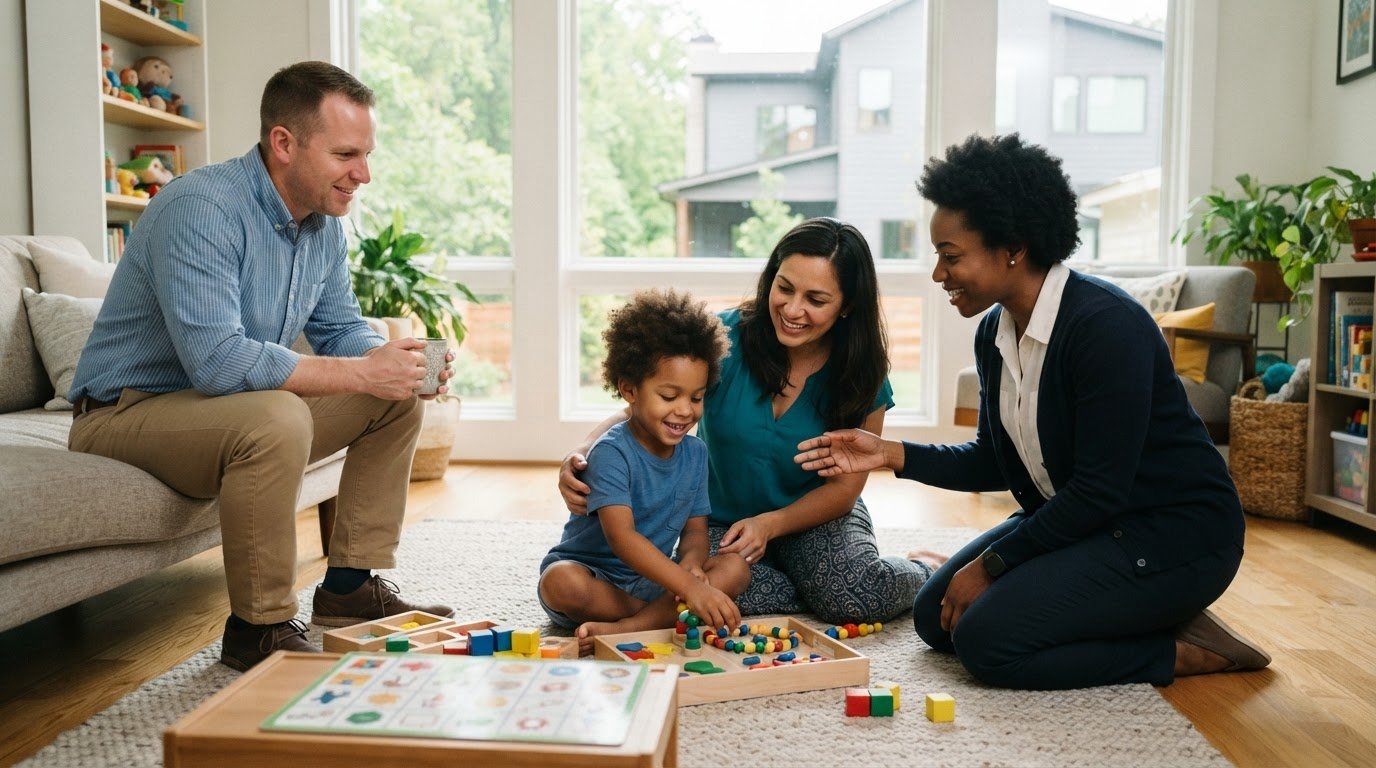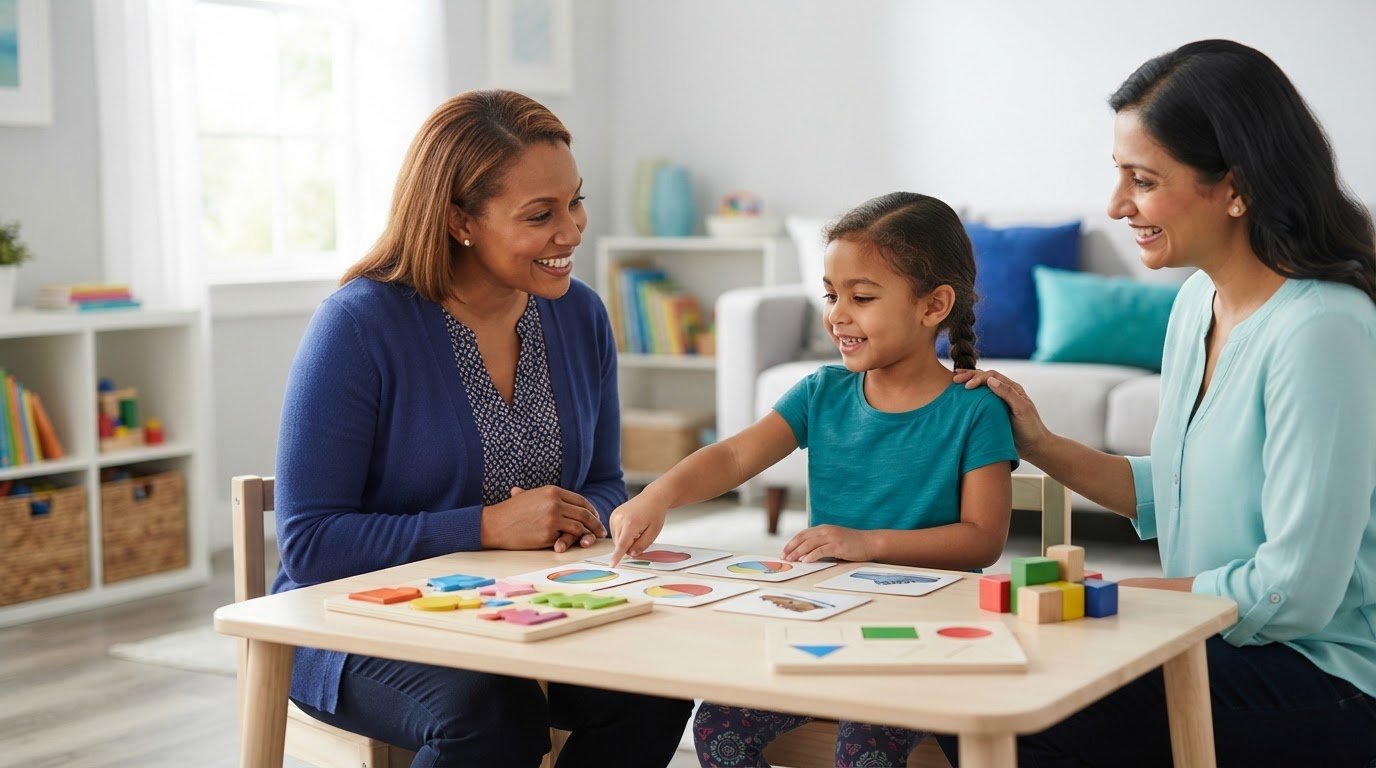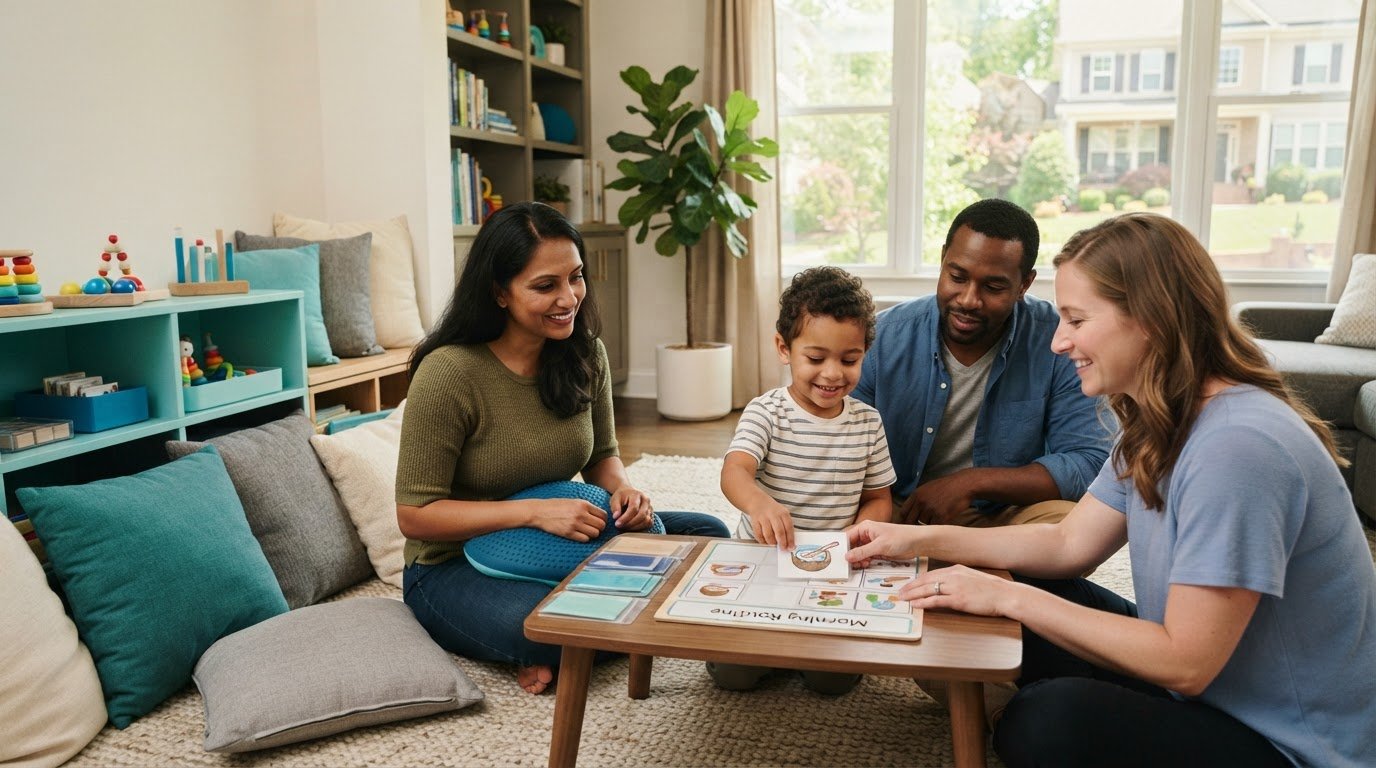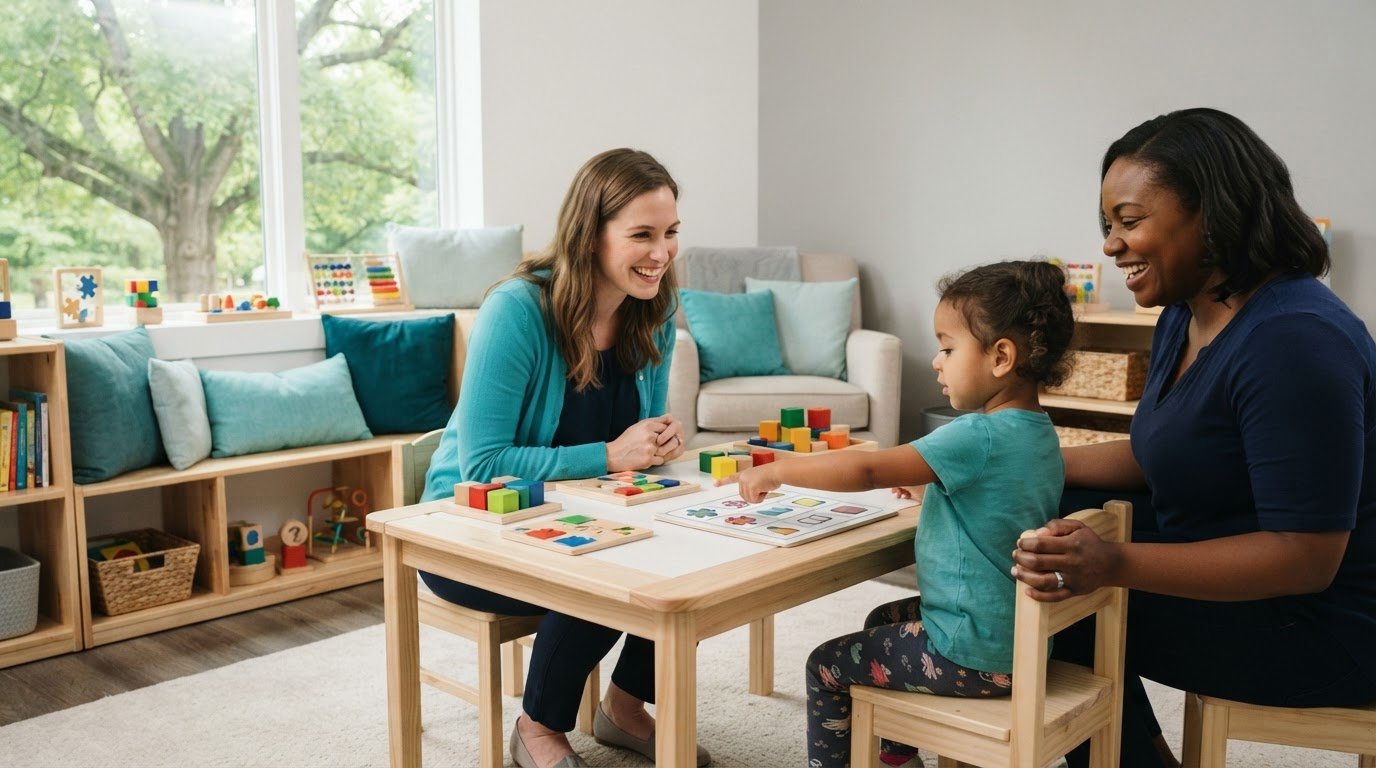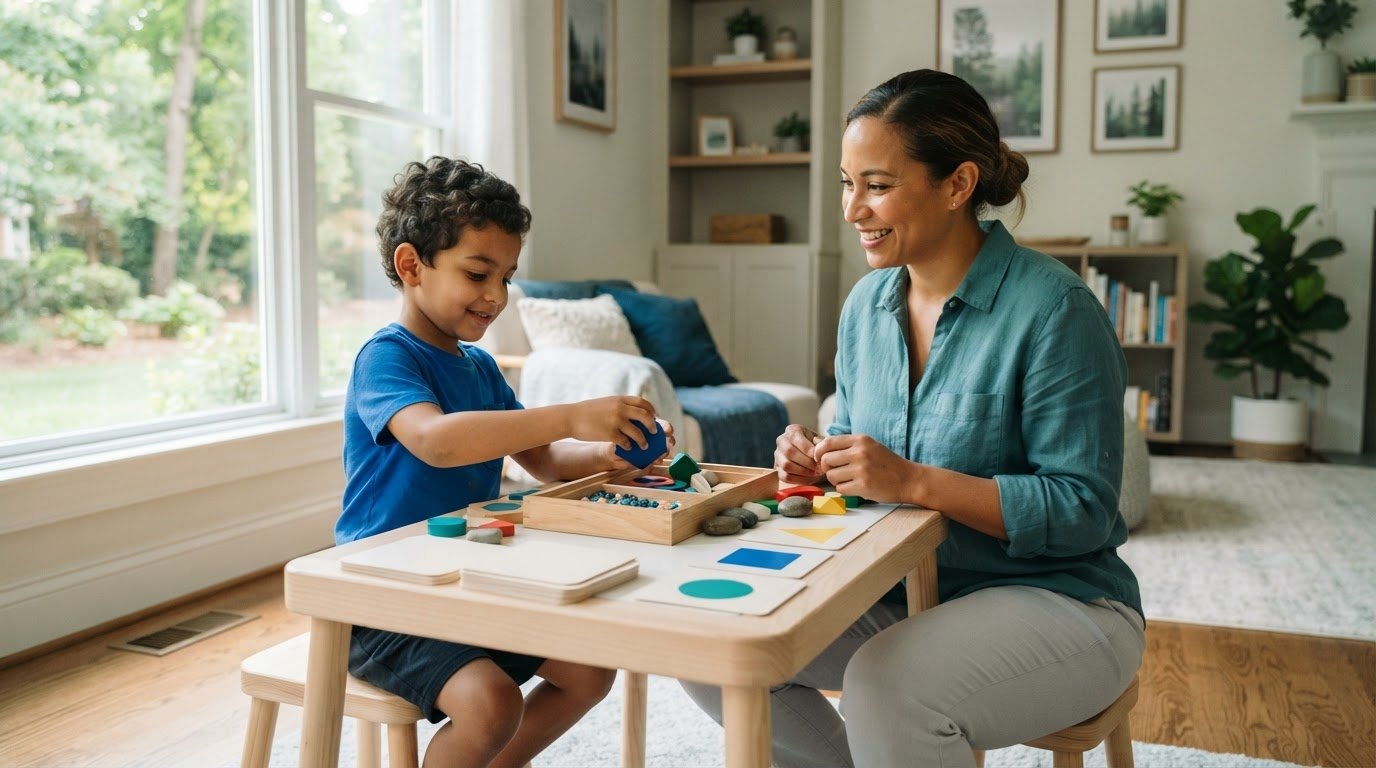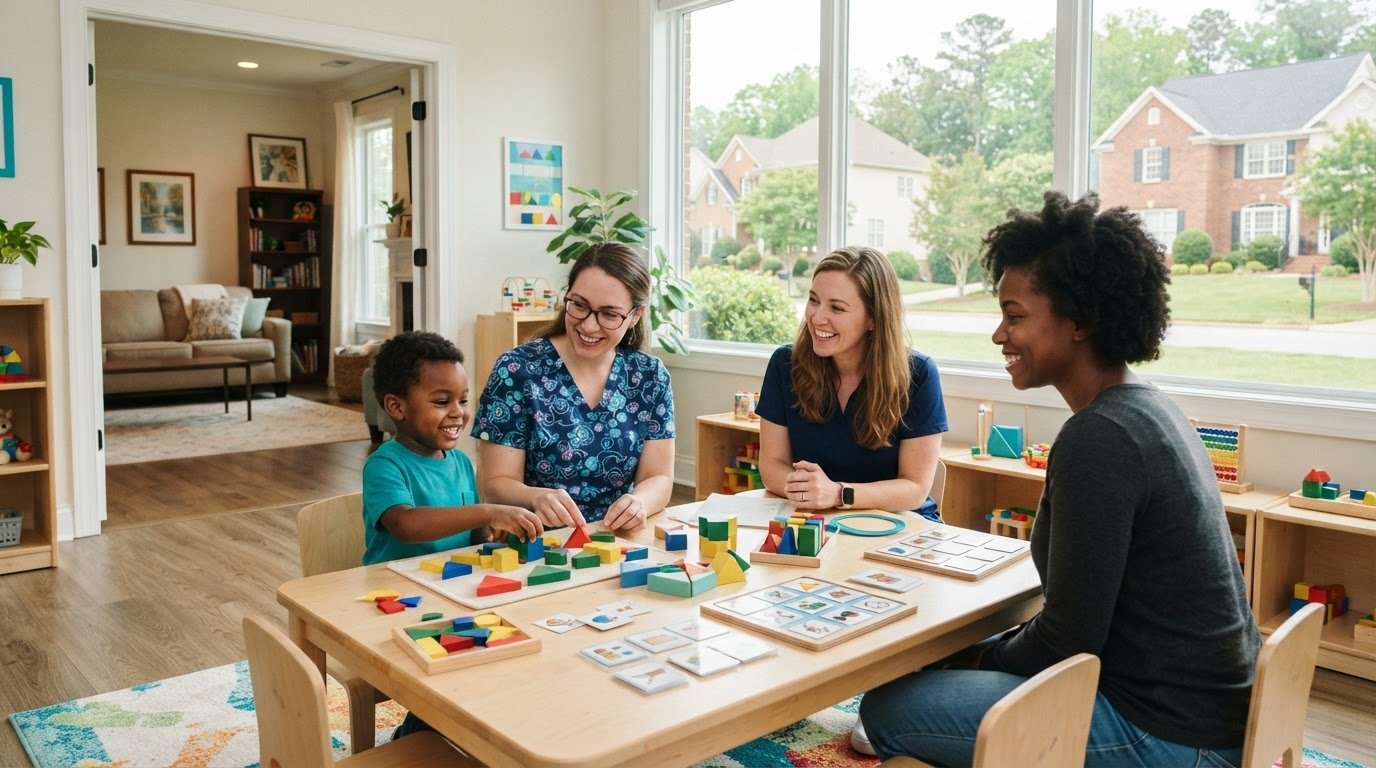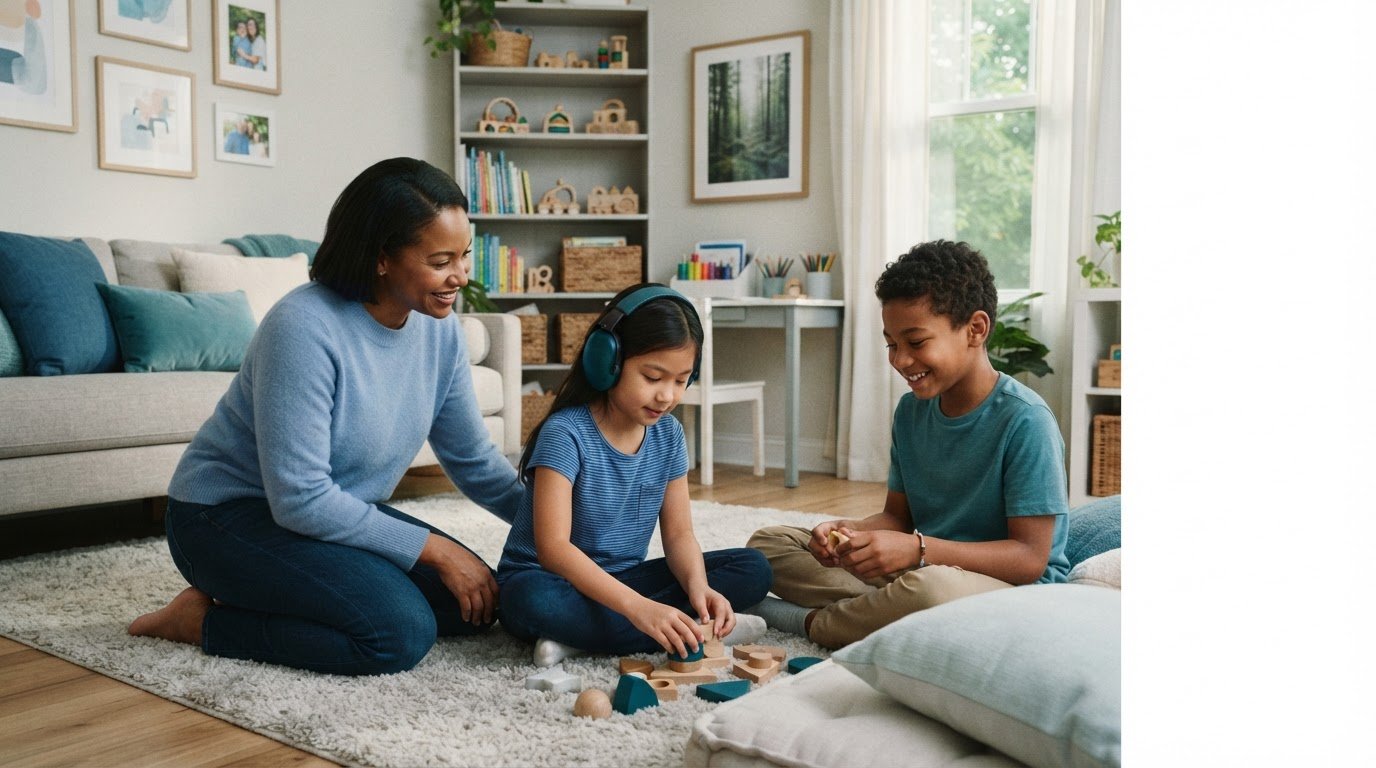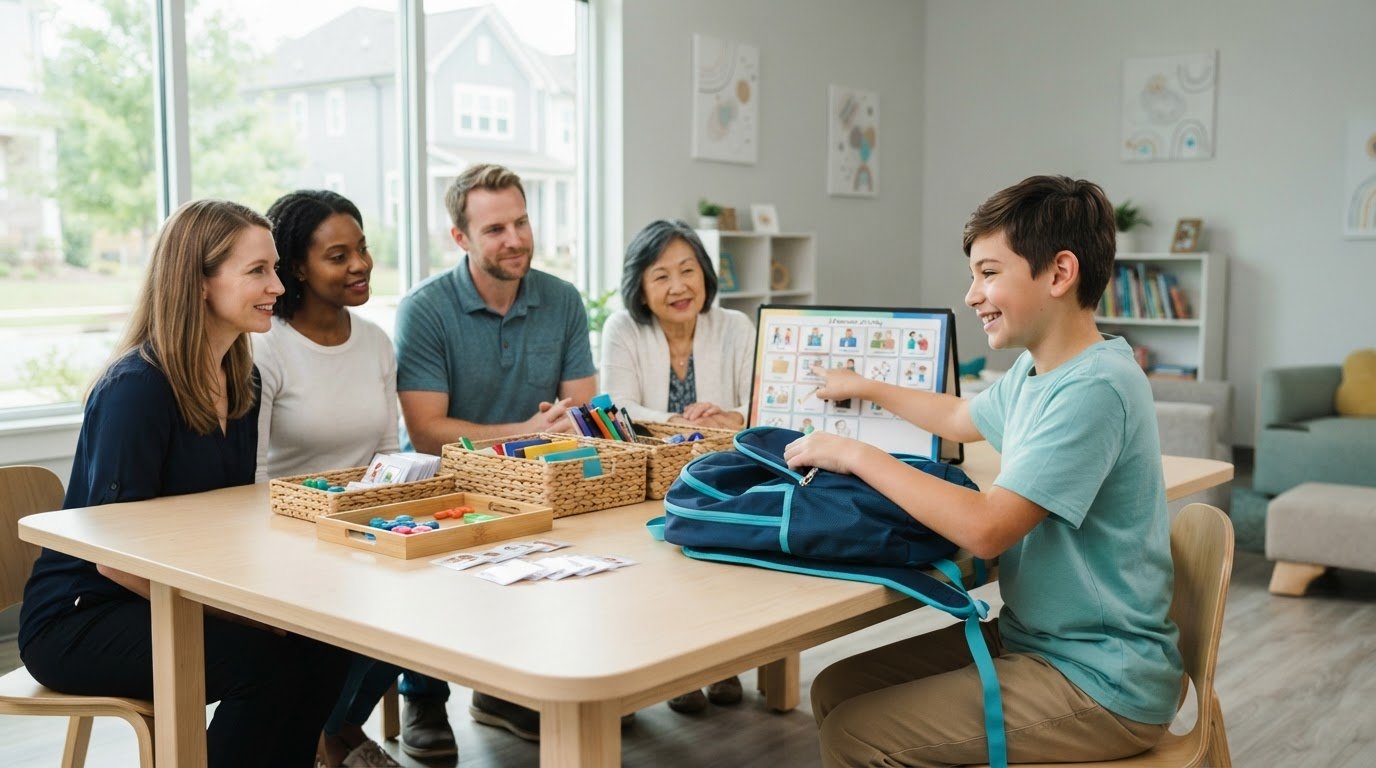
What if a skill that looks mastered in a therapy room still feels out of reach at home? That gap can be confusing for families, but it doesn’t mean a child hasn’t learned or that progress has disappeared. Skill generalization for autism is the planned, individualized process of helping a useful skill carry over to different people, materials, and everyday routines.
It’s understandable to hope that practice in one setting will carry over everywhere. In reality, a new person, cue, or setting can make a familiar skill harder to use. Generalization isn’t about demanding identical performance in every situation. It’s about helping a child use a skill in ways that matter to them.
This article explains what generalization means, what it doesn’t, and how to encourage transfer without turning family life into therapy. You’ll learn how caregivers and an ABA team can choose relevant goals, build practice into natural moments, and notice progress when people or surroundings change. These ideas can be useful for families working with an ABA team in Cary, Apex, or Raleigh.
What Does Skill Generalization for Autism Mean in Everyday Life?
A child may ask for a break with a therapist but not with a caregiver, or follow a familiar direction in the clinic and pause when the same request comes up at home. That difference can be puzzling. It doesn’t necessarily mean the skill is lost. A new person, setting, or cue may change what the child understands or feels ready to do.
Skill generalization for autism means using a learned skill across relevant people, places, materials, or situations. The goal is not to make every context look the same. It’s to help a skill become useful where it matters to the learner. Transfer may happen in some situations before others, and progress can look different from one child or skill to the next. A child might communicate a need with a familiar caregiver and later begin doing so with another trusted adult, using speech, a device, a gesture, or another preferred communication method.
Generalization is a recognized consideration in autism education and intervention. The overview of Generalization in Autism Management discusses carrying learned skills into new situations, including in relation to ABA and other educational approaches.
Which parts of a skill can transfer to new situations?
A skill can be considered across several dimensions. For example, a learner may:
- Use it with different people: request help from a caregiver, teacher, or another trusted adult.
- Use it in different settings: follow a familiar routine at home, in a clinic, or in the community.
- Use it with different materials: sort or identify items that look different from the examples used during teaching.
- Use it during everyday routines: communicate “all done” at a meal, during an activity, or while getting ready to leave.
These dimensions don’t have to change all at once. A child may use a communication device with several familiar people but only in one room, or manage a routine in different places when the steps remain predictable. Caregivers and the ABA team can identify which situations matter to the child, then consider one manageable variation at a time. For example, they might keep the routine familiar while introducing one additional trusted adult, and respect the child’s communication preferences and comfort throughout.
How is generalization different from learning a skill once?
Acquisition means a learner can demonstrate a skill under the teaching conditions. Generalization means the learner uses that skill in relevant situations beyond those conditions. For instance, answering a question during a structured activity shows the response has been learned. Answering a similar question during a natural conversation may show transfer.
That distinction makes generalization a possible ongoing learning goal, not a pass-or-fail test. A change in materials or surroundings can add effort, and a learner may need time, support, or a familiar cue to use the skill in a new context. Noticing partial transfer helps adults decide what to adjust. They might practice with another trusted person, use a different version of a material, or try the skill during a routine where it has a clear purpose. Small steps still provide useful information about what is working.
How Do Autistic Children Build Skills That Carry Across Settings?
Transfer is easier to support when it’s part of the teaching plan from the beginning. Instead of practicing a skill with one person, one set of materials, and one familiar cue every time, an ABA team can plan small, thoughtful variations. The aim isn’t to make learning unpredictable. It’s to help a child recognize when a skill is useful, even when some details change.
Planning starts with the child’s priorities. A goal might be asking for a preferred snack, following a step in a morning routine, or getting help with a task. The team and caregivers can consider where that skill would make daily life more accessible, who the child might want to communicate with, and what supports make the interaction comfortable. Individual assessment matters because a strategy that helps one learner may not suit another.
Why practice with different people and materials can matter
Small variations can help a skill become useful beyond the exact teaching setup. If a child requests a snack by pointing to its picture, the picture might appear on a communication board, a choice card, or a familiar device. A trusted adult can respond during a planned snack routine. Another familiar person might join later, when the child is comfortable. Change one feature at a time and keep the rest of the routine predictable, so it’s easier to notice what helps.
How natural routines can support meaningful practice
Everyday routines offer opportunities, not an obligation to turn the day into therapy. During a familiar activity, a caregiver might pause to give the child time to request a preferred item, while accepting their usual communication method. Interests and existing strengths can make participation more engaging. Individualized treatment plans in clinic-based ABA therapy can identify skills to practice and ways to connect clinic learning with relevant home or community routines.
Support can also be adjusted gradually. A prompt is a cue or assistance that helps a learner respond, such as pointing to a choice or offering a brief verbal reminder. Fading means reducing that support carefully as the learner becomes more familiar with the skill. It doesn’t mean withdrawing help abruptly or expecting independent performance before the learner is ready. The type and pace of support should reflect the child’s communication, comfort, and progress.
A practical sequence may look like this:
- Choose a useful skill and identify the routine where it naturally belongs.
- Practice with familiar supports and people, allowing time to respond.
- Introduce a small, planned change, such as a different material or trusted person.
- Notice what helps, then adjust the next step with the ABA team and caregiver.
Generalization doesn’t reliably happen just because a child has demonstrated a skill once. It needs planning and individualized assessment, including attention to how the learner responds as contexts change. For families, sharing what works in daily routines helps the team design practice that feels relevant, respectful, and achievable. That can be as simple as describing which cue helped, who was there, and what made the routine comfortable or difficult.
Does Skill Generalization Mean a Child Must Perform the Same Way Everywhere?
No. Generalization isn’t a demand for identical behavior in every place or with every person. The purpose of a goal should be to make life more accessible for the learner, not to make them appear the same across situations. A child might communicate comfortably with one person using speech and with another using a device. Both can be effective ways to express a need.
In thoughtful skill generalization for autism, teams focus on skills that support the child’s safety, communication, participation, or personal priorities. They don’t treat harmless differences, such as a preference for quiet or a distinct way of engaging, as problems to eliminate. Nor should the goal be to mask autistic traits or hide discomfort. Flexibility means having useful options, not requiring a child to respond in a prescribed way everywhere.
How can teams keep generalization goals individualized?
Begin with what matters in the child’s everyday life and what the family identifies as useful. A team might discuss whether a goal helps the learner ask for assistance, take part in an activity they enjoy, or communicate that they need a pause. The target should be specific enough to guide support while respecting the child’s preferred communication and ways of participating.
During practice, pay attention to the learner’s communication, comfort, and willingness to engage. Choices, pauses, and indications of distress or disengagement are relevant information, not obstacles to push past. If an expectation doesn’t serve the child in a particular context, the team and family can reconsider the goal, the support, or the situation. Individualized planning should be collaborative and open to adjustment.
What if a skill appears in one setting but not another?
That difference is information, not proof of failure. Consider what changes between situations: Is the environment noisier? Is there less time to respond? Is a different person present, or is a familiar communication support missing? A child who completes a routine at home may find it harder elsewhere because the cues, pace, or expectations differ. Identifying the change can help the team decide what support might make the skill more accessible.
Caregivers can share what they observe, including when the skill does appear and what seems to help. With home-based ABA therapy, goals can be considered in relation to familiar household routines and the context in which a skill is meant to be useful. That doesn’t mean every home moment needs to become practice. It means the team can learn from real routines and adapt support with the family.
Progress may look like using a skill with one additional trusted person, communicating a need before frustration builds, or finding a comfortable way to participate in a new situation. These steps count even if the child’s response differs from what adults expected. Regular conversations between caregivers and the ABA team help keep goals relevant and ensure the focus stays on the learner’s needs.
How Can Families Support Generalization Without Making Home Feel Like Therapy?
Home doesn’t need to become a second treatment room. A small, relevant opportunity within an ordinary routine can help a child use a skill in a meaningful context. The aim of skill generalization for autism is not constant practice. It’s making useful skills available in daily life while protecting time for connection, rest, and family priorities.
Try a simple sequence with the ABA team:
- Choose one relevant goal. Focus on a skill that could make a familiar routine more comfortable or accessible.
- Identify a natural moment. Consider when the skill might already be useful, such as choosing a snack or asking for help with an activity.
- Offer a low-pressure opportunity. Make space for the child to respond, using familiar supports if they help.
- Observe and adjust. Notice the child’s response and share what you learn with the team before deciding what to try next.
Follow the child’s communication and signals. A gesture, device response, spoken word, or other established way of communicating can all be meaningful. If the child doesn’t respond, seems uncomfortable, or moves on, avoid turning the moment into repeated prompting. The opportunity can pass. Everyday practice should fit the family’s routines and the learner’s priorities, not require the family to reshape the day around therapy.
How can you practise a skill during familiar routines?
Imagine that a child is choosing a snack. A caregiver might offer two preferred options and wait, allowing the child to point, speak, or use a familiar visual support to show their choice. If the child doesn’t choose, the caregiver can respond supportively and continue the routine without making it a test. The interaction itself matters. Participation, comfort, and connection are more important than a perfect response or a specific communication form.
How can families and ABA teams track progress together?
Brief notes can help reveal what makes a skill easier to use. Record the routine or setting, who was present, what supports were available, and how the child responded. Include context that may matter, such as a change in timing, noise, or the usual sequence. A few clear observations are more useful than trying to document every interaction.
Share those notes with the clinical team and discuss patterns together. Perhaps a visual support helps during one routine, or the child uses the skill more comfortably with a particular person. These details can guide practical adjustments to the goal or support. Parent coaching offers a collaborative setting to discuss home routines and connect family observations with individualized goals.
Families can learn more about discussing everyday routines and individualized goals with Divergent Minds ABA.
How Can ABA Support Skill Generalization Across Cary-Area Settings?
Generalization is easier to plan when the team understands where a skill will matter in a child’s life. Individualized ABA planning can begin with family priorities, the learner’s current strengths, and the situations where a skill could support communication, participation, or greater comfort. From there, the team can consider what practice makes sense and how to recognize progress without expecting the child to respond identically in every context.
Divergent Minds ABA is a BCBA-owned practice serving children with autism and families in Cary, Apex, and Raleigh. Clinic, home, and community settings can each offer relevant opportunities to connect learning with daily life. They aren’t steps every child must follow in a fixed order. The setting and goals should reflect the learner’s needs and the family’s context.
Why might different settings support different learning opportunities?
A clinic may provide a structured place to learn or strengthen a skill. Home can connect a goal with familiar people and household routines. In the community, a child may encounter different materials, people, and activities. Community-based ABA therapy can support goals related to participating in everyday community contexts. The right setting depends on what the child is working toward and what fits family life.
For example, a family and team might identify participation in a preferred community activity as a meaningful goal. They can discuss what would help the child feel prepared, such as knowing what to expect or having access to familiar communication supports. The focus is not on practicing in every possible place. It’s on selecting contexts that make the goal relevant and supporting the learner at a comfortable pace. Families in Cary, Apex, and Raleigh can discuss which clinic, home, or community routines best fit their child’s goals.
What can families expect from a collaborative next step?
A first conversation can center on what the child enjoys, what they already do well, and which everyday situations the family would like to make more accessible. Caregivers can describe what helps at home and what feels difficult; the clinical team can use those observations to shape individualized goals and consider suitable contexts for practice. Plans can be revisited as the child’s interests, needs, or family routines change.
It may help to bring one or two examples of a skill that appears in some situations but not others. Note who was present, what supports were available, and what seemed comfortable or challenging for the child. These details give the team a practical starting point for discussing how to adapt learning across clinic, home, and community settings. They also help keep the conversation grounded in the child’s lived experience rather than assumptions about what progress should look like.
Skill generalization for autism is a collaborative process, shaped by meaningful goals and attention to the learner’s needs. Families in Cary, Apex, and Raleigh can talk with the Divergent Minds ABA team about their child’s goals.
Let Everyday Priorities Guide the Next Step
A useful next step can begin with one question: what would make an everyday moment more accessible or meaningful for your child? That priority can help shape an individualized plan for skill generalization for autism, with goals grounded in the learner’s strengths, communication, and family routines. Progress doesn’t have to look identical from one situation to another to be valuable.
Divergent Minds ABA is a BCBA-owned and operated practice providing individualized ABA in clinic, home, and community settings. The team serves families in Cary, Apex, and Raleigh, North Carolina, and works collaboratively with caregivers to consider where a skill matters and how to support it respectfully. A conversation about your child’s goals can be a starting point for exploring an individualized plan.
Talk with our team about your child’s goals. Each thoughtful step can help make learning more connected to the life your child is living.
Frequently Asked Questions
What is skill generalization for autism?
Skill generalization for autism is using a learned ability in situations beyond the exact one in which it was taught. A child might learn to follow a visual sequence for getting ready, then use that sequence when preparing for a different activity. The sequence doesn’t need to look identical each time. What matters is whether the skill helps the learner participate or communicate in a relevant, comfortable way.
Why does my child use a skill in therapy but not at home?
A skill may be connected to cues that are present during therapy but absent at home. The rooms, timing, instructions, support materials, or people may differ, and these changes can affect what the child understands or feels ready to do. Consider what’s different rather than assuming the skill is gone. Sharing those observations with the clinical team can help identify which cues or supports might make home routines easier to navigate.
How can parents help generalize skills at home?
Choose a useful opportunity that already fits the day, and keep the interaction relaxed. For example, while getting ready to leave, a caregiver could let the child use a familiar checklist, gesture, or communication device to indicate which item they need. Respond to the child’s communication, and don’t insist on repeated attempts if they’re not engaging. A short note about what helped can give the clinical team useful context.
Does generalization mean my autistic child has to act the same everywhere?
No. Generalization doesn’t require a child to communicate, participate, or respond identically in every place. A learner may prefer different supports with different people, and a skill can still be useful even when its form changes. The goal should support the child’s own priorities and access, not enforce conformity or conceal harmless autistic traits. Teams can revisit expectations if a target creates discomfort or doesn’t meaningfully help the learner.
How do ABA therapists teach skill generalization?
ABA therapists can plan for transfer by teaching a skill with relevant variations, such as changing the wording of an instruction or introducing another familiar person. They may also observe whether the learner uses the skill when a prompt is reduced or a routine changes. Practice should be paced to the individual, with support adjusted based on the learner’s response. Caregiver input helps the team choose variations that connect to real life.
How do you know whether a skill has generalized?
Look for the child using the skill in a relevant situation that differs from the original teaching context. For example, they might recognize the same kind of direction when it’s phrased differently or use an established communication method with another trusted person. Notice what support was available and whether the response was comfortable and useful. A pattern across observations is more informative than expecting one demonstration to prove transfer everywhere.
Can skill generalization happen outside a clinic?
Yes. Skills can be practiced and observed at home, in community activities, and in other relevant environments, depending on the learner’s goals and comfort. A family in Cary, Apex, or Raleigh might discuss whether a routine outside the clinic offers a meaningful opportunity, such as following an agreed plan during a familiar outing. The purpose is to connect learning with everyday participation, not to practice in every setting simply for variety.
How long does it take for a child to generalize a skill?
There isn’t one timeline that applies to every child or skill. A familiar communication response may transfer under some conditions before a multi-step activity does. The number and type of changes, available supports, the learner’s comfort, and how often the situation naturally occurs can all affect progress. Families and the ABA team can review observations over time, recognize useful steps, and adjust goals or teaching supports when needed.