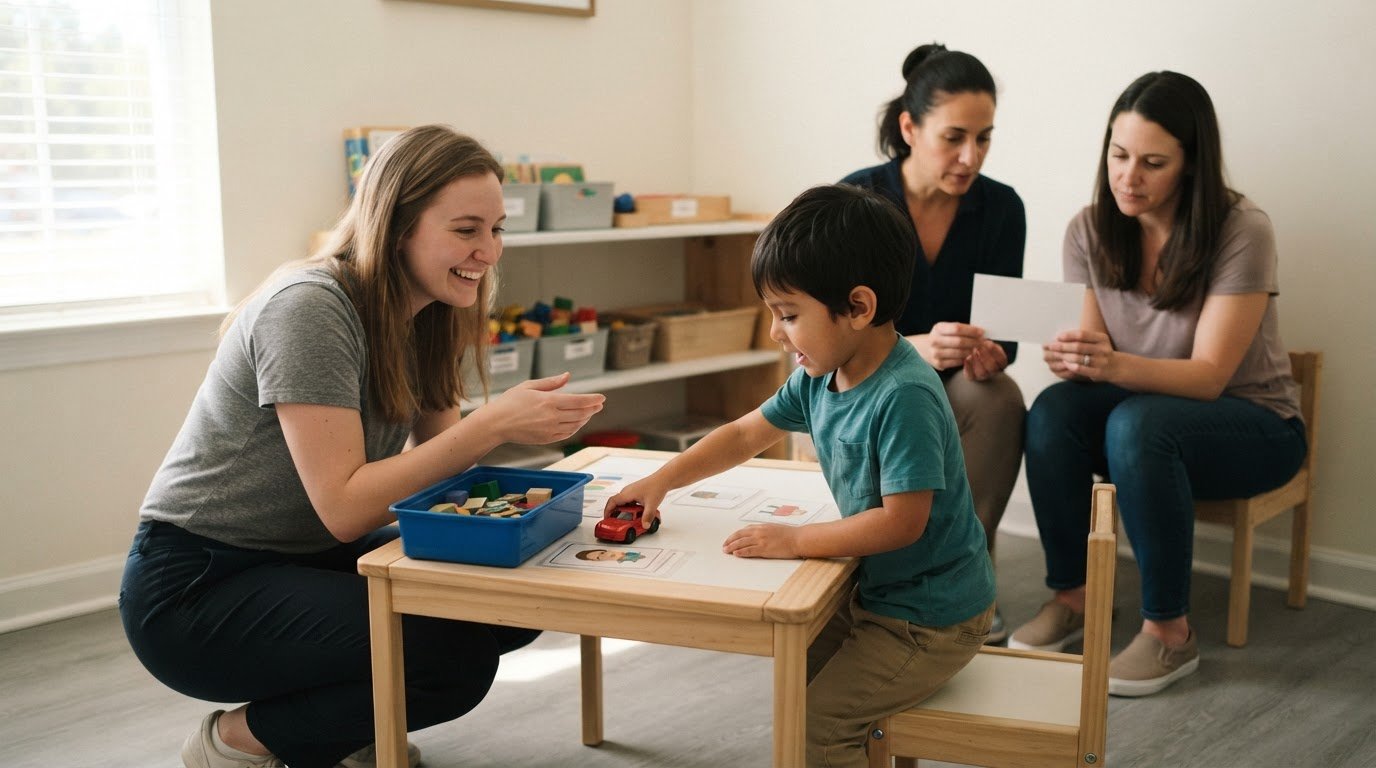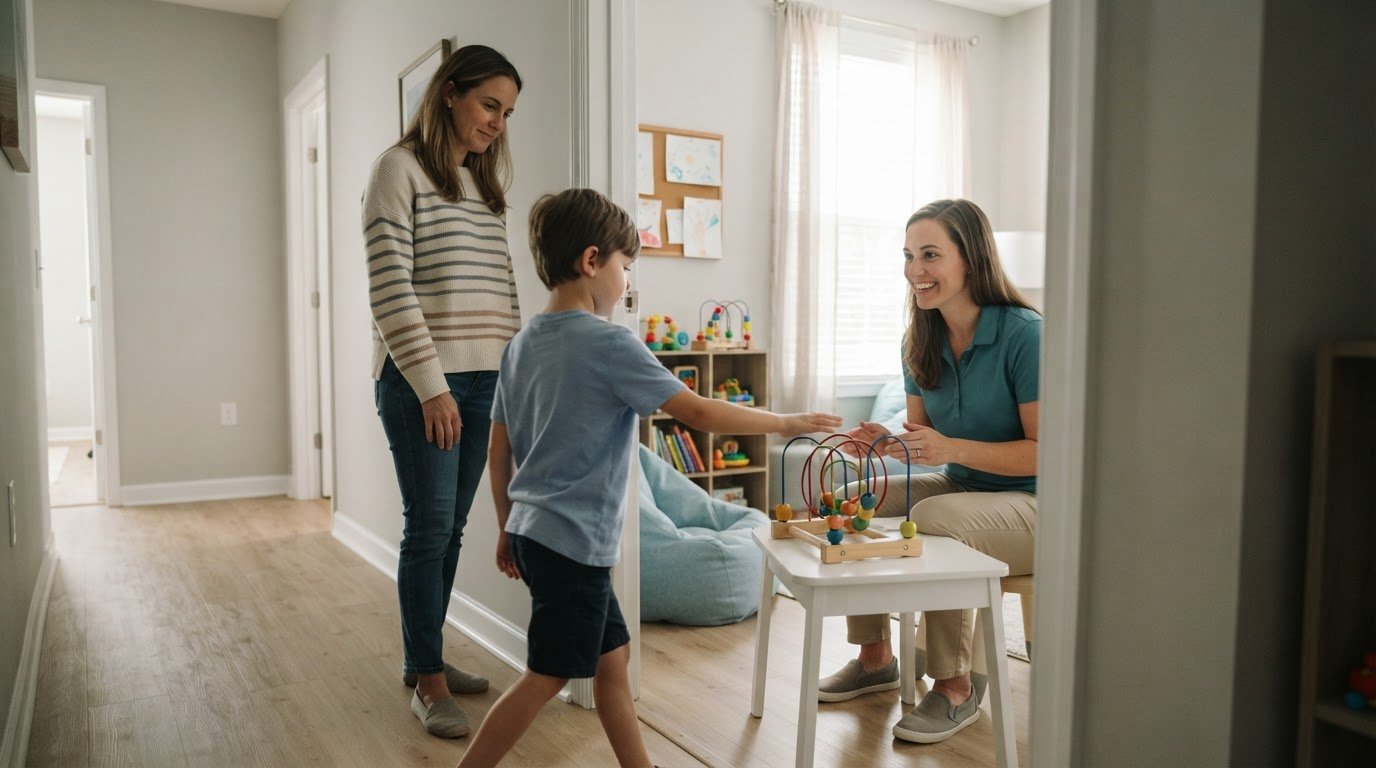

Preparation isn’t about asking your child to master new skills before therapy begins. Preparing your child for ABA therapy in Raleigh means helping your family understand the process and creating a comfortable foundation for individualized care. ABA uses positive reinforcement and structured learning to support children with autism as they build skills, with goals shaped around each child’s needs.
It’s understandable to wonder what the first sessions will involve, whether insurance will cover care, and how home-based therapy can fit into family routines. Those questions are part of getting ready, not signs that you need to have everything figured out in advance.
This guide explains how an initial assessment informs a treatment plan, what families can expect during in-home sessions, and how to prepare the space and coordinate with siblings and caregivers. You’ll also learn what to understand about insurance coverage in North Carolina, so you can approach the next steps with clearer expectations and a focus on your child’s comfort and progress.
Does insurance cover ABA therapy in Raleigh?
North Carolina Senate Bill 676 requires insurance to cover autism services, with coverage of up to $40,000 per year for children under age 19. That limit is one part of the picture. ABA coverage can also depend on the plan, authorization requirements, and medical-necessity documentation. Families should understand what their plan requires before sessions begin, including which records are needed and whether authorization applies to the recommended care.
Applied behavior analysis, or ABA, uses positive reinforcement and structured learning to help children with autism develop skills. A Board Certified Behavior Analyst (BCBA) conducts an initial assessment and shapes goals around a child’s strengths, needs, and everyday routines. For example, a communication goal might involve requesting a favorite toy during play, while a daily-living goal might involve practicing a familiar routine. Family input helps connect those goals to life at home, school, and in the community.
Before in-home sessions, the provider can learn about the child’s routines, interests, communication, and support needs. The BCBA may use observations and family conversations to shape activities around familiar items, such as toys, books, or mealtime routines. For school-based sessions, coordination with school staff helps identify relevant learning activities and transitions. In either setting, the plan should make clear what the therapist will work on, how progress will be observed, and how caregivers can share useful updates.
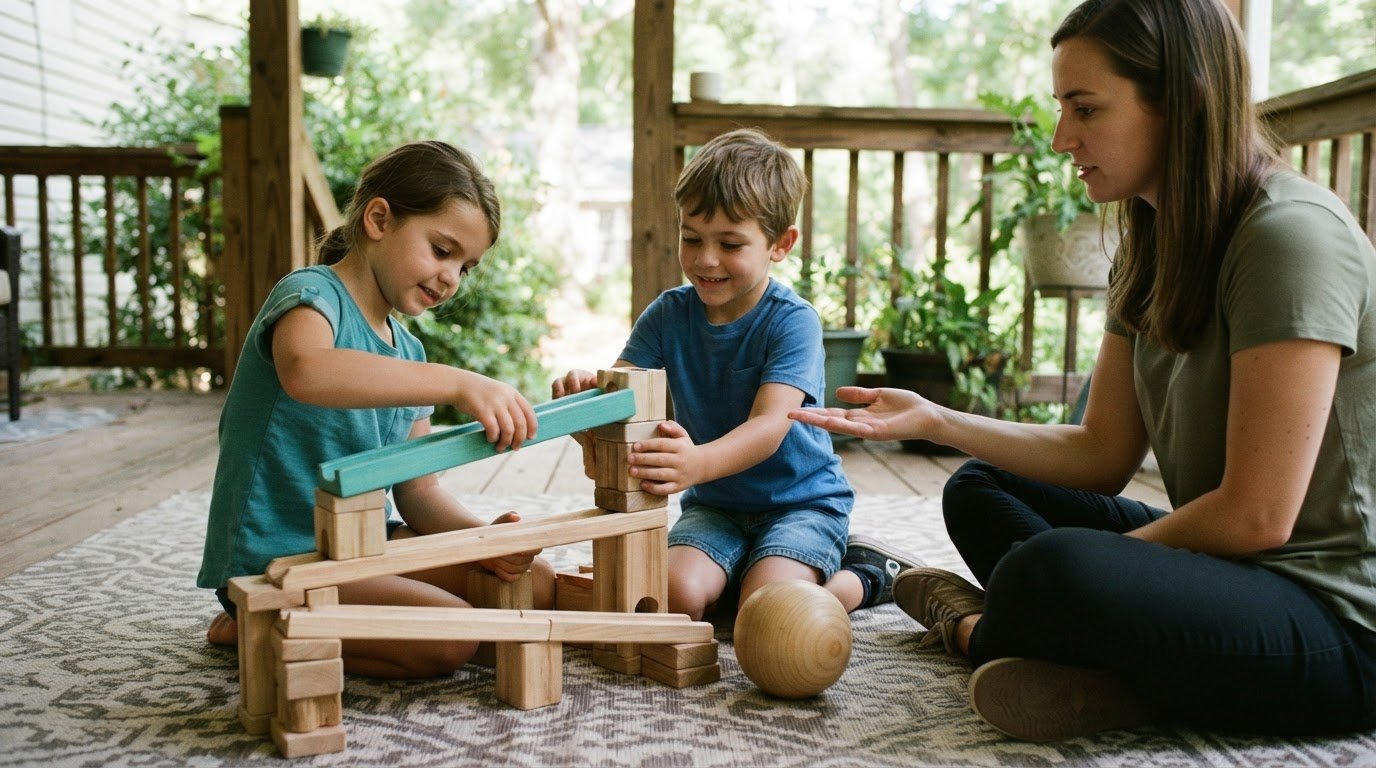
Play can support learning without making every session feel like a drill. A therapist might follow a child’s interest in blocks to practice requesting a piece, taking turns, or describing a build. Individualized, collaborative ABA also means reviewing goals with caregivers and adapting activities as a child’s interests or needs change. A child-centered approach pays attention to the child’s cues and comfort, rather than treating participation as a test of obedience.
In-home and center-based ABA offer different environments. Home sessions can use familiar routines, household items, and everyday transitions as practice opportunities. Center-based sessions provide a separate setting for structured activities and learning outside the home. The right setting depends on the child’s goals, comfort, and support needs. Some families value home practice, while others prioritize a dedicated space away from household distractions.
Before care begins, make sure you understand the proposed goals, teaching methods, and how concerns will be handled. Ask how the team recognizes your child’s communication, responds to signs of distress, and involves caregivers in discussing progress. Evidence-based care should use positive reinforcement to support useful skills, with treatment choices explained clearly to the family.
To prepare your child for ABA therapy in Raleigh, focus on understanding the plan and sharing practical details with the care team. Information about preferred activities, routines, communication, and relevant school transitions helps the team make early sessions more meaningful and coordinated.
How ABA providers help prepare the home and family for early sessions
Preparation connects therapy goals with a child’s routines, caregivers, and learning environment. Families in Raleigh can choose from clinic, home, and community settings, with Parent Coaching to help caregivers support goals in everyday routines.
Where can families find ABA therapy and parent support in Raleigh? Clinic-Based ABA Therapy and Home-Based ABA Therapy provide different settings, while Community-Based ABA Therapy can connect learning with everyday activities. Parent Coaching can help caregivers support skills between sessions.
Session Scheduling Around Family Needs
Scheduling should account for the child’s routine, family responsibilities, and recommended therapy frequency. In North Carolina, session frequency varies with the child’s needs, goals, and therapist recommendations. Families can discuss school, meals, naps, and other regular commitments so sessions fit daily life. A predictable schedule may also help a child know what to expect.
Parent Training and Family Involvement
Parent Coaching gives caregivers practical ways to support goals during familiar routines. A caregiver might encourage a communication skill at snack time or practice turn-taking during a game. Share observations about what works, where your child gets stuck, and how routines have changed. That feedback helps the team connect session learning with everyday life at home.
Before early sessions, providers can learn which activities help the child feel engaged, what transitions are difficult, and which household routines matter most. A quiet, organized, low-traffic area can serve as a workspace, while favorite toys or books can support rapport and play. A reminder 10-15 minutes before a session gives the child time to shift activities. The therapist can adapt the space to the child’s needs rather than requiring a dedicated therapy room.
Family participation can support practice beyond a scheduled session. Siblings might join simple activities, such as sharing materials or taking turns, when that feels comfortable for the child. Caregivers can use consistent communication strategies during routines and share observations with the team. These examples help the team understand how a skill is working in everyday life.
Families should also plan for an adjustment period. Early sessions may emphasize observation, rapport, and practical routines while the child becomes familiar with the therapist. ABA is a longer-term process, and the child may need time to settle into a new routine. Session plans and schedules can be discussed as family needs or developmental goals change.
For Raleigh families seeking coordinated support, the conversation about family routines and session planning can begin with the child’s schedule, interests, and current priorities.
Initial assessment and personalized treatment plans
A BCBA uses an initial assessment to understand a child’s strengths, support needs, and family priorities. For families in Raleigh, this information helps shape goals and guide decisions about which setting and approach may suit the child.
BCBA Assessment and Initial Preparation
Before the assessment, gather examples from everyday life: how your child communicates, handles transitions, plays, and manages routines. Sharing relevant school observations, interests, and developmental concerns gives the BCBA useful context. The assessment and observations help guide an individualized treatment plan, rather than applying the same goals to every child. Families can also ask how the team will discuss progress and supervise the plan.
The assessment considers skills and support needs relevant to learning and daily life. For example, the BCBA may look at how a child requests help, follows a familiar routine, or participates in play. Caregiver observations can show when a skill comes more easily and what makes it harder. The resulting plan can set practical goals and ways to discuss progress, while keeping family priorities in view.
Therapy Frequency and Fit
Recommended frequency depends on the child’s goals and assessment findings. Observations and support needs inform recommendations about how often therapy takes place and how sessions are structured. Families can discuss how the recommendation fits school, home routines, and the child’s comfort with sessions. The conversation should also consider the child’s interests and the family’s priorities.
How do Raleigh ABA providers assess whether a child is a good fit for therapy? A BCBA considers the child’s needs, goals, and assessment observations, then develops an individualized plan. Fit also involves whether the proposed setting and learning activities align with family priorities and the child’s comfort.
An ABA assessment and an autism diagnosis are different steps. An ABA assessment informs treatment planning; it does not replace a diagnostic evaluation. For children under age three, parents can self-refer for early intervention evaluations without a physician referral, according to the U.S. Department of Education. North Carolina early intervention programs serve children from birth to age three.
In Raleigh, the Wake County Department of Human Services is located at 220 Swinburne St, Raleigh, NC 27610, and can be reached at (919) 212-7000. Families seeking early intervention information can use this local contact as a starting point. Keeping assessment notes, school observations, and questions together can help caregivers explain the child’s needs clearly during conversations with professionals.
What should parents expect during in-home ABA sessions?
Home-Based ABA Therapy connects goals with familiar routines and household activities. Caregivers can observe how the therapist supports skills such as communication, self-care, and turn-taking.
Caregiver Coaching and Training
A BCBA oversees the treatment plan, while a Registered Behavior Technician may provide direct therapy. Parent Coaching helps caregivers understand the strategies used and how they relate to the child’s goals. For example, the therapist can demonstrate a communication prompt during play, then explain how the skill connects with an everyday routine.
During a session, the therapist might use a child’s toothbrush to practice steps in brushing or the refrigerator to support a snack routine. A caregiver can observe how the therapist introduces an activity, responds to the child, and recognizes progress. These examples make it easier to discuss what feels practical for the family and how to use strategies consistently.
Benefits of Parent Involvement
Caregivers know their child’s preferences, communication, and daily patterns. Sharing those observations helps the team understand whether a strategy works outside the session. For instance, a parent can describe how the child asks for help at home, giving the therapist useful context for shaping communication goals.
Parent involvement helps connect therapy skills with ordinary family moments. At mealtime, a caregiver can encourage a child to request food using words or signs practiced in therapy. During play, family members can create opportunities to share materials and take turns. The therapist can model these interactions and offer feedback as the caregiver participates.
Caregivers can share changes in a child’s routine, mood, or health with the ABA team. A new bedtime routine or a difficult transition may affect how a child approaches activities. This context helps the team understand what’s happening and consider whether any treatment-plan adjustments may be appropriate.
Families can clarify which skills matter most in daily life. One caregiver may prioritize making a snack more independently; another may focus on communicating needs during play. The therapist can use these priorities to connect treatment goals with meaningful routines, rather than practicing skills only in isolation.
For families who want structured guidance beyond observing sessions, parent coaching can support caregiver participation and shared learning. The focus stays on practical strategies, positive interactions, and helping the child use developing skills across familiar activities.
Social communication and positive behavioral strategies
Applied behavior analysis can support communication, social interaction, and skills for managing challenging behavior. A team might teach a child to request help, respond to a peer, or communicate a need for a break. Goals focus on useful skills, not simply stopping behavior. Each strategy should connect to the child’s individualized treatment goals and daily experiences.
Positive reinforcement can help encourage a skill that matters to the child. For example, a therapist might respond warmly when a child uses a word, sign, or communication device to ask for a favorite activity. The therapist observes what happens before and after an action, then uses that information to teach a practical alternative. The approach should respect the child’s communication and comfort.
Communication with the ABA team helps connect strategies with home life. Parents can describe changes in routine, mood, or health and share what they notice during everyday activities. A specific observation, such as difficulty leaving a preferred game, gives the team clearer context than a general report that the day was hard. The therapist can discuss how the treatment plan addresses the situation.
Team communication matters, too. A BCBA oversees the treatment plan, while a Registered Behavior Technician may work directly with the child. Families can ask how the team shares progress, who to tell about a new concern, and how strategies stay consistent across sessions. If school routines relate to a goal, caregivers can share relevant observations so the team can consider that context.
Community-Based ABA Therapy can help children practice skills beyond the home or clinic when appropriate. A child might work on communicating a choice during an outing or staying with a caregiver during a transition. The therapist can use the setting to practice goals in context, while adapting activities to the child’s needs. Community practice can complement home or clinic sessions rather than replace every other setting.
Parents can support the process by sharing what they observe, asking how a strategy works, and explaining which goals feel most useful at home. For example, a caregiver might tell the team that a child now signals discomfort before a difficult transition. That observation helps the team understand progress and discuss whether the current strategy still fits.
For help connecting social communication goals with everyday routines, discuss ABA support for your child.
Divergent Minds ABA
Divergent Minds ABA helps families connect preparation with individualized ABA care for children with autism. The team works with families to create treatment plans focused on confidence, independence, and everyday skills. Clinic, home, and community settings offer different ways to work on goals, while Social Skills Groups provide opportunities to build skills with peers.
Families may turn to Divergent Minds ABA when they’re ready to discuss assessment findings, their child’s routines, or which setting could support learning. Sharing preferred activities, communication needs, and family priorities can help shape meaningful goals and early sessions. The next step is a conversation about your child’s needs and the questions your family wants addressed.
Contact Divergent Minds ABA to discuss your child’s ABA therapy needs.
Take the Next Step With Confidence
As you prepare your child for ABA therapy in Raleigh, focus on the conversation ahead rather than trying to anticipate every detail. Your child’s interests, communication, comfort, and daily priorities can guide a thoughtful start. Bring questions about what matters most to your family and share what helps your child feel understood. Those details give the care team a meaningful place to begin.
Progress is supported by collaboration, reflection, and goals that remain relevant to your child’s life. You don’t need to have every answer before reaching out. An initial conversation can help your family clarify what support may involve and what information could be useful as you consider next steps.
Contact Divergent Minds ABA to discuss your child’s needs and your family’s priorities. Every thoughtful step can help create a more supportive path forward.
Frequently Asked Questions
What Is ABA Therapy?
Applied Behavior Analysis (ABA) is an evidence-based approach to helping children with autism develop useful skills. Therapy can focus on communication, daily routines, social interaction, or other goals that matter in a child’s life. For example, a child might practice asking for help during play. The therapist uses observation and structured learning to support that skill in meaningful situations.
Do you provide therapy at home, school, or both?
Divergent Minds ABA offers Home-Based ABA Therapy, Clinic-Based ABA Therapy, and Community-Based ABA Therapy for families in Raleigh, Cary, and Apex. These settings give families different options for practicing goals. If a goal relates to a school routine, share that context during planning. The treatment team can use family priorities and assessment information to shape an individualized plan.
How much ABA therapy will my child receive in a week?
Weekly ABA frequency depends on your child’s needs, goals, assessment, and therapist recommendations. In North Carolina, examples can range from daily sessions to a few hours per week. The recommendation should relate to specific treatment goals, not a standard schedule for every child. Families can discuss how the proposed frequency fits their child’s school, family routines, and capacity for consistent participation.
How can an ABA provider help your child prepare for therapy?
An ABA provider can use intake conversations to learn what helps your child engage, communicate, and manage transitions. Share examples such as a favorite game, a challenging change in routine, or a familiar way your child asks for help. The team can use these details to plan relevant early activities and build rapport. A predictable session routine can also make the transition into therapy easier to understand.
What should I expect at the first ABA therapy appointment in Raleigh, NC?
The first appointment may include a BCBA assessment and observation, along with a discussion of your child’s strengths, needs, and family priorities. The BCBA uses this information to guide an individualized treatment plan. You can describe goals you hope to address, such as communication during play or greater independence with routines. Raleigh families can also ask how the team will share updates and discuss progress.
What information and records might an ABA provider request for an intake assessment?
Intake discussions can cover your child’s communication, daily routines, interests, developmental needs, and current goals. Useful examples include what happens during a difficult transition or how your child asks for a preferred item. Existing assessment information and relevant school observations can also help explain the child’s learning environment. Ask what information would be useful for planning, rather than assuming every family follows the same intake checklist.
What questions should I ask when choosing an ABA provider in Raleigh?
Ask how the BCBA conducts an assessment, develops the treatment plan, supervises therapy, and communicates with caregivers. You can also ask how activities reflect your child’s interests and how the team responds to signs of discomfort. For Raleigh families, it’s useful to discuss which setting may support the child’s goals and how the team will review progress. Clear answers help you understand how family input shapes care.
How can an ABA provider help your child adjust to therapy routines and a new therapist?
The provider can begin by learning about your child’s interests and communication style, then use familiar activities to build rapport. Early sessions may emphasize observation and comfortable interaction before focusing on specific routines. A predictable session schedule and a reminder before the therapist arrives can help signal the transition. Caregivers can share which routines feel manageable so the team can tailor the introduction and support the child’s adjustment.