
A weekly ABA schedule isn’t one-size-fits-all. Some children may benefit from 10-15 hours of therapy per week, while others may need more intensive support; recommendations are tailored to the child after assessment and observation. For families considering ABA therapy for improving focus in Raleigh, the right schedule depends on the child’s needs, goals, and progress.
It’s understandable to want a clear number of hours, especially when therapy needs to fit alongside school, family routines, and play. But the schedule is only one part of the plan. Where sessions happen and how skills are practiced also shape support for attention and participation. Families exploring ABA therapy for improving focus in Raleigh can consider how these elements fit their child’s everyday life.
This article explains how weekly hours are determined and how insurance coverage, parent coaching, play-based learning, and clinic, home, or community settings can factor in. You’ll also learn how individualized goals guide ABA therapy for improving focus in Raleigh, helping you understand what a thoughtful plan may look like for your child.
Insurance coverage
Insurance can shape which ABA services are covered and when sessions can begin. In North Carolina, age, plan type, authorization requirements, and assessment findings all matter.
Coverage and Authorization
North Carolina Senate Bill 676 requires insurance companies to cover behavioral therapy and other therapeutic services for people diagnosed with autism who are under age 19. According to the North Carolina General Assembly, employer, Marketplace, and private health insurance in Raleigh covers ABA therapy up to $40,000 per year for children under age 19. Coverage limits and authorization steps still depend on the specific plan.
During intake, insurance verification identifies ABA benefits, required documentation, and the authorization process. A comprehensive assessment then helps define goals and recommended support. Together, these steps clarify how the proposed schedule fits the plan’s requirements before services begin.
Insurance and Payment Options
Families may encounter employer coverage, Marketplace plans, private insurance, Tailored Plans, Medicaid, or private pay. Each follows a different payment pathway, so benefit details and authorization requirements need review for the specific plan. North Carolina Medicaid funds ABA for children and adults, with no age cap. Private pay is another route, with arrangements based on the services and schedule selected.
Tailored Plans are worth distinguishing from other insurance options during intake. Their plan documents and benefits guide the coverage review. Medicaid and private insurance coverage should be reviewed separately, rather than assuming one plan’s rules apply to another.
For children under age three, parents can request early intervention evaluations without a physician referral, according to the Centers for Disease Control and Prevention. This evaluation pathway is separate from ABA insurance verification. It can help families understand developmental support options while gathering information for an ABA assessment.
A practical intake sequence keeps the pieces clear:
- Share the insurance plan name and relevant member information for benefit verification.
- Review ABA coverage, authorization requirements, and any plan-specific documentation.
- Complete an assessment focused on the child’s needs, strengths, and goals.
- Use the assessment and coverage details to shape a service plan and session schedule.
Families comparing Raleigh ABA programs can review intake status, waitlist information, insurance acceptance, and service settings. Since availability can change, use each program’s latest intake information and consider how the family’s coverage pathway fits.
Play-based learning and natural environment teaching
Play can give a child a meaningful reason to practice attention, communication, and flexible responding. In applied behavior analysis, natural environment teaching uses activities and everyday interactions to build skills where they can be useful, rather than relying only on structured table work.
Weekly recommendations follow assessment and observation. Clinical guidelines recommend individualizing therapy frequency and session length to a child’s unique needs when implementing ABA therapy for improving focus Raleigh. For focus goals, a clinician may observe how the child engages with a preferred toy, responds to a transition, or returns to an activity after a pause. These observations help shape goals and the support plan.
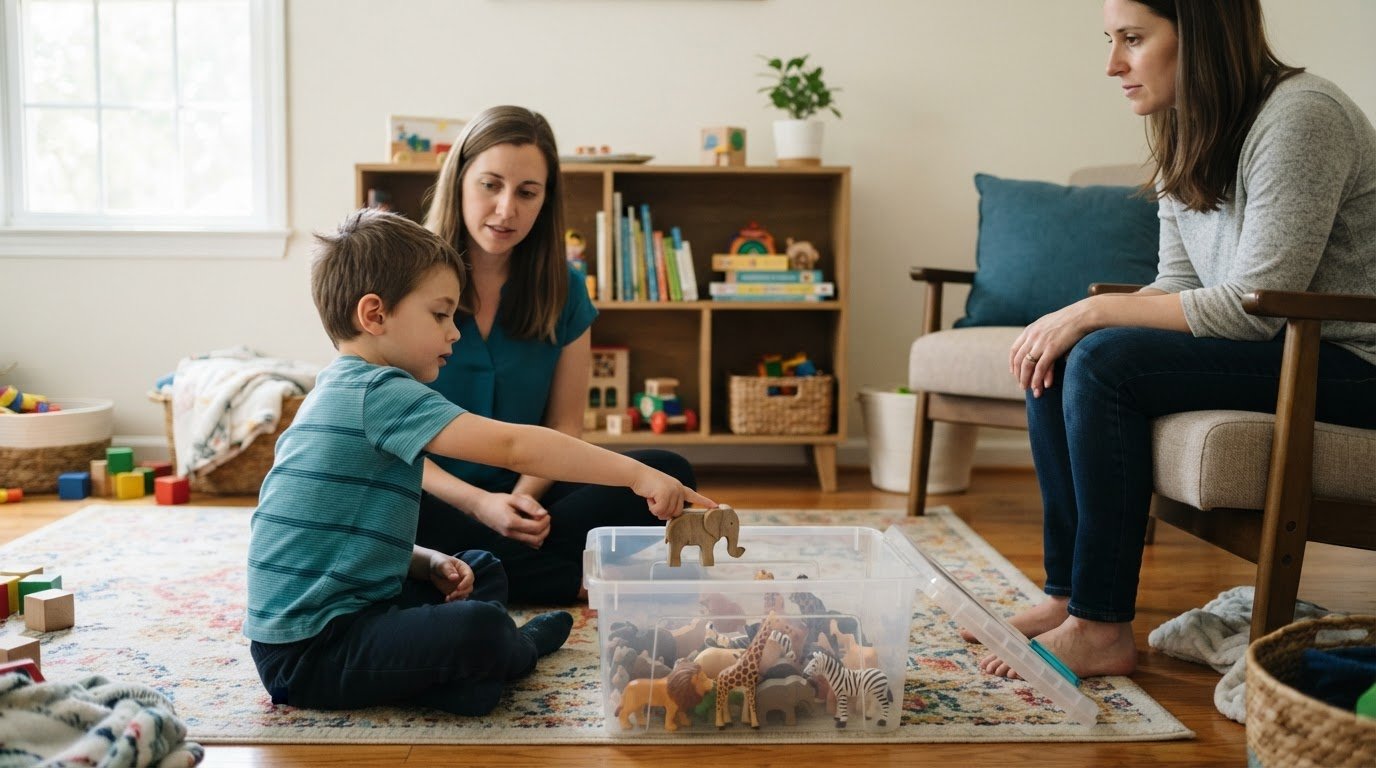
Instruction should connect with the child’s interests and family priorities. If a child enjoys building, a provider might use blocks to practice shared attention, requesting pieces, and completing a short sequence. If pretend play is motivating, the provider may create opportunities to take turns, follow a simple play idea, or shift roles. The child’s choices offer useful information, while the clinician arranges learning opportunities around individualized goals.
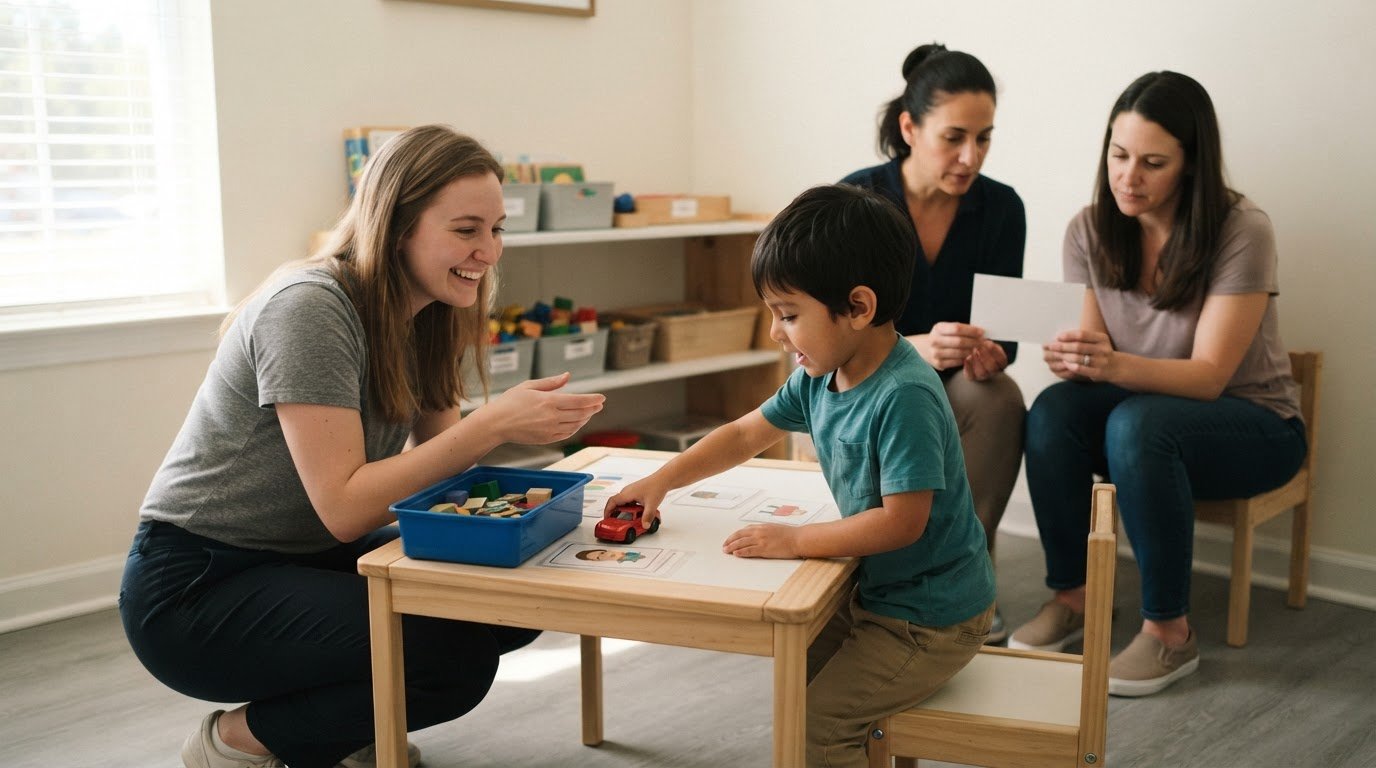
In a clinic-based session, activities might include matching games, puzzles, pretend play, movement breaks, or a small group activity. The provider can observe how the child starts, sustains, and shifts attention across tasks. A familiar activity can be adjusted gradually, such as adding a turn-taking step or practicing cleanup before choosing another toy. Progress is tracked against the child’s goals, not by expecting every child to engage in the same way.
Natural environment teaching also brings learning into routines. A home activity could involve asking for a snack item, then staying near the table while preparing it. A community outing might create opportunities to attend to a caregiver’s direction before entering a familiar store. Home-based ABA therapy can connect practice with routines and materials the child already knows.
ABA has limitations and deserves thoughtful oversight. A concern arises if goals prioritize compliance over communication, comfort, or autonomy. Plans should respect the child’s boundaries and meaningful choices. Skills may not transfer automatically between activities or settings, so providers can plan practice across relevant routines and review progress with families.
Families can ask how a provider follows the child’s interests, measures progress, and adapts a session when an activity causes frustration. A compassionate, evidence-based plan makes room for breaks, choice, and different ways to participate. To discuss how play and everyday routines can support your child’s learning, connect with the Divergent Minds ABA care team.
How much ABA therapy will my child receive in a week?
There isn’t one weekly schedule for every child. The Autism Society of North Carolina recommends that frequency and session length follow assessment and observation; some children may benefit from 10-15 hours of ABA therapy per week, while others may need more intensive support.
For children with autism, an assessment considers strengths, communication, daily routines, and behaviors that affect participation. If your child leaves activities quickly or struggles to shift attention, a clinician can observe when these patterns occur and identify practical goals. The assessment and the child’s response to support inform recommendations, rather than a diagnosis alone determining the weekly schedule.
ABA providers serving Raleigh, Cary, and Apex can address attention and focus through individualized goals, such as staying with a chosen activity, responding to a direction, or moving between tasks. Progress is reviewed against these goals so the clinical team can adjust teaching strategies and recommendations as the child develops.
The service setting also matters for families in Raleigh, Cary, and Apex. Clinic-based sessions can provide a consistent space for structured learning and interaction. In-home support can connect practice with routines such as getting ready, playing, or joining a family activity. Community-based work can address participation in familiar places. Assessment helps determine which setting reflects the child’s needs and where skills should be practiced.
Families in Raleigh, Cary, and Apex can consider travel, the child’s comfort in different environments, and the goals being addressed. A setting recommendation should explain how each location supports learning. For example, a clinic may suit a goal involving structured activities, while home practice may fit a goal tied to an everyday routine.
Raleigh ABA programs generally serve children with autism, with eligibility and age ranges shaped by each program and insurance plan. An autism diagnosis helps frame the service plan, while the child’s developmental profile and support needs guide goals and setting recommendations.
A BCBA should guide assessment, treatment planning, and progress reviews. Direct therapy staff should follow that plan and share observations with the supervising clinician. Families can ask how the team connects the BCBA’s goals to each session and incorporates caregiver input.
When comparing ABA services in Raleigh, Cary, and Apex, consider how assessment, weekly recommendations, settings, and progress updates are explained. Review intake status and waitlist information, then consider whether the available setting fits your child’s routines and goals. These details help you understand how a proposed schedule could work for your family.
In-home and community-based ABA therapy
Focus skills matter beyond the therapy room. In Raleigh and the surrounding Triangle, home-based and community-based ABA can create opportunities to practice attention during familiar routines, with support shaped around a child’s needs and strengths. The setting is part of the teaching plan, not simply a change of address.
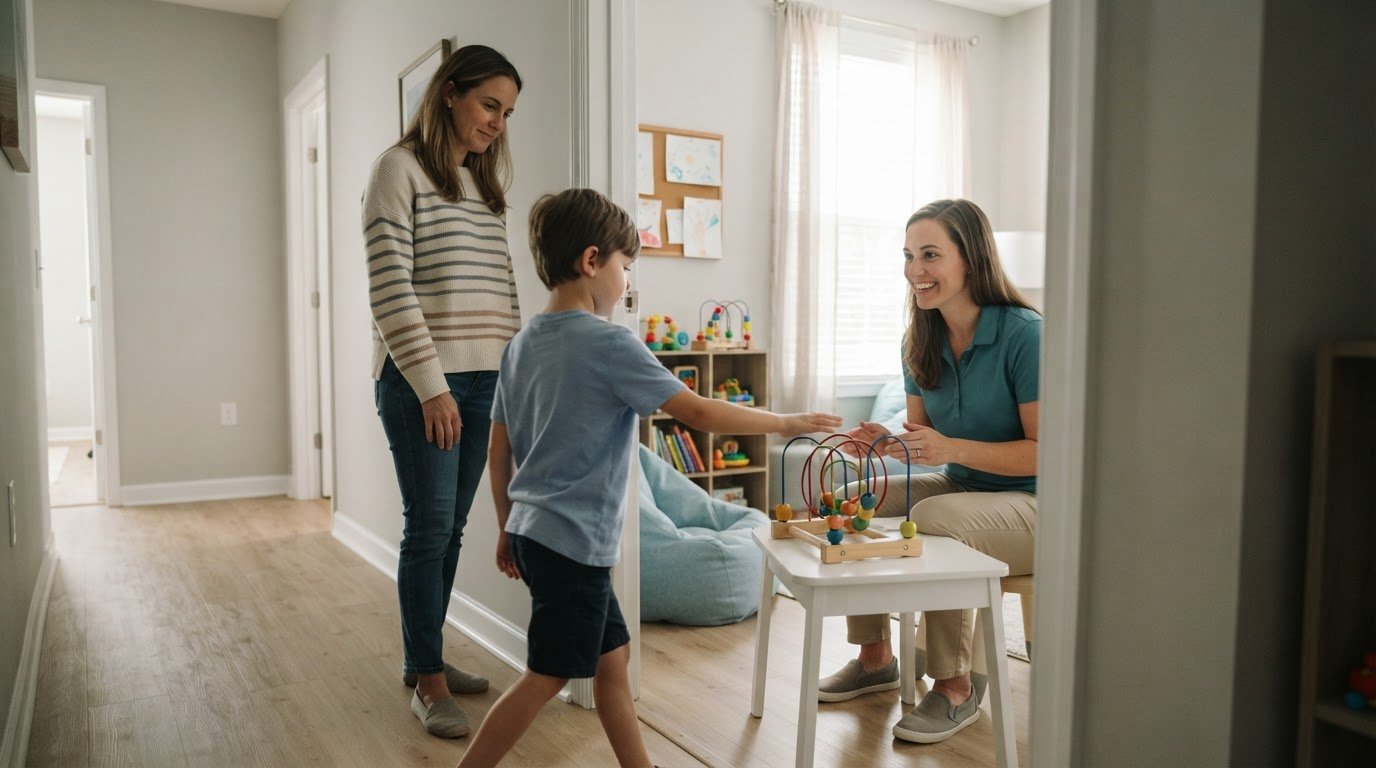
At home, a certified behavior analyst may build goals into activities the child already knows. For example, a session might practice attending to a caregiver’s direction while setting the table, then asking for a preferred item. A familiar space can make it easier to observe what supports engagement, including the activity, routine, or type of prompt. The team can use those observations to guide development goals.
Community practice brings different distractions and expectations. During a planned visit to a familiar park or store, a provider might work on responding to a caregiver, staying with an activity, or shifting attention between steps. These examples are individualized. The child’s comfort, communication, safety needs, and current goals shape which community activities are appropriate.
Neither setting replaces careful clinical planning. A Board Certified Behavior Analyst (BCBA) develops and reviews goals, while session observations help show whether strategies support meaningful progress. The family’s perspective matters too: caregivers can describe challenging routines, activities their child enjoys, and strengths that can support learning. A shared plan connects these details to measurable objectives.
School routines may also inform goals, even when therapy takes place at home or in the community. For instance, if a child has difficulty moving from a preferred activity to a less preferred one, the team can practice a similar transition during a home routine. The aim is to build a useful skill in context, not assume that success in one setting automatically carries over elsewhere.
Community-based ABA can provide practice in settings where children encounter everyday social and environmental demands. Community-Based ABA Therapy connects individualized goals with activities outside the home. The provider selects learning opportunities based on the child’s goals, interests, and readiness, while giving each session a clear clinical purpose.
Families can help shape the work by sharing examples: when attention comes easily, what interrupts it, and which activities spark interest or curiosity. These details help the team adapt instructions, pacing, and materials. A compassionate approach respects the child’s choices and communication, while evidence-based ABA uses observation and progress data to refine teaching. The practical takeaway is simple: choose settings that match the skills being practiced, then review how the child responds across familiar routines and community activities.
What is ABA therapy and how can it help improve focus?
Applied behavior analysis (ABA) uses observation and individualized teaching to build useful skills. For a child working on focus, goals might include staying with a chosen activity, responding to a direction, or moving between tasks. The aim isn’t to make every child pay attention in the same way. It’s to identify what helps that child participate and learn.
A provider begins by understanding the child’s strengths, communication, interests, and routines. For example, a clinician might observe how a child approaches a puzzle, asks for help, or responds when play changes. These observations help define a specific goal, such as completing a short activity with appropriate support. The plan can then be adapted to the child’s learning style and priorities.
Focus is not a single behavior. A child may attend closely to a favorite activity but find a group direction or transition harder. Therapy can break a goal into teachable steps, such as orienting toward the speaker, following one direction, and returning to an activity after a break. A motivating game or familiar routine can give the child a meaningful reason to practice.
Progress monitoring helps the team understand whether an approach is useful. A provider can record how the child responds to an activity, what support was offered, and whether participation changes over time. If a puzzle becomes frustrating, for instance, the provider may adjust its difficulty, offer a choice, or divide it into smaller steps. The clinical team reviews these observations and updates goals as needed.
Teaching should respect communication, comfort, and autonomy. A child can show interest, ask for a break, or decline an activity in different ways. The provider should recognize those signals and adapt the session, rather than treating stillness or quiet compliance as the only signs of focus. Families’ knowledge of the child’s routines and preferences can help make goals meaningful beyond therapy.
ABA may support attention-related goals, but it doesn’t guarantee that a child will focus in every setting or situation. Skills often need practice in the routines where they matter, such as play, a family activity, or getting ready to leave home. A clear plan connects each goal to observable behavior and considers what support makes participation more accessible.
To discuss goals for attention, participation, or transitions, contact the care team and share examples of activities your child enjoys and routines that feel challenging.
Divergent Minds ABA
Divergent Minds ABA helps families turn questions about focus into individualized goals and practical support for children with autism. As a BCBA Owned & Operated practice, it develops evidence-based treatment plans with families, considering each child’s strengths, routines, and needs rather than assuming one weekly schedule fits everyone.
Support can include Clinic-Based ABA Therapy, Home-Based ABA Therapy, Community-Based ABA Therapy, and Social Skills Groups. The right setting depends on the skills being addressed and where the child can practice them meaningfully. Families can discuss assessment, weekly recommendations, and how progress will be reviewed together.
If you’re considering next steps for your child, contact Divergent Minds ABA to discuss your family’s needs.
Take the next step toward meaningful goals
Progress begins with a goal that matters in your child’s daily life. Before moving forward, consider where focus feels most important: joining a family activity, shifting between routines, or staying engaged in play. These examples can help clarify what you hope your child will build through ABA therapy for improving focus in Raleigh.
Divergent Minds ABA can help families explore an individualized plan and a setting that fits their child’s needs. Its clinic-based, home-based, and community-based therapy can support goals in different environments. Families considering ABA therapy for improving focus in Raleigh can discuss which setting and goals best fit their child.
You don’t need every goal defined before starting a conversation. Sharing what your child enjoys, which routines feel challenging, and what progress would matter can help guide the discussion. Contact Divergent Minds ABA to talk about a thoughtful next step. Each meaningful goal can create room for new skills and growing confidence.
Frequently Asked Questions
How Long Will My Child’s Therapy Session Last?
Session length is recommended after assessment, based on your child’s goals and support needs. A session may include teaching, play, transitions, and practice with communication or attention skills. The clinical team considers how your child participates and what the plan is designed to address. For example, a goal involving turn-taking may call for a different session structure than practicing transitions between daily activities.
How long does ABA therapy take to show results?
There isn’t one timeline that applies to every child or goal. Progress is reviewed through specific observations, such as whether a child returns to an activity after a transition or follows a familiar direction with less support. The team can explain how it records these changes and how often goals are reviewed. For families in Raleigh, Cary, or Apex, useful updates connect observed progress to routines that matter at home.
Is There Any Therapy For Autism?
Yes. Applied behavior analysis therapy is a service option for children with autism. It can address individualized goals related to communication, daily living, participation, or social interaction. For example, a plan might focus on asking for help during play or joining a shared routine. Goals should reflect the child’s needs and strengths, with families involved in shaping a plan that supports meaningful skills.
What evidence supports ABA therapy for attention and focus in children?
ABA uses observation and measurable goals to guide teaching and evaluate a child’s progress. For attention-related goals, the team can track a defined behavior, such as beginning a task after an instruction or returning to play after a pause. These observations help show whether a strategy supports participation. Families can ask how goals are recorded, what progress looks like for their child, and how the team adjusts instruction when needed.
How much does ABA therapy cost in Raleigh, and does insurance cover it?
There isn’t one cost that applies to every family; expenses depend on the treatment plan, service setting, and insurance benefits. North Carolina General Assembly information states that employer, Marketplace, and private health insurance in Raleigh covers ABA therapy up to $40,000 per year for children under age 19. Plans may have distinct authorization steps. Divergent Minds ABA accepts multiple insurance providers and assists with benefits verification.
Does North Carolina Medicaid cover ABA therapy for focus-related goals?
North Carolina Medicaid funds ABA for children and adults, with no age cap. Focus-related goals may be part of an individualized treatment plan when they address a child’s needs and participation. Coverage depends on the applicable plan requirements and authorization process. During benefits verification, families can clarify how the plan handles ABA services and what documentation is needed for the proposed treatment goals.
What happens during an ABA assessment and treatment plan for focus?
An ABA assessment gathers information about a child’s strengths, routines, communication, and current support needs. The clinician may observe how the child approaches activities, responds to directions, or shifts between tasks. The treatment plan then connects those observations to individualized goals and teaching strategies. For example, a plan may define what “joining an activity” looks like for the child and how the team will record progress.
How many ABA therapy hours per week are typical for attention goals?
Some children may benefit from 10-15 hours of ABA therapy per week, while others need more intensive support. Assessment and observation guide the recommendation; attention goals alone don’t determine weekly hours. The team considers the child’s needs, goals, response to teaching, and daily routines. Families can discuss how the recommended schedule supports practice across settings and how progress will inform future treatment planning.