
A shared moment can be a meaningful step toward communication. For families focused on improving joint attention skills in Raleigh, the goal is to help a child share attention with another person around a toy, activity, or event. These moments can grow through playful, everyday interactions, including for autistic children.
It’s understandable to look for clear signs of connection and wonder how to encourage more of them. Joint attention can include following another person’s gaze or gesture, showing someone something interesting, or taking turns during play. Every child communicates in their own way, so small responses such as a look, gesture, sound, or attempted word can be meaningful starting points.
This article explains how joint attention relates to social communication and how awareness, engagement, and interaction can develop through play at home. You’ll find practical ways to follow your child’s interests, create shared moments, and build communication into familiar routines at a pace that feels comfortable for your child.
1. What is Joint Attention?
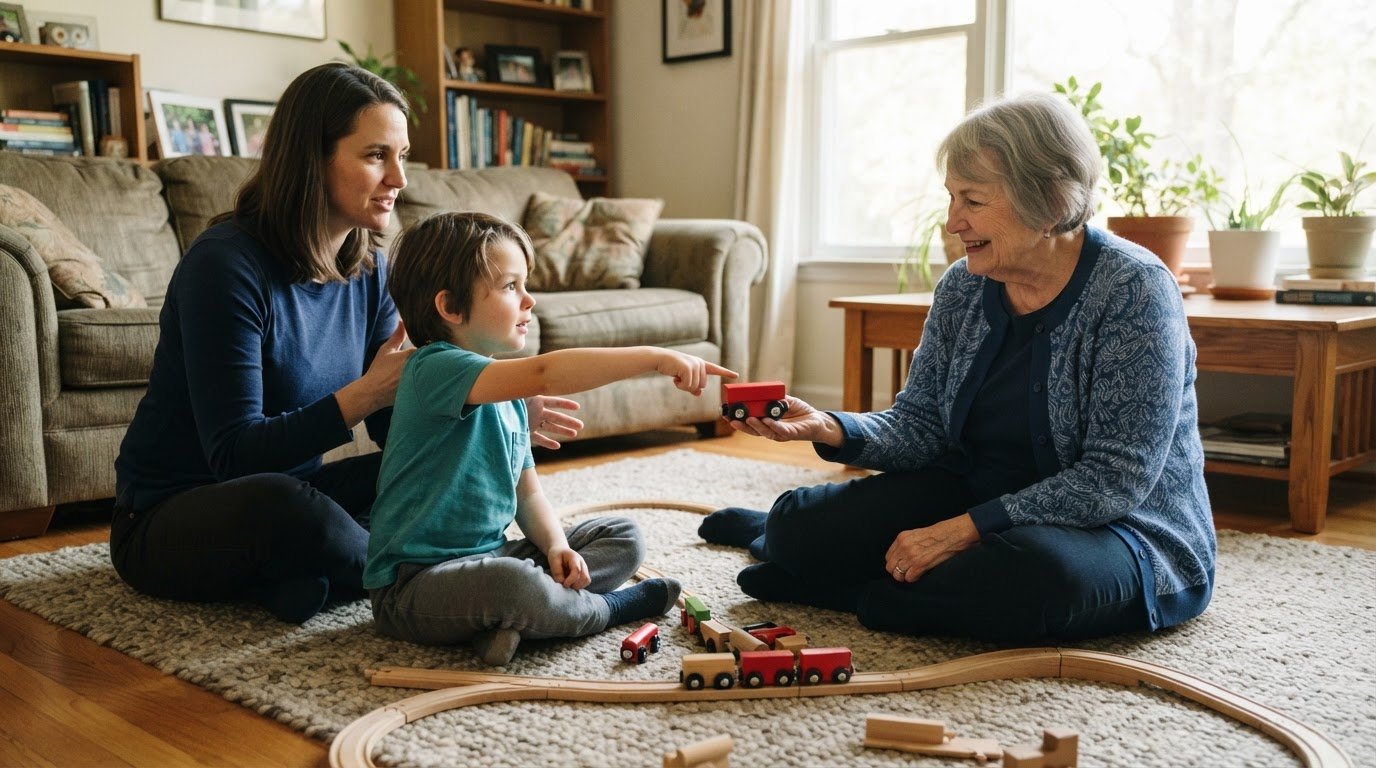
Joint attention happens when two people share focus on an object, activity, or event. A child might follow a caregiver’s point toward a bird, then look back to share the moment. A child can also initiate attention by showing a toy or pointing something out. These exchanges may use gaze, gestures, sounds, and sometimes words.
Joint attention is more than looking at another person. It involves coordinating attention between a person and something interesting. For example, while playing with blocks, a child may watch a caregiver build a tower, add a block, or make a sound to keep the interaction going. A shared activity creates opportunities to notice, respond, and communicate.
Early joint attention develops during the first year of life. Children typically begin developing these skills between 9 and 18 months, although development varies. Some infants may follow another person’s gaze earlier; around 12 months, children often begin showing interest in sharing attention. By 18 months, many children can point to show something or look at book pages with another person, according to the Centers for Disease Control and Prevention.
These early exchanges support social communication and language development. When a caregiver points to a ball and names it, a child can connect the spoken word with the object. Repeating this during play, reading, or watching a passing truck gives the child chances to hear words in context. A child may respond verbally, with a gesture, or by shifting their gaze. Each response can help adults build an interaction around the child’s interests.
Joint attention also supports learning how social exchanges work. A child learns that another person may notice something different, respond to a gesture, or take a turn. Following a parent’s gaze toward a dog, for instance, can create a shared moment and invite a comment such as “There’s the dog.” Joint attention skills in young children are associated with later spoken language and social skills, but they don’t look the same in every child.
Costs for speech, occupational, or behavioral therapy sessions in Raleigh depend on the service, session details, and individual circumstances; the price is provided after a quote request, with the case’s needs shaping it.
In North Carolina, insurance coverage for therapy and developmental evaluations depends on each plan’s benefits, eligibility terms, and documentation requirements. Consider therapy and evaluation coverage separately, since plans may handle those services differently.
Families seeking parent-child social communication groups in Raleigh can look for social skills groups that include shared play, turn-taking, and caregiver participation. These activities give children practical chances to initiate or respond to shared attention while engaging with others.
2. Teaching awareness, engagement, interaction, and communication
Build awareness by joining what already interests your child. Sit nearby, use a preferred toy, and let them lead before adding a comment or gesture. If they watch a spinning wheel, describe it briefly, then pause. That pause gives your child room to look, move, vocalize, or invite another turn.
Engagement grows when adults make interaction predictable and enjoyable. During peekaboo, for example, hide your face, wait for the child’s response, then reveal it with a smile. Around 6 months and older, peekaboo can offer practice with shared moments and turn-taking. Follow the child’s cues, and soften your voice or movements if they turn away.
Pointing and gestures can make shared focus easier to understand. Point toward a passing bus, name it, and wait to see whether your child looks or gestures. If they show interest, respond warmly and add a few words: “Yes, a big bus.” Specific feedback connects the child’s communication attempt with a social response.
Interactive play can help children notice another person’s actions and take turns. Roll a ball back and forth or add blocks to one tower, pausing after each turn. If your child prefers playing beside you, imitate their actions with a similar toy rather than changing their game. Pictures in a book can also create chances to point, label, and share attention.
Individualized planning starts with observing what a child enjoys and how they communicate. One child may respond to bubbles; another may prefer music, picture books, or a familiar household routine. Adults can adjust prompts, pauses, gestures, and reinforcement to fit those interests and responses. Early support can focus on small, achievable interactions rather than demanding eye contact or speech.
In North Carolina, early-intervention eligibility is determined by assessing a child’s development against program criteria. Communication, play, and social interaction concerns are useful to raise during that process, but a concern alone does not establish eligibility.
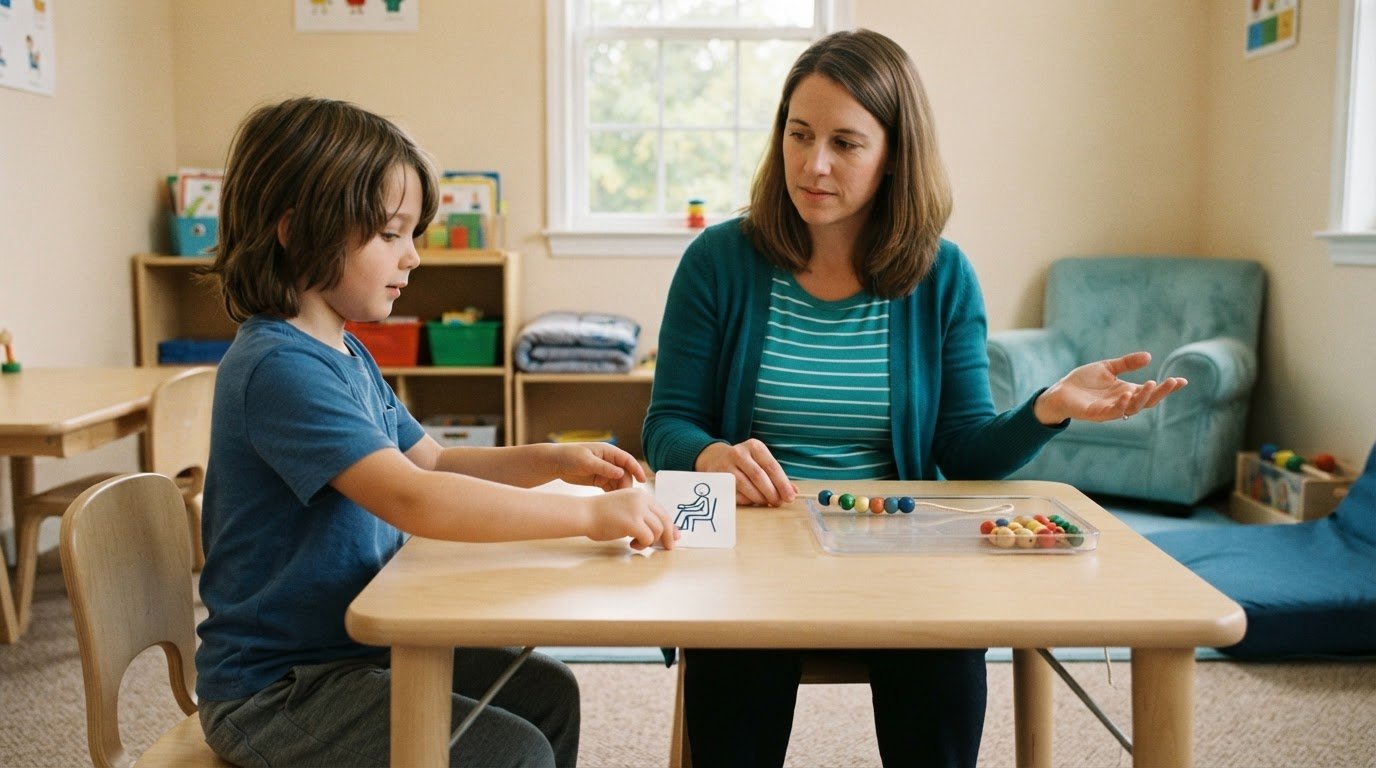
Approaches used to build joint attention include behavioral interventions, speech-language therapy, and structured social communication practice. A therapist may model a gesture, use a picture cue, pause during a game, then reinforce a child’s attempt to share attention. The approach should fit the child’s communication style and goals.
Progress in shared attention can create more opportunities to learn words, respond to others, and participate in social interaction. Language skills can also support later social relationships, academic learning, work, and independent living. These are developmental goals, not a reason to rush a child through play.
For help connecting everyday play with individualized communication goals, discuss your child’s needs.
At the child’s level, use their name and preferred interests. Point out interesting things to encourage gaze-following. Initiating joint attention involves pointing to or showing an object to share interest; most children start pointing to show a caregiver something interesting around 12-15 months of age. Respond consistently and positively to pointing, gestures, sounds, or attempted words. Turn-taking or cooperative-play toys make play interactive.
3. Joint attention and autism
Autistic children may find it difficult to follow another person’s gaze or pointing gesture toward an object. A caregiver might point toward a plane while the child continues focusing on a preferred activity. This difference can affect how shared attention begins, but it doesn’t mean the child has no interest in people or connection. It shows that communication and attention may develop or appear in different ways.
Joint attention can involve responding to someone else or initiating sharing. One child may look toward a toy after an adult gestures; another may bring over a favorite object, make a sound, or position it for someone to see. These actions can communicate interest without spoken words. Some autistic children use eye gaze less often, while others share attention through gestures, movement, vocalizations, or repeated actions around a favorite subject.
Notice the whole interaction rather than treating one behavior as the only sign of connection. For example, a child who doesn’t look directly at a caregiver may still respond by reaching toward the object, smiling, or returning to an activity with them. Eye contact isn’t the sole measure of engagement. Adults can follow the child’s focus, describe what’s happening, and allow time for a response in the child’s preferred communication style.
Signs worth discussing with a pediatrician include not following another person’s gaze by age one or not pointing to share interest by age two. These observations don’t diagnose autism; an evaluation considers a child’s broader development and communication across situations.
During play, adults can make an invitation clear and low-pressure. Hold up a toy the child enjoys, pause, and watch for any response, such as a glance, reach, sound, or movement closer. If the child responds, continue the activity and acknowledge the attempt. If they turn away, reduce demands and try again at a more comfortable moment. This approach respects the child’s cues while creating opportunities for sharing.
In ABA, a therapist may use a gesture or visual cue to support attention toward a shared activity, then reinforce the child’s response with specific praise or a preferred item. Prompts can be adjusted to the child’s needs and reduced as independent communication develops. The goal is meaningful participation, not performing a particular behavior on command.
Autism-related differences in joint attention can affect how children enter social interactions, learn from shared experiences, or connect words with what others notice. Support can create more chances to practice these exchanges across familiar routines. Progress may look like staying near a caregiver during a game, responding to a point, or initiating sharing in a preferred activity. Each example gives adults useful information about what engages the child and how to build interaction respectfully.
4. Play-based joint attention activities at home
For families focused on improving joint attention skills in Raleigh, home routines offer familiar moments to practice sharing attention. Start by noticing which objects or activities your child chooses. Sit nearby, join in without taking over, and give your child time to notice your presence. A relaxed start can make it easier to build a shared activity around their interests.
Try an imitation game with simple actions. If your child taps a spoon on a table, copy the action, pause, then make a different gentle rhythm. Wait to see whether they respond by copying, looking, or making a sound. Take turns leading, and keep the game brief if your child loses interest. The aim is an enjoyable exchange, not a perfect imitation.
Peekaboo can create anticipation through a familiar sequence: cover your face, pause, then reappear. For children aged 6 months and older, it can offer practice sharing a playful moment. During bubble play, pause before blowing again so your child has an opportunity to signal interest. Bubbles or balloon play can support anticipation and shared excitement for children aged 10 months and older.
Reading offers another way to practice. Choose a book with clear pictures, point to one, and name what you see. Pause before turning the page so your child can touch a picture, vocalize, or look toward you. Follow their response by commenting on the image they noticed, rather than moving quickly through the whole book.
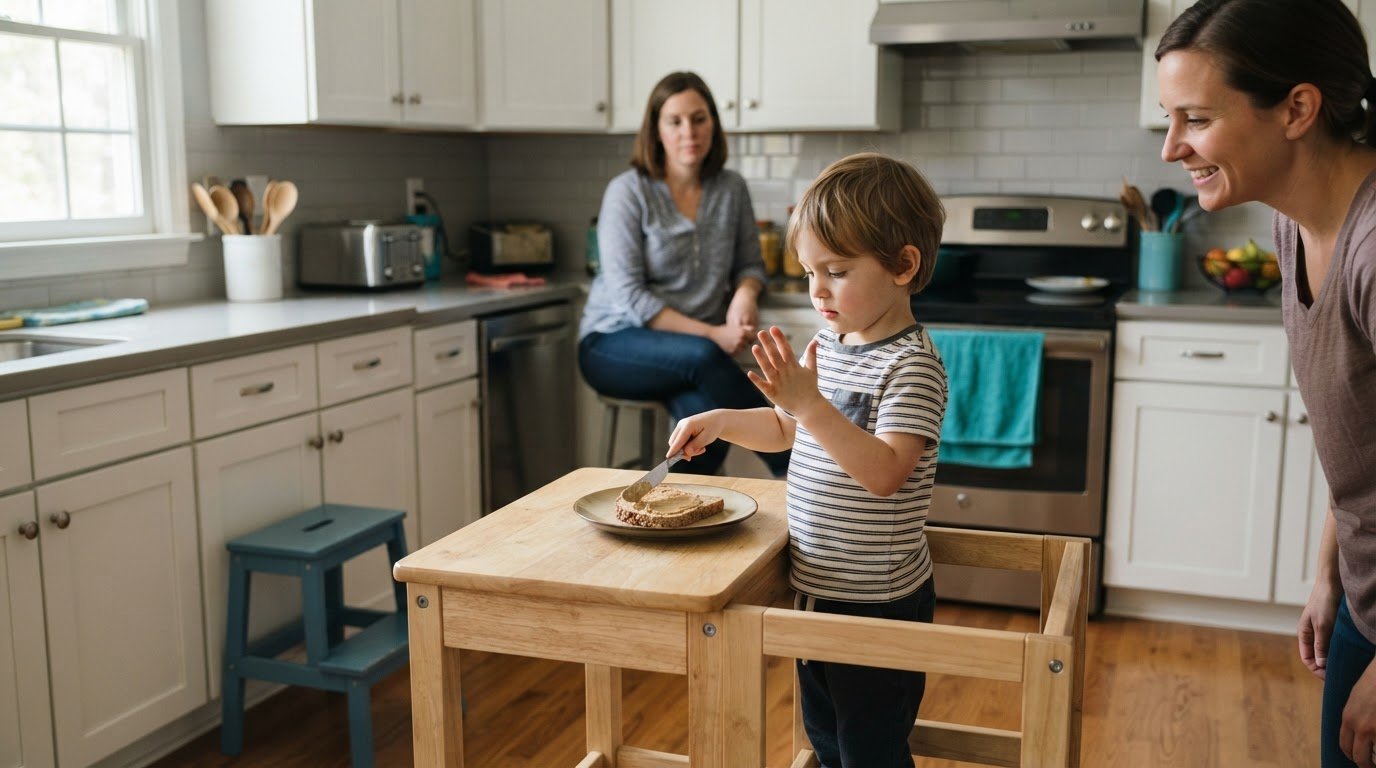
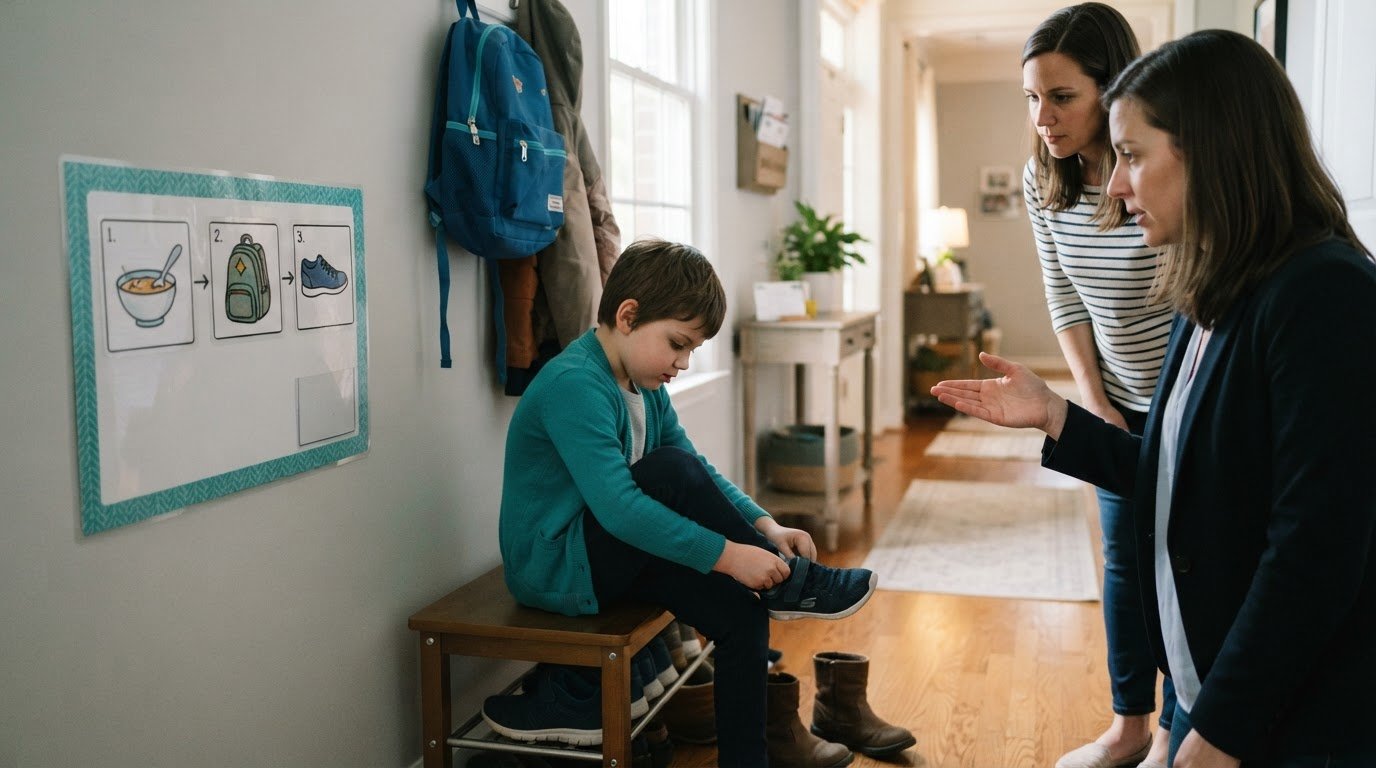
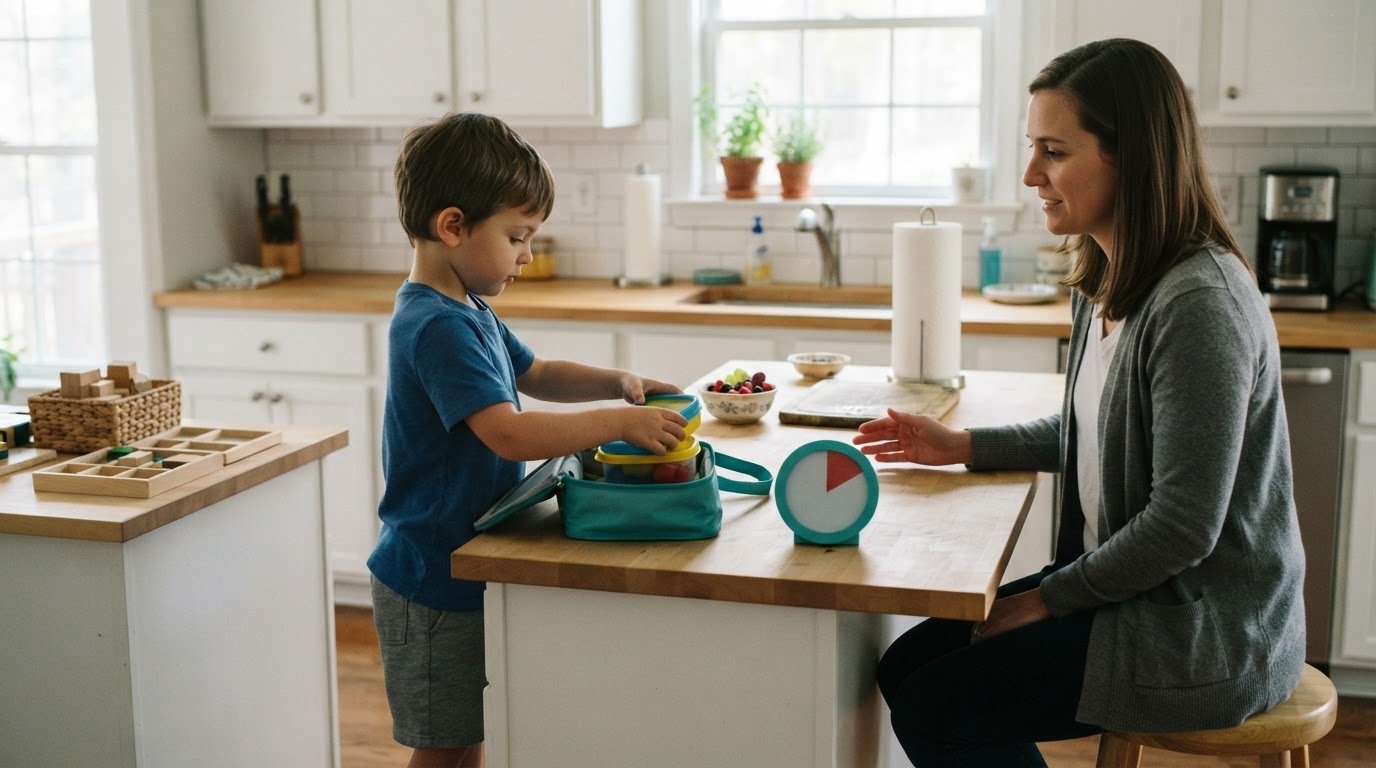
Parents can also practice joint attention during everyday routines by drawing attention to an activity, pausing, and responding to the child’s cues. While putting away laundry, for example, hold up a familiar shirt and describe its color. Outside, notice a leaf moving in the breeze and gesture toward it. These brief exchanges fit naturally into shared routines.
Keep activities flexible and follow your child’s comfort. If a game feels overwhelming, reduce noise, simplify the actions, or return to a preferred object. A child can show interest through a glance, movement, gesture, or sound. Acknowledge the communication and let it guide what happens next.
Improving joint attention skills in Raleigh can involve practicing small exchanges at home and noticing which activities invite connection. When one game becomes familiar, change a single detail, such as using a different picture book or taking turns making a sound. This creates fresh opportunities for shared attention while keeping the activity predictable and child-led.
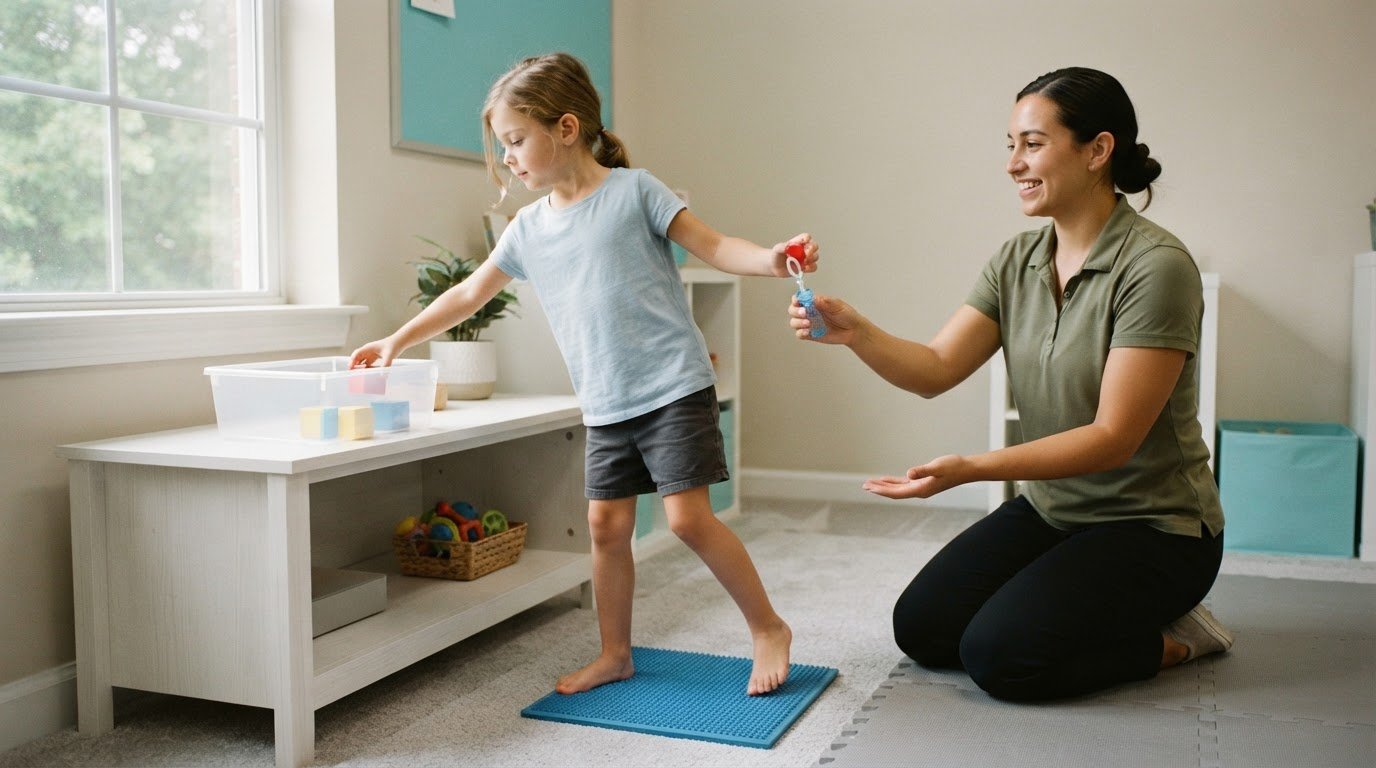
These activities don’t need to take long. Parents can create opportunities to strengthen shared attention through play at home in as little as a few minutes a day. Structured joint-attention activities can involve turn-taking and imitation to encourage engagement and social responsiveness. During bubble play, pause before blowing bubbles and wait a few seconds for a response.
Play therapy activities, such as toys, role-playing, and expressive games, can provide opportunities for children to initiate or respond to social cues. Occupational therapists can use structured play activities to teach joint attention skills. Joint attention can be taught at home, at school, and in the community, with an emphasis on natural everyday routines and activities.
5. Joint attention and social communication
Joint attention helps children connect an experience with another person, creating opportunities for communication and social participation. A child might bring a drawing to a caregiver, wait for them to notice, then point to a favorite part. That exchange can communicate interest and invite a response, even without spoken words. The key is the shared experience, not one required gesture.
Children communicate attention in varied ways. One child may point; another may move an object closer, vocalize, or pause beside someone before continuing play. Parents can respond to these cues by acknowledging the child’s interest and adding a short comment. This shows that the child’s attempt has been noticed and gives the interaction room to continue.
By 18 months, many children can point to show caregivers something or look at a few pages of a book with others, according to the Centers for Disease Control and Prevention. Developmental examples provide context, but children may share attention differently. A child might communicate interest through a sound or movement rather than pointing, so adults can attend to the whole exchange.
Shared attention supports social communication by giving people a common topic. During a familiar song, a parent can pause before a favorite part and wait for the child to signal interest. The child might smile, move closer, or make a sound. Responding to that cue creates a back-and-forth exchange and lets the child influence what happens next.
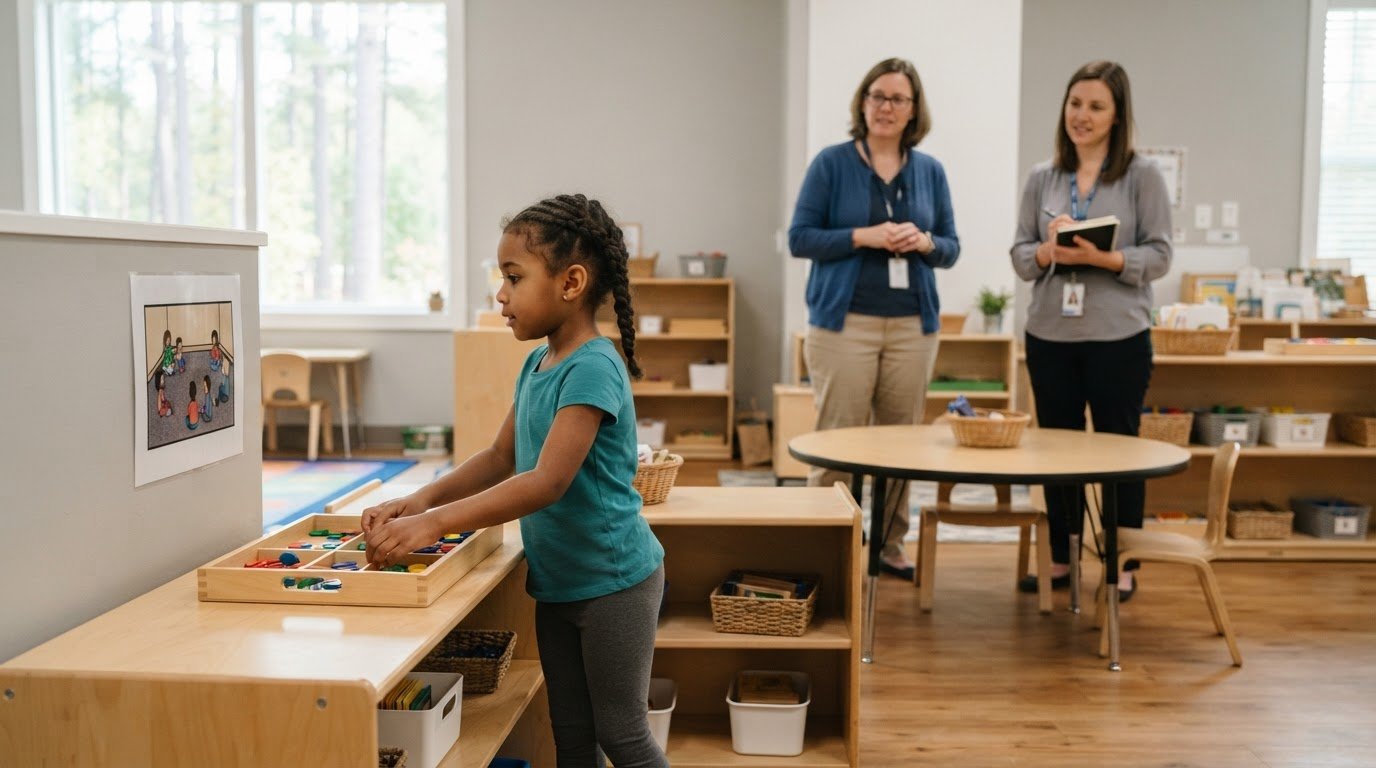
Therapists can observe how children initiate and respond across activities, then shape practice around meaningful goals. In a rolling-ball game, a therapist might wait before sending the ball back, allowing the child time to request another turn using their preferred communication. Support can include a gesture or visual cue, with reinforcement for the child’s effort to share or continue the interaction.
For families improving joint attention skills in Raleigh, it can help to notice where a child already communicates comfortably. A child who shares interest during music might find it easier to practice similar exchanges while choosing a song or taking a turn with an instrument. Therapists and parents can build from familiar interests while respecting the child’s cues and communication style.
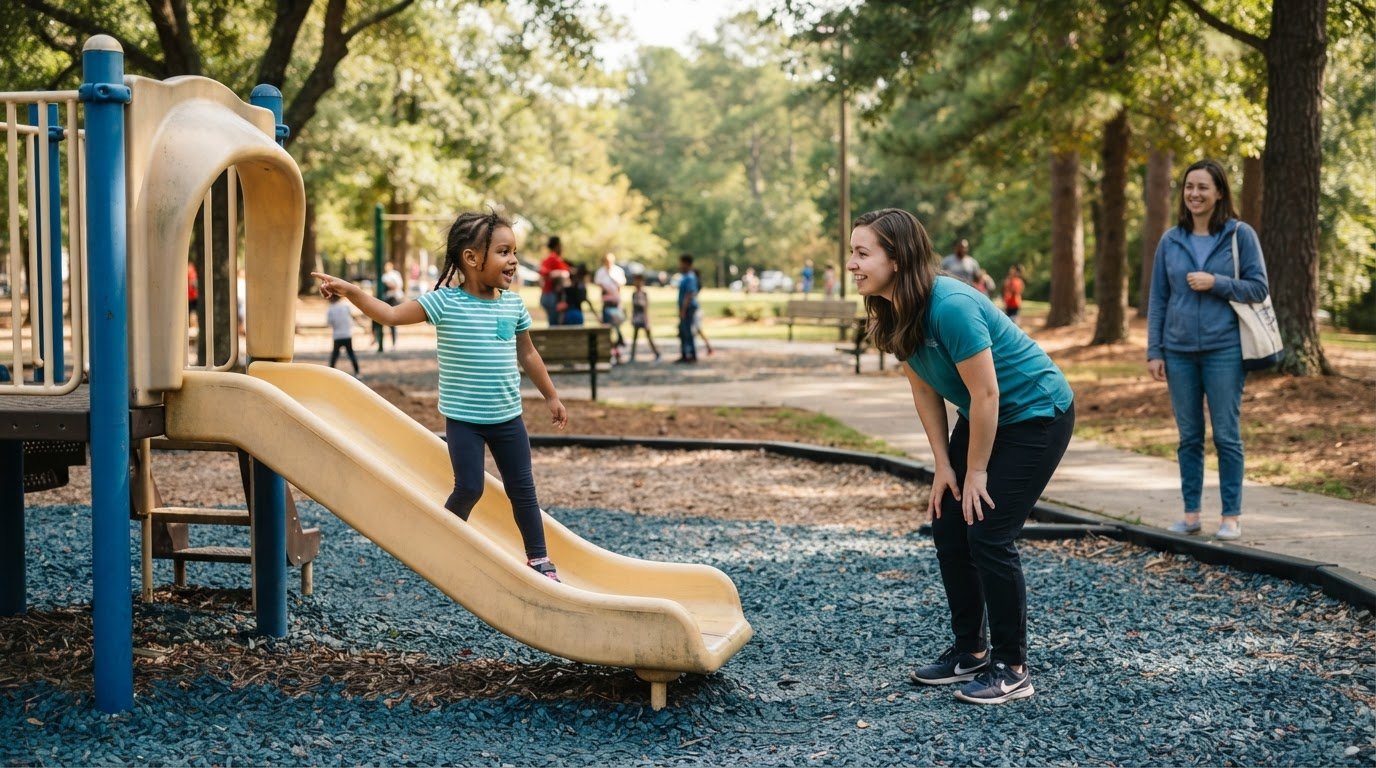
Improving joint attention skills in Raleigh can also mean helping communication carry across daily settings. A child may practice sharing focus during play at home, then use a similar gesture with a caregiver at the park. Adults can notice which cues the child uses in each setting and respond consistently. The goal is communication that supports participation and connection in ways that matter to the child.
To discuss support for your child’s social communication, talk with the team about next steps.
Divergent Minds ABA: Social Skills Groups
Divergent Minds ABA offers Social Skills Groups where children can practice communication and shared interaction with peers. This can be a useful next step when a child is ready to build on familiar play skills in a group setting. Activities can support turn-taking, responding to social cues, and sharing attention around a common activity.
For families focused on a child’s individual goals, Divergent Minds ABA offers Clinic-Based ABA Therapy, Home-Based ABA Therapy, and Community-Based ABA Therapy in different settings. The right setting depends on the child’s needs and where practicing skills is most useful.
To discuss support for your child’s social communication, contact Divergent Minds ABA.
Build the next step around your child
Progress can begin with noticing what helps your child feel engaged and connected. A shared activity that works at home may offer a helpful starting point for communication goals, while support can create opportunities to practice those goals in different environments. Families exploring ways to improve joint attention skills in Raleigh can consider what kind of guidance would make everyday interactions more purposeful.
Divergent Minds ABA offers Clinic-Based ABA Therapy, Home-Based ABA Therapy, and Community-Based ABA Therapy. These settings can support individualized ABA goals across different parts of a child’s life, with families involved in building skills that matter to them. The next step is to talk with Divergent Minds ABA about your child’s interests, communication style, and the interactions you hope to encourage.
Contact Divergent Minds ABA to discuss support for your child. Every meaningful connection can help create room for the next one.
Frequently Asked Questions
What is Joint Attention?
Joint attention is coordinating focus with another person around the same object or event. For example, during a puzzle, a child might notice a missing piece, look toward a caregiver, and indicate where it belongs. The exchange matters because both people are attending to the puzzle together. Children can share attention through movement, sounds, gestures, or words, so caregivers can recognize communication beyond spoken responses.
What activities help improve joint attention skills at home?
Try a simple “find it” game with a familiar object. Place a favorite toy partly under a cushion, then use a gesture or short comment to draw attention toward it. Pause so your child can explore, signal, or invite you to help. When they respond, join their discovery with a matching comment or expression. Keep the game flexible, and stop or change it if your child shows they’ve lost interest.
Which Raleigh clinics offer joint attention or early-intervention therapy?
Families in Raleigh, Cary, and Apex can consider Divergent Minds ABA for personalized ABA services for children with autism. Its offerings include Clinic Based ABA Therapy, Home Based ABA Therapy, Community Based ABA Therapy, and Social Skills Groups. These are ABA services, rather than a separate developmental evaluation service. Families seeking support for improving joint attention skills can discuss their child’s communication goals and how ABA services may address them.
What progress measures are used to track joint attention skills?
Progress can be observed through behaviors such as staying near a caregiver during a game, responding to a point, or initiating sharing during a preferred activity. A child’s looks, gestures, sounds, and movements can also show attempts to share attention.