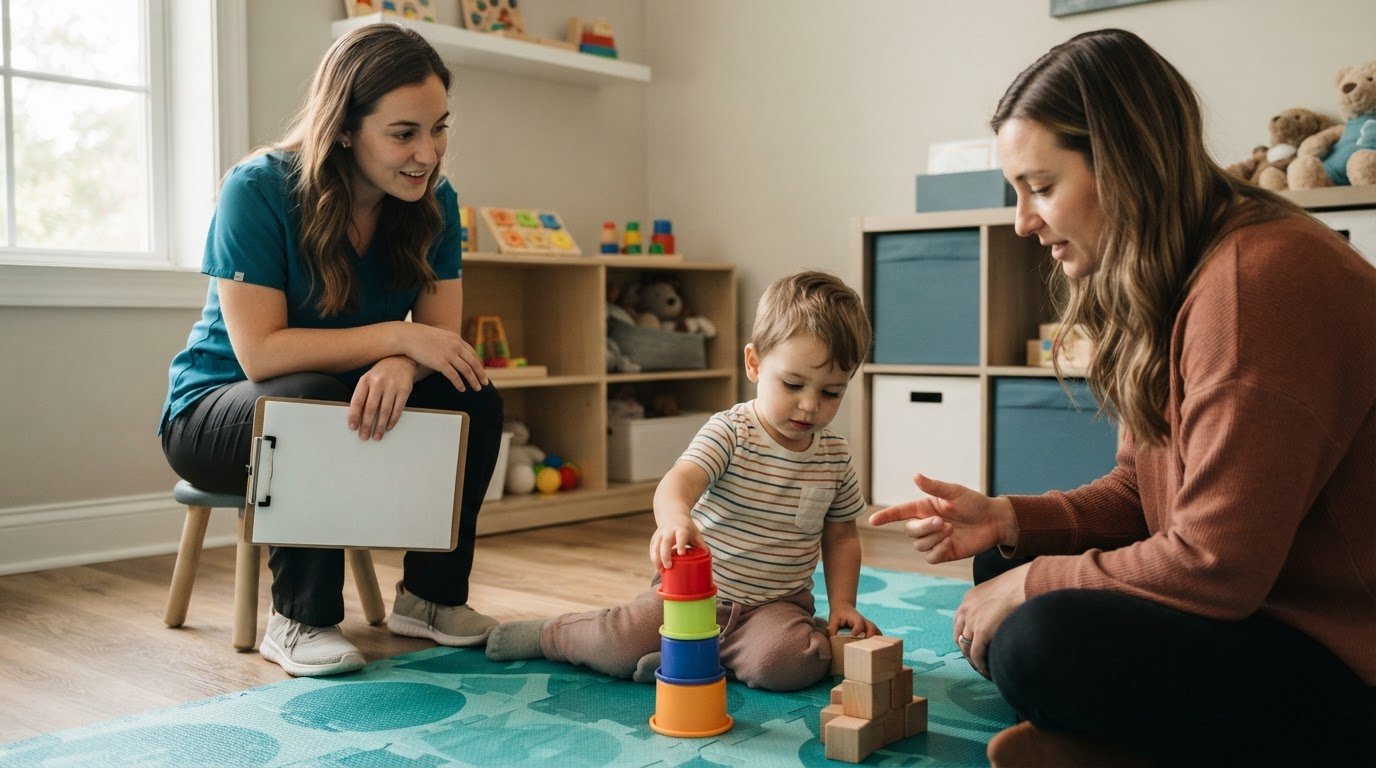
Shared goals matter more than identical methods. A practical approach to collaborating with schools on ABA goals in Cary brings parents, teachers, and ABA providers together to choose meaningful priorities, clarify roles, and share concise progress updates. This coordination connects therapy goals with the routines and learning opportunities of the school day.
It’s understandable to want strategies to feel consistent at home, in therapy, and in the classroom while respecting the school’s educational plan and each child’s needs. Collaboration doesn’t mean every setting must work in exactly the same way. It relies on clear communication, observable goals, and a shared understanding of progress.
This article explains how school and ABA teams can coordinate classroom strategies, monitor progress, and connect treatment plans with IEP goals. It also covers how roles differ, how collaboration can fit school routines, and how families can support steady communication as their child builds skills.
What strategies facilitate collaboration between schools and ABA therapy providers?
Effective collaboration starts with shared priorities, clear roles, and practical ways to exchange updates. For families collaborating with schools on ABA goals in Cary, the focus is on connecting meaningful skills to the routines where children use them.
Coordination Across Home, School, and Community
Coordination means adapting related ABA strategies across home, school, and community settings. Children need opportunities to practice useful skills in the places where they are needed.
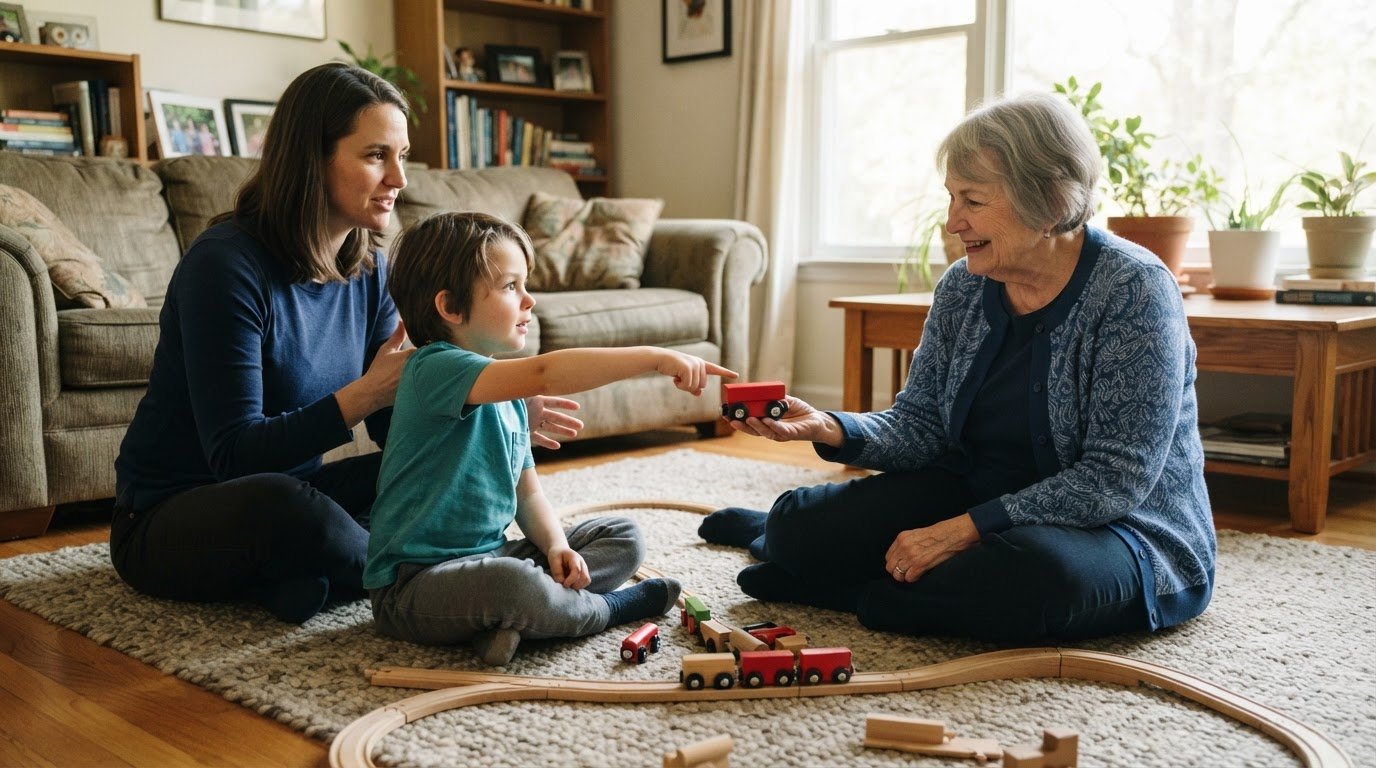
For example, a therapist might teach turn-taking, a teacher might reinforce it during group activities, and a parent might practice it during play at home. The team can define an observable objective, such as taking a turn after a peer speaks. Praise or token systems may support practice when they fit each setting’s routines and rules.
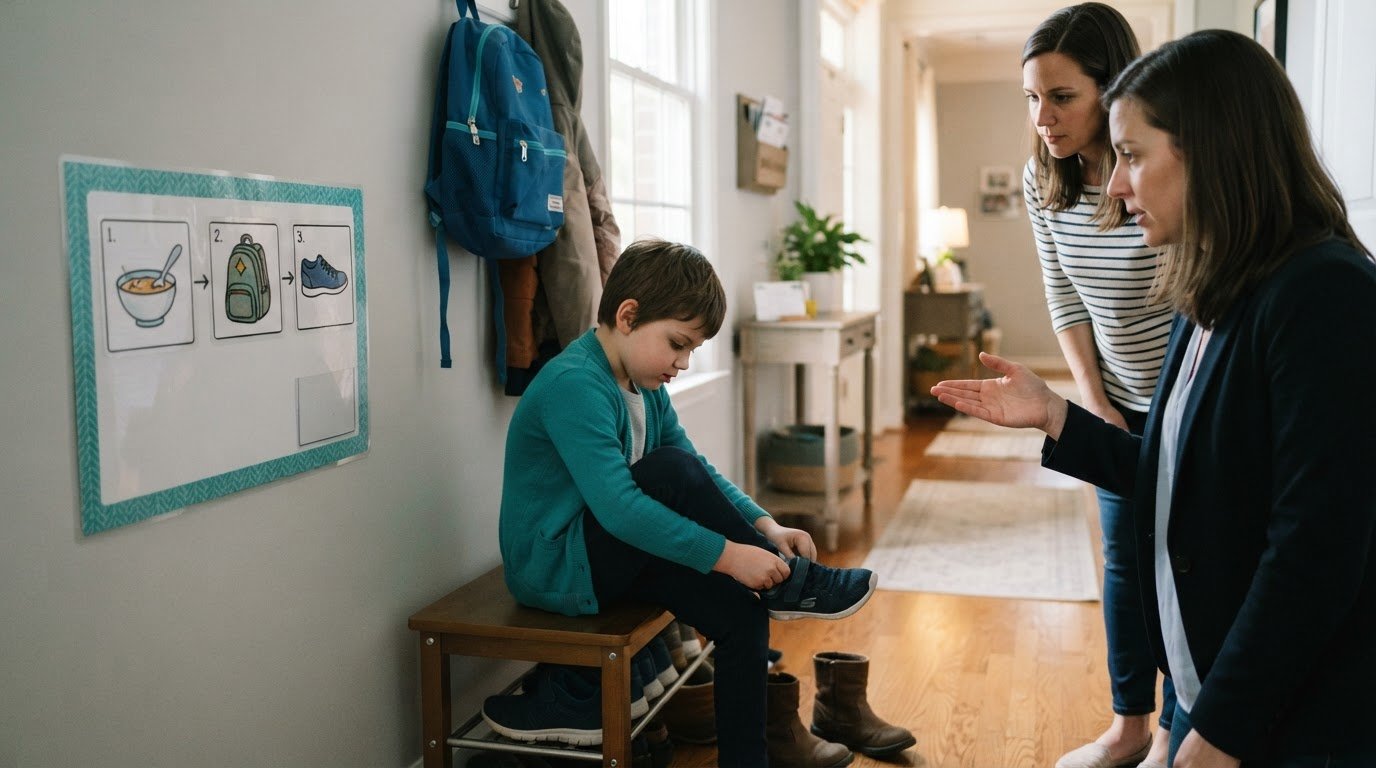
Adults can also share brief observations about helpful cues. If a visual prompt supports a transition at school, the team can discuss whether a similar cue would work at home or in the community.
Communication and Information Exchange
Information exchange is the structured sharing of updates about goals, strategies, and observed outcomes. A consistent format helps parents, teachers, and therapists see what’s working and what may need adjustment.
A weekly check-in is one option, and progress reports can be shared weekly or biweekly. Keep updates focused: identify the objective, note the strategy, and describe the response. For example, a teacher might report whether a student followed a group direction with a verbal prompt.
Parents, teachers, and therapists can meet in person, by phone, or by video call. Secure online portals or databases can organize progress reports. Agreeing on who shares each update and what information is relevant makes communication more useful and coordinated.
Choosing School-Based or Outside ABA Services
The right approach depends on the goals and settings where a child needs support. School-based services connect with classroom routines, while outside therapy can focus on skills at home or in the community.
A student working on classroom participation can practice during school activities. For goals tied to family routines, home-based ABA therapy can provide practice in that setting. These approaches may complement each other when goals and progress are coordinated, rather than treating one setting as a replacement for another.
For families collaborating with schools on ABA goals in Cary, key considerations include the target skill, where it matters, and how adults can support practice across routines.
Consent and Insurance for School Coordination
Parent consent establishes what information may be exchanged between an ABA provider and a school. Families can use the school’s and provider’s permission processes to identify who may communicate and which goals or updates the exchange covers.
For example, permission can cover progress information about a classroom participation goal. Defining the scope helps parents, teachers, and therapists share relevant details according to the family’s preferences.
Insurance coverage for school coordination depends on the plan’s terms and how the coordination is categorized. Coverage for ABA therapy does not, by itself, mean provider-school communication is covered. Decisions depend on the services described, documentation, and the plan’s benefits.
Adapting ABA programs to school routines and classrooms
ABA strategies work best when they fit the student’s classroom schedule, learning environment, and individual goals. In North Carolina, the IEP organizes educational goals and services. ABA-informed objectives can support those goals without replacing the school’s plan.
Adapting Programs to Classroom Routines
Adapting an ABA program means fitting its strategies to classroom routines and the student’s needs. This allows educators to practice useful skills during real academic and social activities.
A transition goal, for example, can be practiced when the class moves from reading to math. A teacher might use a visual schedule or first-then board, then reinforce the student for following the next step. For group participation, prompting can help a student follow directions or raise a hand before speaking.
Classroom structure matters, too. A shared behavior-tracking sheet can show whether a prompt helps during one activity but distracts during another. Educators can then adjust the prompt, seating, or visual cue to suit the routine. Reinforcement strategies should fit the school’s behavior rules and the student’s individual needs.
IEP Goal Setting and Shared Priorities
IEP goal setting identifies educational outcomes and describes the progress a student is working toward. Clear, observable goals help families, educators, and ABA teams coordinate strategies without treating every therapy objective as an IEP goal.
A useful goal names a skill and shows what success looks like. For example, an IEP social-skills goal might target increasing interaction with peers by 20%. Academic and behavior-related objectives can also address classroom participation, transitions, or following group directions.
Teams can focus first on two or three meaningful outcomes, then review whether they remain relevant as the student’s needs and school routines change. According to the U.S. House Office of the Law Revision Counsel, under IDEA, schools own the IEP and the supports tied to it. ABA input can inform coordination, while the school team maintains the educational plan.
Progress Monitoring and Strategy Adjustments
Progress monitoring uses classroom observations and recorded data to assess whether strategies support a student’s goals. Teachers and therapists can track behavior, skill acquisition, and goal progress daily or weekly.
For North Carolina families asking about school requirements, the IEP is the central document for educational goals and services, and IDEA assigns the IEP and its supports to schools. ABA goals should be realistic, individualized, and measurable. These are planning principles, not separate state requirements for ABA services.
Reviewing data helps educators decide whether to continue a technique or adjust it. Teams can compare observations across four to six weeks, discuss what changed, and revise shared priorities when needed. If classroom data shows a student completes a worksheet more independently with a visual cue, the team can consider how to maintain that support. Families can discuss ABA goals and school coordination as they plan these conversations.
How is support provided for IEP development?
IEP development can draw on family priorities, classroom observations, and ABA data to connect educational goals with practical strategies. Consultation and staff learning help translate those goals into supports educators can use during the school day.
School Consultation for Classroom Success
School consultation is a shared review of a student’s needs, classroom routines, and useful strategies. An approach must fit the actual learning environment to be practical.
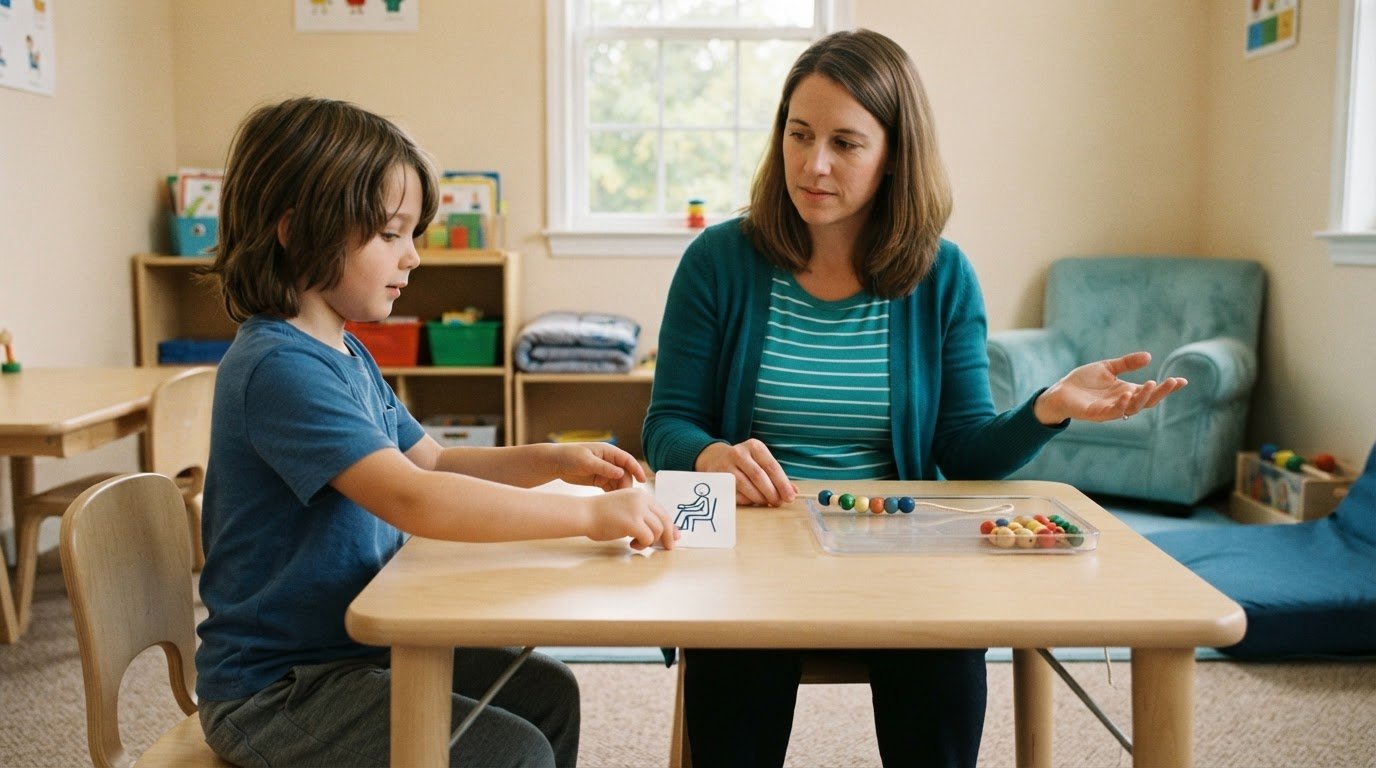
For a student with autism who finds transitions difficult, the team might consider a visual schedule, a first-then board, or a social story. Educators can discuss when a support is useful, such as moving from independent work to group instruction. The ABA team can share applied behavior strategies and explain how prompts or positive reinforcement support the student’s individualized goals.
Consultation can also help teams coordinate resources. A visual aid, shared data sheet, or brief written description of a strategy can make classroom support easier to understand and use. Families can contribute observations from home, while educators explain which classroom demands shape the student’s day.
Agency Partnerships and IEP Meeting Requests
An ABA agency partnership connects a family’s treatment goals with the school team’s educational planning. It matters because parents can bring relevant observations, while therapists can explain how a skill is taught and measured.
Families in Cary can write to the school’s IEP team or principal to request a meeting about their child’s goals. Name the concern, identify the ABA goals related to school participation, and ask the team to arrange a discussion. For example, a family could describe a transition challenge and request a review of classroom supports and progress information.
Before the meeting, families can prepare a concise summary of the skill, strategies used in therapy, and examples of what helps. With parent permission, an ABA therapist can contribute relevant observations or explain an intervention. The school team can then consider how educational objectives and classroom supports fit the student’s needs.
Training can make strategies more consistent across educators and daily routines. Short sessions or visual aids can explain antecedents, behavior, consequences, prompting, and positive reinforcement. For instance, staff might review how to give a clear prompt, recognize signs of distress, and record a response. Training can also cover shaping, which builds a skill through successive steps, and chaining, which teaches steps in sequence.
Support should remain practical. A classroom visual schedule may show the order of activities, while a token system can reinforce a defined classroom behavior. Families and school teams can revisit how these tools work as routines or goals change. Discussing ABA goals and school support can help families consider how treatment strategies relate to classroom participation.
Role boundaries for schools, ABA teams, and parents
Clear roles help schools, ABA teams, and parents contribute without confusing educational responsibilities with treatment priorities. A shared goal, such as smoother classroom transitions, gives each person a practical way to coordinate.
The school team applies educational supports during instruction and school routines. For example, a teacher may use a classroom visual schedule and observe whether the student follows it during transitions. When reviewing supports, the school team can consider those observations alongside academic participation and classroom needs.
ABA therapists focus on behavior and skill-building strategies within the child’s treatment plan. They can explain how a prompt, reinforcement approach, or task breakdown supports a specific skill. They can also learn from educators about classroom routines, group expectations, and when a strategy may need adapting.
Parents know their child’s communication, preferences, and responses across home routines. Sharing that context can help the team understand why a strategy works in one setting but not another. For instance, a parent might describe which choices help a child begin a familiar task at home, then discuss whether a similar approach fits a classroom activity.
Parent participation can include sharing therapy updates, describing what works at home, and asking how school strategies are progressing. Families can also invite their child to talk about the school day and recognize specific progress, such as joining a group activity or trying a new routine. Parent Coaching can help caregivers build confidence using ABA strategies in daily interactions.
Structured collaboration keeps each role focused. Before a meeting, the team can name the priority skill, identify who observes it, and agree on how to share relevant updates. A teacher might track participation during group work, while a therapist reviews skill data and a parent describes similar experiences at home. Each perspective adds context without requiring identical methods.
When outcomes differ across settings, the team can discuss the conditions rather than assign blame. A child may complete a task with a visual cue at home but need more support in a busy classroom. Comparing those details helps adults consider the environment, task demands, and prompt before changing an intervention. Clear role boundaries support partnership while keeping the child’s individual needs at the center.
Aligning educational goals with ABA treatment plans
Alignment connects classroom learning priorities with skills addressed through applied behavior analysis. In Cary, families, educators, and therapists can use shared objectives to support children across school routines.
Collaboration with Schools and Special Education
Collaboration means connecting school-based educational priorities with ABA strategies while respecting each team’s role. It matters because students need support that fits both learning goals and classroom demands.
For example, a student’s IEP may target participation in group instruction, while an ABA treatment plan addresses following directions or communicating for help. An ABA therapist can share relevant observations and data with the school team, which can consider them alongside classroom information. The therapist also learns about the school environment, including routines, expectations, and opportunities for practice.
Special education collaboration can connect behavioral supports with positive learning conditions. A school Behavior Intervention Plan informed by a Functional Behavior Assessment can identify strategies for teaching an appropriate alternative, setting expectations, and reinforcing desired behavior. The school team can coordinate those supports with treatment strategies so the student encounters clear expectations across activities.
Elements of a School-Home ABA Goal Plan
A school-home ABA goal plan describes the shared skill, how adults will support it, and what information will show progress. These elements help families and educators discuss outcomes using concrete examples.
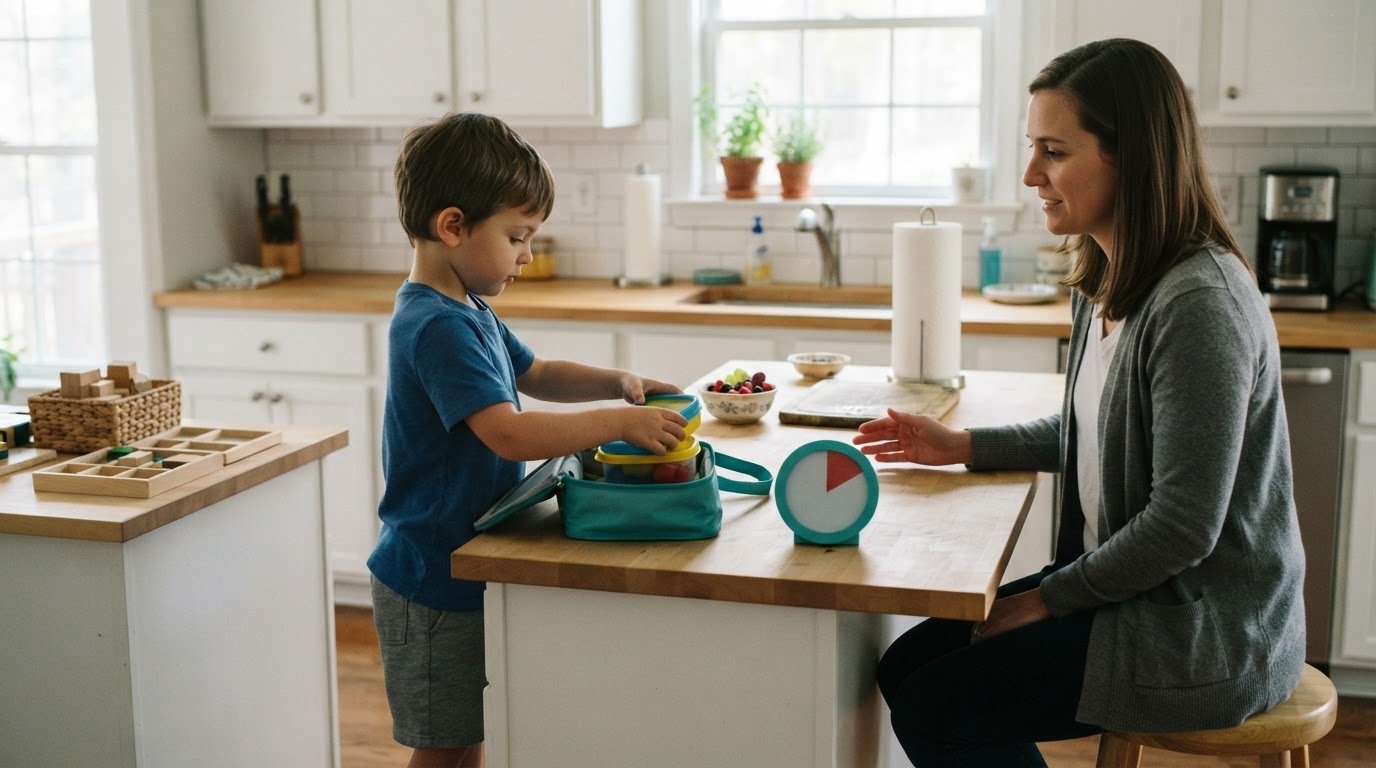
A useful plan can identify two or three meaningful outcomes, such as asking for help, completing a classroom routine, or engaging with peers. For each outcome, describe observable success, the setting for practice, and the prompts or reinforcement adults will use. For instance, the plan might track whether a student asks for help during independent work.
Include who will observe the skill and how relevant data will be shared. A teacher might record classroom observations, while a therapist reviews skill-acquisition data and the family contributes examples from home. These perspectives help the team understand whether a strategy supports learning across settings or needs adjustment.
Regular discussions about treatment plans can keep shared priorities relevant as the student’s needs and school routines evolve. If classroom data shows a student participates more readily with a visual cue, the team can discuss how that cue fits the educational goal and whether it supports independence. Discuss coordinating ABA goals with school priorities as you consider the next steps for your child.
Divergent Minds ABA
Divergent Minds ABA provides individualized ABA therapy for children with autism, with treatment plans shaped around each child’s needs and family priorities. If you’re connecting your child’s learning goals with everyday skill development, the team’s family-centered approach can help you consider practical priorities across settings.
Clinic, home, and community therapy offer different environments for building skills, while Social Skills Groups provide opportunities to practice interaction with peers. Families can discuss which goals matter most in daily life and how ABA treatment may support their child’s development alongside educational planning.
Contact Divergent Minds ABA to discuss your child’s goals and next steps.
Take the Next Step Toward Shared Goals
Progress can start with one priority your child is ready to practice. For families collaborating with schools on ABA goals in Cary, that priority might be classroom participation, communication, or greater independence in everyday routines. Bringing a clear goal to your next conversation can keep planning centered on your child’s needs.
Divergent Minds ABA provides Clinic Based ABA Therapy, Home Based ABA Therapy, and Community Based ABA Therapy. These settings give children opportunities to build skills in different environments as families consider how treatment goals relate to learning and daily life. The next step is a conversation about your child’s strengths, needs, and the skills your family hopes to support.
Contact Divergent Minds ABA to discuss your child’s goals and explore a thoughtful path forward. Small, meaningful steps can help your child continue building confidence and independence.
Frequently Asked Questions
How do professionals work together through goal setting and planning?
Professionals start by identifying a student’s priority needs, then connect each goal with observable actions and relevant supports. A family might describe difficulty starting independent work, while a teacher shares what happens during class and an ABA therapist explains strategies used in therapy. The team can draw on those perspectives to define a practical objective, assign responsibilities, and decide what information will help evaluate progress.
How does collaboration with ABA therapists benefit educational environments?
Collaboration can help educators understand which prompts, visual supports, or reinforcement strategies are useful for a student. For example, an ABA therapist might explain how a first-then cue supports task initiation, while the teacher considers where it fits into classroom routines. This exchange can make strategies more consistent and support participation without changing the academic purpose of a lesson.
How does continuous communication and joint goal setting improve ABA outcomes?
Ongoing communication helps the team notice when a strategy works in one situation but not another. If a student requests help during small-group instruction but not during independent work, that difference gives the team a useful next focus. Joint goals also help adults respond consistently, review relevant observations, and adjust supports based on demonstrated skills rather than assumptions.
How is ABA therapy integrated into school environments and what is its impact?
ABA strategies can fit into school routines through visual cues, prompting, and positive reinforcement. A teacher might use a visual sequence to help a student begin a familiar classroom task, then observe how independently the student completes it. The aim is meaningful participation and skill practice in the educational setting, with strategies suited to the student’s needs.
Which ABA providers in Cary, NC, collaborate with schools?
Divergent Minds ABA is based in Cary and provides individualized ABA therapy for children with autism. Families in Cary, Apex, and Raleigh can discuss their child’s treatment goals and how relevant information may be shared with educators. The practice also offers Clinic Based ABA Therapy, Home Based ABA Therapy, Community Based ABA Therapy, and Social Skills Groups, giving families different settings to consider for skill development.
How do ABA therapists coordinate goals with teachers and school staff?
Therapists can coordinate by discussing the student’s priority skills with the family and, with parent permission, exchanging relevant observations with school staff. For example, a teacher might describe when a student needs help transitioning, and the therapist can explain a strategy practiced in treatment. The team can then clarify the goal, identify useful classroom opportunities, and share updates in an agreed format.
How can progress on ABA goals be measured across home and school?
Measure progress by defining the skill clearly and recording what happens in each setting. For a goal involving asking for help, a family might note whether the child requests assistance during a home routine, while a teacher records the same skill during classwork. Comparing observations shows where the skill is emerging and where additional practice or different supports may help.
What are the privacy and information-sharing rules for ABA providers working with schools?
Before provider-school exchanges begin, families can clarify what information may be shared, who may receive it, and how it will be communicated. A written permission process can specify that updates cover a particular goal, such as transitions or classroom participation. Keeping shared information relevant helps the family, school staff, and therapist focus on useful details while respecting the family’s preferences.