
ABA therapy may be a good fit for your 4-year-old when it supports meaningful goals in communication, social interaction, daily routines, or other areas that matter to your child and family. If you’re asking yourself, “Is ABA therapy right for my 4-year-old?”, the answer depends on your child’s individual strengths, needs, and goals, not age alone.
It’s understandable to want clear guidance, especially when communication or connecting with others feels difficult. ABA uses structured teaching and play-based learning to help children build skills, with an individualized plan centered on their needs and well-being. This article explains what may make ABA worth considering for your four-year-old, how to assess whether an approach fits, and how support can work alongside school, other therapies, and community activities. You’ll also learn what to look for in family involvement and how to judge progress by goals that matter in your child’s everyday life.
Can ABA therapy start before an autism diagnosis?
A formal autism diagnosis isn’t always required before a child begins early support. At age four, families can explore therapy and coordinate it with existing services.
Early Intervention Before Diagnosis
Early intervention means support for a child’s developmental needs during the early years, sometimes before a formal diagnosis. State early intervention services may support children under age three without a diagnosis. For a four-year-old, families can discuss developmental concerns with their pediatrician and explore therapy based on identified needs and goals.
When to Seek Therapy
Families may consider therapy when a child’s communication, social interaction, daily routines, or behavior makes learning and participation more difficult. For example, difficulty expressing needs or moving between activities may be useful topics to discuss with a pediatrician. A professional developmental evaluation can identify strengths and support needs, helping shape individualized goals rather than relying on age or a single behavior alone.
ABA Alongside Other Early Services
ABA can complement speech therapy, occupational therapy, and other supports rather than replace them. A child working on requesting help in speech sessions might practice that skill during play or a daily routine. Coordination helps adults use consistent strategies across settings, including home and school. Families can share the child’s goals and current supports so each professional understands which skills are being practiced.
Starting Age and Early Learning
ABA therapy can begin as early as 18 months, and most providers see children beginning at age two. These ages describe when services may start, not a deadline for seeking support. For a four-year-old, the relevant question is which skills would improve participation and independence now. Early learning goals might include communicating a choice, following a familiar direction, or tolerating a transition.
Parent Support and Everyday Practice
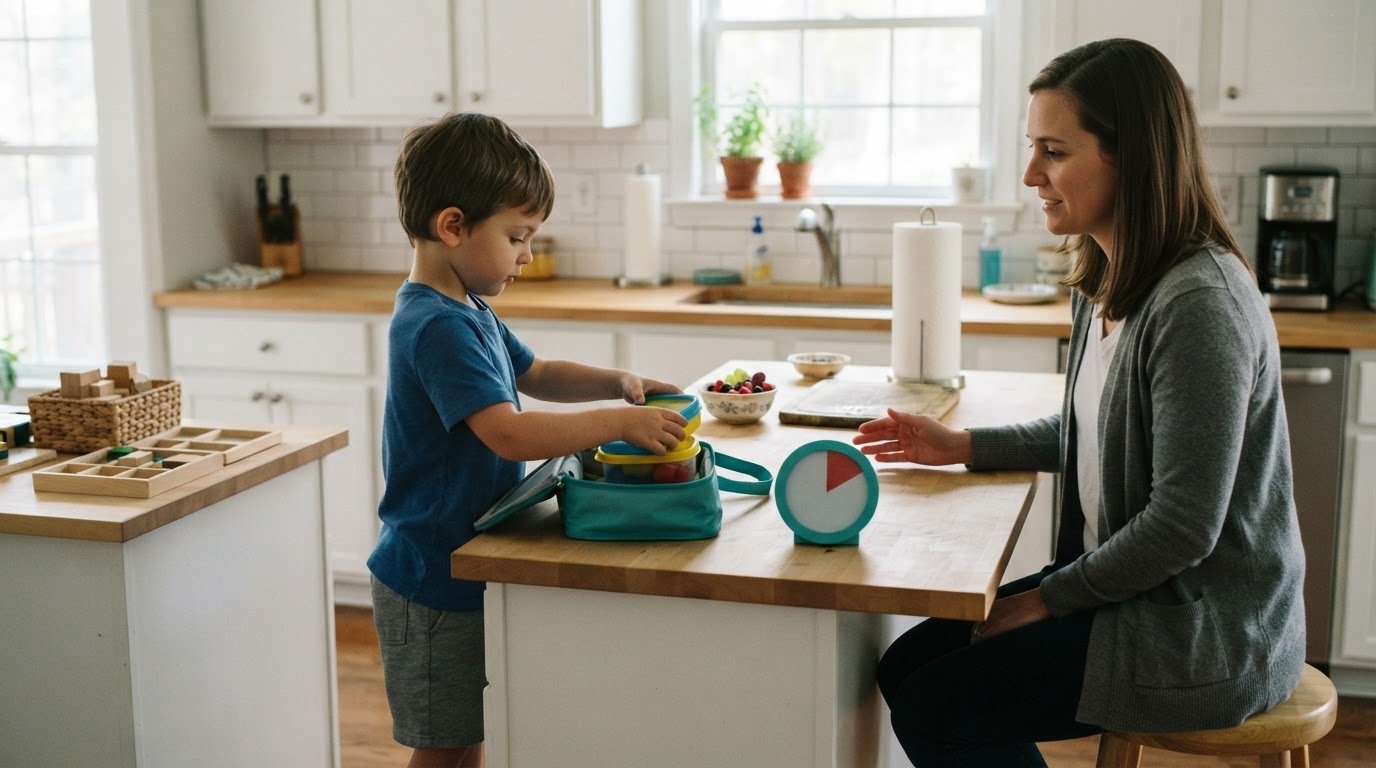
Parents can support learning during everyday routines without becoming their child’s therapist. At snack time, pause to give your child time to request a preferred food, or offer two clear choices when getting dressed. You can note which prompts help and share your observations with the therapy team. Small, repeated opportunities make everyday activities useful practice.
Research, Cost, and Coverage
A 2024 JAMA Pediatrics meta-analysis examined 9,038 children across 144 studies. It found no statistically significant link between weekly therapy hours and improvement size. This finding supports considering goals and progress, not hours alone, when discussing an individualized plan for an autistic four-year-old.
In the United States, ABA costs depend on program intensity, setting, and service needs; pricing is provided after a quote request. Medicaid and most private insurance plans widely cover ABA, though insurers typically require an autism diagnosis report, and a physician referral may also be required.
Is Applied Behavior Analysis (ABA) Therapy Right for Your Child?
ABA is an individualized approach that teaches useful skills through structured practice and everyday activities. For a four-year-old, goals may include communication, social interaction, daily living, and transitions; early intensive programs commonly describe 20-40 hours per week, but intensity should reflect the child’s goals and needs. If you’re asking, “Is ABA therapy right for my 4-year-old?”, begin by considering which everyday skills matter most to your child.
Assessing Fit for Child and Family
ABA may be worth considering when a child’s specific needs affect participation in play, learning, or daily routines. A professional evaluation can help identify strengths, challenging areas, and meaningful treatment goals. Families can also weigh how sessions would fit with preschool, other therapies, caregiving responsibilities, and the child’s tolerance for structured activities. Those factors help shape a plan that supports the family’s routines as well as the child’s development. They also help clarify whether ABA therapy is right for your 4-year-old.
Preschool Therapy Goals and Skills
Preschool ABA focuses on practical skills that help children communicate, engage, and take part in everyday activities. For a four-year-old, goals might include requesting a toy, following a familiar direction, joining a short play activity, or moving between activities with support. The aim isn’t to make every child follow the same developmental path. Individualized goals should reflect what can improve that child’s participation and quality of life.
Beginning ABA in Early Childhood
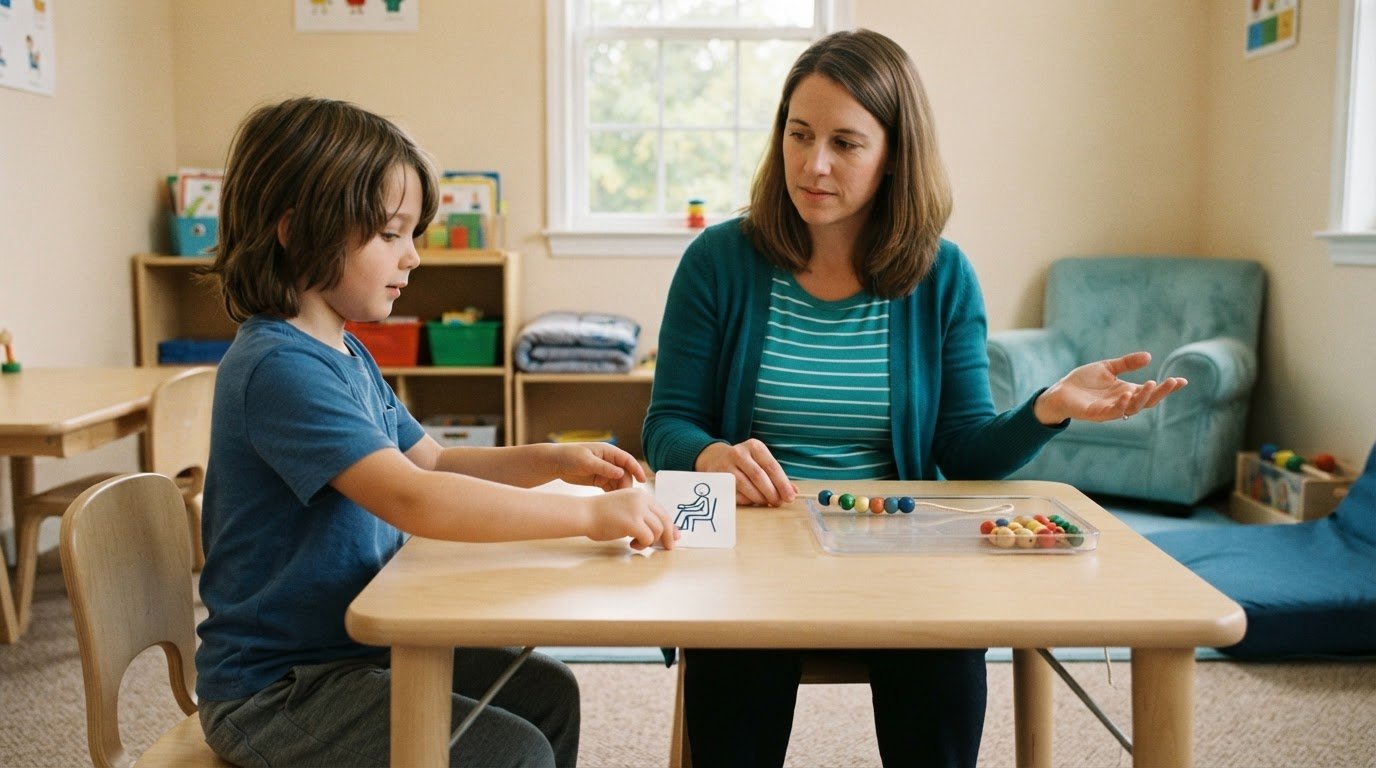
Starting ABA in early childhood means teaching skills within the child’s routines and developmental needs. Sessions may combine structured teaching with natural, play-based learning, such as practicing turn-taking during a simple game. A therapist can build cooperation gradually through positive relationships and motivating activities. Consider whether this approach matches your child’s learning style and whether the goals complement preschool and other supports.
Adapting Therapy to the Child
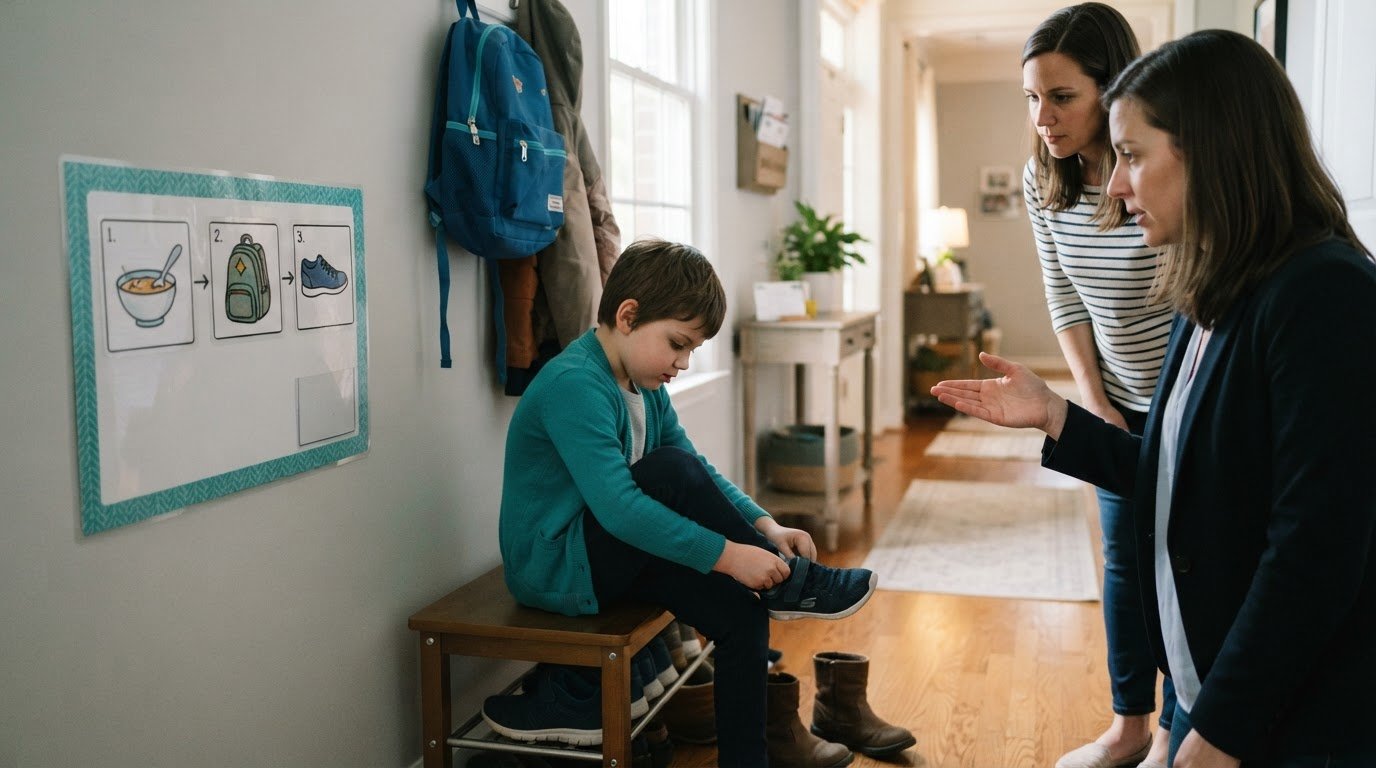
An individualized ABA plan adjusts teaching methods, goals, and activities to the child’s strengths and needs. A child who finds transitions difficult might practice moving from blocks to snack with a visual cue, while another child may focus on requesting help. Research on early intensive ABA reported greater gains in thinking skills, daily living skills, and autism symptoms among children receiving 26-40 hours weekly than lower-intensity groups; this does not make one schedule right for every child. For families still asking, “Is ABA therapy right for my 4-year-old?”, the fit depends on whether the approach supports relevant goals.
Families and the care team can consider reducing or ending ABA when a child meets agreed goals, uses skills across settings, and shows increasing independence. Together, they can review the child’s input, progress, and support from school or other systems. If skills still depend on prompts or appear only during sessions, the team can identify what needs more practice before changing the plan.
Comparing providers and considering an assessment
A careful assessment connects a child’s needs with specific, useful treatment goals. Comparing approaches can help families understand how therapy may support communication, participation, and independence.
Questions for Families to Ask
Questions about goals, family participation, and coordination help you judge whether an ABA approach fits daily life. Ask how the assessment identifies strengths and support needs, and how the team will measure progress toward each goal. Find out how you can practice skills at home and how the provider coordinates with professionals such as speech pathologists or occupational therapists.
An assessment can help determine appropriate service intensity and clarify which daily living skills matter most. For example, a four-year-old may need support requesting a break, joining play, or completing a familiar routine. A qualified behavior analyst should explain how observations inform an individualized plan, which progress measures will be reviewed, and how goals change as a child’s needs shift.
Families can schedule consultations with 2-3 ABA providers to compare their approaches. Look for clear explanations of how sessions involve caregivers and how learned skills can transfer beyond therapy. Ask how treatment fits with preschool and other services. A useful comparison focuses on the child’s goals and the provider’s planned collaboration, not simply on session format.
Warning Signs of Low-Quality Therapy
Warning signs include goals focused on appearing “normal,” suppressing a child’s personality, or discouraging family input. Ethical ABA should prioritize skills that improve quality of life and respect neurodiversity. If a team can’t explain a goal’s purpose, how it supports the child, or how caregivers can share concerns, families lack important information for informed participation.
When progress slows, the team can review whether goals remain relevant, teaching methods suit the child, and skills appear outside sessions. Progress may be gradual while therapists build rapport and identify effective motivators. For example, a child who practices requesting a toy only during structured activities may need supported practice during play at home or preschool.
A change in progress doesn’t automatically mean ABA is unsuitable. An evaluation can clarify whether the plan needs adjustment or other supports should play a larger role. Speech therapy may address communication goals, while occupational therapy may support participation in routines. Coordination helps the team connect each skill with the child’s everyday life.
Before choosing an approach, ask for an explanation of the assessment findings, selected goals, and how caregivers contribute. You can also ask how the team responds when a child shows discomfort or a goal no longer seems useful. Clear answers make it easier to decide whether the plan supports your child’s independence, learning, and well-being.
Coordinating ABA with school and community supports
Skills become more useful when a child can use them beyond therapy sessions. Coordinating ABA with school and community activities connects development goals with everyday experiences.
With family consent, the ABA team can coordinate goals with educators, occupational therapists, and other professionals. Share the skills being practiced, such as asking for help or following a classroom routine. A teacher can then notice whether the child uses those skills during group activities or transitions. Regular communication also helps adults avoid conflicting prompts and keep support focused on practical outcomes.
Communication delays can make social participation and daily routines harder. Functional communication gives a child ways to express needs, choices, and feelings. These might include body language, picture exchanges, or electronic communication devices. For example, a child can point to a picture to request a break during preschool. Adults can respond consistently and allow time for the child to communicate in their preferred way.
ABA goals can connect communication with play and daily living. A child might practice asking to join a game, taking turns, or indicating which snack they want. The team can use structured teaching to introduce a skill, then practice it during a natural activity. This helps show whether the child can use the skill with different people and materials.
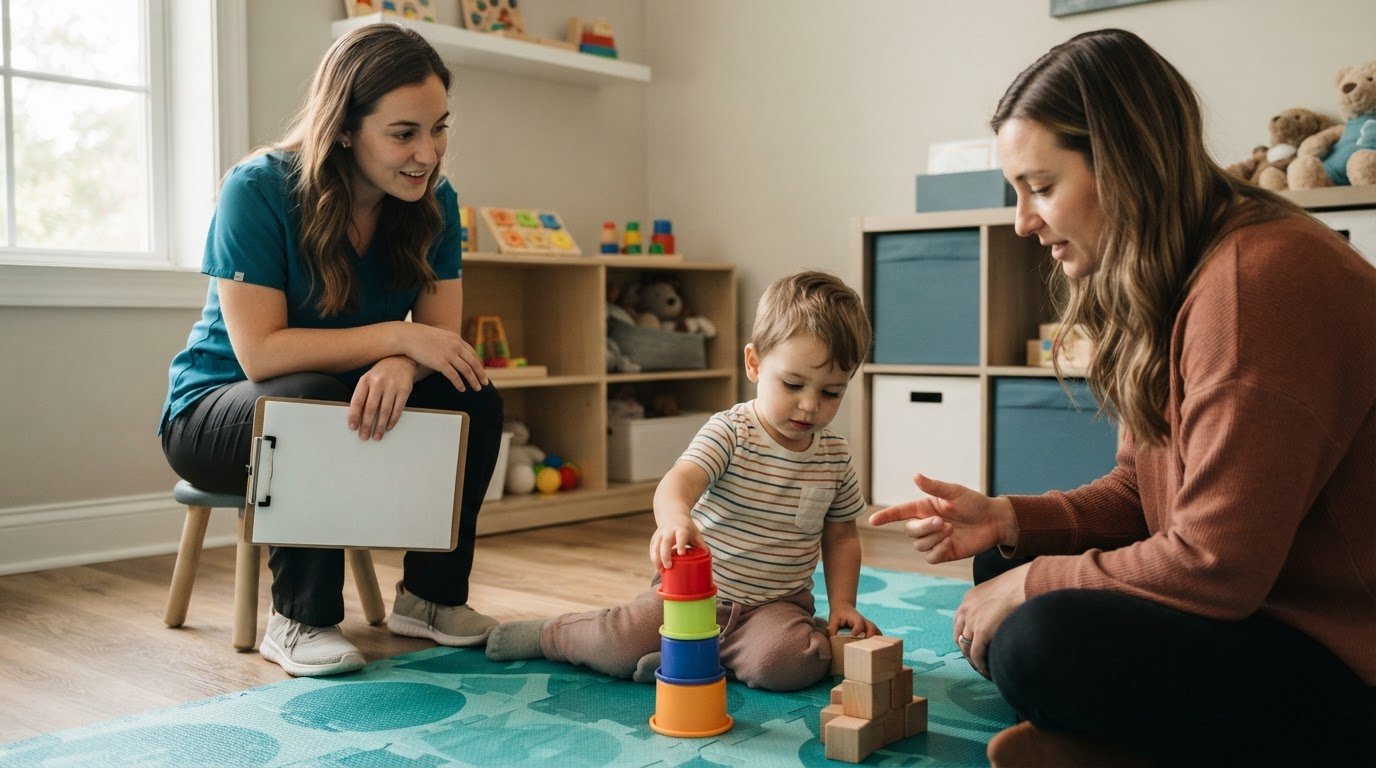
For a four-year-old, play offers opportunities to practice social skills without making every interaction feel like a formal lesson. During a shared activity, an adult might model waiting, responding to a peer, or requesting a toy. If the child uses a picture or gesture instead of speech, adults can recognize that communication and support the interaction. The goal is meaningful participation, not one prescribed way to connect.
Community activities can provide practice alongside school and therapy. Families might explore an interest-based club, recreational program, adaptive sport, or art or music activity. Each setting offers different routines and people. A child could practice following a group direction during music, then use the same skill in a classroom activity. The ABA team can coordinate transition planning with educators and other professionals.
Review progress across settings, not just during sessions. Families and educators can note examples, such as a child independently asking for help at school or completing part of a daily living routine at home. These observations show where a skill is carrying over and where more support may help. Shared goals keep outcomes connected to the child’s participation, communication, and relationships.
Communication and social interaction challenges
Communication and connection can look different for every four-year-old. Applied behavior analysis can target useful ways to express needs, engage with others, and take part in familiar routines while respecting each child’s individuality.
Some autistic children are nonverbal or have minimal speech by age two. At four, communication goals can include more than spoken words: a child might point, use body language, exchange a picture, or select a message on an electronic communication device. These methods give children ways to make choices, ask for help, or communicate discomfort. A meaningful intervention builds on the child’s current communication rather than requiring speech as the only measure of progress.
Social interaction can include skills adults may not immediately recognize. A child might watch a peer, bring over a toy, or respond to a familiar game without using words. Therapy can build on these moments through shared play, turn-taking, and practice noticing another person’s actions. For example, a therapist might pause during a favorite game so the child can signal “again” with a gesture, picture, or word.
At four, play and daily routines offer natural opportunities to practice. Use snack time, getting dressed, or a trip to the playground to create communication opportunities. Offer two choices, wait for your child’s response, then acknowledge their signal. At a park, for example, you can practice words with your four-year-old. The aim is to support communication within an enjoyable activity, not turn every outing into a lesson.
Applied behavior analysis should focus on skills that improve quality of life, not on making a child appear “normal” or suppressing their personality. For a child who finds group play difficult, a useful goal might be joining briefly or communicating a wish to stop. Providers can use positive reinforcement and play-based practice while adapting prompts to the child’s responses. Families should understand why a goal matters in their child’s everyday life.
Look at whether communication and social skills carry over beyond sessions. A child might use a picture to request a break at preschool, then use the same picture at home. Parents can share examples from daily routines with providers, who can adjust practice to support consistency. Progress may include clearer requests, more comfortable participation, or a reliable way to say “no.” Each outcome matters when it increases the child’s agency and connection.
If communication or social interaction is a current concern, discuss goals that honor your child’s preferred ways of connecting. Divergent Minds ABA offers an individualized approach to support those needs.
Divergent Minds ABA
Divergent Minds ABA helps families explore whether individualized ABA support fits their four-year-old’s goals, routines, and learning needs. Treatment plans focus on skills that can support communication, confidence, and independence, with families involved in planning and progress.
Support can take place in a clinic, at home, or in the community, depending on the child’s needs and goals. Social Skills Groups can also offer opportunities to practice interacting with peers. These options help families consider which setting and approach best complement their child’s school and community supports.
If you’re considering ABA for your child, contact Divergent Minds ABA to discuss your questions and next steps.
Take the Next Step at Your Child’s Pace
If you’re still wondering whether ABA therapy is right for your 4-year-old, focus on the goals that would make everyday life more manageable and meaningful for your child. A thoughtful conversation can help you describe what you’re noticing, what your family hopes to support, and which questions you still have. There’s no need to have every decision settled before starting that conversation.
Divergent Minds ABA offers Clinic-Based ABA Therapy, Home-Based ABA Therapy, and Community-Based ABA Therapy. These settings offer different ways to connect individualized goals with a child’s routines and learning environment. Start with your child’s needs, strengths, and the skills your family wants to nurture.
Contact Divergent Minds ABA to talk about your questions and possible next steps. Each child’s path develops through understanding, partnership, and progress that matters in daily life.
Frequently Asked Questions
What is ABA Therapy?
Applied Behavior Analysis, or ABA, uses principles of learning to teach skills and understand behavior. A therapist may break a complex task into smaller steps, then adjust teaching based on the child’s responses. For example, practicing putting on a coat can involve teaching one part at a time. A useful plan focuses on skills that matter in the child’s everyday life and respects their individuality.
What Are the Benefits of ABA, and Is It Right for My Child?
ABA may support communication, social interaction, daily living, or behavior goals that affect a child’s participation. Its relevance depends on whether those goals address needs important to the child and family. A family in Cary, Apex, or Raleigh might discuss a specific challenge, such as difficulty asking for help at preschool, and consider whether individualized teaching could address it.
At What Age Is ABA Most Effective?
ABA is described as most effective when started between ages 2 and 6, while it may also benefit older people. Age alone doesn’t determine the right goals or approach. A young child might work on communicating choices, while an older child’s plan could address independence or daily routines. The purpose of considering age is to match teaching and goals to a person’s development.
Can ABA Help a 3-Year-Old or 4-Year-Old?
Yes. ABA programs for children under five can address skills such as communication, play, and following directions. For a three- or four-year-old, a goal might involve requesting a favorite activity or taking part in a simple shared game. Consider whether the proposed goals reflect your child’s needs and support participation at home, preschool, and other familiar settings.
Does ABA Therapy Work for 2-Year-Olds?
ABA can begin as early as 18 months, and most providers see children beginning at age 2. For a toddler, teaching may focus on early communication, play, or participating in daily routines. A caregiver might practice pausing during a familiar activity so the child can request “more” through speech, a gesture, or another communication method.
Does My Child Need to Be Talking to Start ABA?
No. A child doesn’t need spoken language to work on communication goals. Children can communicate through gestures, body language, picture exchanges, or electronic communication devices. For instance, a child might point to a picture to choose a snack or indicate they want a break. Therapy can build on the child’s current way of communicating while supporting additional functional skills.
How Does ABA Therapy Work?
ABA begins by identifying a child’s strengths, needs, and meaningful goals. The team then teaches skills through planned activities and everyday practice, observing responses to guide instruction. For example, a child learning to ask for help might practice during play and a familiar routine. Family participation connects therapy goals with opportunities the child encounters outside sessions.
How Long Does ABA Last?
People stay in ABA for an average of two to three years. That average isn’t a schedule for every child. Treatment continues as goals and support needs evolve, with the team reviewing whether skills are appearing across settings and supporting greater independence. When a child is ready to reduce or end therapy, hours are gradually tapered rather than stopped abruptly.