
Nearly half of children with autism aged four to five aren’t yet toilet trained. Autism can affect the pace and process of potty training, so autism potty training support in Apex should focus on a child’s readiness and the specific skills they’re building, not age alone.
If progress feels slower than expected, it does not mean your child cannot learn. Communication differences, transitions, and the many steps involved can shape how a child approaches the bathroom. Each small gain can help build confidence.
This article covers readiness signs, ways to make bathroom transitions more predictable, and practical supports for older or nonverbal children. It also breaks potty training into achievable skills, helping you identify a useful next step and support progress at your child’s pace.
1. Does autism affect potty training?
Yes. Autism can affect how a child notices body signals, communicates needs, tolerates bathroom sensations, and shifts from play to the toilet. Toileting is a chain of skills, not one behavior. A child may sit successfully but still need support recognizing urgency, managing clothing, or asking for help. Children with autism achieve daytime dryness at an average age of 3.3 years, and 49% of children aged four to five aren’t toilet trained yet. These figures reflect varied learning paths, not a deadline for an individual child.
Communication differences can make it harder for a child to report discomfort or signal a need before an accident. A child who uses few spoken words might benefit from one consistent cue, such as pointing to a toilet picture, handing over a bathroom card, or using a communication device. Adults can model the same cue before each bathroom transition. Notice and reinforce the communication attempt, even if the child does not urinate. This teaches a useful alternative: requesting the bathroom before the need becomes urgent.
Body sensations and routines matter, too. Nearly 40% of individuals with autism experience gastrointestinal conditions, which can affect toileting comfort and patterns. Keep a simple record of meals, drinks, bathroom visits, and accidents to notice recurring signs. For example, a child may avoid sitting after discomfort or show a predictable change in behavior before a bowel movement. Share persistent pain, constipation, or other health concerns with a qualified healthcare professional; behavioral teaching alone doesn’t resolve a medical cause.
Avoid turning toilet practice into repeated pressure. Sitting every 5 to 10 minutes or staying on the toilet for extended periods can make the bathroom aversive. Instead, offer a brief, calm opportunity at a predictable time, then end the sit without scolding if nothing happens. Reinforce small steps, such as entering the bathroom, sitting briefly, or communicating a need. Immediate positive reinforcement helps connect the child’s action with the outcome.
Does North Carolina Medicaid cover autism potty training or ABA services? Coverage depends on the child’s Medicaid plan and applicable service criteria. Potty-training goals may be addressed as functional skills within an ABA plan. Ask the plan about coverage and authorization for the specific service.
For autism potty training support near Apex, individualized ABA can teach bathroom routines, communication, and transitions in the settings where those skills are needed. Community-Based ABA Therapy can support practice in everyday environments.
Parent coaching and in-home services in Apex can help caregivers use consistent cues, routines, and reinforcement at home. Parent coaching can align adult responses around a child’s specific toileting steps.
When looking for local autism potty-training support groups near Apex, distinguish peer connection from direct instruction. Social Skills Groups can support communication and participation, while individualized teaching addresses private bathroom routines and personal care.
2. Readiness signs and transitioning from diapers or pull-ups
Readiness depends on your child’s skills and interest, not age alone. The American Academy of Pediatrics recommends beginning when a child shows interest in the process. Potty training can start as early as 18 months, but that isn’t a deadline. Parents can watch for signs such as noticing a wet diaper, showing interest in the bathroom, or following a simple routine. One useful sign is staying dry for at least two hours during the day.
Look for communication and participation, not just dryness. A child might tell you, gesture, bring a bathroom picture, or move toward the toilet when they need to go. Another child may show readiness by helping pull clothing up or down, sitting briefly, or accepting a bathroom routine. These skills can develop separately. A child who cannot yet say “potty” may still communicate through a consistent gesture or picture.
Imitation is another useful readiness skill. Before expecting toilet use, model the steps calmly or use pretend play. For example, a parent can have a stuffed animal sit on a toy toilet, then demonstrate handwashing. A full-length mirror can help a child watch and copy simple actions, such as lowering clothing or sitting. Keep the model brief and predictable. The child can practice imitation without being expected to use the toilet.
Make the bathroom familiar before changing the diaper routine. Let your child explore the room, choose a toilet picture as a visual cue, and practice sitting with clothes on. A stable seat cover with handles and a stool can support balance while sitting. Praise participation in each step, including entering the bathroom or sitting briefly. These low-pressure opportunities can show which parts feel comfortable or difficult.
Moving from diapers or pull-ups to underwear may make wetness easier to notice, because absorbent products can draw urine away before a child feels it. Consider the change alongside your child’s communication, comfort, and ability to participate. You can introduce underwear during a predictable part of the day, keep spare clothing available, and respond calmly to accidents. If the change causes distress, return to practicing the routine instead of treating underwear as a test.
Family readiness matters, too. Choose a period when parents or caregivers can use similar cues and routines at home. If schedules are changing or bathroom practice is difficult to coordinate, agree on one shared phrase, one visual cue, and a clear sequence. For example: show the toilet picture, walk to the bathroom, sit briefly, then wash hands. Consistency across caregivers helps the child understand what happens next.
Assess readiness by observing interest, communication, imitation, participation, and daytime dryness together. A child does not need every skill before practice begins. Start with a manageable step, then build gradually. The goal is a comfortable learning routine, not immediate independence.
3. What if my child won’t leave play to use the bathroom?
Leaving a preferred activity can be difficult when a child does not know what comes next. A visual schedule can make a bathroom trip predictable: pause play, walk to the bathroom, sit, wash hands, then return. Include a clear “finished” picture so the child can see that the visit has an ending. Before interrupting a game, point to the schedule and give the same brief cue, such as “Bathroom, then blocks.”
Use observation to make scheduled visits more useful. Record when drinks happen, when the child urinates, and when accidents occur. Include the activity and location, such as “playing outside” or “after snack,” so patterns are easier to notice. One example is urination around 30 minutes after drinking. If the notes show a recurring pattern, plan a bathroom opportunity before that usual time rather than waiting for the child to stop play independently.
For preschoolers with autism, scheduled bathroom visits every 30 to 60 minutes can provide regular opportunities to practice. Treat the schedule as a teaching structure, not a demand to remain seated. Pair each visit with the same visual sequence and a brief, neutral prompt. If the child is engaged with a puzzle, show the next step, help mark the puzzle’s stopping point, and return to it after the bathroom routine.
Some children do not yet have a reliable spoken way to announce urgency. Teach a simple signal that works across rooms and caregivers. For example, show a toilet picture, help the child point to it, and respond by going to the bathroom together. Keep the picture within reach, such as beside a play area or on a portable card. Respond consistently to the signal, even while the child’s timing is developing.
Make transitions easier by connecting the bathroom visit to a clear pause in play. Use a visual timer or a “one more turn” cue when a game reaches a natural stopping point. Then point to the schedule, walk with the child, and return to the same activity afterward. This shows that leaving play does not mean losing access to it. Praise the transition, such as putting down a toy or walking to the bathroom, as well as any toileting attempt.
After several practice days, review the log and routine together. If accidents cluster around a particular activity or time after drinking, adjust the bathroom visit to fit that pattern. Keep the signal, visual schedule, and return-to-play step consistent, and change one part at a time. This helps caregivers see whether the adjustment supports transitions and gives the child a predictable way to communicate.
4. Support for older children and nonverbal children
Older age doesn’t remove the need for individualized teaching. A caregiver seeking help for a 7-year-old with very limited verbal abilities may need to identify which parts of toileting are already familiar. Separate the routine into observable actions: entering the bathroom, managing clothing, sitting, using toilet paper, flushing, and washing hands. Mark each action as independent, prompted, or not yet practiced. That snapshot shows where teaching can begin.
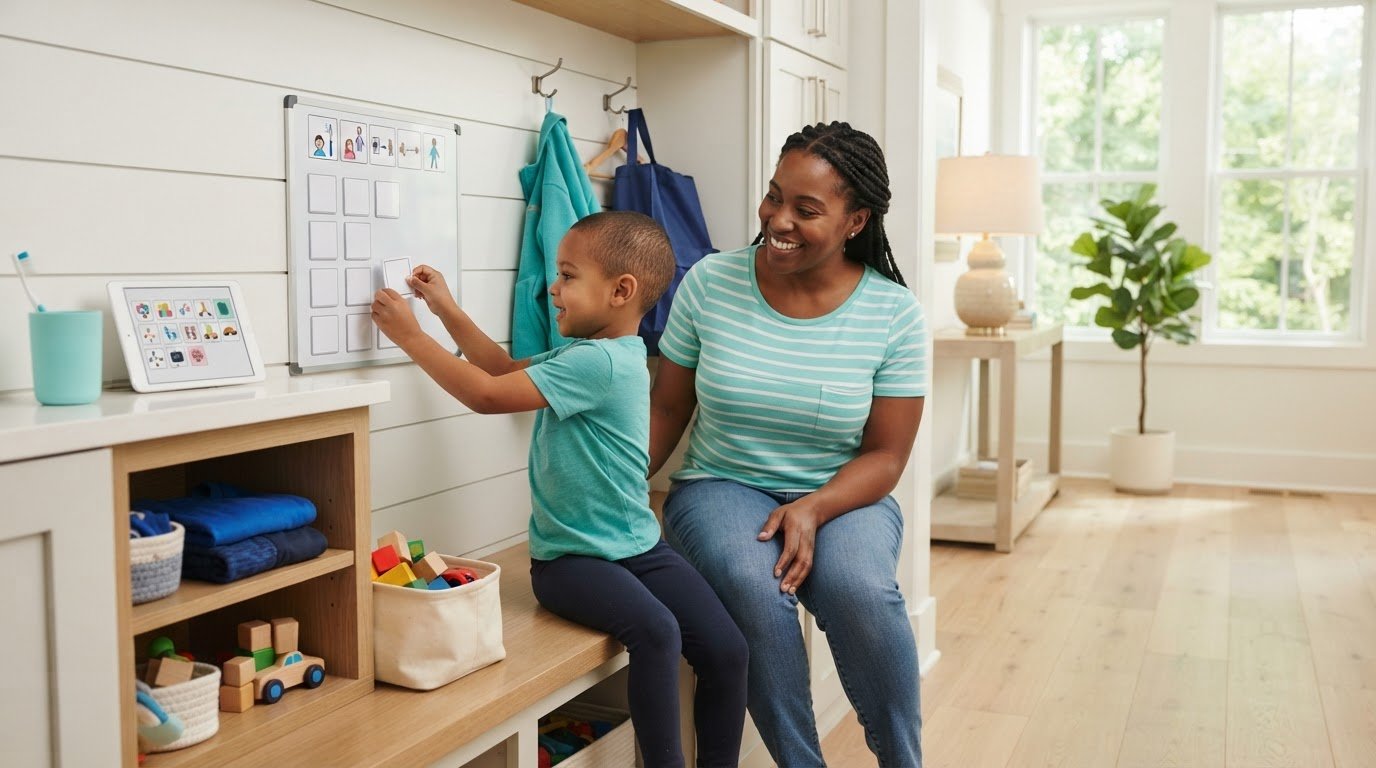
Visual supports can make a bathroom routine understandable without relying on spoken directions. Use clear pictures or simple drawings that match the child’s actual bathroom. Arrange them in sequence near the relevant place, such as a handwashing picture beside the sink. Point to the next image, allow time to respond, then remove or turn over each picture when that step is complete. Age-respectful visuals can help older children follow a routine without making the materials feel babyish.
Communication should work before urgency becomes distress. Choose one signal the child can access reliably, such as a picture card, gesture, or button on a communication device. Practice during calm moments, then respond consistently by helping the child reach the bathroom. If the child touches the card but does not vocalize, treat it as a meaningful request. Spoken words are not required to communicate a bathroom need.
Teach the sequence in manageable parts rather than expecting the whole routine at once. If a child enters the bathroom but resists sitting, practice entering and approaching the toilet first. Once that step feels comfortable, teach a brief sit, then build toward the next action. A visual checklist or simple marks on paper can help caregivers record which steps the child completes independently. Keep prompts consistent across adults, then gradually reduce help as the child takes over actions.
Consider what makes the bathroom difficult for this particular child. The sound of a flush, an unfamiliar public restroom, or hard-to-manage clothing fasteners may interrupt an otherwise familiar sequence. Observe what happens just before the child stops, moves away, or signals discomfort. Then adjust one feature at a time, such as flushing after the child leaves the room or choosing easier clothing for practice. These observations help distinguish skill needs from environmental barriers.
If toilet-training difficulties persist, personalized help from an autism-informed behavioral therapist or another clinician can help caregivers assess the routine and choose teaching steps. Bring a record of completed actions, communication signals, and situations that make bathroom use harder. For instance, note whether the child completes handwashing at home but needs support in a busy public restroom. Specific examples give the clinician a practical starting point for adapting the plan.
5. Potty training as a sequence of skills
Toilet learning is a chain of developmental skills, not a single moment of success. A child may recognize a full bladder but need help pausing an activity, communicating, or managing clothing. Write the routine as observable actions: notice a signal, request the bathroom, walk there, lower clothing, sit, urinate, dress, and wash hands. This helps caregivers identify the next teachable step instead of judging progress only by dry underwear.
Begin with the earliest step the child can practice successfully. If the child does not yet approach the bathroom, practice walking to the doorway before adding toilet sitting. If sitting is manageable but clothing is difficult, teach pulling pants down and up outside the bathroom routine. Keep the instruction brief and consistent, then record whether the child completes the step independently, with a prompt, or with physical assistance. That record can guide what to teach next.
Make progress visible with a simple chart: use one row for each skill and stickers or check marks for completed attempts. For example, a child might earn a mark for entering the bathroom, even before urinating there. Celebrate small toileting successes, including a small dribble of urine, during early practice. Offer a preferred reward as soon as possible after the child’s effort, so the connection between the action and reward stays clear.
Choose a manageable practice window instead of expecting potty training to be completed over a weekend. For example, offer the potty twice during a specific part of the day, such as after breakfast. If both attempts are unsuccessful, pause and return to the routine later rather than extending the sit or repeating prompts. This creates a predictable opportunity while preserving a clear stopping point.
Evidence-based toilet-training steps for autistic children include breaking the routine into small actions, using consistent prompts, and promptly reinforcing achievable attempts. Track each skill with stickers or check marks, then adjust the next step according to what the child does independently.
Keep the learning goal specific. “Use the toilet” can mean different things, while “walk to the bathroom after showing the picture” is observable. Once that response becomes familiar, add another step, such as lowering clothing or sitting briefly. If a child completes the sequence at home but not elsewhere, practice the same visual cues and actions in the new setting. The principle is simple: define the skill, teach one next step, and record progress.
Divergent Minds ABA: Clinic Based ABA Therapy
Divergent Minds ABA can help families turn toileting goals into individualized, teachable steps through Clinic Based ABA Therapy. This support may be useful when a child needs structured practice with bathroom routines, communication, transitions, or daily living skills. The team works with families on goals that build confidence and independence, while identifying practical steps caregivers can reinforce across everyday settings. Depending on the child’s needs, Home Based ABA Therapy or Community Based ABA Therapy can support practicing skills in familiar or daily environments. The focus remains on the child’s current abilities and the next achievable step, rather than a fixed timetable. To discuss support for your family, visit Divergent Minds ABA online.
Take the Next Step Toward Practical Progress
Your child’s next toileting goal can start with one useful observation: which part of the routine feels manageable today? Note the step your child completes most comfortably and the support that helps, such as a picture cue, familiar phrase, or calm transition. This gives your family a practical starting point for choosing what to build next, without measuring progress against another child’s timeline.
Families looking for autism potty training support in Apex can discuss their child’s goals with Divergent Minds ABA. A conversation can help you consider which skills to prioritize and how support might fit your child’s daily routines. Contact Divergent Minds ABA to take that next step.
Each skill your child develops can make the next part of the routine more accessible. Keep the focus on learning, partnership, and meaningful progress for your family.
Frequently Asked Questions
Does autism affect potty training?
Yes, autism can influence how a child notices body cues, expresses a need, and responds to bathroom routines. The effects vary between children. Some may reach daytime dryness and still experience accidents or bedwetting afterward. If a child’s toileting changes suddenly or includes discomfort, note when it happens and what else is different. That record can help families distinguish routine-learning needs from concerns to discuss with a healthcare professional.
Does ABA therapy help with potty training?
ABA therapy can help teach toileting as observable daily-living skills, such as signaling a need, managing clothing steps, or following a bathroom routine. A behavior analyst can identify which parts a child already does and where prompts or practice may help. For example, if a child reaches the bathroom but does not begin the next step, the plan can focus on that transition and track responses over time.
Is my child ready for potty training?
Readiness is better assessed through skills and interest than age alone. Notice whether your child shows curiosity about the bathroom, imitates everyday actions, or communicates discomfort with a wet diaper. Staying dry for two hours during the day can also be one useful sign. A practical check is to observe whether your child can participate in one routine step, such as walking to the bathroom or sitting briefly.
What are ways to Encourage Positive Potty Training?
Choose a reward your child already enjoys, then connect it clearly to a specific effort. For instance, offer a brief favorite activity after the child signals a bathroom need or completes a practice step. Keep praise specific, such as “You showed me the bathroom picture.” If an accident happens, respond calmly and shift attention back to the next routine step rather than turning the moment into a long discussion.
What if my child wants to play in the toilet?
Set a calm, consistent boundary and redirect the child to an appropriate activity. For example, say, “Toilet is for using; water play is at the sink with an adult,” then guide them to the planned activity. Keep bathroom materials limited to the routine and supervise bathroom access. If the play seems connected to curiosity about flushing or water, offer a suitable demonstration outside toileting practice.
What if my child won’t leave play to use the bathroom?
Make the transition easier by building a clear return point into play. Before leaving a game, help your child save their place, park a toy, or ask another adult to hold the activity. Use a consistent phrase such as “Bathroom, then back to the train.” When the routine ends, return to the saved activity so the child experiences the transition as a pause, not a loss.
When Should You Transition to Toilet Training from Pull Ups?
Consider the change when your child shows interest, notices wetness, or participates in bathroom steps. Pull-ups can absorb urine before a child notices dampness, so families may choose underwear during a predictable practice period. Start with a manageable routine and observe how your child responds. The transition can be gradual; the guide is how the child manages the learning steps, not a particular birthday.
What ABA clinics near Apex NC offer toilet training support?
Divergent Minds ABA provides Clinic-Based ABA Therapy for children with autism and serves families in Cary, Apex, and Raleigh. Its BCBA-owned practice offers personalized, evidence-based ABA services, with individualized treatment plans that can address daily-living goals such as toileting skills. Families can also choose Home-Based ABA Therapy or Community-Based ABA Therapy, depending on where practice best fits their child’s routines and learning goals.