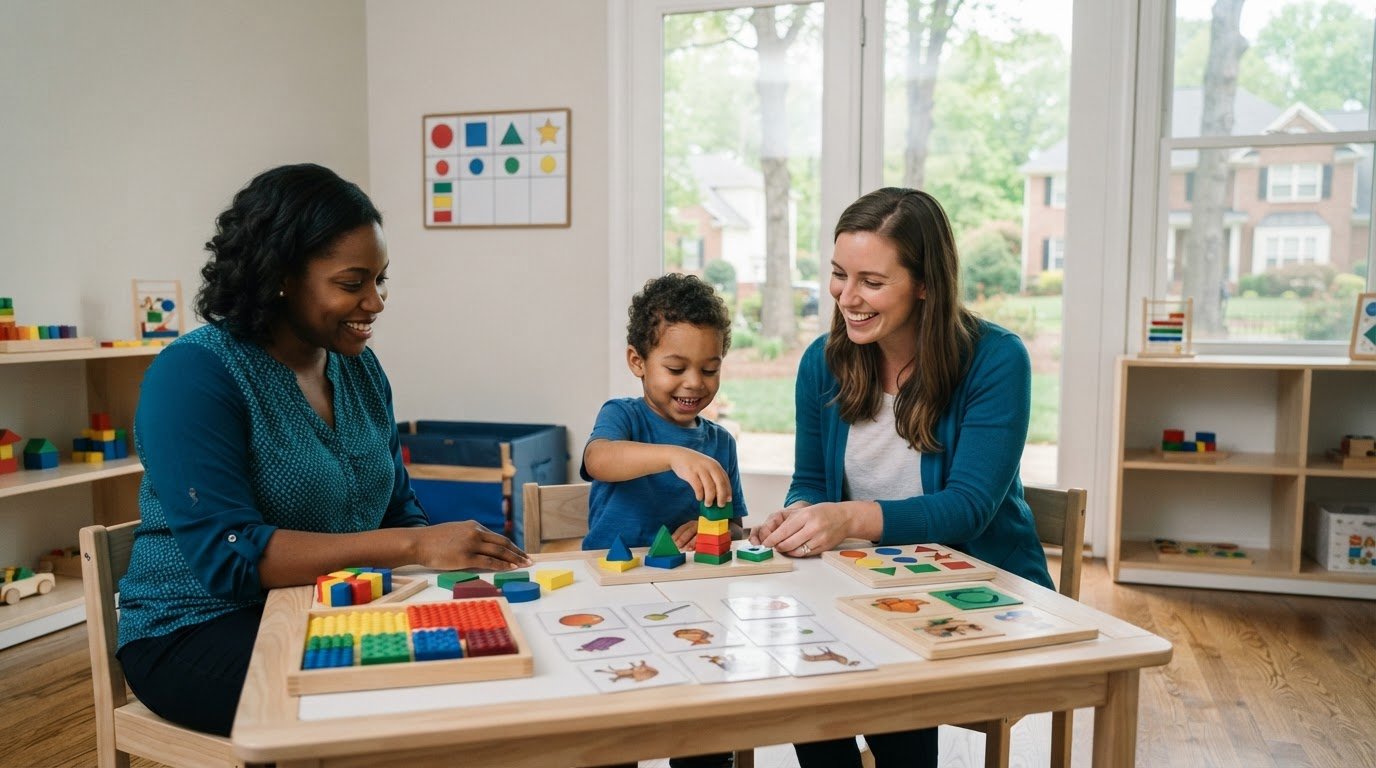

Independence isn’t an all-or-nothing milestone; it grows through small skills that make daily life more manageable. Building independence in autistic kids can begin as early as age 2, with simple opportunities to help with dressing, tidying up, and other everyday routines. The most useful starting point is a goal that fits the child’s abilities and interests, taught in clear, achievable steps.
It’s natural to want your child to feel confident and capable while still getting the support they need. Progress doesn’t mean doing every task alone. It may mean taking one new step, communicating a need, or completing part of a routine with less help.
This article explores why independence matters and how to nurture it with practical strategies, visual supports, predictable but flexible routines, and positive reinforcement. You’ll also learn how to set attainable goals, adjust support as skills develop, and make daily living practice purposeful and encouraging.
1. What are effective strategies to promote independence in children with autism?
Effective strategies connect a child’s interests and abilities to practical, teachable steps. Parents can model a task, use pictures or written instructions, offer choices, and gradually reduce prompts as skills grow. Recognizing effort and partial progress reinforces learning without making task completion the only measure of success.
Start with daily living skills that matter in the child’s routine: dressing, hygiene, and meal preparation. A child can choose between two shirts, follow picture steps for brushing teeth, open a snack package, or put a dish in the sink. Children can help with dressing and tidying from age 2; begin with one manageable step and build from there.
For a practical example of visual schedules in structured learning, watch this video:
Social skills develop through specific practice, not just reminders to “be social.” Use a visual schedule or social story to prepare for a playground visit, then role-play greeting someone, waiting for a turn, or asking to join a game. Give specific, immediate praise when your child uses a helpful communication skill. Community activities and social skills training also offer supported opportunities to practice with different people.
Communication, self-advocacy, and decision-making grow when children can express their needs and make meaningful choices. Practice words, signs, pictures, or communication devices for requests such as “I need a break,” “water,” or “help.” Offer two realistic options, such as choosing a snack or deciding which chore to do first, then respect your child’s selection.
Moving too quickly can make tasks overwhelming, increase reliance on adult prompts, or leave a child unsupported in social situations. Teach one step at a time, keep assistance available for safety, and gradually reduce prompts as your child demonstrates the skill. Some children learn basic routines but still need supervision and guidance in social settings.
Programs that teach adaptive skills can combine task analysis, modeling, visual supports, prompt fading, and reinforcement. Individualized behavioral instruction can help children learn daily routines, while social skills training and recreational activities provide practice with peers and community participation. Parents can use the same steps at home to support practice across settings.
Build real-life skills into familiar activities: let your child pour water with a small pitcher, help plan a meal, sort groceries, or put toys in labeled bins. Chores such as watering plants or carrying laundry can teach responsibility. As your child becomes more proficient, gradually increase the task’s complexity and opportunities to complete steps independently.
Vocational skills also belong in long-term planning. Starting at age 14, include vocational skills in an autistic child’s IEP, such as following a task sequence or asking for help. Teach money concepts through real choices during shopping, and connect practice to the child’s interests and developmental abilities.
2. How can assistive technology and visual supports aid children with autism?
A visual cue can make a routine easier to understand and follow. For self-care, create a checklist with one picture or short instruction per step, such as turn on the water, wash hands, rinse, and dry. Place it near the sink, then let your child check off each step. A mirror can help with grooming, while sensory-friendly products may make hygiene routines more comfortable.
A visual schedule can show what happens now, what comes next, and when an activity is finished. Use photographs, symbols, or written words suited to your child’s reading and communication abilities. For example, a morning schedule might show getting dressed, eating breakfast, brushing teeth, and packing a bag. Keep the sequence familiar, but allow for changes when plans or needs shift.
Assistive technology can include visual schedule or checklist apps, digital timers, and augmentative and alternative communication tools. These supports can display task steps, signal transitions, or help a child communicate a need. Choose a format your child can access and understand. A paper chart may work better than a screen, while another child may prefer tapping through digital pictures.
Timers make waiting and transitions more concrete. Set a visual timer before ending a preferred activity, then pair it with a clear cue such as “when the color disappears, shoes go on.” Keep the timer visible and use the same transition language across home routines. Avoid relying on the timer alone, so your child can gradually follow the schedule itself.
Families can create a simple work system that answers four questions visually: what to do, how much to do, how to know it’s finished, and what comes next. A child sorting laundry might see a picture of the basket, a small stack of clothes, a finished check mark, and a picture of the next activity. Set out only the materials needed for the task.
Start with the least intrusive prompt that works, such as pointing to the next picture instead of repeating verbal directions. As your child learns the sequence, pause before prompting and gradually fade assistance. When appropriate, practice the same schedule in different settings so the routine isn’t tied to one adult or room.
Visual supports work best when they reflect the child’s communication, sensory preferences, and daily needs. Speech-language and occupational therapy professionals can help families select and use supports. Parent coaching can also help caregivers build consistent visuals into home routines; explore parent coaching for family routines.
3. How do routines and reinforcement support independence?
Predictable routines help autistic children understand what comes next and build confidence with familiar activities. Keep the sequence consistent while allowing flexibility when your child’s needs or interests change. For example, a morning routine can use the same visual supports for getting dressed, eating breakfast, and preparing to leave, even if the order occasionally needs to change.
A work system makes a task clear by showing what to do, how much work remains, how to recognize completion, and what happens next. For schoolwork, a visual sequence might show “finish worksheet,” “put it in the tray,” then “choose a reading activity.” For self-help, it could show the steps for packing a backpack. A teacher might provide 10 coupons to cut, with a finished container and a next-task cue.
Prompt thoughtfully. Point to the next step or model it, then give your child time to respond before adding more help. Fade prompts as the skill develops, and practice the same system with different adults or in different settings. Specific feedback, such as “You put your towel in the hamper,” reinforces the action more clearly than general praise.
Self-care routines can include washing, dressing, and organizing personal items. For adolescents, agree on a private, respectful hygiene sequence that fits their sensory preferences. If toothpaste flavor or water temperature causes discomfort, adjust the materials or steps. A mirror, checklist, or labeled storage spot can help your teen follow the routine with fewer verbal prompts.
Household chores offer practical ways to teach responsibility and follow-through. Start with one defined job, such as placing toys in a labeled bin, wiping a table, or carrying laundry. Recognize each completed step, then gradually build toward a longer task. Children can develop independence in some areas before others, so choose tasks that match your child’s current abilities.
Independence means different things at different ages and for different individuals on the autism spectrum. A young child might help put on clothing or clean up toys; an older child may follow a hygiene checklist or prepare part of a snack. Children can begin helping with dressing and tidying as young as age 2, with support suited to their developmental skills.
Include stress management in the routine, too. Teach your child to use a break card, take deep breaths, or move to a calming activity when a task feels overwhelming. Practice the coping strategy during calm moments, then include it in the visual sequence. This helps your child learn to pause and return to an activity with support.
4. Why daily living tasks can be challenging for autistic children
A familiar task can involve several challenges at once. Clothing seams may feel uncomfortable, toothpaste flavor may be unpleasant, or water temperature may be difficult to tolerate. These sensory experiences can make getting dressed, brushing teeth, or washing hands harder. Your child’s behavior may communicate discomfort or uncertainty, so notice what happens before changing the task.
Some routines also combine steps that are hard to remember or coordinate. Getting dressed means selecting clothes, orienting each item, putting it on, and adjusting it. Task analysis breaks the routine into teachable actions. A visual schedule can show each action, while a parent models the first step and offers a brief verbal prompt when needed.
Prompting should support learning without becoming a permanent part of the routine. Begin with the least assistance that helps: point to a picture, gesture toward the soap, or model one handwashing step. Pause to give your child time to respond. As your child completes more steps independently, gradually reduce prompts and recognize each useful attempt.
For example, teach table wiping by showing how to pick up a cloth, wipe one section, and put the cloth back. A picture sequence can clarify what comes first and when the chore is finished. If your child pauses, use one concise cue, such as “wipe the table,” rather than repeating several directions. Add steps only after the current ones become familiar.
Household tasks offer practical learning opportunities, but their sensory and organizational demands can vary. Carrying laundry involves moving a basket; sorting clothes adds matching and decision-making. Start with a part your child can already approach, such as placing socks in a basket. Then model the next action and set out supplies in a clear place to support the task.
Visual schedules, task analysis, and prompting teach independence by making steps visible, modeling what to do, and gradually reducing adult help. ABA therapy can use these strategies to practice adaptive skills, while families carry familiar steps into everyday routines. Adjust the materials and sequence to your child’s sensory needs, communication, and current abilities.
Progress can vary from task to task. Your child might manage a familiar dressing step yet need support with toothbrushing because the bristles feel uncomfortable. Change one feature at a time, such as trying a softer toothbrush or adjusting the water temperature, then observe whether participation becomes easier. This helps children with autism practice behavior and daily living skills without treating distress as unwillingness.
5. Setting attainable goals based on a child's abilities and interests
A meaningful independence goal starts with what your child can do now, not an age-based checklist. One child may dress independently but need support communicating a need for a break; another may make choices confidently but need help organizing belongings. Identify the next useful step in the area that matters most to your child and family.
Choose a goal connected to an everyday responsibility. If your child enjoys drawing, they might learn to put materials away before choosing another activity. If they like helping prepare food, they could carry napkins to the table. These goals build life skills through purposeful activities rather than practicing an unrelated task.
Make the target specific enough to teach and observe. Instead of “be more independent,” define the action: “put the lunch container in the backpack after eating.” Identify which parts your child already manages, what support makes the next step accessible, and how adults will recognize progress. A clear target helps everyone teach the skill consistently.
Interests can make practice more motivating. Many autistic people have strong interests in particular subjects. Use an interest as a context, not as a reward that must be earned. A child who loves maps might sort them into a folder, follow a route with an adult, or help pack materials for an outing.
Keep the goal attainable by adjusting the task, environment, or support. To teach putting away clothes, begin with placing one item in an open drawer, then build toward sorting items by type. A picture label, a reachable storage bin, or a quieter practice space can reduce barriers without diminishing the value of the responsibility.
Consider abilities in different areas separately. Your child may complete familiar chores yet need guidance when plans change, or communicate choices but struggle with a sensory aspect of hygiene. Track which step is improving, which prompt is still needed, and where the skill works. This helps show whether to maintain supports or teach a new step.
Families can review goals together by asking whether a skill increases participation, choice, or comfort in daily life. If your child resists a task, consider its sensory demands, communication load, and timing before deciding the goal is unsuitable. Keep what is meaningful, adjust what is difficult, and build toward greater independence at a pace grounded in your child’s demonstrated abilities.
Divergent Minds ABA: Clinic Based ABA Therapy
Divergent Minds ABA helps families turn independence goals into individualized, practical learning opportunities through evidence-based ABA therapy. Clinic-Based ABA Therapy can support children working on daily living, communication, and adaptive skills. Home-Based ABA Therapy brings practice into familiar routines, while Community-Based ABA Therapy supports learning in everyday community settings. Social Skills Groups offer opportunities to practice interaction with peers.
Consider support when a child needs a structured plan, consistent teaching, or help carrying a developing skill into daily life. Treatment plans are personalized to the child and created in close collaboration with families, with goals that build confidence and useful lifelong skills. Visit Divergent Minds ABA to learn more about its approach and services.
Keep building toward meaningful participation
Building independence in autistic kids starts with goals that respect a child’s priorities and make daily participation more accessible. Identify one skill your child wants to develop, then consider what support would make practice feel clear and worthwhile. Progress can include asking for help, making a choice, or taking greater ownership of a familiar activity.
Divergent Minds ABA develops individualized ABA treatment plans in collaboration with families. Clinic-Based ABA Therapy, Home-Based ABA Therapy, and Community-Based ABA Therapy provide settings for working on skills that matter in a child’s daily life. A useful starting point is a shared goal that reflects the child’s abilities, interests, and family routines.
Building independence in autistic kids isn’t about expecting a child to manage everything alone. It’s about creating more opportunities for choice, confidence, and participation, while providing support where it’s useful. Contact Divergent Minds ABA to discuss how individualized support can help your family take the next step.
Frequently Asked Questions
Why is Independence Important?
Independence gives children more ways to participate, communicate preferences, and influence everyday decisions. It doesn’t mean doing everything without help. For example, a child might choose how to complete a familiar task or signal a need for assistance. For families, building independence in autistic kids means supporting meaningful participation rather than comparing a child with siblings or age-based expectations.
How can assistive technology and visual supports aid children with autism?
Assistive tools can make information easier to understand, remember, or communicate. A child who finds spoken reminders difficult to follow might use a picture-based communication board to request help, while another may use a phone reminder for a familiar activity. Choose tools to match your child’s access needs and preferences. Keep a backup communication option available, especially when a device is charging or unavailable.
How do routines and reinforcement support independence?
Routines help children anticipate what comes next, while reinforcement encourages useful actions to be repeated. Notice the specific behavior you want to encourage, such as starting a task after seeing a cue, and respond with genuine, specific recognition. Reinforcement can also be a natural result, such as choosing the next activity after putting materials away. Don’t make access to basic needs conditional on completing a task.
Understanding the social and emotional needs related to independence?
Independence should include emotional safety, communication, and your child’s willingness to participate. A child may need time to process a request, a way to decline, or support identifying feelings before trying a new responsibility. Watch for changes in engagement in unfamiliar situations, and offer meaningful choices about how to proceed. Respecting your child’s communication helps distinguish a need for support from a need for more time.
What are effective strategies to promote independence in children with autism?
Effective strategies connect a child’s goals with practice in the setting where a skill matters. For example, if your child wants to order a preferred snack, practice choosing, communicating the request, and completing the exchange with supportive assistance. A helpful approach to building independence in autistic kids adapts each step to the child’s communication and sensory needs. Families in Cary, Apex, and Raleigh can explore individualized ABA support with Divergent Minds ABA.
What are key life skills for children with autism?
Key life skills increase a child’s participation and choice in daily life. Alongside personal care, families might prioritize asking for help, recognizing familiar safety cues, communicating discomfort, or managing personal belongings. The right goals depend on the child’s routines and priorities. For example, a child who uses a communication device can practice finding the message for “I need help” in different everyday situations.
What are prompting strategies to support learning?
Prompting strategies provide cues that help a child begin or complete an action. A prompt might be a gesture, picture, brief spoken reminder, or model of the action. Give your child a chance to respond before adding another cue, and reduce assistance as the skill becomes familiar. If your child waits for a prompt each time, adjust the teaching plan so the natural cue is easier to notice.
What are the key techniques for skill acquisition?
Skill acquisition can combine clear instruction, guided practice, feedback, and opportunities to use a skill in everyday situations. Shaping reinforces progress toward a larger goal, while chaining teaches connected steps in a task sequence. For example, a learner might first practice one part of organizing a school bag, then connect it with the other steps. Revisit learned skills over time and across settings to support continued use.