
What makes an ABA plan feel like it belongs to your child, rather than a template? For families in Cary, Apex, and Raleigh, the answer often starts with everyday details: the skills a child wants to build, the routines that matter at home, and the goals caregivers consider meaningful. Personalized ABA treatment plans should reflect those priorities, not just clinical terminology that can be difficult to interpret.
It’s understandable to wonder how a plan is developed, how your family’s perspective will shape it, and what happens when progress points toward a different next step. A thoughtful plan connects assessment findings with practical, measurable goals, while leaving room to adjust as a child’s needs and abilities change. Families are partners throughout that process.
This article explains what an individualized ABA plan may include, how a BCBA can use progress information to guide treatment, and how caregivers can help skills carry over beyond sessions. You’ll also find practical ways to prepare for a planning conversation, so you can explain what matters most to your child and family.
What Is a Personalized ABA Treatment Plan and Its Purpose?
A personalized ABA treatment plan is a written guide to the goals a child is working toward, the teaching approaches used, and how progress will be reviewed. It brings assessment findings together with the child’s strengths, preferences, support needs, and family priorities. Rather than applying a fixed template, the plan helps the clinical team focus on skills that can matter in the child’s everyday life.
A treatment plan is not a diagnosis. ABA planning can guide support after a child’s needs have been assessed, but it does not determine whether the child is autistic. In plain language, individualized goals connect assessment findings to practical skills that can support participation, communication, and independence. For a broader overview of Applied Behavior Analysis (ABA), see the subject’s history and core principles.
This video offers a brief look at personalized ABA therapy:
What information does an ABA treatment plan organize?
A plan connects four elements: goals, teaching approaches, progress measures, and review. Goals describe the skill to build. Teaching approaches explain how the team will support learning, such as practicing a communication skill during a familiar routine. Progress measures show what the team will observe or record, and review helps the BCBA decide whether the approach remains useful. The BCBA leads clinical planning; caregivers contribute context about routines, priorities, and what they notice outside sessions.
Plan language should be understandable. A “measurable goal,” for example, describes an observable skill rather than a broad aim such as “improve communication.” The team can clarify what counts as the skill and how progress will be tracked. These elements can be organized differently for each child because no single template fits every family.
How should a personalized plan reflect the child?
A plan should account for how the child communicates, what captures their interest, what they already do well, and where support may help. Family observations add important context: a child may communicate differently at home than in a clinic, or show more interest in learning through a favorite activity. Those details can inform both the goal and how a skill is taught.
Meaningful goals focus on everyday usefulness, not compliance or appearance alone. For example, a goal might support a child in expressing a choice, asking for help, or taking part in a valued family routine. The plan should respect the child’s preferences and individual needs, with supports suited to the skill and setting. Families can share what matters most and discuss what the goal means, how progress will be measured, and when the approach may be reviewed. Parent coaching can also help caregivers practice supportive strategies in daily routines.
How BCBAs Develop Personalized ABA Treatment Plans
Planning is a collaborative process, not a form completed once and left unchanged. The BCBA selects assessment methods suited to the child and the questions the team needs to understand. Family observations make those findings more useful: caregivers can describe routines, communication, strengths, and moments when support would make a difference. Together, these details connect clinical priorities with everyday life.
A plan commonly takes shape through these steps:
- Gather information. The BCBA reviews relevant skills and behaviors using appropriate assessment methods and considers family input.
- Identify priorities. The team considers which areas matter most to the child’s participation, confidence, and daily routines.
- Set goals. Broad priorities are translated into observable skills that can be discussed and monitored.
- Select strategies. The BCBA chooses teaching approaches related to each goal and the child’s support needs.
- Monitor and review. Progress information and family observations help the team decide whether to continue or adjust the plan.
How assessment findings become meaningful goals
Assessment helps the BCBA understand what a child can do now, what support may be useful, and the situations in which a skill matters. A baseline is the starting picture of a skill or behavior. The BCBA uses that information to define observable, measurable goals, making later progress easier to discuss. Instead of “communicate better,” a goal might describe a specific way the child can request help during a familiar routine.
Depending on the child’s needs and family priorities, goals may involve communication, daily living, learning, or social participation. Behavior also has context: what happens before and after it, and what the child may be communicating or needing. A functional behavior assessment family FAQ explains how that context may inform planning. Families can contribute by describing what they notice across familiar situations, rather than treating a single moment as the whole picture.
How the plan connects goals with teaching strategies
Each strategy should support a specific goal. If a child is building a way to communicate a choice, for instance, the plan can identify an approach that fits the child’s communication style and the setting where the skill is useful. No technique is right for every child. The BCBA makes individualized clinical decisions based on assessment and ongoing observations.
A clear plan also explains who will support the skill and what progress will look like. It may describe the relevant routine, the response the team is observing, and how information will be recorded. That clarity helps caregivers understand what they can support in everyday activities and gives the BCBA a basis for reviewing the approach with the family. Family priorities should stay visible: if a goal does not feel relevant to the child’s life, that is useful information to bring to a planning conversation.
What Makes an ABA Plan Truly Individualized, Not One-Size-Fits-All?
Personalization means more than adding a child’s name to a standard template. A meaningful plan reflects what a child can already do, how they communicate, what interests them, where support is useful, and which priorities matter to the family. Two children may share a broad goal, such as building communication, but need different skills, teaching approaches, and ways to recognize progress.
Look at the wording of a goal, not just its category. A goal is more individualized when it identifies a useful skill and the context where it matters:
| Generic wording | More individualized wording |
|---|---|
| Improve communication. | Build a way to ask for help during a familiar home or learning routine, using the child’s communication style. |
| Increase social skills. | Practice a chosen way to join a preferred shared activity, with supports suited to the child and setting. |
| Reduce challenging behavior. | Understand what may be contributing to a specific behavior and support a safe, meaningful way to communicate a need. |
These examples are starting points, not prescriptions. A BCBA considers assessment information alongside the child’s interests, communication, environment, and family priorities to identify relevant goals and supports. A favorite activity may offer a natural context for practicing a skill; family observations may show that a target is more useful in one routine than another. Individualization guides clinical decisions, but it doesn’t guarantee a particular result.
How can families recognize a meaningful goal?
Look for a goal that describes an observable skill and names, or clearly implies, the context where it matters. The progress measure should match the goal and make sense to the family. If the target is asking for help, the team should be able to explain what it will recognize as a request and how it will track it. Families can also consider whether the goal respects the child’s dignity, preferences, and quality of life, rather than focusing only on appearing compliant or typical.
When might a plan need thoughtful revision?
Review is a conversation, not an automatic reaction to every change in recorded data. The BCBA considers progress patterns, the child’s changing needs, the context in which skills are practiced, and caregiver feedback together. A plateau or a difficult week may prompt questions about circumstances or support, but it doesn’t by itself prove the plan has failed. The BCBA and family can discuss clinical adjustments and whether the goal and approach remain useful.
Caregivers can make review discussions more concrete by sharing what they’ve noticed: where a skill is emerging, which situations feel harder, and whether a goal still reflects family priorities. One data point may tell only part of the story. A pattern considered alongside lived experience can help the team decide whether to continue, clarify, or thoughtfully revise a goal or support.
How Families Can Shape ABA Goals and Support Skills Across Settings
Families bring knowledge that an assessment alone cannot capture: what a child enjoys, how the day unfolds, which communication approaches feel comfortable, and where more independence or support would matter. Sharing those details helps connect personalized ABA treatment plans to real routines. Caregivers don’t need to become therapists. The BCBA guides clinical planning and implementation, while family input helps keep goals relevant to the child’s life.
What should caregivers share during treatment planning?
Concrete examples can make planning conversations more useful. Consider sharing:
- Interests and strengths: Activities the child enjoys, skills they use confidently, or topics that invite engagement.
- Daily routines: Moments such as getting ready, mealtimes, or play that feel important or challenging.
- Communication preferences: How the child expresses choices, asks for help, or signals a need for space.
- What has helped: Supports that seem useful, as well as approaches that feel difficult or don’t fit your family’s routine.
- Family priorities: Skills caregivers hope will support the child’s comfort, participation, or independence.
It’s reasonable to say when a goal is unclear or doesn’t seem connected to everyday life. Ask what the goal looks like in practice, why it matters, and how progress will be observed. Shared planning is an ongoing conversation, not a test of how much clinical language a caregiver knows. Parent coaching for families can help caregivers understand and apply strategies as part of that partnership.
How can a skill carry over beyond one session?
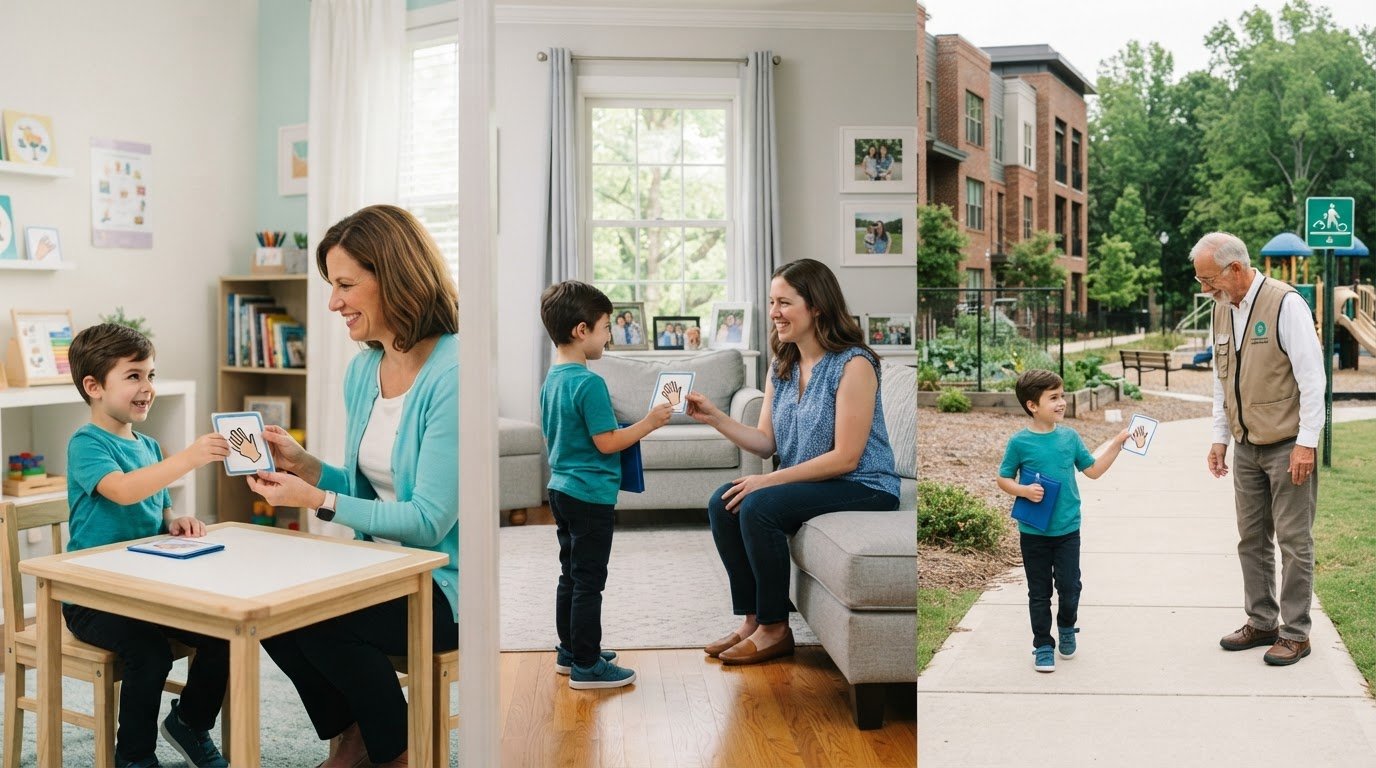
Generalization means supporting a learned skill with relevant people, in different places, or during routines beyond the original teaching moment. A child might practice communicating a choice with a clinician, then have opportunities to use a familiar way to choose a snack at home. The point isn’t to turn every routine into a lesson. It’s to make a useful skill available where it naturally matters.
Caregivers and the clinical team can coordinate practical details, such as the words or communication supports used, materials that help, and how much prompting may be appropriate. The BCBA guides those decisions so families aren’t left to guess or asked to carry clinical responsibility alone. Clinic-based ABA therapy is one setting where a skill can be taught, with family observations helping the team consider how it may fit elsewhere.
Small observations are valuable: “She tried this at breakfast,” or “That prompt felt confusing.” These notes help the team understand what is working across settings and what may need clarification. Information about family-centered ABA planning is available on our contact page.
Choosing Next Steps for a Personalized ABA Treatment Plan in Cary and Nearby Communities
A planning conversation should leave you with a clearer sense of how your child’s needs and your family’s priorities can guide support. You don’t need to arrive with clinical terminology or a finished list of goals. A few observations about daily life can make the discussion more useful, and it’s reasonable to ask for plain-language explanations along the way.
Divergent Minds ABA is a BCBA-owned practice that develops individualized plans in collaboration with families. ABA services are provided in clinic, home, and community settings, with the setting considered in relation to a child’s needs and goals. The practice accepts multiple insurance providers, though coverage depends on the individual plan. For families in Cary, Apex, and Raleigh, a first conversation can focus on what matters most to your child.
What can families expect from a first planning conversation?
The conversation is a chance to share what you’ve noticed and learn how individualized ABA planning works. You might describe a routine that feels important, a strength your child enjoys using, or a skill you hope will support greater participation. The team can discuss how family priorities inform planning and how caregivers can stay involved. An initial discussion does not determine a diagnosis, timeline, or treatment outcome.
Consider bringing questions such as:
- How will goals connect to what our child and family value?
- How will progress be observed and explained in everyday language?
- How can we share observations between planning conversations?
- How are goals reviewed with caregivers if our child’s needs or routines change?
These questions can help you understand the planning approach without needing to evaluate it through technical terms alone. If an explanation feels unclear, ask for an example of what a goal might look like in a familiar routine. Your perspective is relevant, and the conversation should make room for it.
How can local families take a next step?
You don’t need every answer before starting a discussion. Begin by describing your child’s interests, strengths, communication, and the routines your family would most like support with. The BCBA can explain how those priorities relate to individualized planning and discuss which setting may fit the child’s needs. Clinic, home, and community options offer different contexts for support, and the right fit depends on the child.
Personalized ABA treatment plans work best as a partnership, with clinical guidance and family knowledge informing meaningful goals. Families in Cary, Apex, and Raleigh can use the Divergent Minds ABA contact page to start a conversation about next steps.
Take the Next Step Toward Goals That Fit Your Child
You don’t need to have every goal figured out before starting a conversation. Begin with what you hope daily life could make room for: more ways to communicate, greater confidence in familiar routines, or opportunities to take part in activities that matter to your child. Those priorities can shape a discussion about what support may be appropriate and how progress can be understood over time.
Divergent Minds ABA is a BCBA-owned practice providing individualized, evidence-based ABA services in clinic, home, and community settings. Each child’s needs and family context guide planning, so the next step is not about choosing a preset path. It’s about sharing what you’ve noticed and exploring meaningful possibilities together.
If you’re considering personalized ABA treatment plans for your child in Cary, Apex, or Raleigh, contact Divergent Minds ABA to discuss your child’s next steps . A thoughtful conversation can be a steady beginning, and your family’s perspective belongs at its center.
Frequently Asked Questions
What is a personalized ABA treatment plan?
A personalized ABA treatment plan is a clinical guide that links a child’s assessed needs with goals, teaching strategies, and ways to review progress. It helps the family and care team understand what skills are being supported and how they’ll discuss development. Families can refer to it between conversations and ask the BCBA to explain unfamiliar terms or how a goal relates to the child’s needs. It doesn’t guarantee a particular outcome.
Who creates a personalized ABA treatment plan?
A Board Certified Behavior Analyst (BCBA) leads the clinical planning. The BCBA considers relevant assessment information and the child’s skills and support needs, while caregivers contribute context about what they see in daily life. For example, a caregiver may notice that a skill looks different at home than in another setting. Sharing that observation helps the team discuss how to make goals and strategies relevant without placing clinical responsibility on the family.
Can an ABA treatment plan change over time?
Yes. A BCBA may revisit goals or strategies as a child develops or family priorities and circumstances shift. For example, a change in a child’s daily routine may make a previously useful practice opportunity harder to access. The team can consider that context alongside progress information before deciding whether an adjustment makes sense. One difficult day doesn’t establish that a plan isn’t working; families can ask what patterns the BCBA is considering.
How often should an ABA treatment plan be reviewed?
There isn’t one review schedule that applies to every child. Timing may depend on the child’s needs, the clinical plan, and applicable service or payer requirements. At the start of care, families can ask when progress discussions are expected and what information will be reviewed. It can also help to ask how caregivers can share observations between meetings, so a review reflects relevant changes rather than a single snapshot.
What goals can a personalized ABA treatment plan include?
Goals vary with the child’s needs and family priorities. They may support communication, daily living, learning, social participation, or another clinically relevant skill. For instance, a family might discuss whether a child could benefit from a clearer way to indicate they’re ready to move from one activity to another. A useful goal describes an observable skill and a way to discuss progress, while respecting the child’s dignity and preferences.
How can parents contribute to an ABA treatment plan?
Caregivers can share observations that may not appear during a clinical session, such as what helps a child settle into a routine or how the child signals a need for a break. Brief notes about when something happened and what was going on can make those details easier to discuss. Parents can also ask for unfamiliar terms to be explained. The BCBA provides clinical guidance; caregivers contribute their knowledge of the child and family.
Does insurance determine what goes into an ABA treatment plan?
Clinical goals are individualized to the child, while insurance plans may have separate authorization or documentation requirements. Divergent Minds ABA accepts multiple insurance providers, but coverage depends on the specific plan and policy. Families can review their benefit information with their insurer, including any documentation or authorization steps that apply. Keeping benefit questions separate from clinical goal-setting can help clarify which decisions relate to the child’s needs and which relate to coverage.