
If you’re wondering how to vet an ABA provider in Cary NC, look beyond polished promises and focus on how care is planned, delivered, and reviewed. A useful starting point is to identify what would make everyday life more supportive for your child, then consider whether a provider can explain how its approach connects with those priorities.
Choosing support is a personal decision. Look for qualified clinical leadership, individualized goals that reflect your child’s strengths and needs, and a clear process for reviewing progress and adjusting support. Family input should shape that process from the beginning, not be added as an afterthought.
This guide offers a practical framework for assessing those elements and considering local fit. You’ll learn what to look for in clinical leadership, how goals and progress can connect with caregiver priorities, and how clinic, home, and community settings may support learning across daily routines. Divergent Minds ABA is a BCBA-owned practice in Cary that provides personalized, evidence-based ABA in those settings, along with social skills groups and parent coaching. These options give families in Cary, Apex, and Raleigh different ways to consider support in relation to their child’s needs and family routines.
Why carefully vet an ABA provider in Cary, NC?
Choosing ABA support can affect parts of your child’s daily routine and your family’s experience. Vetting means looking beyond a service description to understand who guides clinical decisions, how care is individualized, how communication works, and whether the setting fits your child’s needs. The practical process behind a provider’s claims matters: how the team learns about your child, sets goals, and reviews progress with you.
A well-vetted ABA provider has qualified clinical leadership, builds goals around a child’s strengths and needs, involves caregivers in planning, and communicates clearly about how support is reviewed. These are features of a working relationship, not promises of a particular outcome. For families learning how to vet an ABA provider in Cary NC , paying attention to those details can help distinguish a clear care process from broad marketing language.
Start with your child’s priorities and family goals
Before discussing services, write down what would make daily life more supportive for your child and family. Separate immediate priorities from longer-term hopes so that the first conversation can stay focused. For example, consider:
- Routines that feel challenging, such as getting ready to leave home or moving between activities.
- Skills your family hopes to build, such as communicating needs, taking part in everyday tasks, or connecting with peers.
- Your child’s preferences, strengths, communication style, and comfort in different settings.
These notes give you a starting point for a discussion about individualized planning. They also help keep your child’s perspective in view, rather than letting a list of adult priorities define the whole picture. If priorities compete, note which routines matter most right now and which can be revisited later.
Separate treatment fit from a provider’s marketing
Terms such as “personalized” or “evidence-based” can sound reassuring, but broad claims alone don’t show how care will reflect one child’s needs. Applied Behavior Analysis (ABA) includes a range of principles and applications, so ask for a plain-language explanation of the approach behind a plan. Find out how goals are selected, what progress looks like in everyday terms, and how the team uses its observations to review support. Clear explanations make it easier for caregivers to take part in decisions.
Look for a connected process: information about your child informs goals, and review of those goals informs next steps. Family input should shape the plan and remain part of ongoing communication. At Divergent Minds ABA, individualized treatment planning and parent coaching support collaboration with caregivers. ABA is available in clinic, home, and community settings, so families can consider how learning may connect with everyday routines. Explore parent coaching as one way caregiver partnership can be part of support.
Fit is practical, too. Consider whether the setting aligns with your child’s comfort and the routines or skills your family wants to focus on. You don’t need to settle every question at the outset. A thoughtful vetting process gives you a clearer basis for understanding the care process, discussing what matters, and deciding what feels workable for your family.
How to assess ABA credentials, individualized care, and progress
Strong clinical care is reflected in the decisions behind a treatment plan. Credentials help you understand who guides those decisions, while individualized goals and clear progress reviews show how the plan connects with a child’s everyday life. As you consider how to vet an ABA provider in Cary NC, look at how clinical expertise, practical goals, and family understanding work together, rather than treating any single feature as proof of quality.
Understand BCBA leadership and the care team
A Board Certified Behavior Analyst (BCBA) has specialized training and certification in behavior analysis. In ABA care, a BCBA may guide assessment, develop or oversee treatment planning, and provide clinical direction to the team. Team members can have different roles, so clear communication about who plans, delivers, and reviews care helps families understand how clinical oversight connects to day-to-day support.
Divergent Minds ABA is BCBA-owned and operated. That ownership makes clinical leadership an important part of the practice’s identity, but ownership alone doesn’t establish whether a plan is right for an individual child. Consider how clinical knowledge is applied: whether decisions reflect the child’s needs, strengths, communication, and family priorities, and whether caregivers can understand the reasoning behind the plan.
Look for individualized goals and meaningful progress review
Goals should describe useful skills in context, not just broad aspirations. A goal might relate to communicating a need during a daily routine or participating in an activity with support. The measure should be understandable: what is being observed, where the skill matters, and how the team will use that information to review the plan. For more background on how assessment can inform support, see this functional behavior assessment in Cary guide.
Progress information is most useful when it gives families a clear picture of what is changing and what still needs attention. Observations can help the team and caregivers discuss whether a goal remains relevant, whether support should be adjusted, and whether a skill is appearing beyond a therapy activity. Ask for explanations in everyday language, and check that you understand what the team is observing and how it relates to the goal.
Individualized goals become meaningful when families can understand the observable progress being tracked and how clinical review guides next steps.
- Specific: The goal describes an observable skill rather than a vague outcome.
- Relevant: It connects to the child’s strengths, needs, and daily routines.
- Understandable: Caregivers can explain what progress measures mean.
- Reviewable: The team uses observations to consider whether the plan still fits.
Caregiver understanding is part of the process, not an extra. Parent coaching can help families take part in connecting treatment goals with everyday routines. When the team explains observations and reviews them with caregivers, that information can support shared decisions about whether goals and strategies continue to fit the child and family.
How to judge whether ABA services fit your family in Cary
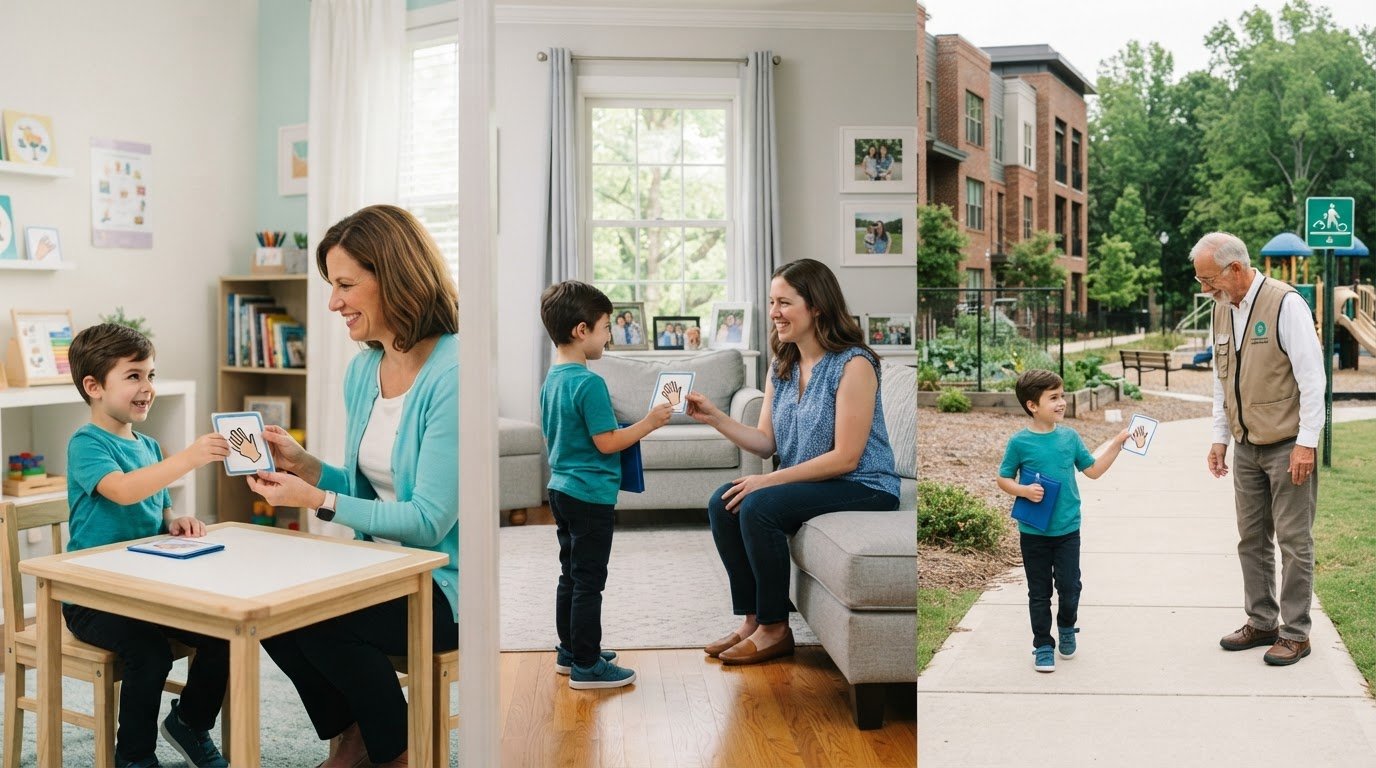
The right setting depends on what your child is working on and how support can fit into family life. Clinic, home, and community-based ABA each offer different contexts for learning. None is automatically best for every child. As you consider how to vet an ABA provider in Cary NC, connect your child’s goals with the routines where those skills matter, while also weighing the practical details of attending and participating.
Match the service setting to the skills being built
A clinic may provide a consistent environment for structured learning and clinical routines. Home-based support may fit goals connected closely with activities at home, while community-based support can create opportunities to work on skills in everyday places. These are factors to discuss, not guarantees: the value of a setting depends on the child, the goal, and how the plan is carried out.
| Family priority | Setting to consider | Fit question |
|---|---|---|
| Structured learning routines | Clinic | Would a dedicated setting support the goals being discussed? |
| Skills tied to home activities | Home | Would practicing within familiar routines be useful? |
| Participation in everyday places | Community | Are there meaningful community routines connected to the goals? |
Use the table to guide a conversation, not to rank options. A child may benefit from one setting or a combination, depending on the treatment plan and family circumstances. Consider whether the setting supports comfort and engagement as well as the specific skills being developed. For instance, compare the routine your family wants to address with the activities and surroundings available in each setting.
Consider family partnership and day-to-day logistics
Fit includes the calendar and the people involved. Think through travel time to a clinic, how sessions might align with family routines, whether a caregiver can participate, and how the team will share useful updates. A setting that seems suitable on paper should also be workable for the child and caregivers over time.
Parent coaching can help caregivers build understanding and connect strategies with daily routines. Divergent Minds ABA offers parent coaching as part of its family-centered support. If caregiver learning is a priority, explore parent coaching for autism and consider how it could complement your child’s ABA plan.
Insurance is another practical part of fit. Provider participation and benefits vary by plan, and coverage details can affect how a family plans for services. Review your plan’s ABA benefits, including any requirements or limits that apply, and discuss coverage details with your insurer and the practice. This can help you weigh the setting and schedule alongside treatment goals, without making insurance the only measure of quality.
A practical step-by-step process for vetting an ABA provider
A consistent process can make a complex choice easier to discuss. Focus on how clinical leadership, individualized planning, communication, and family logistics come together. This framework for how to vet an ABA provider in Cary NC is designed to clarify what matters to your family, not to score your child or reduce a provider’s quality to one feature.
- Define your priorities. Note the routines or skills you hope support will address, what your child enjoys or finds comfortable, and which family priorities feel most immediate. Keep longer-term hopes separate so they don’t become promises or pressure.
- Review the clinical approach. Understand who guides assessment and treatment planning, how goals are chosen, and how clinical oversight connects with daily support. Divergent Minds ABA is BCBA-owned and operated, and provides personalized, evidence-based care with individualized treatment planning.
- Assess the fit. Consider whether clinic, home, or community settings make sense for the goals and routines under discussion. Include caregiver participation, communication preferences, travel, and scheduling in your thinking. A useful fit supports your child’s needs and is workable for your family.
- Understand coverage. Insurance benefits and provider participation depend on the family’s individual plan. Review the plan’s ABA benefits and any relevant requirements or limits as part of practical planning. Avoid making assumptions based on another family’s coverage.
- Choose a next step. Identify what feels clear, what matters most, and what you’d like explained further. A conversation about individualized goals and family collaboration can help you decide whether to move forward.
Use a consistent checklist to organize your decision
Keep brief notes under four headings: clinical leadership, individualized planning, communication, and family fit. For each, record what you understand, why it matters to your family, and what you want clarified. This makes it easier to compare your priorities with the care process without turning the decision into a numerical score.
- Goals: Which skills or routines are important to our family?
- Communication: How will caregivers understand updates and take part in planning?
- Progress measures: What observations will help us understand progress and plan reviews?
- Logistics: Which setting, travel needs, and schedule feel workable?
Review insurance and local logistics without assumptions
Geography can shape daily practicality. Families in Cary may consider travel to a clinic, while families commuting from Apex or Raleigh may weigh routes and routines differently. Include travel time alongside scheduling and caregiver participation when considering whether clinic-based care fits your family. Pair that planning with a review of your own insurance benefits, since coverage varies by plan.
Move from family priorities to an informed next step by reviewing clinical leadership, clarifying goals, considering fit, and understanding coverage. Divergent Minds ABA emphasizes individualized planning and collaboration with families. To discuss how these considerations connect with your child’s needs, connect with Divergent Minds ABA.
Explore a family-centered ABA next step with Divergent Minds ABA
Vetting care is about more than finding a service setting. It means understanding who guides the clinical work, how goals reflect your child, how caregivers are included, and whether the approach fits your family’s routines. Divergent Minds ABA brings these priorities together through personalized, evidence-based ABA and collaborative planning with families. The focus is on making the care process understandable and centered on the child, without promising a particular outcome.
What families can expect from Divergent Minds ABA
Divergent Minds ABA is a BCBA-owned practice based in Cary, North Carolina. The practice provides ABA in clinic, home, and community settings, giving families different contexts to consider as they discuss their child’s goals and everyday routines. The setting is part of an individualized plan, not a universal measure of quality. Families exploring a structured clinic environment can learn more about clinic-based ABA therapy.
Planning is collaborative. The practice works with families on individualized treatment plans and offers parent coaching, giving caregivers opportunities to take part in learning and connect support with daily life. Families can share what matters to them, including a child’s strengths, communication, preferences, and routines. These details help shape a discussion about what support may look like and how the family can stay involved.
Take a supportive next step
You don’t need to have every question resolved before beginning a conversation. Start with the routines you hope to support, what your child enjoys or finds challenging, what you’d like to understand about progress, and what kind of caregiver communication would be helpful. Sharing those priorities can make it easier to discuss whether the practice’s approach and settings could fit your family.
Families asking how to vet an ABA provider in Cary NC can use the same criteria in that conversation: clear clinical leadership, thoughtful individualized planning, understandable communication, and practical alignment with family life. It’s reasonable to take time to consider those factors and ask for explanations in language that feels clear. A supportive next step is a discussion about your child and your family’s priorities.
Bring your questions, goals, or early thoughts about fit to the Divergent Minds ABA team. Together, you can discuss your priorities and possible next steps for ABA support in Cary.
Take the next step with confidence
The next step doesn’t have to answer every question at once. Start with what matters most to your child and family, then use those priorities to guide a conversation about care, communication, and practical fit. That’s a steady way to apply what you’ve learned about how to vet an ABA provider in Cary NC while allowing your understanding to grow.
Divergent Minds ABA brings BCBA-led clinical perspective and personalized, evidence-based care to its work with families. Clinic, home, and community settings, along with parent coaching, offer different ways to consider how support may connect with everyday life. The focus is on building a plan through collaboration, with your child’s needs and your family’s perspective at the center.
You can begin with a question, a goal, or a description of the routines you hope to support. Talk with Divergent Minds ABA about your family’s next step and discuss a path forward for your child.
Frequently Asked Questions
Is an ABA provider required to be BCBA-owned?
No. BCBA ownership describes who owns and operates a practice, but it isn’t by itself a measure of whether care is appropriate for your child. Focus on who provides clinical leadership, how treatment decisions are made, and whether the plan is explained clearly. Families in Cary can consider ownership as context, then look at the clinical process and how the team works with caregivers.
Can parents participate in their child’s ABA therapy?
Yes. Caregiver participation can include sharing what you notice at home, discussing priorities, and learning ways to support goals between sessions. Parent coaching offers a dedicated way to build that understanding. For example, if a child is practicing a way to communicate a choice, caregivers can discuss which everyday moments might make that skill useful. The team and family can then consider how to keep support consistent and comfortable.
How can families understand whether ABA goals are making progress?
Ask the team to explain what it observes and how those observations relate to each goal. For instance, if a goal involves requesting help, clarify what counts as a request and how the team records it in relevant situations. Progress may be gradual, and a single observation may not tell the whole story. Regular discussion can help caregivers understand patterns, raise questions, and consider whether goals remain meaningful.
Does insurance cover ABA therapy in Cary, NC?
Coverage may be available, but benefits and provider participation depend on the specific plan. Divergent Minds ABA accepts multiple insurance providers, while each family’s benefits can differ. Families in Cary, Apex, and Raleigh can review their plan documents and ask their insurer about ABA coverage, authorization steps, and cost-sharing. Keep written notes about the information received so you can use it when planning services and comparing it with your family’s needs.
Can ABA therapy support communication and everyday skills?
ABA goals can address communication and skills used in daily life when they’re relevant to a child’s needs and included in an individualized plan. Examples might include expressing a preference, asking for assistance, or taking part in a familiar routine. The goals should respect the child’s communication and strengths. Families can discuss which skills would make daily activities more accessible or meaningful, then review how the team will monitor and discuss progress.
What should families consider when changing ABA providers?
Consider how to preserve useful information while making room for a fresh review of your child’s needs. Families can gather current goals, progress summaries, strategies that have been helpful, and questions about what they’d like to change. Share relevant context about routines, communication, and preferences with the new care team. A transition conversation can help identify what should continue, what needs reassessment, and how caregivers can support continuity during the change.
How do clinic-based and home-based ABA therapy differ for families?
Clinic-based therapy takes place in a dedicated setting, while home-based therapy happens within familiar household routines. The difference may affect travel, the activities available during sessions, and how caregivers participate. For example, a family considering a morning routine goal might discuss whether the home context is relevant; another family may prefer a clinic setting for its structure. Neither option is universally best. Consider your child’s comfort, goals, and family logistics.