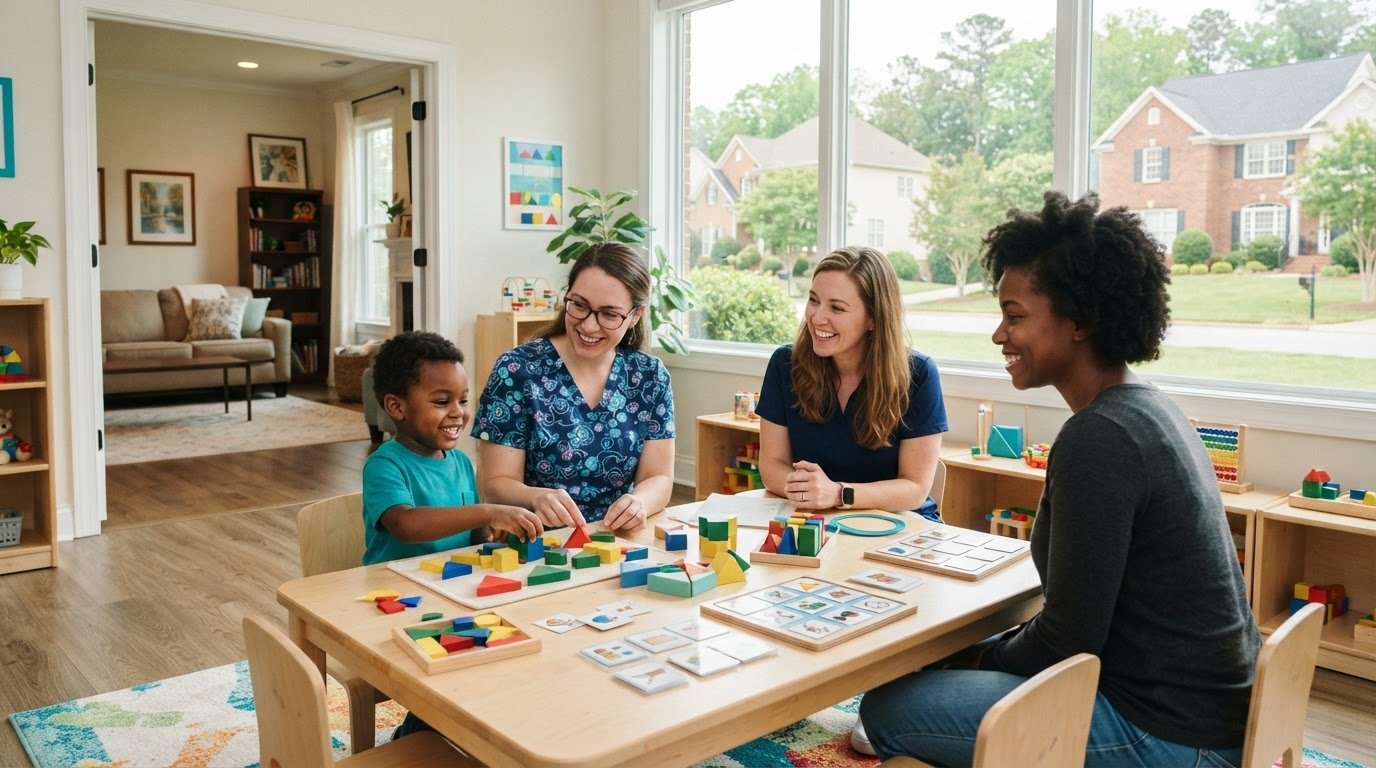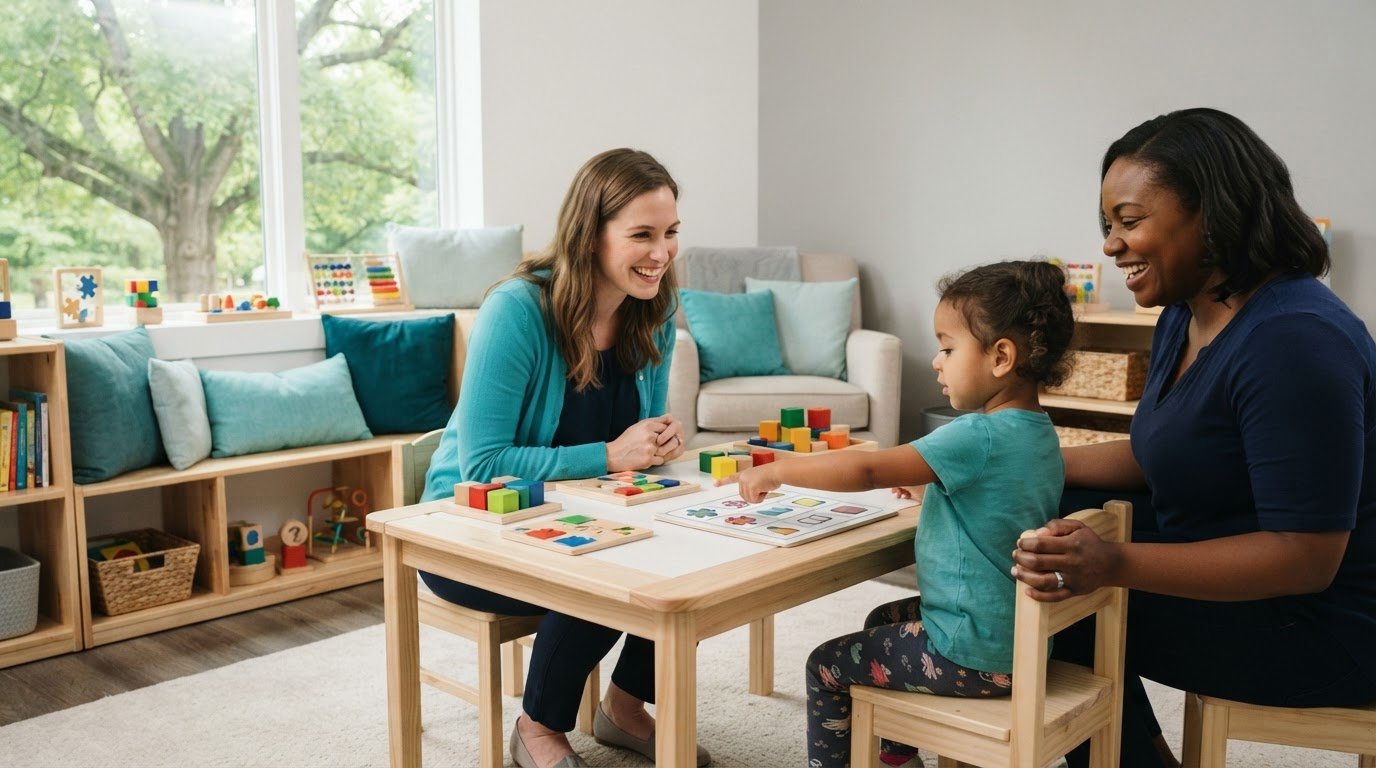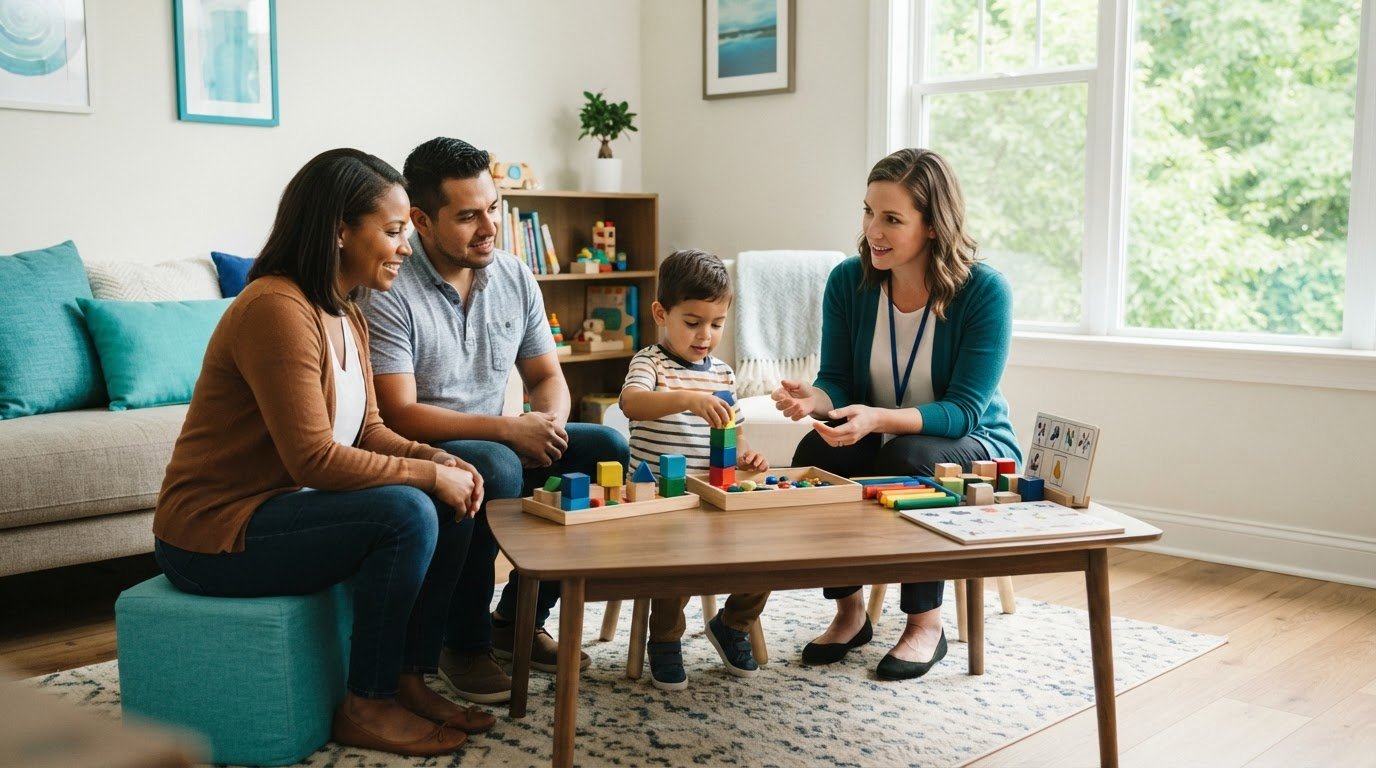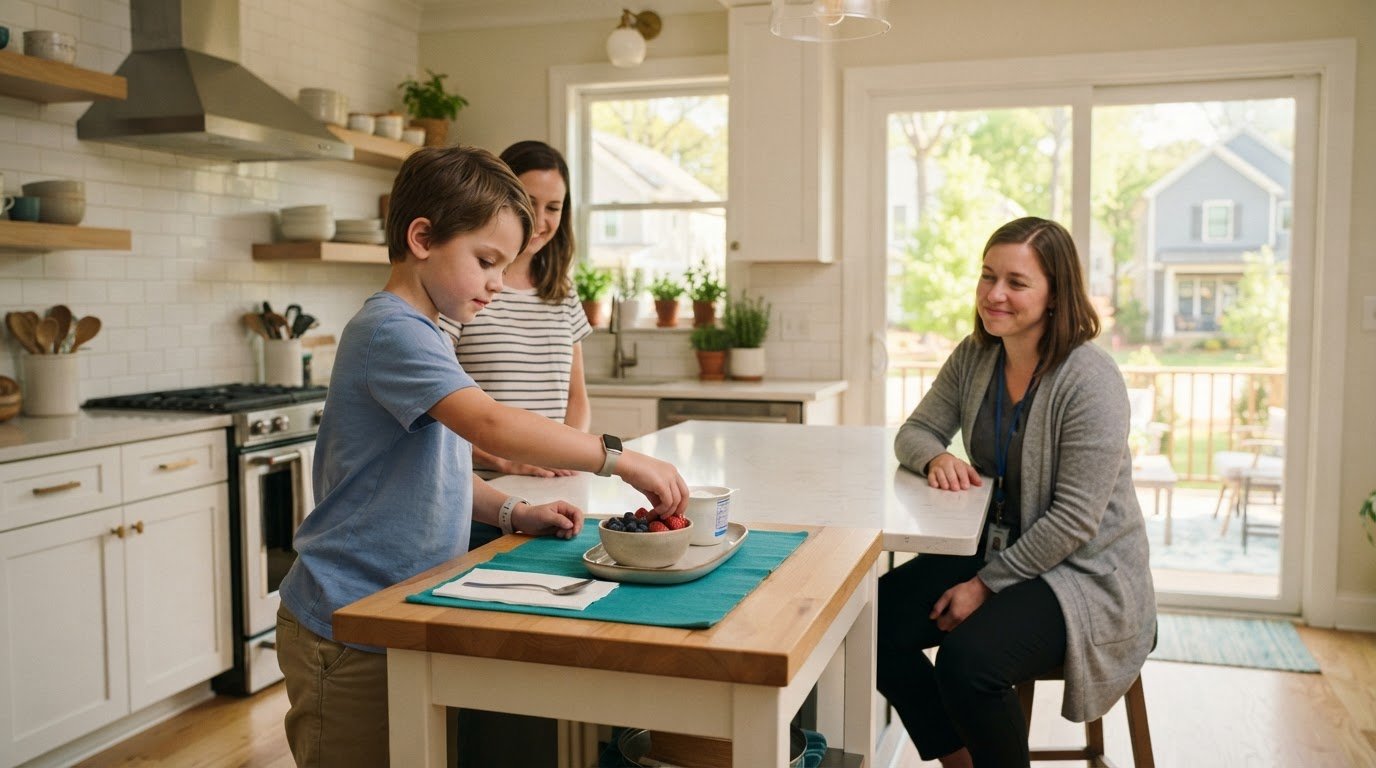

A behavior that feels difficult may also be communicating something important. A child could be responding to discomfort, needing a break, or adjusting to a change, but there is no single explanation that fits every child or situation. When a strategy is hard to use consistently, it can be difficult to know what to try next. Respectful behavior management for autistic children starts by considering the child’s needs, not by trying to erase autistic traits.
This guide offers practical ways to observe what may be happening, support communication, and make everyday routines more accessible. The focus is on building useful skills and responding to individual needs, not simply stopping behavior. You’ll also learn when an individualized plan and professional guidance may help. For families, collaboration matters: strategies should reflect the child’s strengths and needs, as well as what is workable at home and in the community.
What Does Behavior Management for Autistic Children Really Mean?
Behavior is information, not a complete explanation. A child’s actions may relate to communication, sensory experiences, fatigue, uncertainty, pain, or what is happening around them. These are possibilities to explore, not conclusions to jump to. The same behavior can have different meanings for different children, or for one child in different situations.
Behavior management for autistic children means considering what may be shaping a child’s behavior and providing individualized support that protects wellbeing, builds communication, and helps the child participate safely in meaningful activities. The focus is on useful skills and quality of life, not punishment, forced compliance, or making a child appear less autistic. Approaches vary; the Management of autism overview describes several intervention models, including ABA and developmental approaches.
What goals should respectful behavior support focus on?
Goals should reflect what matters to the child and family. For example, a child might need a reliable way to request a break, get help with a difficult routine, or join an activity with appropriate accommodations. Clear, observable goals make it easier to review whether support is useful. Quiet compliance alone is not a measure of progress.
Safety, autonomy, communication, comfort, and meaningful participation all matter. Harmless stimming, such as rocking or hand movements, isn’t automatically a treatment target. Support may be appropriate when a behavior creates a safety concern or interferes with something the child wants or needs to do. The response should preserve the child’s dignity.
How is behavior management different from stopping behavior?
Stopping an outward behavior without understanding its context can leave the underlying need unaddressed. For example, a child may cry or move away when an activity changes unexpectedly. Instead of assuming the child is being defiant, consider whether the transition feels abrupt, unclear, or overwhelming. Depending on the child, a visual cue, extra time, or a way to request a pause may help.
Supportive strategies aim to understand the situation and teach a useful skill or adapt what happens next, rather than place blame. Families and practitioners can work together to set individual goals and notice what helps across daily routines. Parent coaching can help families and the clinical team shape strategies around the child and everyday family life instead of relying on one-size-fits-all rules.
Why Might an Autistic Child Behave Differently in Different Situations?
Context can change what a child is able to manage or communicate. Noise, crowding, discomfort, an unexpected change, or fatigue may affect one child strongly and matter less to another. Access to communication matters, too. A child who can’t easily ask for help, attention, a break, or more time may show distress in another way. These are possibilities to explore, not assumptions about what a behavior means.
A useful way to organize observations is the ABC sequence: antecedent , what happened just before; behavior , what the child did that you could see or hear; and consequence , what happened immediately afterward. “Consequence” means what followed, not punishment. This framework can help families notice context while remembering that a child is a person, not a formula. The CDC provides an overview of evidence-based behavioral approaches among autism treatment options.
What patterns can caregivers notice before and after behavior?
When a situation is difficult, make brief, neutral notes. Record the setting, who was present, the activity, any transition or demand, what happened beforehand, what the child did, and what followed. Note whether the child had a comfortable way to communicate or request support. For example, compare what happens during a busy, noisy errand with what happens during a similar activity in a quieter setting.
A few observations can suggest useful questions, but they can’t establish a cause on their own. For a deeper overview, the functional behavior assessment family FAQ explains how a more systematic assessment examines patterns and context.
How can sensory and communication needs affect behavior?
Pay attention to the child’s own signals and preferences. One child may seek a quieter place when a room becomes loud; another may be comfortable with the same sound but need more time to shift activities. Watch for changes in movement, facial expression, vocalizations, or attempts to leave. Consider whether the child can communicate “help,” “break,” “too loud,” or “wait” in a way that works for them. These observations can guide questions without relying on stereotypes or assigning intent.
Families can explore these patterns collaboratively through parent coaching, with strategies shaped around the child and everyday routines.
Does Behavior Management Mean Suppressing Autistic Traits?
No. Respectful behavior management for autistic children shouldn’t aim to erase harmless autistic traits or make a child appear more compliant. It should support safety, communication, autonomy, and participation in ways that matter to the child. A behavior’s visibility alone doesn’t make it a problem to fix.
Behavioral support can include teaching new skills and reinforcing actions that help a child meet their needs. The NICHD overview of behavior management therapy describes behavioral approaches. In practice, goals should also be individualized and centered on the child’s wellbeing. The key question is not simply, “How do we stop this?” but “What would help this child feel safe, communicate, or take part on their own terms?”
| Supportive goal | Compliance-focused goal |
|---|---|
| Help the child ask for assistance using speech, signs, pictures, or a device. | Require a specific communication method, even if it doesn’t work for the child. |
| Make a break or quieter space accessible when the child needs one. | Expect the child to stay in an uncomfortable setting without support. |
| Support participation in an activity the child values, with appropriate choices. | Measure success by appearing still, quiet, or indistinguishable from peers. |
Which goals support autonomy and wellbeing?
Meaningful goals might include requesting help, choosing between activities, asking for more time, or accessing a break. Include the child’s preferences and communication method when planning. Consider what the family finds useful in daily life, such as making a transition or taking part in a familiar routine. Progress can look different from one child to another. It doesn’t require hiding harmless stimming or masking autistic traits.
What if a behavior creates a safety concern?
Immediate safety needs deserve attention, but they’re distinct from longer-term goals for communication and participation. If a behavior could result in injury, focus first on reducing immediate danger and seek individualized guidance from a qualified professional who can consider the child’s circumstances. Avoid one-size-fits-all responses, punishment, restraint, or ignoring signs of distress. A thoughtful plan should address safety while working to understand the child’s needs and support safer ways to communicate them.
How Can Families Build a Practical, Supportive Behavior Plan?
A useful plan starts small and stays responsive. Observe a challenging routine, choose one meaningful priority, adjust the context, teach a helpful skill, and review what changes. The goal isn’t to control every moment. It’s to make everyday situations more accessible while supporting the child’s communication, comfort, and participation.
For example, if getting ready to leave often becomes stressful, notice which part of the routine is difficult. Then consider whether a choice, a clearer cue, extra time, or a way to request help would support the child. What works may depend on the child, their communication, family routines, and the setting.
- Observe: Notice what’s happening before and during the difficult moment.
- Identify a priority: Focus on one concern that affects the child’s wellbeing or participation.
- Adjust the context: Consider changes to timing, demands, cues, or available choices.
- Teach a useful skill: Support a way to ask for help, more time, or a break.
- Review: Consider whether the change made the routine more comfortable or accessible.
Consistency doesn’t mean every adult must respond identically in every circumstance. It means caregivers share an understanding of the child’s goal and communicate in ways that support it, while adapting to real-life needs. Families working on behavior management for autistic children can use parent coaching to practice strategies collaboratively and adapt them to everyday life.
How can caregivers choose a realistic first goal?
Start with one routine or concern rather than trying to change everything at once. Describe the goal in positive, observable terms that reflect what the child needs. Instead of “stop resisting,” a goal might be “have a way to ask for more time before moving to the next activity.” Then consider what support, choice, or communication access could make that step possible.
How should families review whether a strategy helps?
Keep review manageable. A brief note after a relevant routine may be enough: did the child seem less distressed, communicate a need, or participate more comfortably? There’s no need to measure every interaction. Look for patterns over time, and adjust when the child’s preferences, needs, or circumstances change. A strategy can be useful in one setting and need adapting in another.
If you’d like collaborative guidance in shaping a practical plan, connect with our team.
When Can Individualized ABA Support Help Families in Cary, Apex, and Raleigh?
Individualized ABA support may help when a child or family wants to build practical skills around a meaningful priority, such as communicating a need, taking part in a routine, or navigating a social situation. Behavior management for autistic children should focus on goals developed with the family and tailored to the child, not a standard checklist or a promise of specific results.
At Divergent Minds ABA, families and the clinical team work together to identify priorities, consider support that fits the child’s circumstances, and review progress. Divergent Minds ABA is a BCBA-owned practice serving families in Cary, Apex, and Raleigh, with personalized ABA therapy in clinic, home, and community settings. Each setting offers a different context for learning and practicing skills.
What can families expect from individualized ABA support?
Planning begins with the child’s needs and the family’s priorities. Goals and progress measures should be meaningful and observable, while accounting for how the child communicates, what they prefer, and the situations they encounter. Clinic-based ABA therapy offers one setting for individualized support, with skills selected around the child rather than a one-size-fits-all program.
Families are partners in this process. Their knowledge of daily routines and the child’s strengths can help the team understand what matters and whether a strategy is practical for the household. The plan can be adapted as circumstances, needs, or priorities change.
How can families carry useful strategies across settings?
A skill can be practiced in the setting where it’s useful. A child might work on communicating a need in the clinic, use that communication in a home routine, or practice a relevant skill in a community setting. The goal is not to make every environment identical, but to keep support relevant to the child’s life. Shared understanding among caregivers and the clinical team can help, while respecting each family’s capacity and preferences.
Families in Cary, Apex, and Raleigh can talk with Divergent Minds ABA about their priorities and questions. Individualized ABA therapy and family collaboration can be shaped around the child’s needs and everyday routines.
Take the Next Step Toward Support That Fits Your Child
Effective behavior management for autistic children begins by considering what a child may need, then building practical skills that support wellbeing, communication, and meaningful participation. Respectful strategies are individualized: they focus on safety and useful goals without treating harmless autistic traits as problems to erase. Families can start by noticing patterns, choosing one priority, and adapting support as their child’s needs and preferences evolve.
For families in Cary, Apex, and Raleigh, Divergent Minds ABA is a BCBA-owned and operated practice offering personalized, evidence-based ABA services in clinic, home, and community settings. Care is shaped collaboratively around each child and family, with support considered in the routines and environments where skills matter.
If you’re ready to explore supportive next steps for your family, contact Divergent Minds ABA to discuss your goals. Start a conversation about what matters to your child and the support that may fit your family’s routines.
Frequently Asked Questions
Is behavior management appropriate for autistic children?
Yes, behavior management for autistic children can be appropriate when support is individualized, respectful, and focused on goals that matter to the child and family. These may include communication, safety, comfort, or participation in daily life. Support shouldn’t aim to make a child appear less autistic or eliminate harmless self-regulation. Families can discuss goals with a qualified professional and consider whether the child’s preferences and wellbeing remain central.
Can behavior management stop autistic stimming?
Stimming shouldn’t automatically be treated as a problem to stop. It may help a child regulate, communicate, or manage sensory experiences. If a particular behavior raises a safety concern or makes it harder for the child to do something they want to do, consider the context and what the child may need. A qualified professional can help explore supportive options without assuming harmless autistic traits need to change.
How can I understand what my child’s behavior is communicating?
Start by noticing what happened before and after the behavior, where it occurred, and what demands or sensory conditions were present. Consider whether communication access, discomfort, uncertainty, or a change in routine could be relevant. These observations can help you form useful questions, but they don’t prove a single cause. If patterns remain difficult to interpret, individualized professional support can help you explore them with care.
What should I do during a difficult behavior episode?
Focus first on immediate safety and reduce unnecessary demands or stimulation when possible. Use calm, clear communication that fits your child, then allow time and space if those supports help. Avoid assuming the child is acting deliberately or responding with punishment. After the situation settles, consider what may have contributed and whether a change to the environment, communication supports, or existing plan could help next time.
When should a family seek professional help with behavior?
Consider professional guidance if a behavior causes significant distress, affects safety or daily participation, or remains hard to understand despite thoughtful observation. A qualified clinician can work with your family to explore patterns and develop individualized support. The purpose should be meaningful, respectful goals that serve the child’s wellbeing, not simply changing behavior to make a child easier for others to manage.
Can ABA behavior strategies be used at home and in the community?
Yes. Strategies may be practiced across settings when they fit the child’s goals and circumstances. A skill introduced in a clinic may need adapting for home or community routines, where people, sensory conditions, and demands can differ. Families and clinicians can collaborate on what feels useful and manageable. Divergent Minds ABA provides personalized ABA services in clinic, home, and community settings for children and families.
How can families in Cary, Apex, or Raleigh explore ABA support?
Begin by identifying the situations and goals that matter most to your family, then explore what individualized support and family collaboration could look like. Divergent Minds ABA is a BCBA-owned practice serving children and families in Cary, Apex, and Raleigh through clinic, home, and community-based ABA services. Contact the team to discuss your priorities and next steps for support.