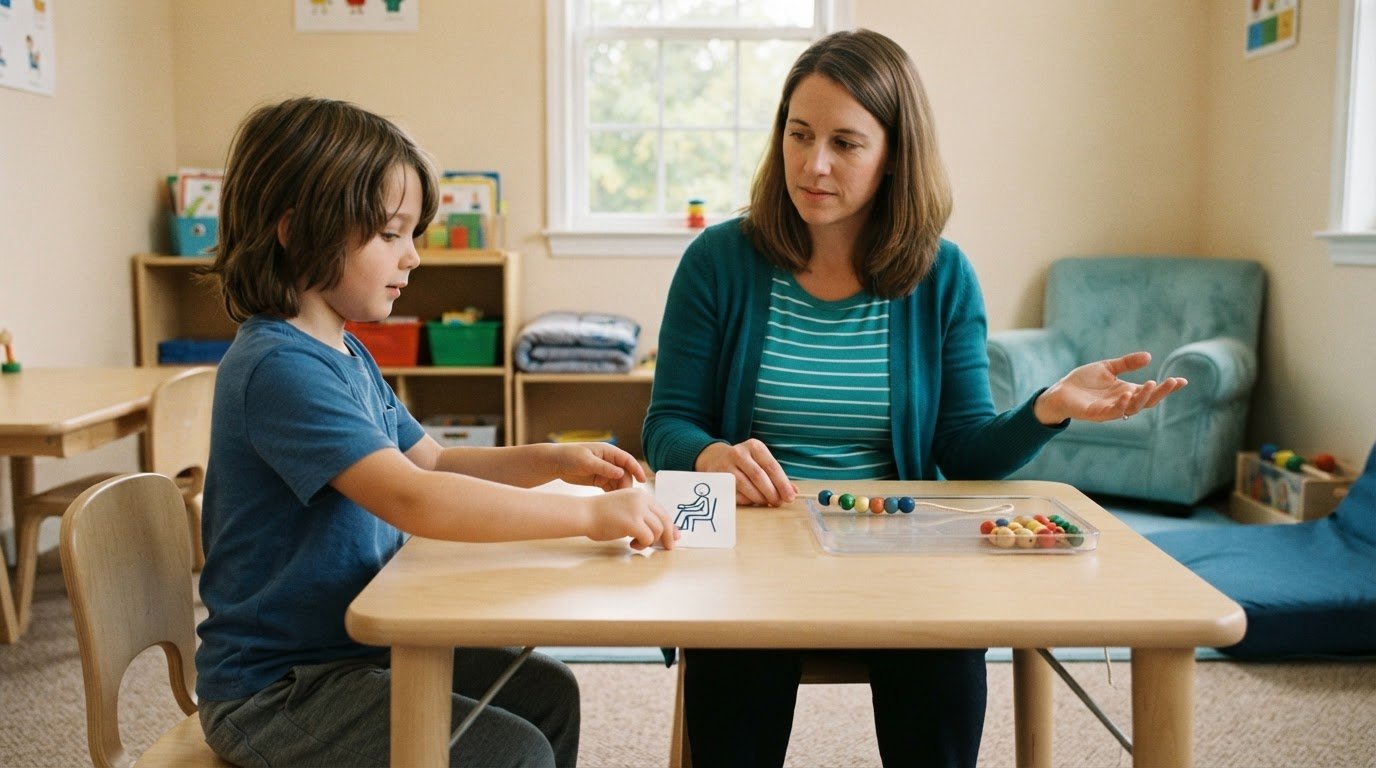

More ABA hours don’t automatically mean better care. Signs of bad ABA therapy can include goals aimed at suppressing harmless autistic traits, a therapist who ignores a child’s distress, or poor communication with the family. A BCBA can oversee treatment, while an RBT may provide therapy under that supervision. A suitable plan should reflect the child’s goals, comfort, and daily life.
It’s reasonable to want clear evidence that therapy is helping, and to question a schedule that leaves your child overwhelmed. Some children receive 10 or 20 hours of ABA therapy per week, while others may receive 30 to 40; those figures aren’t a prescription, because hours should be justified by individual needs and the child’s response. This article will help you assess goals, therapist qualifications, teamwork with school and other providers, and whether the schedule suits your child. You’ll also learn what respectful, individualized care can look like, and which changes may signal a need to revisit the plan.
1. Too focused on eliminating behaviors?
A behavior’s appearance doesn’t explain its purpose. Hand-flapping or rocking may help a child manage sensory input, so stopping these actions without understanding them can remove a useful coping strategy. A functional behavior assessment helps identify why a behavior occurs. The analyst observes the child, looks for patterns, and considers what happens before and after the behavior. Those observations guide recommendations instead of treating every visible difference as a problem.
Look at what the plan aims to build. Applied behavior analysis should prioritize functional skills such as communication, self-advocacy, independence, emotional regulation, and safety. If a child hits when overwhelmed, for example, a plan can address safety while teaching them to request a break. Positive reinforcement can encourage that replacement skill. A plan that only aims to stop the hitting, without teaching a safer way to express a need, leaves the underlying communication challenge unaddressed.
Goals should also respect the child’s identity and boundaries. Requiring a child to smile or show affection on command focuses on appearance, not a functional skill. A six-year-old who rocks to self-soothe might be offered a stress ball or fidget toy as another option, rather than being punished for rocking. The child’s response matters: the alternative should support regulation, not become another demand for strict compliance.
During refusal or a meltdown, watch how the RBT responds. A patient therapist can pause, reduce demands, offer a break, and help the child feel safe. They can consider what the behavior communicates and adjust the environment, such as reducing noise during sensory overwhelm. Frustration, impatience, punishment, or pressure to finish a task despite distress are warning signs. A child crying when an RBT arrives or avoiding interaction may also signal that the relationship needs attention.
Qualifications and supervision matter alongside day-to-day care. A Registered Behavior Technician (RBT) may provide therapy under a Board Certified Behavior Analyst (BCBA)’s supervision. BCBA certification requires a master’s degree, supervised fieldwork hours, and passing a standardized exam. According to the Behavior Analyst Certification Board (BACB), its public registry lets families search for certified behavior analysts by location. A BCBA should guide assessment and treatment decisions, while the RBT follows the treatment plan and shares observations.
Consider the overall pattern, not one difficult session. Signs of bad ABA therapy include suppressing harmless self-soothing, overlooking a behavior’s function, and responding to distress with punishment rather than support. Aversive methods, including electric shocks, are not considered acceptable today. If a provider behaves aggressively or repeatedly ignores a child’s safety and boundaries, take that seriously. Effective treatment reduces harmful behaviors while helping a child gain meaningful skills.
2. Goals that support quality of life and ability development
A useful ABA goal improves something the child needs or wants in daily life. For a child with autism, that might mean communicating a choice, participating in a preferred activity, or completing a personal routine with greater independence. Goals should support quality of life and respect the child’s identity, rather than treating autistic traits as problems to remove. A goal is more meaningful when the child can use the skill beyond a therapy session.
Individualization starts with the child, not a standard checklist. A treatment plan should account for strengths, challenges, sensory profile, communication style, interests, and family priorities. For example, a child who loves drawing might practice asking for a particular color or requesting help with a project. Another child may communicate most comfortably with gestures or a communication device. The goal should recognize that communication can take different forms.
Consider whether each intervention teaches a useful skill or demands compliance for its own sake. “Follow every adult instruction immediately” centers obedience. A more functional goal might help a child understand a simple direction, ask for clarification, or indicate they need a pause. That distinction matters in real situations: children need ways to express preferences and boundaries, not only ways to meet adult expectations.
Emotional regulation goals can also be practical and respectful. A child who becomes overwhelmed in a noisy classroom might learn to identify discomfort, request a quieter space, or use a preferred coping strategy. The goal shouldn’t require the child to appear calm while still distressed. Instead, progress means gaining a usable way to communicate and respond to emotional needs. That skill can support participation without demanding that the child hide discomfort.
Clear goals make progress easier to discuss. They describe an observable skill, the setting where it matters, and how the team will recognize progress. For instance, “communicate a need for help during a familiar activity” gives the family and therapist a concrete focus. The team can review whether the skill occurs in daily routines, whether the child finds the approach comfortable, and whether the goal remains relevant to family priorities.
Social goals should make room for authentic connection, not force eye contact, scripted conversation, or affection. A child may practice taking turns in a shared game while choosing how to participate. Social skills groups can provide a setting to practice interaction with peers around shared activities. Families can discuss which goals reflect their child’s strengths and priorities through a conversation about individualized ABA goals.
3. Coordination with schools and other providers
A child’s learning happens across settings, not only during ABA sessions. When goals involve communication, classroom participation, or daily routines, coordination can help adults use compatible approaches. A teacher may notice that a student asks for help during art but not during writing. A speech therapist may know which communication supports the child already uses. With the family’s agreement, those observations can inform how skills are practiced.
Useful collaboration connects a specific goal to a real routine. If a child is learning to request a break, the ABA team and teacher can discuss how the child communicates that need in class. The plan should make room for the child’s established communication method, whether spoken words, gestures, or another system. Consistent responses across adults can make the skill easier to use during learning and everyday activities.
Other providers can add context that changes how an intervention is applied. An occupational therapist may share that classroom noise affects a child’s participation. A pediatrician may offer relevant health context for a change in behavior. ABA providers should coordinate with teachers, speech therapists, occupational therapists, and pediatricians rather than work in isolation. The purpose is not to make every professional deliver ABA, but to align support around the child’s needs.
Families can look for practical signs of teamwork in routine communication. The ABA provider should explain which goals connect with school or other services, share useful observations, and listen to information from the family. For example, if a child uses a visual schedule at school, the team can discuss whether a similar approach supports a home routine. If strategies conflict, the adults can clarify the goal and adjust their responses together.
Coordination should protect the child’s individual needs, not impose one method everywhere. A strategy that works during a quiet session may not suit a busy classroom. Teachers and therapists can compare what happens in each setting, identify barriers, and decide whether the support needs adapting. Progress notes are most useful when they describe the skill, context, and response, rather than simply labeling a day as successful or difficult.
Families can document misconduct by noting the date, setting, people present, what occurred, and how the provider responded. They can report concerns to the provider’s clinical supervisor; concerns involving a BCBA may also be directed to the Behavior Analyst Certification Board, while concerns involving a licensed provider may go to the relevant state licensing board.
Isolation is a warning sign if it prevents the team from understanding a child’s experience across settings. Families can ask how school observations or input from a speech therapist, occupational therapist, or pediatrician shape intervention decisions. Clear answers help show whether applied behavior analysis is coordinated around meaningful learning and the child’s daily life.
4. Qualities of an effective ABA therapist
Effective therapy depends on both clinical skill and the therapist’s daily interactions with a child. An RBT should follow the treatment plan, use teaching strategies selected for the child, and share observations with the supervising BCBA. Patience matters during difficult moments: if a child pushes materials away, the therapist can pause, offer a break, or adapt the activity instead of insisting on task completion.
Ethical, assent-based ABA pays attention to a child’s willingness to participate throughout a session. The therapist explains or signals an activity in a way the child can understand, watches for signs of discomfort, and responds by pausing, offering choices, or changing the activity. Assent is ongoing, so a child’s earlier participation doesn’t mean the therapist should ignore later distress.
Parents should be included in treatment planning and receive regular updates about goals, progress, and challenges. A useful update might describe which communication strategy the therapist practiced, how the child responded, and what the team plans to adjust. Parents can raise concerns and expect clear, respectful answers. Parent coaching can support families as they learn ways to reinforce useful skills during everyday routines.
Good clinical work also involves recording and reviewing behavior data, rather than relying on impressions such as “the session went well.” Parents can ask to see a sample data sheet and learn how progress reports are shared. A clear explanation connects the recorded information to a treatment decision, such as changing a teaching prompt when the child isn’t gaining a skill.
Red flags in qualifications or conduct include unclear supervision, a therapist who cannot explain their role, or repeated impatience when a child struggles. Aggressive behavior, punishment, dismissing parental concerns, and ignoring a child’s boundaries are serious conduct concerns. An RBT provides therapy under BCBA supervision; the BCBA should guide treatment decisions and respond to questions about the plan. Parents should receive honest explanations, not pressure to accept a strategy they don’t understand.
Notice how the therapist supports the child after both success and difficulty. For example, a child who becomes overwhelmed during a task should be offered support, not blamed for “refusing.” A respectful therapist observes what happened, considers whether the task or environment needs adjustment, and communicates that response to parents. If a child consistently cries when a therapist arrives or avoids interacting, the team should take those signals seriously and discuss the relationship and session approach.
These qualities help families distinguish skill-building from rigid compliance. A therapist should collaborate, explain decisions, and adapt teaching to the child’s needs. If concerns persist, parents can raise them with the BCBA and ask how the treatment plan will change.
5. Recommended therapy hours and child tolerance
There isn’t one weekly ABA schedule that suits every child. The right number of hours should connect to individualized goals, a child’s tolerance, and family life. A schedule deserves review when the time commitment seems disconnected from what the child is learning or causes distress that continues beyond sessions.
Historical recommendations aren’t a current prescription. Dr. O. Ivaar Lovaas originally recommended 40 hours of ABA therapy per week, but ABA is now almost never implemented at that intensity. A New York City BCBA interviewed by the Child Mind Institute said she usually sees young children every weekday for about two hours. She also said children in the programs she described usually received either 10 or 20 hours of ABA therapy per week.
Some children may receive 30 to 40 hours per week. That higher schedule should be supported by the child’s individual goals, tolerance, and family routines, not treated as a default. Ask how each session contributes to a stated skill, how the team reviews progress, and what changes follow if the child struggles to participate. The answer should connect hours to the child’s needs, not simply to a standard program.
Watch the child’s response across sessions and everyday routines. Pushing materials away, covering their ears, or leaving the room can communicate distress or unwillingness. The therapist should respond by pausing, reducing demands, offering a break, or adjusting the sensory environment rather than forcing task completion. Increased anxiety, consistent resistance, skill regression, or frequent distress after sessions are reasons to reevaluate the plan with the provider.
For a useful review, bring specific observations to the conversation: which sessions feel difficult, what happens before distress, and how long the child needs to recover. The team can compare those observations with progress toward goals and consider changes to session length, pacing, activities, or setting. A schedule should leave room for rest, school, family routines, and preferred activities.
Alternatives to ABA depend on the child’s goals. Speech therapy may focus on communication, occupational therapy may address daily activities or sensory needs, and school-based supports may help with learning. Families can use one approach or combine supports based on the skills they want to develop.
If your child’s hours or tolerance raise concerns, discuss a therapy schedule tailored to your child. A focused conversation can connect the weekly plan to goals, session observations, and your child’s response.
Divergent Minds ABA
Divergent Minds ABA helps families consider whether ABA goals, therapist interactions, care coordination, and session hours fit their child’s needs. Its BCBA Owned & Operated practice provides personalized, evidence-based ABA therapy for children with autism through Clinic-Based ABA Therapy, Home-Based ABA Therapy, and Community-Based ABA Therapy, alongside Social Skills Groups.
Families may turn to Divergent Minds ABA when they want treatment plans shaped around a child’s strengths, communication, interests, and family priorities. The team works closely with families to support confidence, independence, and useful skills, while considering how therapy fits into a child’s everyday life.
Contact Divergent Minds ABA to discuss your child’s needs and questions about ABA therapy.
Take the next step with confidence
Recognizing signs of bad ABA therapy isn’t about judging a child’s progress by one difficult day. It’s about making space for an honest conversation about what your child experiences and what you hope therapy will support. Before that conversation, consider one practical question: what change would help your child feel more capable or comfortable in everyday life? A clear priority can keep the discussion centered on your child, rather than on a schedule or checklist.
Divergent Minds ABA can work with families to understand their child’s needs and discuss individualized ABA support. Bring the observations that matter to you, including changes you’ve noticed and questions you’re still weighing. The next step can be a conversation, not a commitment. Share your questions with Divergent Minds ABA and explore a path that keeps your child’s growth and well-being at the center. Each thoughtful step can help your family move forward with greater clarity.
Frequently Asked Questions
What qualifications should a good ABA therapist have?
A qualified behavior analyst should hold BCBA certification, which requires a master’s degree, supervised fieldwork, and a standardized exam. An RBT may deliver therapy under BCBA supervision, so families should understand who designs the plan and who oversees sessions. The Behavior Analyst Certification Board maintains a public registry for finding certified behavior analysts by location. Some states may also require additional licensure for ABA providers.
How do you know when to stop ABA?
Consider pausing or reevaluating ABA when your child shows increased anxiety, persistent resistance, skill regression, or frequent distress after sessions. Write down what you observe and when it happens, then discuss whether goals, session demands, or the approach need to change. If the concern is immediate safety, prioritize your child’s safety and seek appropriate help. The decision should center on your child’s well-being and meaningful progress.
Is ABA therapy harmful to autistic children?
ABA isn’t inherently harmful, but poorly delivered therapy can harm autistic children. Pay attention to whether treatment respects your child’s communication, boundaries, and emotional well-being. For example, a child should be able to communicate discomfort without being shamed or punished. If your child’s mood, sense of safety, or willingness to engage changes substantially, record what you notice and raise those concerns with the clinical supervisor.
Is ABA therapy punishment-based?
ABA should use positive reinforcement to help children develop useful skills, not rely on punishment or demands for strict compliance. For example, a therapist might reinforce a child’s request for help during a challenging activity rather than reprimand them for struggling. Ask how the team responds when a child refuses or becomes distressed. Punitive responses, threats, or aversive methods are serious reasons to raise concerns.
Is it okay to switch ABA providers?
Yes. Families can decide to switch providers if the relationship, communication, or care no longer fits their child’s needs. To make a transition clearer, prepare a brief summary of your child’s priorities, communication preferences, helpful supports, and concerns about the current plan. Families in Cary, Apex, and Raleigh can also consider which setting best fits daily routines when exploring ABA support.
What if ABA therapy is too focused on eliminating behaviors?
Ask whether each behavior targeted in the plan creates a meaningful safety or daily-life concern. Harmless self-soothing, such as rocking, shouldn’t automatically be treated as a problem to eliminate. A useful plan explains the behavior’s function and, where needed, teaches a safe alternative that meets the same need. For example, a child might learn to request a break when overwhelmed instead of being pressured to hide discomfort.
What if ABA therapy feels too tough on kids?
Therapy can involve effort, but distress shouldn’t be ignored or treated as misbehavior. Notice specific responses, such as a child repeatedly pushing materials away, covering their ears, or trying to leave. Share those observations with the therapist and ask what adjustments are possible. A suitable response may include a pause, a less demanding activity, or a change to the environment, rather than forcing the child to finish.
Should ABA therapy try to eliminate autistic differences?
No. Goals should help a child communicate, participate, build independence, and stay safe, not make them appear less autistic. For example, treatment shouldn’t demand eye contact or affection simply to satisfy an adult’s preference. A meaningful goal respects how the child communicates and regulates themselves. If a target focuses on a harmless difference, ask how it supports your child’s quality of life and priorities.