
ABA is not autism. It is a therapy approach that can help a child build skills. If you’re wondering how to explain ABA therapy to family, start with that distinction: autism describes a child’s neurodevelopment, while ABA focuses on individual goals such as communication, social interaction, and daily routines.
It’s understandable if relatives have questions or concerns, especially if they’ve heard different things about therapy. A simple explanation can clarify its purpose: the aim isn’t to change who your child is, but to support useful skills, confidence, and independence in ways that fit their needs.
This article offers practical ways to describe ABA’s goals, individualized learning, positive reinforcement, and practice in everyday settings. You’ll also find language for answering questions and inviting family members to support your child with care and consistency.
1. Addressing beliefs about children growing out of challenging behaviors
Some relatives may say a child will simply grow out of challenging behavior. Some behaviors change as children mature, but waiting alone doesn’t teach a safer or more effective way to communicate. A child who hits when overwhelmed, for example, may need help identifying what feels difficult and asking for a break. This shifts the conversation from blame to skills and support.
Applied behavior analysis, or ABA, focuses on increasing, decreasing, or maintaining specific behaviors. Its purpose isn’t to erase autism or make every child behave alike. You might explain it this way: “We’re helping Maya communicate what she needs and participate in everyday routines.” The child’s goals guide the strategies, and family involvement can make practice meaningful beyond therapy sessions.
The ABC framework offers families a practical way to understand behavior. “A” means antecedent, what happens before; “B” means behavior, the action; and “C” means consequence, what follows. For example, a loud hand dryer starts, a child covers their ears and cries, and an adult turns it off. Considering all three parts helps the team understand what the child may be communicating and what support could help next time.
When behavior raises safety concerns, relatives may wonder whether consistent responses matter. They can: a therapist may recommend responding consistently to a specific behavior while recognizing and reinforcing a helpful alternative. If a child throws an object to get attention, for instance, an agreed strategy might prompt them to request attention safely, then respond warmly to that request. Follow the child’s individualized plan rather than inventing consequences or using punishment.
Behavior change also requires practice in relevant routines. A child who learns to ask for help during a session may need opportunities to use that skill while getting dressed or doing a family activity. Relatives can help by using the same simple prompt and noticing the child’s effort. For example, they might say, “You asked for help,” then help with the stuck zipper.
Alternatives or complements can include individualized supports focused on communication, social interaction, or daily-living skills. Families can discuss which goals matter most and how different supports can fit the child’s needs and routines.
To explain ABA therapy to family members, give one specific example instead of a technical lecture. “He’s learning to tell us when the room feels too loud” describes a practical goal more clearly than a label. If a relative still has concerns, invite them to share respectfully and discuss the strategy with the child’s therapy team.
2. Explaining ABA’s goals and its focus on individualized learning
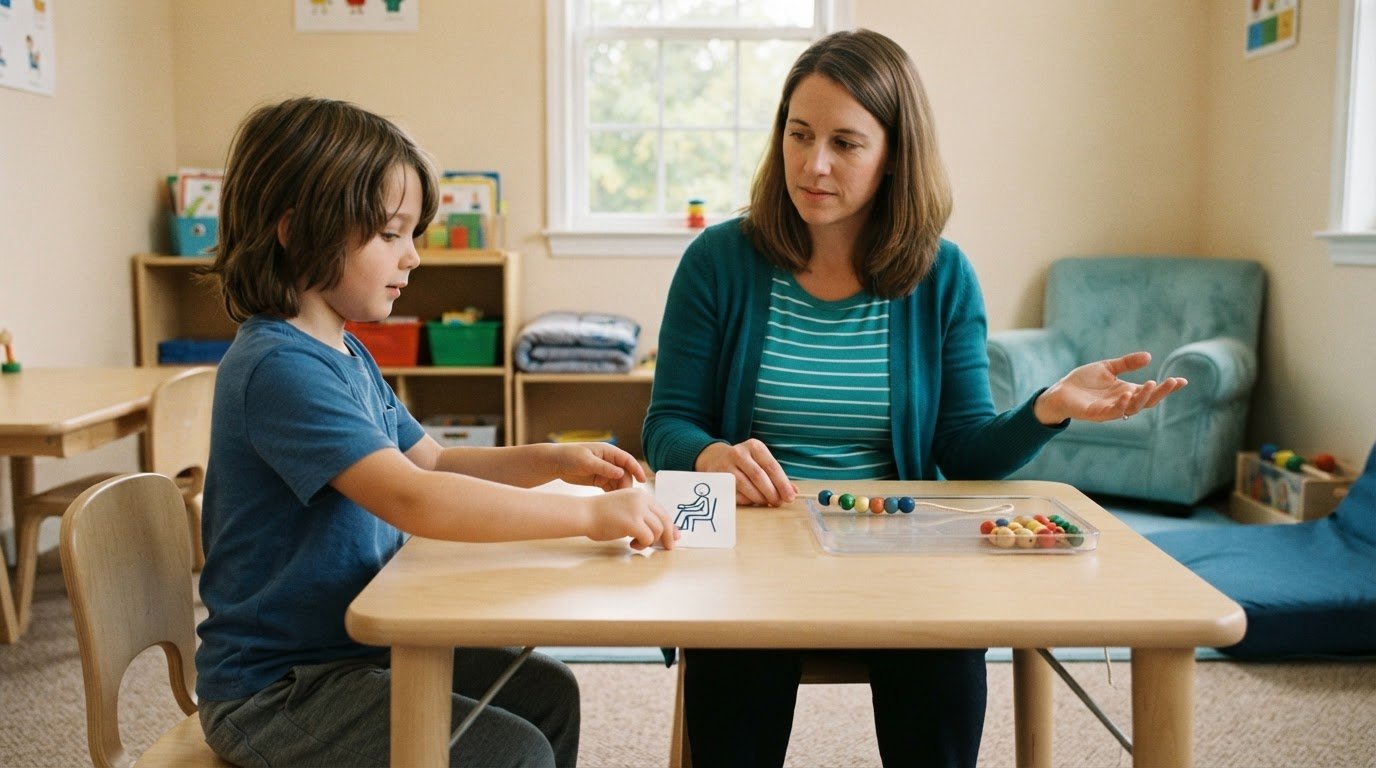
ABA goals describe skills a child can use in real situations, not a standard checklist for every child. A plan might focus on asking for help, joining peer play, or preparing a simple snack. These examples connect learning with independence and everyday quality of life. Explain that teaching starts with the child’s strengths, current abilities, and family priorities, then focuses on useful next steps.
Common goals include communication, social interaction, and daily living skills. Strategies may include breaking a task into smaller steps, modeling an action, practicing it, and using positive reinforcement to encourage learning. For example, a child learning to pack a backpack might practice putting one item inside, then work through the remaining steps. The teaching strategy should fit the skill and the child’s needs.
An individualized treatment plan makes those goals specific. A Board Certified Behavior Analyst (BCBA) conducts the initial assessment, designs the plan, and oversees the ABA program. Families can describe it as a roadmap: it identifies what the child is learning, how the team will teach it, and how progress will guide next steps. The plan can include measurable goals, such as using a communication response during a familiar routine.
Interventions should adapt as a child grows or circumstances change. If a child learns a skill at a table but struggles to use it during play, the team can change the practice setting or prompts. Families and practitioners can review what is working, discuss challenges, and adjust strategies. This keeps the plan responsive rather than applying a fixed set of techniques the same way over time.
Evidence-based ABA may support communication, peer play, and daily living skills, but its benefits depend on the goals and strategies used. Progress on one teaching goal does not automatically mean every skill or setting will change. Reviewing progress and family priorities helps keep treatment relevant.
ABA can be child-led, play-based, and centered on positive reinforcement. Families can ask how the child’s preferences shape activities, how the team responds to refusal or discomfort, and how consent and emotional safety guide teaching. These questions can make individualized care easier to understand than technical terms alone.
When discussing qualifications and treatment plans, families can ask who conducts the assessment, who oversees the program, and how the team measures progress. They can also ask how goals reflect the child’s strengths, how strategies change when challenges arise, and how family input is included. For example, a parent might ask how a communication goal fits the child’s usual morning routine.
3. Helping family members practice skills in everyday settings
A skill becomes more useful when a child can use it beyond therapy sessions. A child practicing a greeting, for example, might try saying “hello” during a family game or when greeting a familiar neighbor. Everyday activities can offer children with autism natural opportunities to practice communication, social skills, and independence. Practice should suit the child’s comfort and routine, not turn every family moment into a lesson.
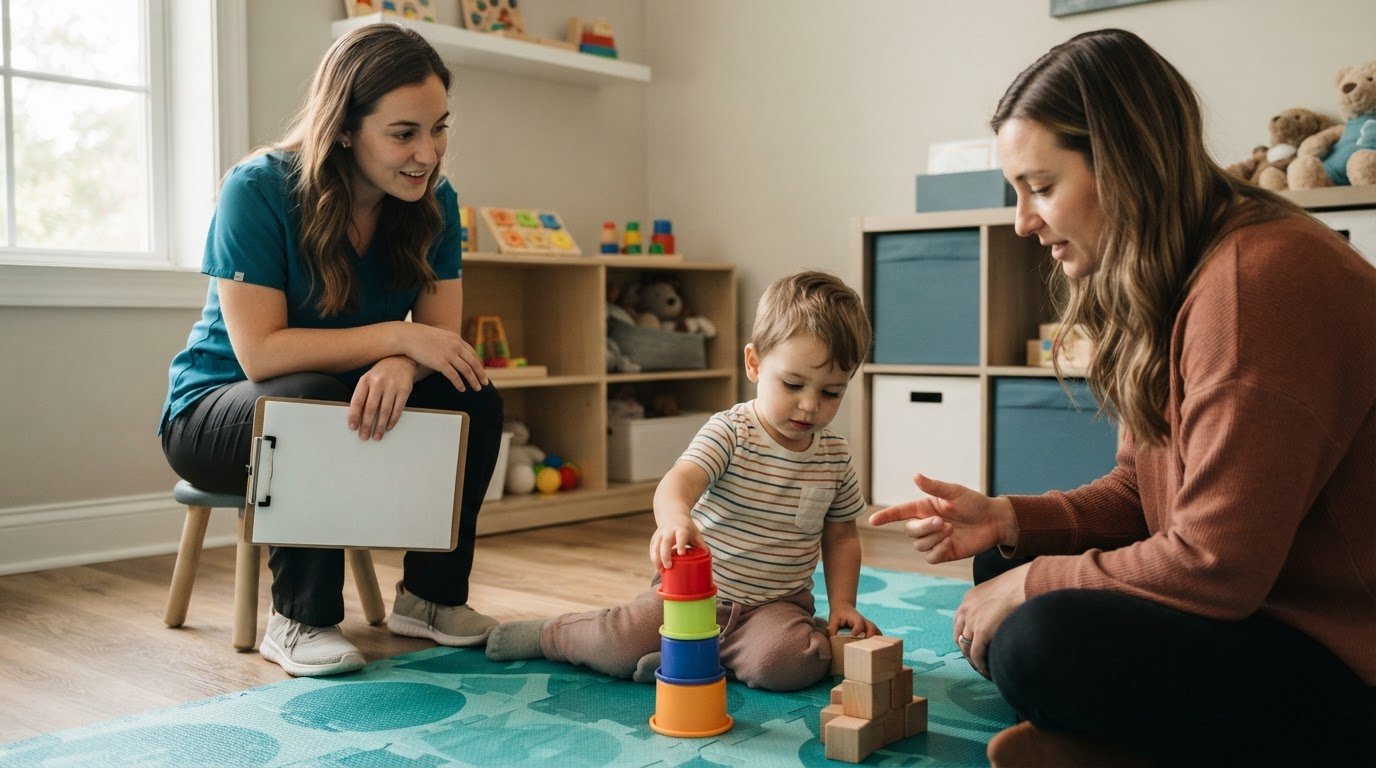
Consistency helps relatives support a skill without making home feel like a clinic. Family members can agree on one short prompt, such as “Tell me what you need,” and use it during a familiar routine. If a child is learning to ask for a break, adults can recognize that request in the kitchen, during play, and while getting ready. Caregivers can share observations with the therapy team to coordinate strategies across settings.
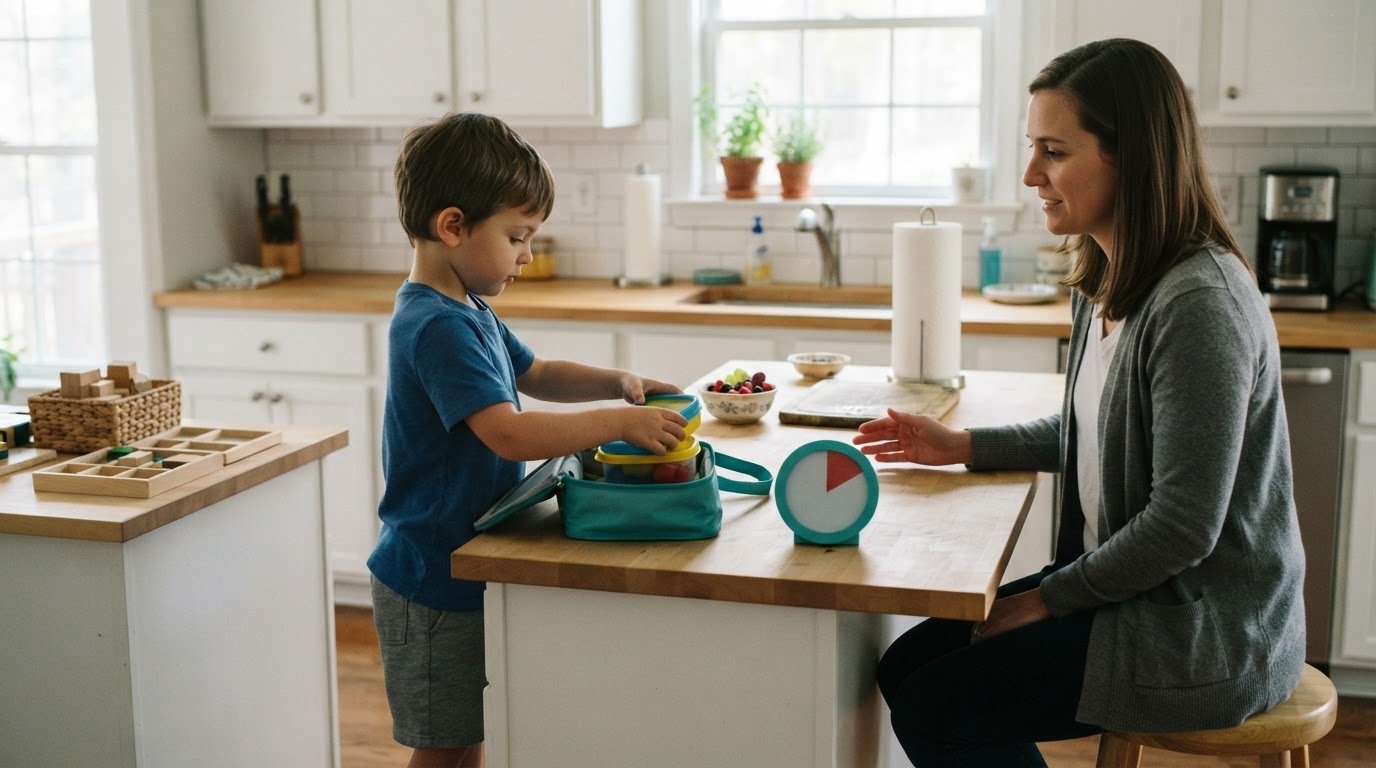
Choose a goal you can notice in everyday life. Instead of “improve communication,” a family might focus on the child asking for help with a difficult task. The team and caregivers can agree on what counts as the skill, which prompt to use, and where practice fits naturally. For example, they might notice whether the child asks for help opening a snack container.
Activities can create opportunities to practice while preserving connection. During cooking, a child might choose between two ingredients, follow a simple direction, or ask for a utensil. During a board game, relatives can model waiting for a turn and encourage the child’s participation. These moments offer chances to use skills, but the activity should remain enjoyable rather than feel like a test.
Relatives may have different views about autism or therapy. Set a clear boundary if a conversation becomes dismissive: “We’re focusing on what helps Jordan communicate, and we won’t debate his needs in front of him.” A parent can share a practical update, redirect the discussion, or pause it. Respectful limits protect the child while giving supportive relatives room to learn.
Expectations should focus on the next achievable step, not demand immediate mastery. If a child is learning to join a group activity, relatives can first invite them to watch, then offer a simple role, such as passing out cards. The family can notice which part felt comfortable and share that with the team. This makes progress easier to discuss without comparing the child with siblings or peers.
Agree on how family members will stay informed. A short update might name the skill, the routine where it is practiced, and a helpful response. With the therapist’s approval, a relative could observe a session and see the strategy in context. If schedules or competing priorities make regular conversations difficult, even a brief message about a successful activity can help keep everyone aligned.
4. Positive reinforcement at home
Positive reinforcement means adding something after a behavior to make that behavior more likely in the future. “Positive” means something is added; it doesn’t mean the response is automatically good or suitable for every child. If a child puts dirty clothes in the hamper and a caregiver gives specific praise, that praise may encourage the routine. The family can observe what happens next to see whether the approach supports progress.
Use examples relatives can picture. If a child waits while a family member finishes a phone call, the adult might say, “Thanks for waiting,” then give the child their attention. If a child starts a bedtime routine, a favorite story can follow. Praise, stickers, or a special outing can also reinforce a helpful behavior if the child enjoys them. The child’s response matters: a reward adults choose may not motivate that child.
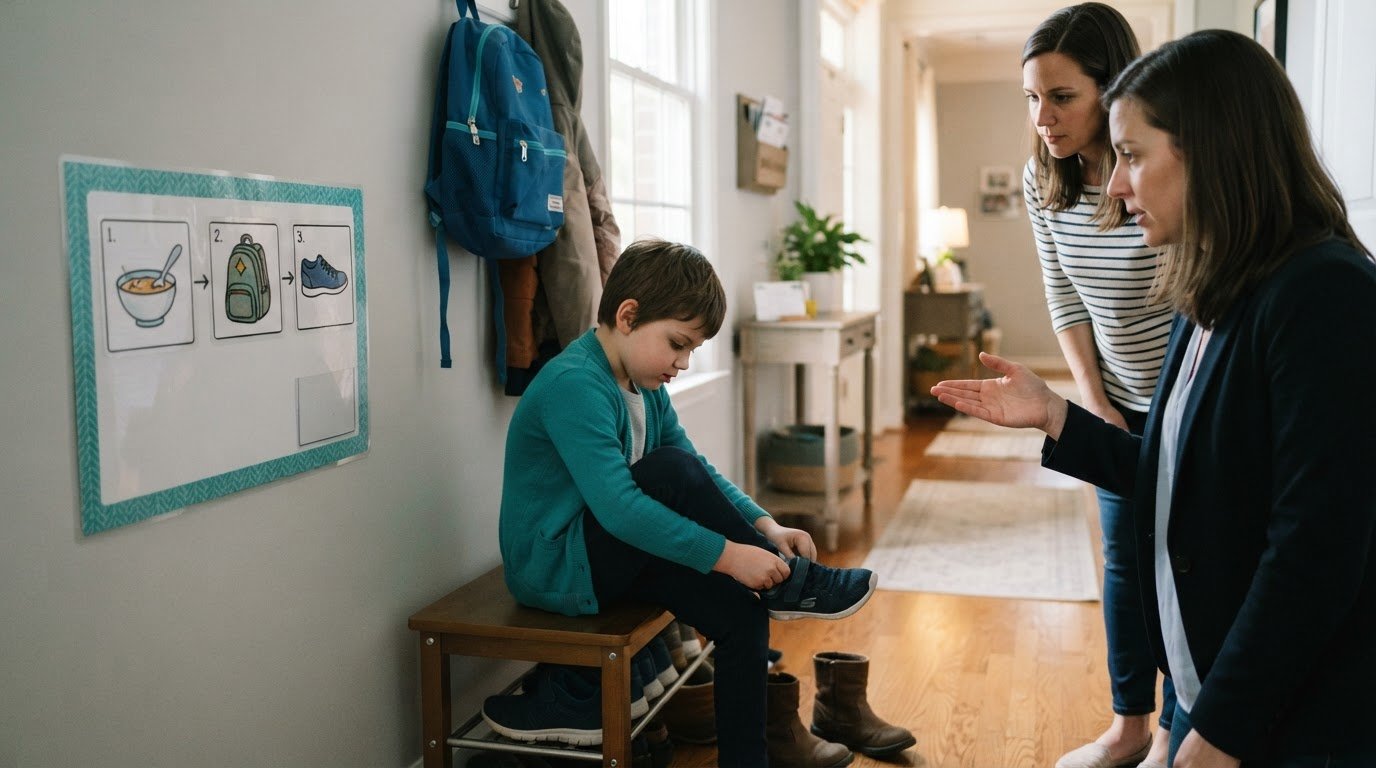
Families can explain the approach through three practical steps. First, identify a specific behavior, such as putting shoes by the door. Next, choose a meaningful response, such as warm praise or a preferred activity. Then notice whether the behavior happens more often. If it doesn’t, discuss the strategy with the therapy team and consider another response. This keeps collaboration focused on observation rather than assumptions.
Positive reinforcement differs from a bribe. A bribe is often offered during a difficult moment to stop behavior immediately; reinforcement is planned around a skill the child is learning. For example, a caregiver might praise a child for placing a plate on the counter after dinner. The praise follows the action and recognizes a useful contribution. It doesn’t require a large reward each time.
Positive punishment has a different technical meaning: adding a consequence after a behavior to reduce the chance it happens again. Here, “positive” means adding, while “punishment” refers to the intended effect on future behavior. The term can sound like approval, but it isn’t. Families shouldn’t use punishment as a default strategy or create consequences without guidance; the child’s individualized plan should guide responses.
If a relative worries that praise or rewards are “giving in,” explain the purpose with a concrete example: “We’re noticing when Sam asks for a turn, so asking becomes easier than grabbing.” Reinforcement supports a useful alternative; it doesn’t mean ignoring a child’s needs. A therapist can help families identify approaches suited to the child and goal.
Parent Coaching can help caregivers understand how to use positive reinforcement and behavior-management strategies at home. Families can bring a routine, such as getting ready for bed, and discuss which skill they want to encourage. They can also share which responses the child enjoys and what makes the routine difficult. This practical information helps connect therapy strategies with family life.
5. Explaining ABA in simple, nontechnical terms
Start with a sentence relatives can remember: “ABA helps a child learn useful skills through practice and encouragement.” This explains the approach without suggesting therapy removes autism. For example, a child might practice asking for a favorite toy, joining a game, or completing a self-care routine. The goal is to build skills that support independence and everyday life while respecting who the child is.
Another simple comparison is learning to ride a bike. An adult breaks the task into manageable steps, offers guidance, and notices each effort. ABA may use a similar teaching structure, with strategies selected for the child’s particular goal. If a child is learning to put on a jacket, practice might begin with finding the sleeves, then continue through each step. Describe it as learning one part at a time, not being expected to master the whole skill immediately.
Explain the principles through an example rather than a list of terms. During a session, a therapist might create an opportunity to request help, give the child time to respond, and acknowledge the communication. The team observes the child’s response and uses that information to guide future teaching. Relatives can understand the sequence: practice a meaningful skill, notice what helps, and adapt the approach to the child.
ABA can support communication, social skills, and self-care, not just behaviors adults find challenging. For instance, a child might learn to say “I need a break” or participate in a shared activity. Describe success in terms of the child’s own goal, such as communicating a need more clearly, rather than comparing the child with a sibling or peer. A specific example makes progress easier for family members to recognize.
Some relatives may hear “therapy” and picture a rigid series of drills. You can explain that ABA can be child-led, play-based, and focused on positive reinforcement. A child might practice taking turns through a game they enjoy, with the activity adapted to their interests. Families can ask how the child’s preferences shape sessions and how the team responds if the child shows discomfort or declines an activity.
If a family member asks what makes an intervention successful, keep the answer grounded in the child’s experience. The team defines a useful goal, teaches it in manageable steps, and reviews whether the child uses the skill in relevant situations. If a strategy isn’t helping with the goal, the team can discuss adjustments. This avoids promising that one approach works the same way for every child.
For a plain-language summary, try: “ABA is structured support for learning everyday skills. The team chooses goals with the child’s needs in mind, practices them, and follows the child’s progress.” Then invite a practical question, such as which skill the child is currently building. That keeps the conversation focused, respectful, and specific.
Divergent Minds ABA
Divergent Minds ABA works with families to create individualized ABA plans that support children’s confidence, independence, and everyday skills. If relatives have questions about therapy, the team can connect a child’s goals with practical support and family priorities. Clinic-Based ABA Therapy, Home-Based ABA Therapy, and Community-Based ABA Therapy offer different settings for care. Social Skills Groups give children another setting to practice interacting with peers.
Families can turn to Divergent Minds ABA when considering ABA support or seeking ways to fit individualized goals and strategies into their child’s life. Contact Divergent Minds ABA to discuss your child’s needs and your family’s questions.
Make the next conversation a shared one
Family conversations don’t need to settle every question at once. Choose one concern your relative raised and respond with a specific example of what matters to your child. You might explain a goal the child is working toward, describe how relatives can respond supportively, or set a respectful boundary around unhelpful comments. A calm, ongoing conversation leaves room for questions while keeping your child’s needs at the center.
If you’re considering how to explain ABA therapy to family, you can also invite them to learn alongside you. A parent coaching conversation can help you find clear language for your family’s questions and discuss ways to support your child’s goals. Divergent Minds ABA can talk with you about your family’s needs and the support that may fit. Contact Divergent Minds ABA to begin the conversation. Each thoughtful explanation can help relatives understand how to offer care that respects your child.
Frequently Asked Questions
Is ABA the same as autism?
No. Autism describes a person’s neurodevelopment, while ABA is a therapy approach that can support learning and development. One child with autism might work on communicating a need; another might focus on participating in a classroom routine. The diagnosis and the therapy are different things. Families can explain the distinction by saying, “Autism is part of how my child experiences the world; ABA is one support we’re considering.”
What is ABA Therapy?
Applied Behavior Analysis (ABA) uses behavioral principles to understand and support specific skills or behaviors. In practice, a team may look at what happens before and after an action, then plan teaching around the child’s goals. For example, if transitions are difficult, the team might examine how the child responds to a change in activity and consider supports that make the transition clearer.
What is ABA therapy and what does it involve?
ABA therapy involves individualized teaching, practice, and review of progress. A Board Certified Behavior Analyst (BCBA) designs and oversees the treatment plan, while a Registered Behavior Technician (RBT) may implement it under the BCBA’s direct supervision. Sessions may include structured learning or practice within everyday activities. The team gathers information during sessions to understand how strategies are working and whether the plan needs adjustment.
How can I explain ABA therapy to family members in simple terms?
If you’re deciding how to explain ABA therapy to family, try a short, personal explanation: “We’re working on skills that matter to our child, and the team adapts teaching to their needs.” Then offer a current example, such as practicing a way to ask for a pause during a busy family gathering. Invite relatives to ask questions, and share only details about your child’s therapy that feel appropriate.
What concerns or risks do autistic people and families raise about ABA?
Some autistic people and families raise concerns about pressure to comply, goals that don’t reflect the child’s priorities, or strategies that overlook distress. A respectful conversation can focus on how the team honors the child’s preferences, explains goals clearly, and protects emotional safety. Aversive methods, including electric shocks, are not considered acceptable today. Families can raise concerns with the team and discuss changes to goals or approaches.
How can families support a child receiving ABA therapy at home?
Ask the child’s team for guidance on a strategy that fits a real home routine, then share what happens during practice. For example, caregivers can note which part of getting ready for school feels manageable and where the child needs support. Parent Coaching helps families understand strategies and collaborate around daily routines. Families in Cary, Apex, and Raleigh can discuss personalized ABA support with Divergent Minds ABA.