
Following directions is a skill children can develop over time. ABA therapy for following instructions in Apex can help identify what makes directions easier to understand, then teach the skill through individualized goals, clear cues, prompts, and positive reinforcement.
It’s understandable to want everyday directions to feel less stressful for your child and family. Progress doesn’t mean expecting instant or unquestioning compliance. It means helping your child understand and respond to directions in ways that support communication and growing independence. Individualized planning can address the skills behind following instructions, while structured teaching and reinforcement make practice meaningful. Consistent routines can support learning across daily activities, and goals can change as your child’s needs and abilities develop. This keeps each step practical and useful beyond a therapy session.
How does ABA therapy play a role in enhancing behavioral skills related to following directions?
ABA links following directions with the skills that make them understandable and useful. A therapist may teach attention, communication, and emotional regulation alongside a direction such as “put your shoes by the door.” This broader approach can support adaptive functioning and social participation over time. Progress can be tracked through observable responses, such as starting a familiar task after a clear cue.
Attention can be supported by reducing distractions and giving one clear instruction at a time. During handwashing, for example, an adult might first say, “Turn on the water,” then allow time to respond. Communication matters, too: Functional Communication Training teaches a child to request help, a break, or clarification as an alternative to challenging behavior. These requests help adults understand what the child needs before repeating or changing a direction.
Emotional regulation also affects how a child responds to directions. If a transition feels overwhelming, a predictable cue and a practiced calming strategy can make the next step easier to approach. ABA sessions can teach and reinforce these skills during manageable activities, then gradually reduce prompts as the child responds more independently. A pause, gesture, or visual cue can support understanding without turning every direction into a test of compliance.
Communication and social interaction develop together in activities with peers. During a structured game, children can practice listening for “your turn,” asking to join, and responding when another child says “stop.” These examples connect directions to reciprocal interaction, rather than simple obedience. Group activities can also offer opportunities to practice sharing, waiting, and expressing preferences with words or another communication method.
Daily routines offer practical opportunities to use directions. Toothbrushing, getting dressed, and preparing a snack can be broken into smaller steps, with prompts matched to the child’s current skills. Consistent routines make expectations more predictable and can support independence. In the community, a child might practice stopping at a doorway or following a caregiver’s cue before crossing a parking area, with attention to safety and the child’s communication.
Practicing at home, school, and in the community helps a skill become useful beyond one session. A familiar “put your cup in the sink” direction can be practiced at home, while a teacher may use a related classroom cue. Aligning language, visual supports, and prompting strategies across settings can help adults support learning consistently. Shared observations can also show whether a child responds differently with a new person, in a new setting, or during a changed routine.
There are risks when ABA focuses on compliance alone: a child may feel pressured to follow directions without expressing discomfort, refusal, or a need for help. Goals should build meaningful communication and independence, not suppress harmless differences or put obedience ahead of the child’s wellbeing.
Individualized assessment and treatment planning
Supporting a child to follow directions starts with understanding how they learn. An individualized assessment considers communication, attention, current abilities, preferences, and situations where instructions are difficult. For children with autism in Apex, the aim is to identify useful, meaningful skills, not assume every child needs the same approach. A direction missed during a noisy classroom activity may call for different support than one missed during a familiar home routine.
A Functional Behavior Assessment can examine what happens before, during, and after a behavior, often described as antecedents, behaviors, and consequences. For example, if a child leaves the table after being asked to begin a task, the assessment explores the task, the wording, and what follows. This helps the team understand possible barriers and select a tailored teaching approach instead of relying on repeated instructions.
Goals should describe an observable skill and how progress will be measured. Examples include completing handwashing steps in four out of five opportunities, making spoken requests for toys five to 10 times a day, or initiating play with peers three times daily. These examples aren’t targets for every child. An individualized plan selects goals that matter to the child’s daily life and current development, then defines what counts as a successful response.
Data collection helps keep the plan responsive. During sessions, the team may record whether a child follows a direction independently, uses a visual prompt, or needs additional support. If the child succeeds with a picture cue but not spoken directions, that pattern can guide the next adjustment. Regular progress reviews help the team decide whether to change the cue, practice in another setting, or build toward a more complex task.
North Carolina Medicaid plans cover ABA therapy for eligible children under age 21. Commercial insurance coverage depends on the specific plan’s benefits and authorization criteria, so families should review their policy for applicable terms.
When choosing ABA therapy in Apex, look for an individualized assessment, meaningful goals, progress tracking, and family involvement. A well-developed plan connects following instructions with communication and practical independence, rather than measuring success by compliance alone. It should also consider how skills can carry over to home, school, and community routines.
For example, an initial goal might focus on responding to a familiar direction at home. Once the child demonstrates that skill, the plan can explore whether the same cue works with another adult or in a different setting. The team can use ongoing observations to shape each next step, keeping targets specific and relevant. Families can share their child’s priorities as part of a conversation about individualized goals.
Why is following through with instructions so important?
Following a direction can help a child take part in daily activities, from getting ready to joining a game. For children with autism, teaching these skills within meaningful routines connects learning with everyday life.
Measurable Goals for Routines and Instructions
A measurable goal describes an observable response, the situation where it occurs, and how progress is recorded. For example, a child might follow a direction to place a backpack by the door after school, with support noted separately from independent responding. This clarity helps the team see whether the goal supports the child’s routine and whether teaching should continue or change.
Goals can also address directions that support participation, such as putting away art materials before choosing another activity. The team can record whether the child begins after a spoken cue, a visual reminder, or both. These details show which supports help without treating speed or unquestioning compliance as the only measure of success.
Functional Routines and Consistency
Functional routines are familiar sequences of actions that help a child participate in daily life, such as packing a school bag before leaving home. Consistent cues make the sequence more predictable, while practice supports learning through repetition. If the order changes, a visual schedule can show what comes next and help the child prepare for the transition.
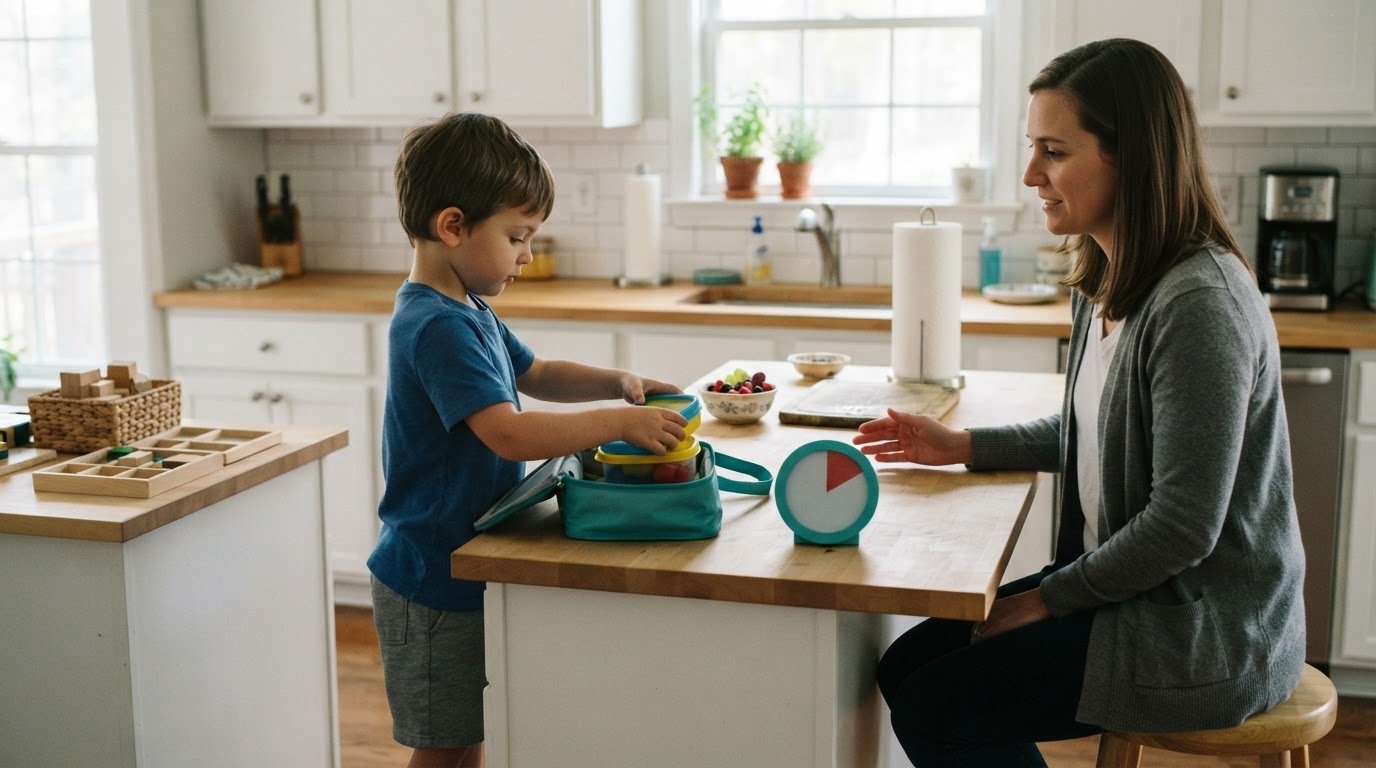
Consistency doesn’t mean every adult must use identical words. Caregivers and teachers can agree on a clear cue for a specific step, such as “lunchbox in the bag,” and use it reliably. Predictable language can reduce confusion between home and school while leaving room for flexibility when a child needs extra time or assistance.
Naturalistic teaching places learning opportunities within activities the child already enjoys or needs to complete. During snack preparation, for instance, an adult can invite the child to get a plate, open a container, and put items away afterward. The child practices directions in context, rather than only responding during a separate teaching exercise. Preferred activities can also support motivation and communication.
ABA strategies can make routines easier to learn by breaking complex activities into manageable steps. Preparing a simple snack, for example, might involve gathering ingredients, assembling them, and cleaning the space. An adult can model a step, offer a prompt when needed, and gradually reduce support as the child learns. Reinforcement can acknowledge effort and participation, not just a perfect sequence.
Following functional directions can also help children participate with others. During a board game, a child can practice listening for whose turn comes next, asking for a needed piece, and responding when the activity ends. These directions support social skills by connecting communication with shared play. A familiar cleanup cue after the game can help carry the routine into another activity.
Daily practice should respond to the child’s needs. If a direction becomes difficult during a rushed morning, an adult can simplify the cue, show the next step, or allow more processing time. These adjustments keep the routine useful while supporting independence, communication, and participation at home and school.
Positive reinforcement and structured routines
Positive reinforcement connects a child’s action with a meaningful outcome. In applied behavior analysis, reinforcement and predictable routines can support learning to follow directions during everyday activities.
Immediate Positive Reinforcement
Immediate positive reinforcement means providing a meaningful response soon after a child completes a desired step. After a child puts a book on the shelf when asked, an adult might offer specific praise or access to a preferred activity. Close timing helps connect the direction, the child’s action, and its outcome. Reinforcement should reflect the child’s preferences, not an adult’s assumptions.
Reinforcement and Prompting
Prompting supports a response, while reinforcement follows the child’s successful effort. For example, an adult may point to a coat hook after saying, “Hang up your coat,” then acknowledge the child’s response. As the child learns the routine, the adult can reduce the gesture or pause before prompting. This supports independence rather than making the prompt a permanent part of every direction.
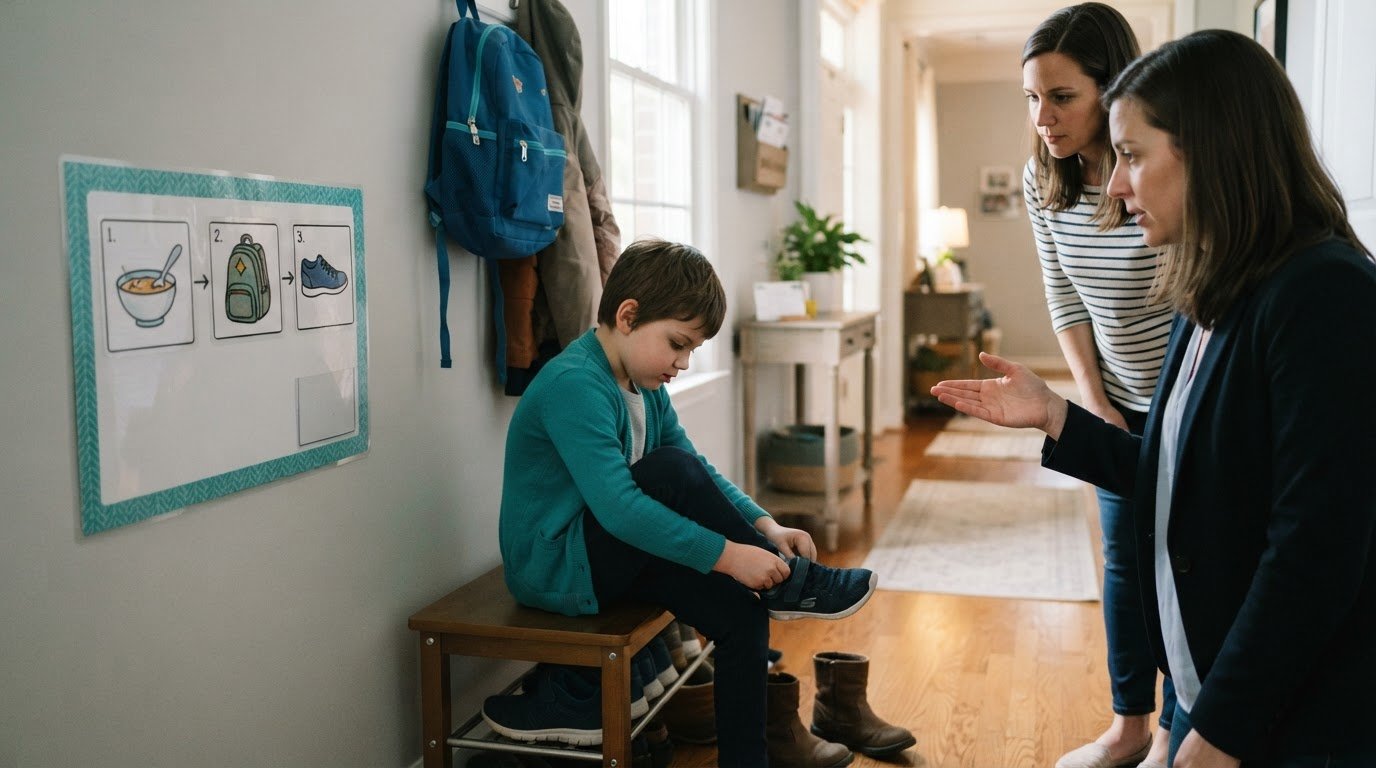
Structured routines give directions a clear place in the day. A visual schedule might show breakfast, getting dressed, and leaving for school in sequence. When the child completes a step, a brief, specific acknowledgment can reinforce participation. If the morning routine changes, an adult can update the schedule and explain the new order instead of repeating an outdated cue.
A token economy uses tokens as a visible form of reinforcement that can be exchanged for a chosen reward. For example, a child might earn a token after putting away play materials and later exchange tokens for extra time with a favorite activity. The target behavior and exchange should be clear. Tokens work best as part of an individualized plan, not as pressure to follow every instruction.
Reinforcement can recognize small steps toward a larger routine. During dressing, an adult might acknowledge choosing a shirt, then putting it on, before expecting the full sequence independently. This lets teaching build on the child’s strengths and shows which step needs more support. For a child with autism, preferences, communication, and sensory comfort can shape what feels meaningful and positive.
Everyday activities provide opportunities to practice without separating learning from family life. At snack time, for instance, an adult can reinforce bringing a cup to the table after a simple direction. A brief analysis of the child’s response can guide whether to keep the same cue, add a visual prompt, or adjust the routine. The goal is functional participation, not reward-driven compliance.
What age groups benefit from ABA instruction-following goals?
ABA therapy can begin at any age, and instruction-following goals should reflect the person’s needs and daily routines. Early childhood is commonly recommended as a time to begin, often at 2 to 3 years old, but age alone doesn’t determine which goals are appropriate.
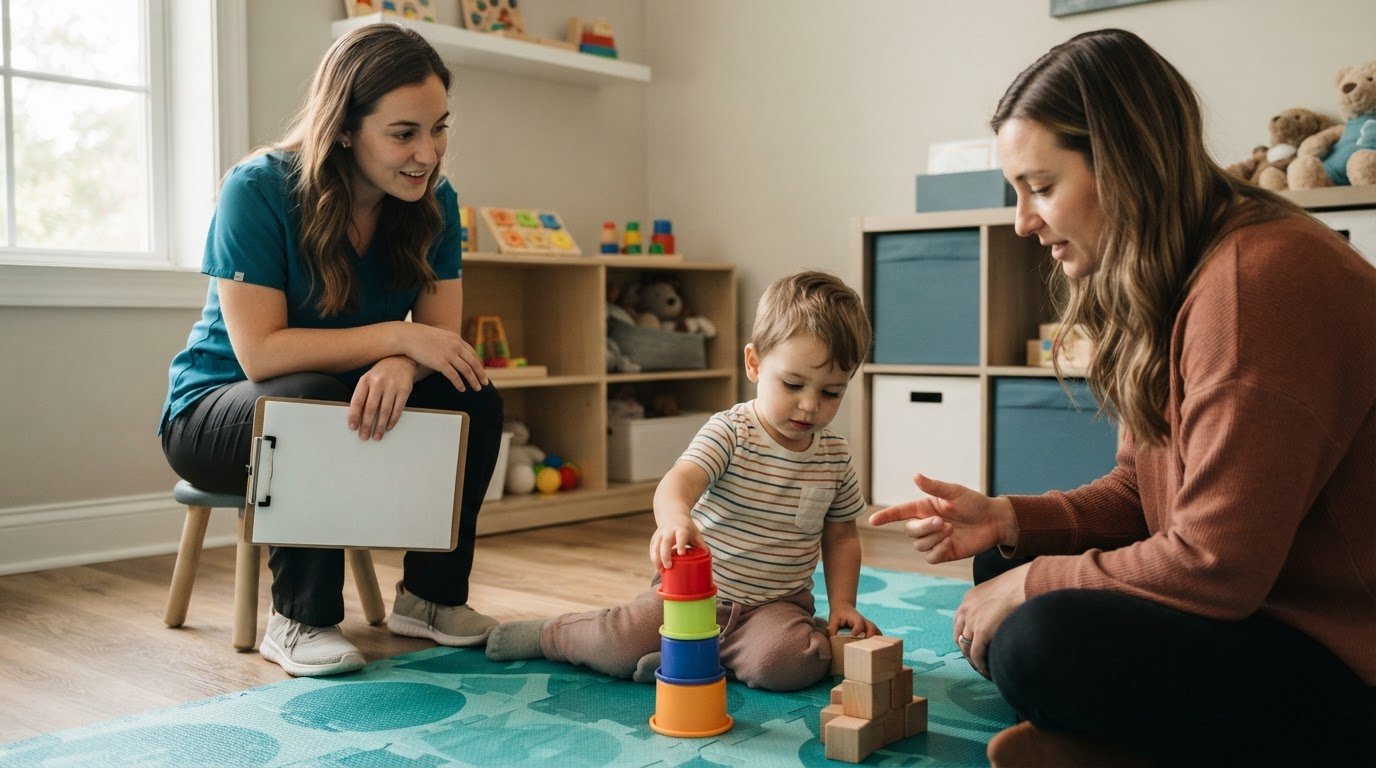
For a young child, a useful goal might be responding to “come here” during play or following a cue to put a toy away. These early directions can support participation in family activities and help a child communicate needs. A therapist considers the child’s current skills, interests, and understanding before selecting a target. The goal is meaningful learning, not expecting a toddler to follow every instruction immediately.
As children grow, goals can connect with new responsibilities and settings. A preschooler might practice putting a lunchbox in a cubby, while an older child may work toward following a classroom checklist or preparing materials for an activity. These examples show how following instructions can develop alongside changing routines. The relevant measure is whether a direction supports the child’s participation and independence, not whether it matches a particular age milestone.
For school-age children, goals may focus on understanding directions from different adults and using them in familiar situations. For example, a child might follow a teacher’s cue to gather supplies, then use a similar routine at home before homework. Plans can account for communication style, sensory needs, and task complexity. A child who uses a visual schedule can still build independence with that support.
Progress also depends on how a direction is worded. “Get ready” may be too broad, while “put your shoes beside the door” identifies a clear action. For a multi-step activity, such as packing a school bag, the teaching plan can address one part at a time. As each step becomes familiar, the team can consider adding another step or practicing in a different setting.
Age-appropriate goals respect the child’s choices and communication. A child should have ways to ask for help, request a pause, or show that a direction is unclear. During an art activity, for instance, the child might ask for help opening a container rather than being expected to complete the step alone. Following instructions is most useful when it supports access to learning, relationships, and everyday participation.
Families in Apex can discuss goals that fit their child’s current routines and developmental priorities. Share your child’s instruction-following goals to start a conversation about individualized support.
Divergent Minds ABA
Divergent Minds ABA helps families turn instruction-following goals into individualized skills that support communication, confidence, and everyday independence. The team develops evidence-based ABA plans in partnership with families, focusing on meaningful steps such as responding to a familiar cue, completing part of a routine, or asking for help.
Support can take place in a clinic, at home, or in the community, with the setting shaped around the child’s goals and where practice is useful. Social Skills Groups can also create opportunities to follow directions during shared activities with peers. Families may consider this support when directions remain difficult across daily routines or when they want a structured plan for building skills gradually.
To discuss goals for your child, contact Divergent Minds ABA.
Build the next step around your child
Instruction-following goals are most useful when they support a child’s priorities, communication, and participation. A helpful next step is to discuss where directions are hardest, which routines matter most, and what progress would look like for your family. This can turn a broad concern into goals that feel relevant in daily life.
For families considering ABA therapy for following instructions in Apex, Divergent Minds ABA offers Clinic-Based ABA Therapy, Home-Based ABA Therapy, and Community-Based ABA Therapy. The setting can connect skill-building with a child’s everyday experiences, while individualized planning keeps goals centered on the child. Families can share what they hope to make easier, from transitions to taking part in familiar activities.
Contact Divergent Minds ABA today to discuss your child’s goals and possible next steps. Each meaningful skill can begin with one clear, supportive step forward.
Frequently Asked Questions
How can ABA therapy help my child?
ABA can help a child learn specific skills that make daily expectations more manageable. If shifting from a preferred activity to a class task is difficult, a plan might teach a transition signal, a way to request more time, and the next action. The team can observe which supports help and adjust teaching accordingly. This connects learning with communication and participation, rather than treating compliance as the only goal.
Does ABA therapy work?
ABA uses observation, practice, and individualized strategies to teach useful skills. Progress is evaluated by looking at whether a child uses a skill in relevant situations, such as joining a classroom activity or communicating a need. Families and practitioners can review that information together and consider whether a goal or teaching approach should change. The purpose is meaningful development, not a uniform outcome for every child.
What Is ABA Therapy and Why Does It Matter?
ABA therapy applies behavioral principles to teach skills that support daily life. A broad concern, such as difficulty during transitions, can be understood by looking at specific situations and responses. That understanding can shape practical goals, such as communicating “one more minute” before leaving a favorite activity. The aim is to support learning and participation while respecting the child’s needs and communication.
What is Applied Behavior Analysis?
Applied Behavior Analysis studies how behavior relates to a person’s environment and uses that understanding to teach practical skills. “Applied” means goals connect to real needs, while “analysis” involves examining patterns and observing responses. For example, a team might consider what happens before a child asks for help, then teach a communication response that works in everyday activities.
Where is ABA Therapy Provided?
ABA therapy can take place in a clinic, at home, or in community settings, depending on the learning goals. A clinic may provide a dedicated space for structured activities, while home practice can connect with family routines. Community sessions can relate skills to real-world activities. For families in Apex, Cary, and Raleigh, the setting can be considered alongside the child’s goals and the routines they want to support.
What is ABA therapy for following instructions?
ABA therapy for following instructions in Apex focuses on helping a child understand and respond to directions that support everyday participation. A goal might involve following a direction to return a library book to its marked place, then asking for help if the label is unclear. Teaching can account for receptive language, attention, and the child’s preferred ways of communicating, while tracking responses over time.
How does ABA teach children to follow instructions?
ABA teaching can make a direction easier to learn by clarifying the expected action, offering suitable support, and observing the child’s response. During a school line-up, for example, an adult might pair “stand behind your classmate” with a visual marker on the floor. The team can note whether the child responds to the words, the marker, or both, then adapt support as understanding develops.
What ABA techniques help with receptive language and compliance?
Visual supports, clear wording, modeling, and prompts can help a child understand what a direction means. For example, a picture showing “put away” can clarify a cleanup cue. The goal is communication and meaningful participation, not automatic obedience. A child also needs a way to express confusion, discomfort, or refusal. These responses give adults useful information about how to make directions clearer and more respectful.