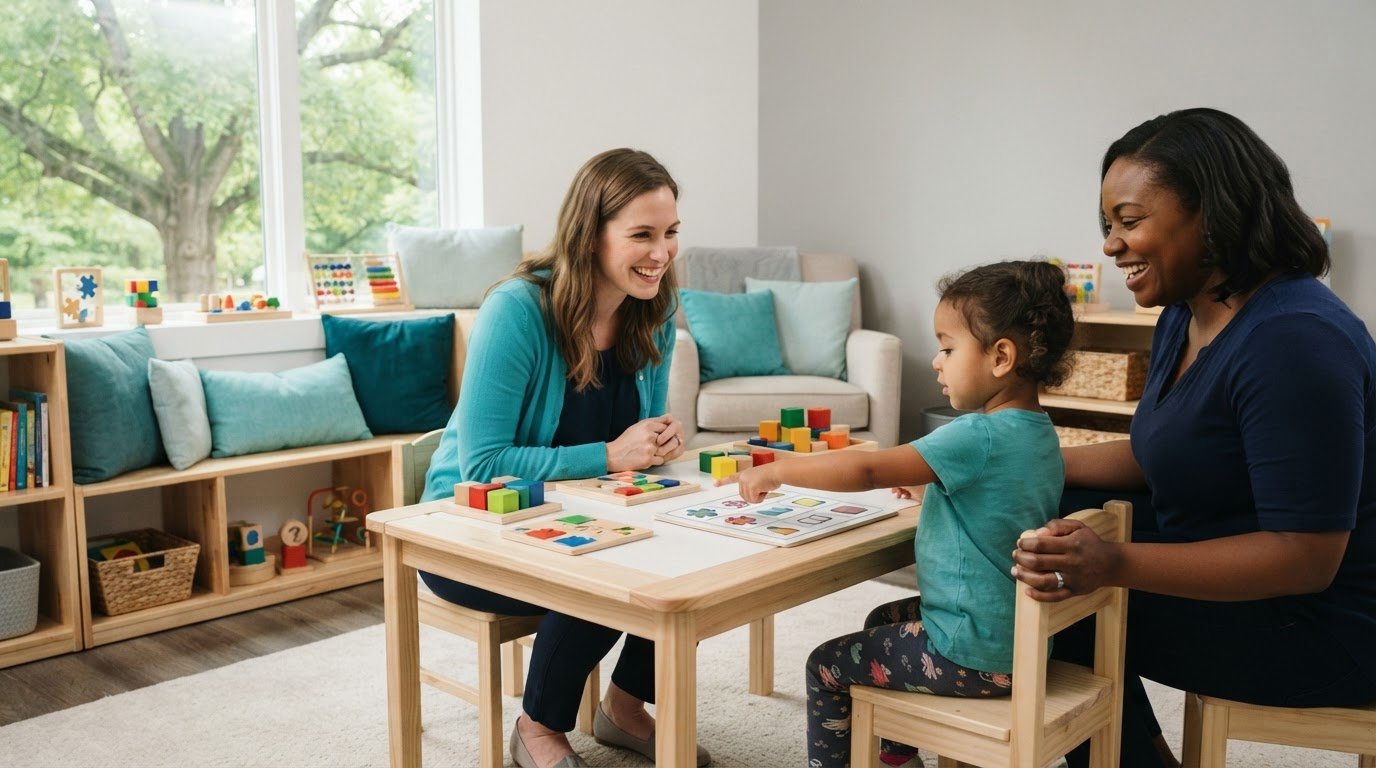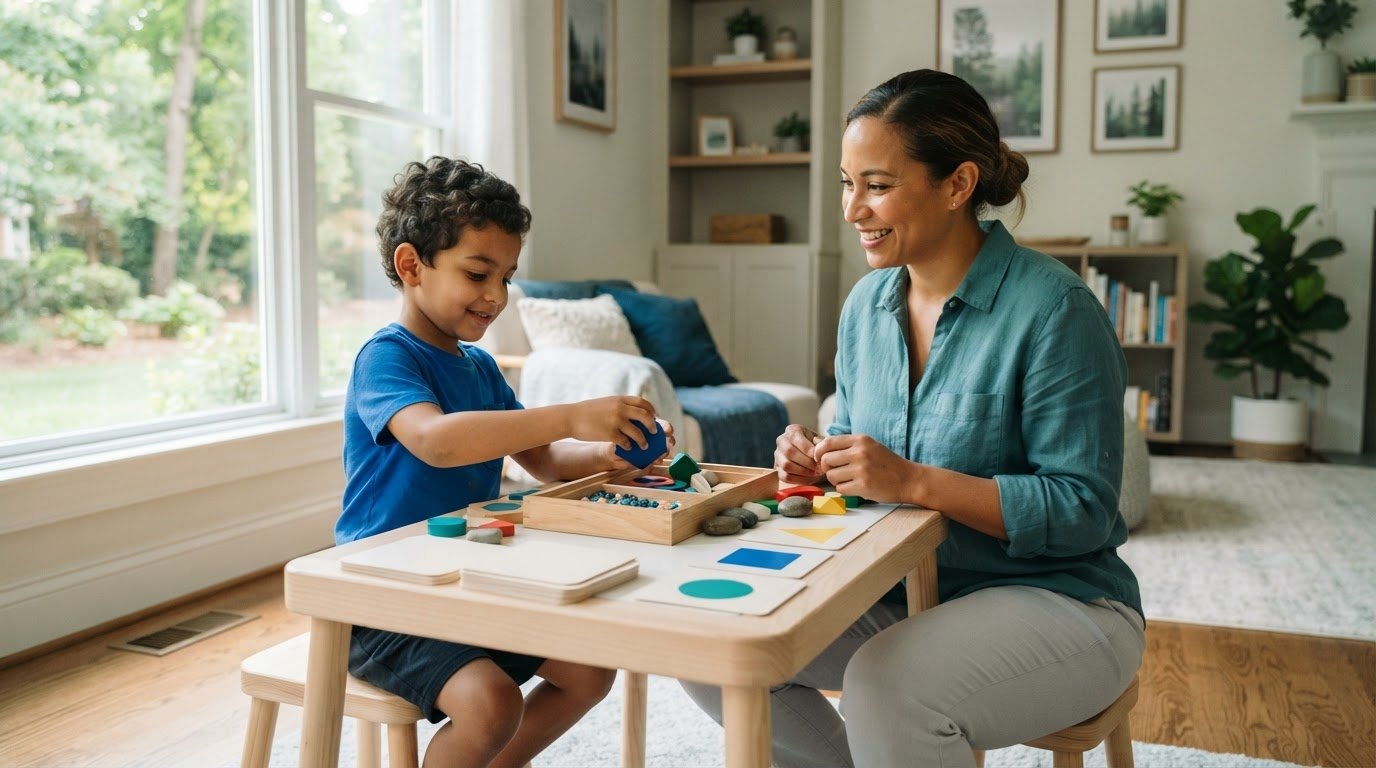

What if the goal of social emotional learning for autism weren’t to help a child seem more neurotypical, but to support self-understanding and connection on their own terms? It’s reasonable to wonder whether SEL will respect a child’s communication and sensory needs or pressure them to mask. Supportive SEL can help a child notice emotions and body cues, express what they need in ways that work for them, and build relationships grounded in mutual respect. It shouldn’t require eye contact, suppress harmless self-regulation, or ask a child to perform social behaviors for others’ comfort.
This guide explains how SEL differs from social skills instruction and compliance-based expectations, and how families can turn broad ideas into practical, individualized support. You’ll find ways to encourage emotional understanding, self-advocacy, and meaningful connection in everyday routines, along with signs that professional guidance may help. For some children, individualized ABA, social skills groups, or parent coaching can support goals that reflect their preferences, communication, and daily life. The focus is on useful skills and greater agency, not changing who a child is.
What Social Emotional Learning for Autism Means, and What It Is Not
Families want their children to feel understood and connected without being asked to hide who they are. That distinction matters. Social emotional learning for autism should build skills that help a child understand themselves, communicate their needs, relate to others, and make choices, not train them to perform neurotypical behavior. SEL covers learning about emotions, self-awareness, communication, relationships, and decision-making. A widely used framework groups these ideas into five core competencies, as outlined in Social and emotional learning (SEL). The meaningful measure is whether a child has more agency and access to connection, not whether they follow an expected social script.
To see one example of SEL discussed in an autism context, watch this video from Els for Autism:
How does SEL apply to autistic children?
Emotional learning is individual. A child’s communication style, sensory experiences, interests, and surroundings all shape how they notice and express feelings. One child may talk about feeling overwhelmed; another may use an AAC device, write, gesture, move away, or show distress through behavior. Each can convey meaningful information. Rather than assume one response fits everyone, adults can observe what happened, consider what the child may be communicating, and offer time and accessible ways to respond.
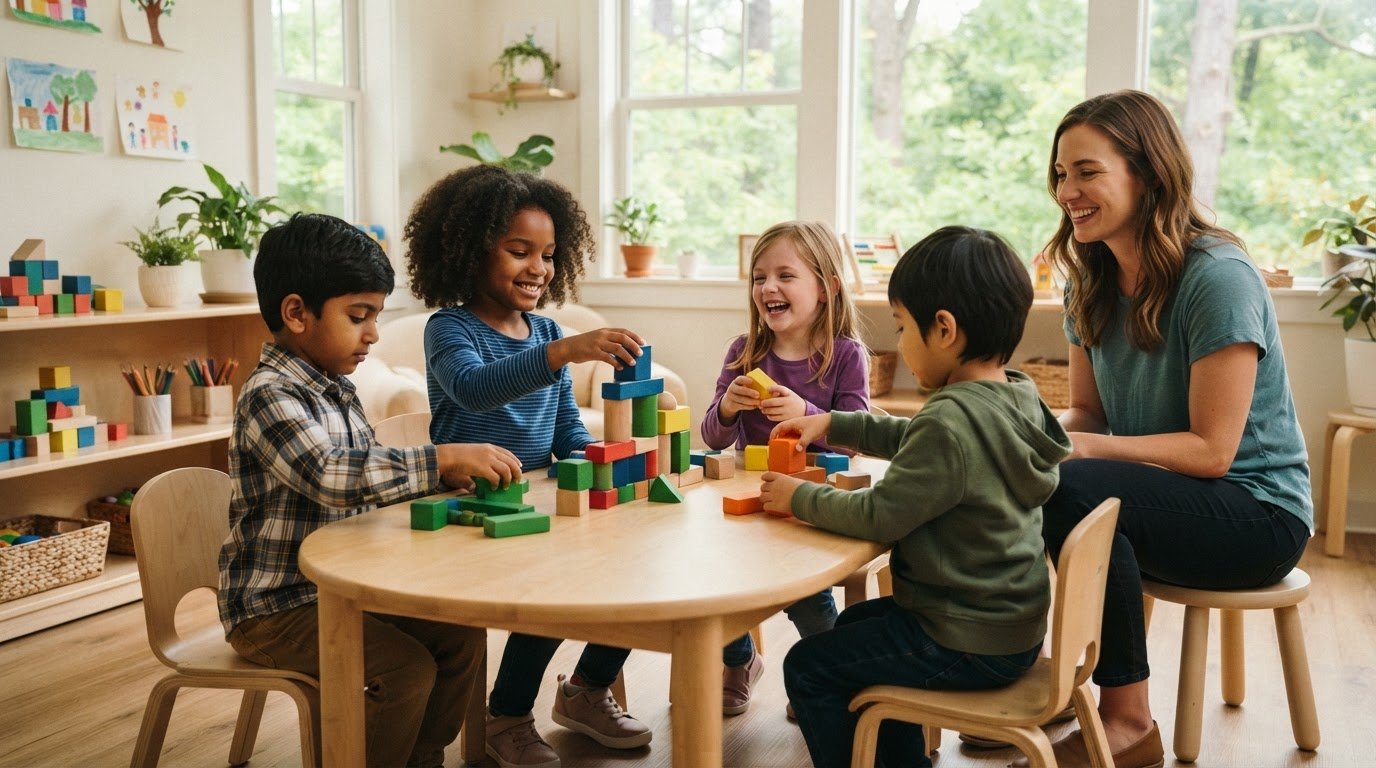
Start with what matters to the child. A child who loves maps might use them to describe places that feel comfortable or overwhelming. A child who prefers parallel play may connect by building alongside a peer instead of joining a group conversation. Goals can recognize strengths, honor preferences, and make communication easier across daily settings.
SEL, social skills instruction, and masking are not interchangeable
SEL is a broad area of learning about emotions, relationships, and choices. Social skills instruction focuses on particular interactions, such as asking to join a game or clarifying a misunderstanding. Those skills can be useful when they serve the child’s own goals. For example, a social skills group can offer opportunities to practice interaction in a supported setting. The purpose should be meaningful participation, not passing as non-autistic.
Masking means hiding or suppressing autistic traits to meet social expectations. Teaching a child to make eye contact, stop harmless self-regulation, or comply without understanding or choice can prioritize appearances over well-being. Instead, center consent, safety, authentic expression, and skills the child values, such as requesting a break or communicating “no.” Meaningful connection is shared understanding, not a performance of the socially expected response.
How Autism-Informed SEL Builds Emotional Awareness and Connection
Emotional awareness can grow through a flexible sequence: noticing an internal cue, connecting it with a possible need, communicating that need, and choosing what might help. The steps don’t always happen in order, and a child may need adult support to identify what’s going on. The aim isn’t to make every feeling disappear. It’s to help the child understand their experience and have more ways to respond.
Context matters. A child who leaves a busy room may be responding to noise, fatigue, uncertainty, or several things at once. Rather than treating the behavior as a problem to stop, consider what happened just before it and whether the environment or communication demands made participation harder. A quieter space, extra processing time, or a clear way to ask for a pause may make the next step more accessible.
Recognizing feelings, body signals, and needs
Start with observable moments without assuming you know exactly how the child feels. A child might cover their ears when sound feels uncomfortable, move closer when excited, become still when uncertain, or leave when they need a break. Facial expression, tone, and eye contact don’t reliably tell the whole story. Calmly offering a possibility, then allowing time to respond, can help the child build a vocabulary for their own experience.
Some children find emotion words useful; others may prefer pictures, body outlines, written choices, gestures, or no visual tool at all. Offer these as options, not tests. For example, an adult might say, “The room got louder. Would you like to stay, move somewhere quieter, or take a break?” A child can point, speak, use AAC, or show their choice another way. Notice which options the child uses and whether the choice led to a more comfortable way to participate.
Practicing communication and connection in real contexts
Low-pressure practice works best when it connects to something the child already cares about. If a child enjoys trains, sharing a timetable or taking turns choosing a route can create a natural opportunity for interaction. Connection might mean talking together, exchanging messages on a device, playing side by side, or enjoying a shared activity quietly. Reciprocity can look different from a rapid back-and-forth conversation.
Communication access gives a child practical ways to express feelings, set boundaries, and ask for what they need. Keep a communication system available in the places where the child uses it, and make sure key messages such as “stop,” “help,” “too loud,” and “break” are easy to reach. Allow time for the child to formulate a response; don’t require speech when another communication method works for them.
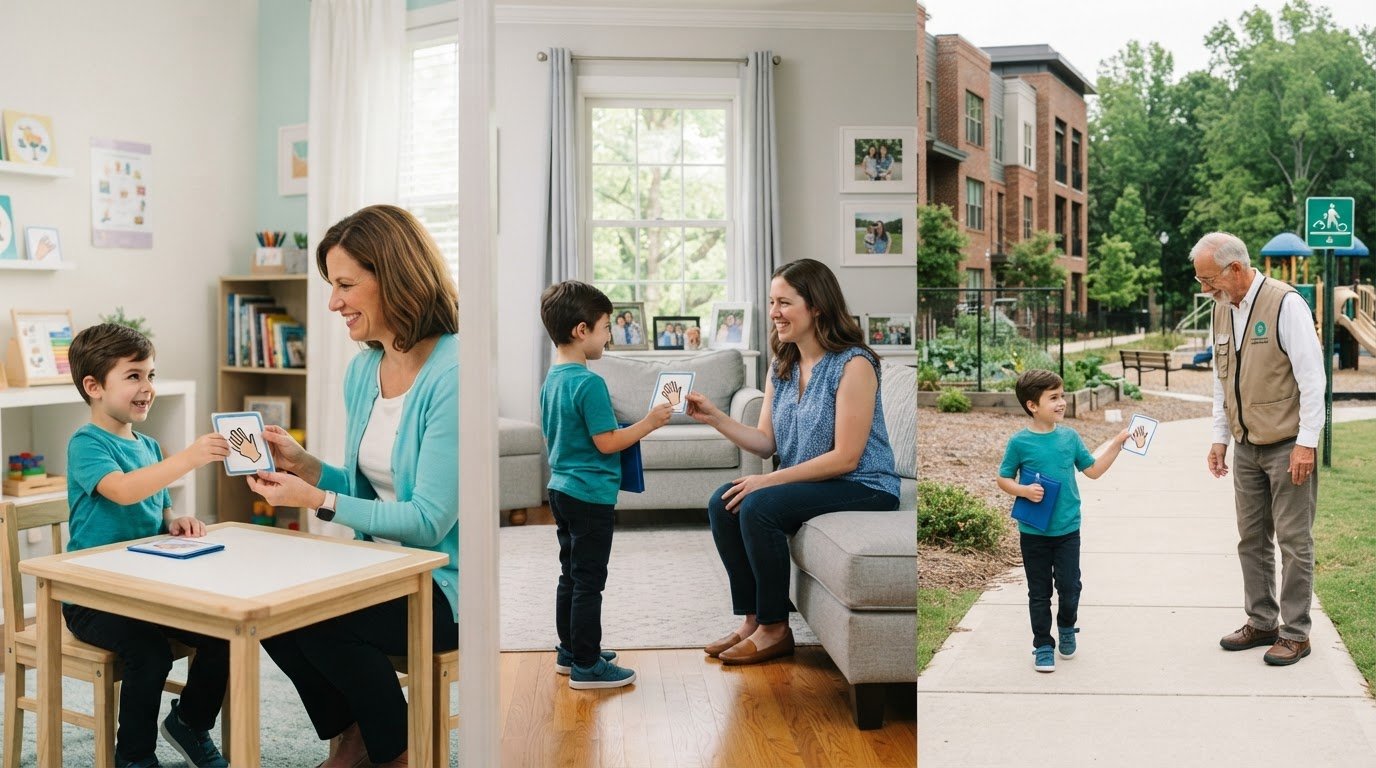
Generalization means a useful skill is available in different situations where the child wants or needs it. A child might practice requesting a break during a calm activity, then use that same message at home, in a group, or in the community. Practice should remain predictable and respectful. Notice whether the strategy fits the moment rather than demanding it on cue. Families who want support adapting strategies to daily routines can explore parent coaching for family routines.
How to Tell Supportive SEL Apart From Compliance or Masking
A goal can look positive on paper and still fail to support a child. The difference lies in its purpose and effect. A child-centered goal helps them communicate, feel safer, participate by choice, or build a relationship that matters to them. A compliance-based goal may instead reward stillness, eye contact, or following directions automatically, even when those actions don’t improve the child’s comfort or access.
Distress, withdrawal, or refusal can communicate that something is wrong: a demand may be unclear, a space may feel overwhelming, or the child may need more time or support. These responses deserve curiosity, not an automatic push to continue. Structured teaching isn’t inherently harmful. Its value depends on what is being taught, how the child experiences the teaching, and whether the skill serves a meaningful purpose in their life.
Questions that reveal whether a goal respects the child
Before working on a goal, pause to consider what it will make possible for the child. Useful questions help families and clinicians check whether the goal is individualized and whether the child can communicate preferences or ask for support. If the goal creates distress or reduces autonomy, review it together and consider a different approach.
- Does this goal improve access, communication, well-being, safety, or a relationship the child values?
- Can the child say no, pause, ask for help, or request a different way to participate?
- Are we measuring a useful outcome, or an outward behavior such as eye contact or quiet hands?
- What happens before and after the behavior, and could sensory, communication, or task demands be contributing?
Families can share what they notice at home, while clinicians can help examine the goal and adjust its teaching plan. A simple record of the situation, the child’s communication or response, and what helped can make patterns easier to discuss. Revisit goals regularly, especially if a child’s response suggests the current approach isn’t working for them.
What meaningful progress can look like
Progress may be quiet or context-specific. A child might use a gesture to indicate “stop,” choose AAC to explain a boundary, or ask for a break before becoming overwhelmed. They may participate in a group on one day and need a quieter option on another. Growth doesn’t require the same response in every setting.
- Self-advocacy: Communicating “too loud,” “help,” or “I’m done” in a way that works for the child.
- Choice and consent: Selecting whether to join an activity, how to take part, or which communication method to use.
- Supported participation: Taking part with a trusted adult, an accommodation, or time to recover when needed.
Rest and environmental adjustments can matter more than visible performance. A child who steps away from a noisy activity may be making a meaningful choice, not failing a social goal. In individualized social emotional learning for autism , the measure of progress is whether a skill supports the child’s safety, agency, and valued connections. Families who want to discuss how goals can fit a child’s daily life can talk with our team about individualized support.
Practical Ways to Support Social Emotional Learning at Home and in Daily Life
Useful practice doesn’t need to feel like a lesson. Start with a familiar moment, respond to what the child may be communicating, and make room for their choice. This flexible sequence can help caregivers organize their response without expecting the child to follow a script:
- Notice the moment. Observe what’s happening around the child, including noise, transitions, fatigue, and the activity itself.
- Consider the need. Offer a simple possibility, such as “This feels different” or “Do you need more time?”
- Make choices accessible. Offer a few options the child can understand and communicate about, including “not now.”
- Reflect without pressure. Later, acknowledge what helped or what was difficult. The child doesn’t have to explain or discuss the moment if they don’t want to.
The sequence is a guide, not a checklist. Sometimes the most helpful response is to reduce demands or give the child space, rather than ask questions.
Build practice into routines the child already knows
Familiar activities can offer low-pressure opportunities for learning. During play, a caregiver might model “my turn” or “I’d like to watch.” At a transition, they can preview what comes next and offer extra time. At a meal, they might demonstrate a simple way to ask for help or say a food is unwanted. Follow the child’s lead, adapt words to their communication style, and let an invitation remain an invitation.
Adjust the conditions, too. Shorten language if a child is processing a lot, lower sensory demands where possible, and choose a calmer time to practice a new idea. Visual reminders or written choices can help some children, while others may prefer spoken language, movement, or another method. If the child declines, honoring that response supports trust and keeps practice from becoming a high-stakes test.
Partner with caregivers and the child’s support team
Consistency doesn’t mean every adult must use identical words or expect the same response in every setting. It means sharing what helps the child understand, communicate, and take part, then adapting those supports to home, school, and community routines. For instance, the same request for more time might be communicated differently during a family routine and a community activity.
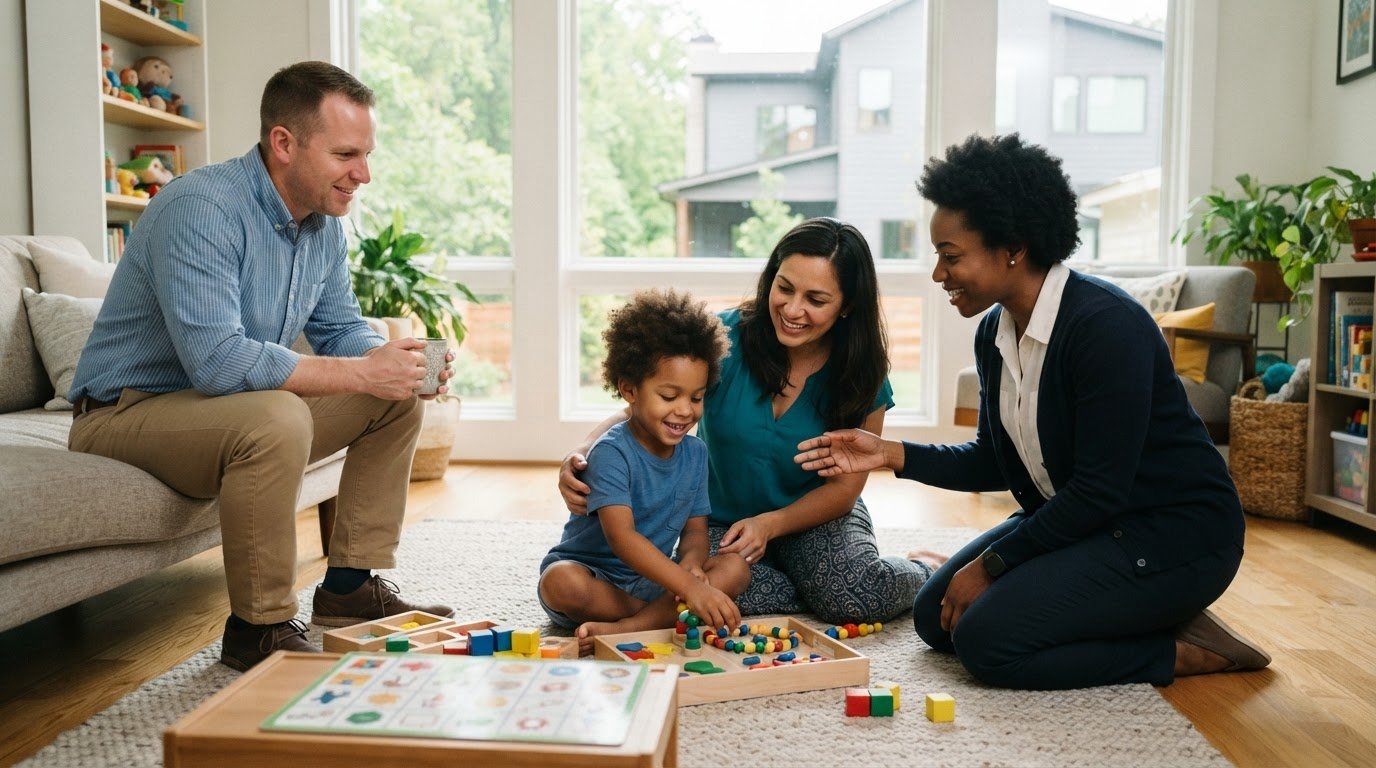
Parent coaching can help caregivers shape strategies around their family’s routines and share useful observations with the child’s broader support team. Individualized professional practice should also reflect the child’s communication, preferences, and daily life. In clinic-based ABA therapy, goals can be developed around skills that have practical meaning for the child, rather than a generic expectation of how they should behave. Supported peer practice, such as a social skills group, may also be relevant when the child is interested in that kind of interaction.
Small observations can guide the next step: Which conditions made participation easier? What helped the child communicate? What would they choose to do differently? These questions keep social emotional learning for autism grounded in the child’s real experiences. To discuss individualized support for your child, connect with our team.
When Professional SEL Support May Help Families in Cary, Apex, and Raleigh
Some families find they could use a collaborative partner when communication goals feel difficult to translate into daily routines, emotional needs are hard to recognize, or participation at home, school, or in the community feels stressful for the child. Professional support can help clarify what the child is communicating, identify barriers, and shape goals around what matters to the child and family. It isn’t necessary for every autistic child, and it shouldn’t replace accommodations or supports that already help.
Individualized ABA is one possible form of support. Its goals should be shaped around the child’s strengths, communication, preferences, and family priorities, with attention to autonomy and meaningful participation. The focus isn’t on eliminating autistic traits or requiring a child to respond in a single socially expected way. Families can also continue using helpful strategies from school, home, and other parts of the child’s support network.
What individualized support can take into account
A useful goal starts with the child’s everyday life. A team can consider what makes transitions easier, how the child communicates discomfort, which activities they enjoy, and what the family hopes to support. Practice can take place in a clinic, at home, or in community settings, depending on the goal and context. For skills that matter outside the clinic, community-based ABA therapy can connect practice with relevant everyday situations.
Divergent Minds ABA offers individualized ABA in clinic, home, and community settings, as well as social skills groups and parent coaching. These options can support different priorities: practicing a specific skill, working on goals in familiar routines, building supported peer interaction, or helping caregivers carry strategies into family life. The approach is individualized around the child’s needs and the family’s goals, not a one-size-fits-all sequence.
Taking a first step with a local ABA team
It can help to describe what meaningful emotional support or connection would look like for your child. You might share what they enjoy, how they communicate, what situations feel challenging, which accommodations help, and what you hope will become easier. Specific examples from daily life give the conversation a practical starting point. Families can then explore how individualized support could complement the strategies already in place.
Divergent Minds ABA serves families in Cary, Apex, and Raleigh, North Carolina. As a BCBA-owned practice, it provides individualized, evidence-based ABA for children with autism. Goals are discussed collaboratively and reflect the child’s communication, preferences, and daily context. Social emotional learning for autism is most useful when support expands a child’s choices and access to relationships they value, while respecting who they are.
Talk with our team about your child’s goals.
Let Your Child’s Priorities Guide the Next Step
The next step doesn’t have to be a large goal. Start by noticing one moment you’d like to feel easier for your child, then consider what support would give them more choice or a clearer way to express themselves. That observation can turn social emotional learning for autism into a practical conversation grounded in your child’s life, not in expectations about how they should appear.
For families considering professional guidance, a BCBA-owned practice can work collaboratively on individualized goals across clinic, home, and community settings. Social skills groups and parent coaching can also offer support for peer practice and family routines. These options aren’t a requirement for every child; the right direction depends on your child’s needs and your family’s priorities.
At Divergent Minds ABA, families can begin by sharing what connection, communication, or emotional support would mean for their child. Start a conversation about your child’s priorities. Each thoughtful adjustment can create more room for the child to communicate, participate, and be understood as themselves.
Frequently Asked Questions
Can social emotional learning benefit autistic children?
Yes, social emotional learning can be useful when it addresses a child’s own needs and priorities. For example, a child who gets anxious about an unexpected change might benefit from a clear way to ask what happens next. Another child may want support recognizing when a favorite activity is becoming tiring. The purpose is to increase understanding, communication, or choice, not to assume every child needs the same kind of instruction.
At what age can autistic children start learning social emotional skills?
There isn’t one required starting age. Children can build emotional understanding and communication through age-appropriate experiences from early childhood onward, with activities and language adapted to their development and interests. A young child might choose between “more” and “finished” during play; an older child might discuss what makes a group activity comfortable. Follow the child’s cues, keep expectations flexible, and adjust support as their communication changes.
Does social emotional learning for autism have to be part of ABA therapy?
No. Social emotional learning for autism can happen through family routines, school activities, community experiences, or individualized professional support. ABA is one possible option, not a requirement for every autistic child. Families in Cary, Apex, and Raleigh who are considering ABA can explore clinic, home, or community settings, along with parent coaching or social skills groups. The relevant question is whether a particular form of support fits the child’s goals and circumstances.
How can parents tell whether an SEL goal is supporting their child?
Look for signs that the goal helps the child communicate, make choices, or take part with less confusion or stress. For instance, after introducing a way to request clarification, notice whether the child can use it with a trusted adult during homework or a new activity. Ask the child, using their preferred communication method, what feels helpful. If a goal mainly makes adults more comfortable while the child’s distress grows, revisit it.
Can social emotional learning include AAC and non-speaking autistic children?
Absolutely. A child can learn about feelings, boundaries, and relationships without relying on speech. AAC, typing, gestures, pictures, signs, or a communication partner’s interpretation can all support participation, depending on the individual. Adults can make sure communication tools include useful messages for the activity, such as “I need help,” “I don’t understand,” or “I want to join.” Allow enough time for the child to communicate without finishing their message for them.
How can families know whether an SEL skill is transferring to everyday life?
Notice whether the child can use the skill in a relevant situation beyond the one where it was first practiced. If they learned a way to ask for help during a quiet activity, for example, observe whether the same communication is available during a different task or with another familiar adult. Transfer doesn’t mean identical performance everywhere. Changes in noise, fatigue, people, or expectations can affect whether support is needed.