What makes a social skills group successful? It isn’t getting every child to interact in the same way. It’s creating useful opportunities for connection while respecting each child’s communication style, sensory needs, interests, and boundaries. It’s understandable to wonder what children actually do in a group and whether the activities will feel relevant to your child. Social skills groups for autistic children can provide practice with shared interactions, but goals should reflect the individual child.
This article explains skills children might practice and how families can think about whether group support fits their child. You’ll find practical questions to consider, ways to connect goals with everyday life, and examples of what meaningful progress can look like. Divergent Minds ABA offers social skills groups and individualized ABA services for families in Cary, Apex, and Raleigh. Exploring whether a group aligns with your child’s priorities is a thoughtful way to decide what support may be useful.
What social skills groups for autistic children are designed to support
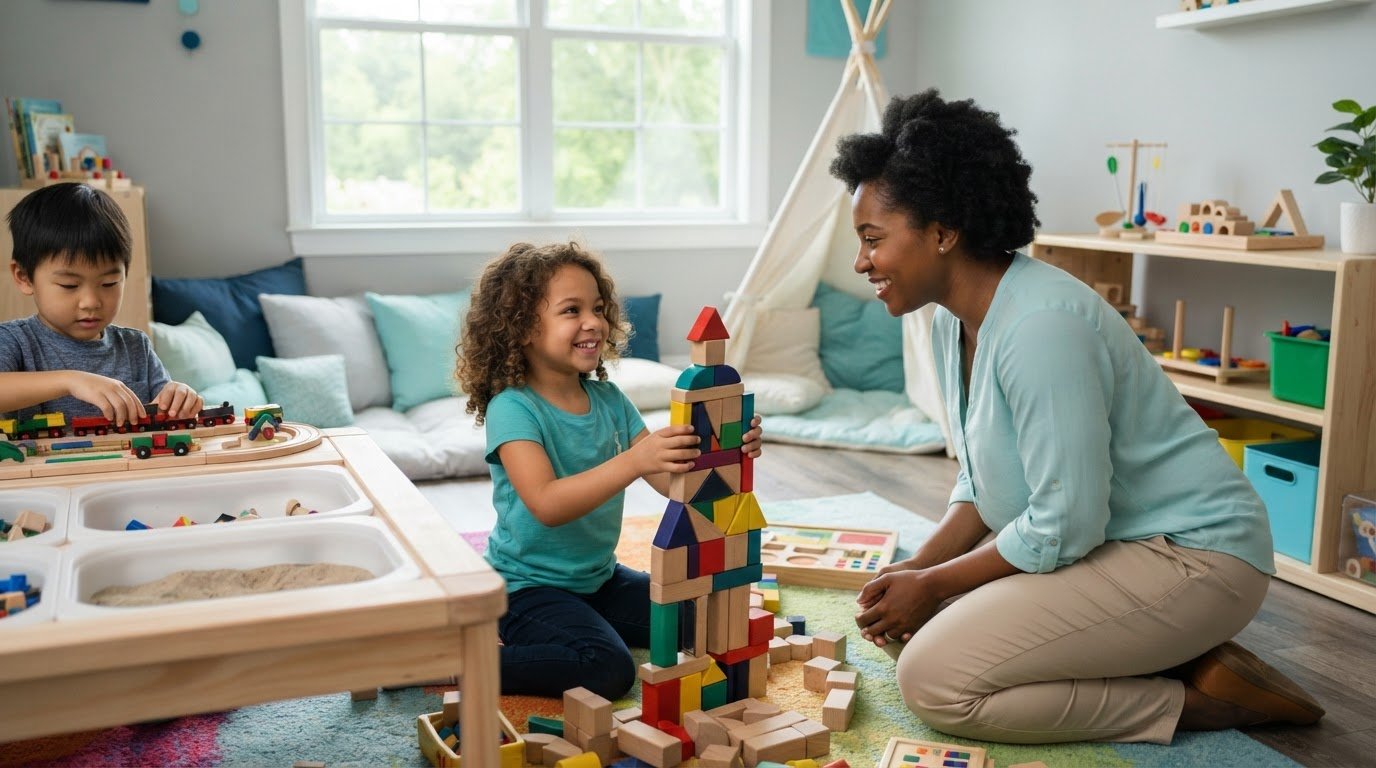
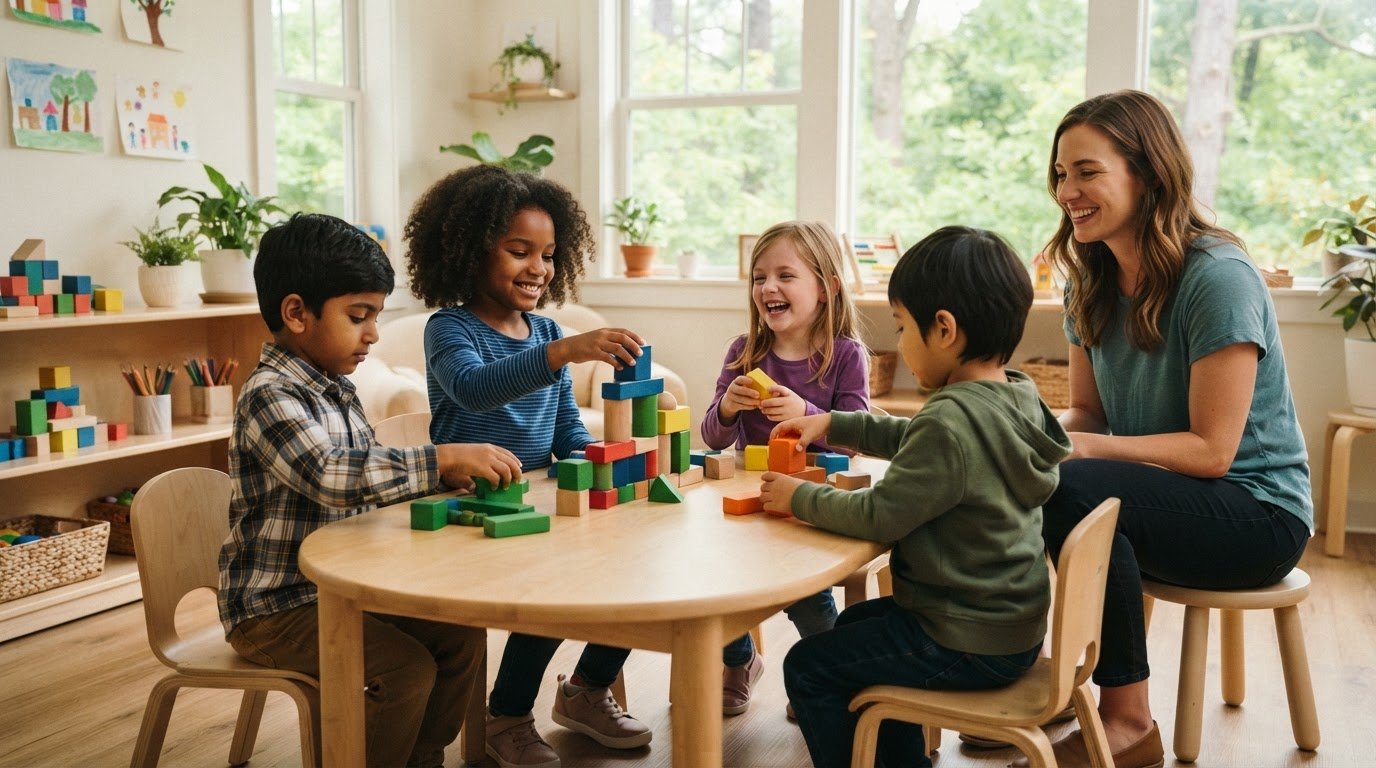
A social skills group provides structured opportunities to practice interaction in a shared setting. The activities and goals should be shaped around what is useful to each child, rather than expecting children to change who they are. A social skills group offers guided opportunities to explore communication and connection without prescribing one way to socialize.
Autistic children have varied communication styles, interests, and support needs. The Autism spectrum disorder overview describes social and communication differences, but those differences don’t mean every child wants the same kind of interaction or needs the same goals. Consider social skills groups for autistic children through that individual lens. At Divergent Minds ABA, social skills groups are part of a broader range of personalized ABA services, with family priorities and child-specific goals central to support. Families in Cary, Apex, and Raleigh can learn about social skills groups offered by Divergent Minds ABA.
What children may work on in a social skills group
Possible goals depend on the child and what they want or need to practice. Examples include joining an activity, taking turns, sharing play, expressing a preference, or responding when someone has a different idea. These are examples, not a fixed curriculum or a promise that every group will address each skill.
Communication can take many forms. A child might speak, use a communication device, gesture, point, type, or combine methods. The aim is to support meaningful expression and understanding, not to privilege speech over other effective ways to communicate. Everyday interactions might include asking for help, saying “no,” requesting a break, or letting someone know which activity they enjoy.
Families can consider whether a goal matters in the child’s life. One child might want to share an activity with a sibling; another might want to communicate a boundary or find a comfortable way to participate around a shared interest. A practical goal is specific enough to guide practice and meaningful enough to matter beyond the group.
How respectful social support differs from masking
Support should make room for comfort, autonomy, and authentic communication. Masking means hiding or suppressing traits to meet others’ expectations. That is different from learning strategies that help a child express needs or connect in ways they choose. Eye contact, sitting still, and copying peers shouldn’t be treated as universal measures of social success.
A respectful goal focuses on what helps the child feel understood and participate with agency. That could mean practicing how to enter a conversation, ask for clarification, or choose when to step away. Progress can look different from one child to another. The guiding question is not whether a child appears less autistic, but whether support helps them communicate, build relationships, and engage on their own terms.
How individualized goals shape social skills groups for autistic children
A group goal is most useful when it connects with something the child values, not simply with an adult’s idea of appropriate social behavior. Communication style, interests, strengths, sensory preferences, and family priorities can all help shape relevant support. Social skills groups for autistic children shouldn’t apply one standard plan to everyone. Individualized goals keep group support focused on interactions that matter to the child and their family.
Progress can look different from one child to another, and even for the same child in different settings. One child might begin by sharing an activity with a peer; another might work toward telling someone they need space. A meaningful step could be trying a new way to ask for help, choosing to join an interaction, or communicating a preference more clearly. These are different, equally valid priorities, not competing measures of success.
Building goals around a child’s strengths and preferences
Start with what already captures the child’s interest. If they enjoy drawing, animals, or building projects, those interests can provide a comfortable basis for shared interaction. A goal might involve inviting someone to participate, taking turns in a manageable way, or showing another person what they’ve made. The activity is a context for connection, not a test the child must pass.
Goals can also support self-advocacy and mutual enjoyment. A child may practice asking to change an activity, declining a suggestion, or indicating when they want a break. Another may want to find a shared topic with a peer. A child might communicate by speaking, typing, gesturing, or using a communication device. What matters is whether the goal gives them a useful way to express themselves, their preferences, and their boundaries.
A checklist of expected behaviors can miss the point. Joining every conversation, making eye contact, or staying with an activity regardless of comfort shouldn’t be universal requirements. Instead, consider what the child wants to do, what currently makes that easier or harder, and what small next step could help.
Connecting group learning with family priorities
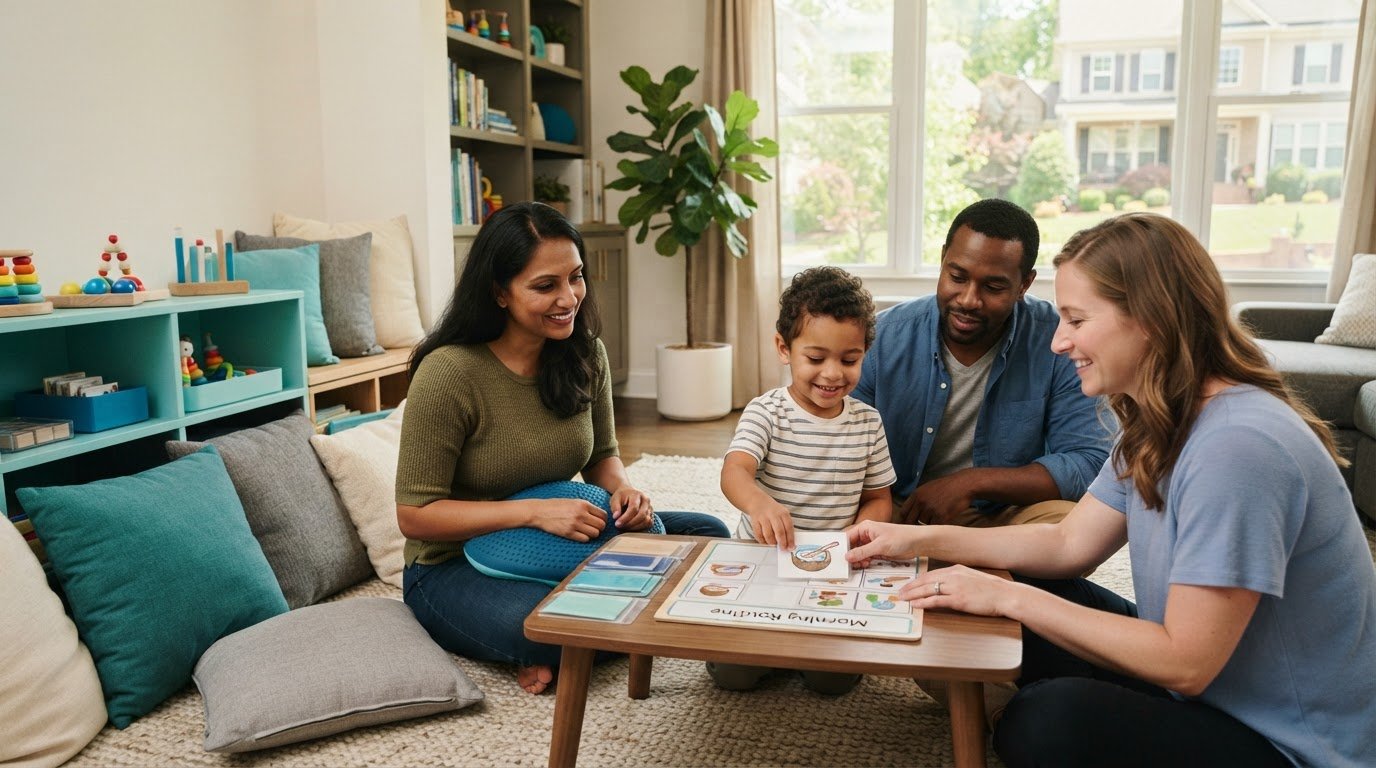
Families know how their child communicates, what they enjoy, and which everyday situations matter to them. Sharing that context can connect group goals with practical moments at home, in the community, or with familiar peers. For example, a caregiver might prioritize helping a child express “I’m finished” during play, while the child’s interest suggests a comfortable activity in which to practice.
Collaboration means taking those perspectives seriously instead of assuming one goal fits every child. Parent coaching for autism can support caregivers as they consider ways to encourage communication and carry meaningful strategies into daily routines. The focus stays on goals that respect the child’s preferences and support participation that feels worthwhile to them.
Is a social skills group a good fit for every autistic child?
No. Group support isn’t automatically the right format for every child or every goal, and choosing another kind of support doesn’t mean a child has failed to meet a readiness milestone. A group can offer opportunities to practice shared interaction, but it also brings social and sensory demands that may feel different from individual support. The useful question is whether the format and goals make sense for this child now.
Consider what a group could make possible and what might make participation harder. Several conversations or activities happening around a child may feel engaging to one child and tiring or distracting to another. A change in routine, waiting for a turn, or communicating in a busy setting may also affect the experience. These differences don’t mean a child can’t participate. They are useful context for shaping support around the child’s comfort, communication, and priorities.
Signs group-based practice may align with a child’s goals
A group may be relevant when a child’s goal involves shared activities, peer interaction, or communicating with others in a group setting. The child’s interests matter, too. A shared topic or activity may offer a natural starting point for connection. Willingness can show up in different ways, such as choosing to join, showing curiosity, or communicating a preference. Fit is an individual decision, not a requirement every child must meet.
Families can reflect on questions such as:
- Does the child have a meaningful reason to practice interaction with peers?
- What kinds of settings, topics, or activities tend to hold their interest?
- How does the child communicate comfort, uncertainty, or a wish to stop?
- Would a group opportunity support a family priority, or is another goal more pressing right now?
There’s no single answer for every child. A group might suit one goal while another area benefits from more individualized attention. Revisit the decision as the child’s interests, needs, and family priorities change.
When another setting or support may be a better starting point
If a child currently finds shared settings demanding, needs more time to communicate, or has goals that are easier to address individually, a different pace or setting may be a better starting point. That doesn’t rule out group participation later. It keeps the next step responsive to the child instead of treating group attendance as the goal in itself.
Divergent Minds ABA offers individualized ABA therapy in clinic, home, and community settings, as well as social skills groups. For a child whose current goals call for focused support, clinic-based ABA therapy can be part of a broader plan shaped around family priorities. Group learning and individualized support can complement each other when that combination fits the child’s goals. A conversation with the family helps keep the plan focused on what feels most useful now.
What families can consider before joining social skills groups
A little preparation can help you decide whether a group’s purpose matches what matters to your child. You don’t need to arrive with a finished plan. Start with a family priority, share what you know about your child, and discuss goals that feel useful and respectful.
Before a conversation, jot down a few notes about your child’s:
- Interests, preferred activities, and topics they enjoy sharing.
- Communication preferences, including speech, gestures, typing, or a communication device.
- Sensory considerations, such as sounds, transitions, or busy environments that may affect comfort.
- Preferred ways to participate, including how they show interest, ask for help, or signal a need for space.
These details make discussion specific without assuming what a child can or should do. They can also help distinguish a family’s hoped-for outcome from a goal the child may find meaningful. The purpose of these conversations is to shape a relevant experience, not to produce a checklist of expected behaviors for social skills groups for autistic children.
Questions families may want to discuss
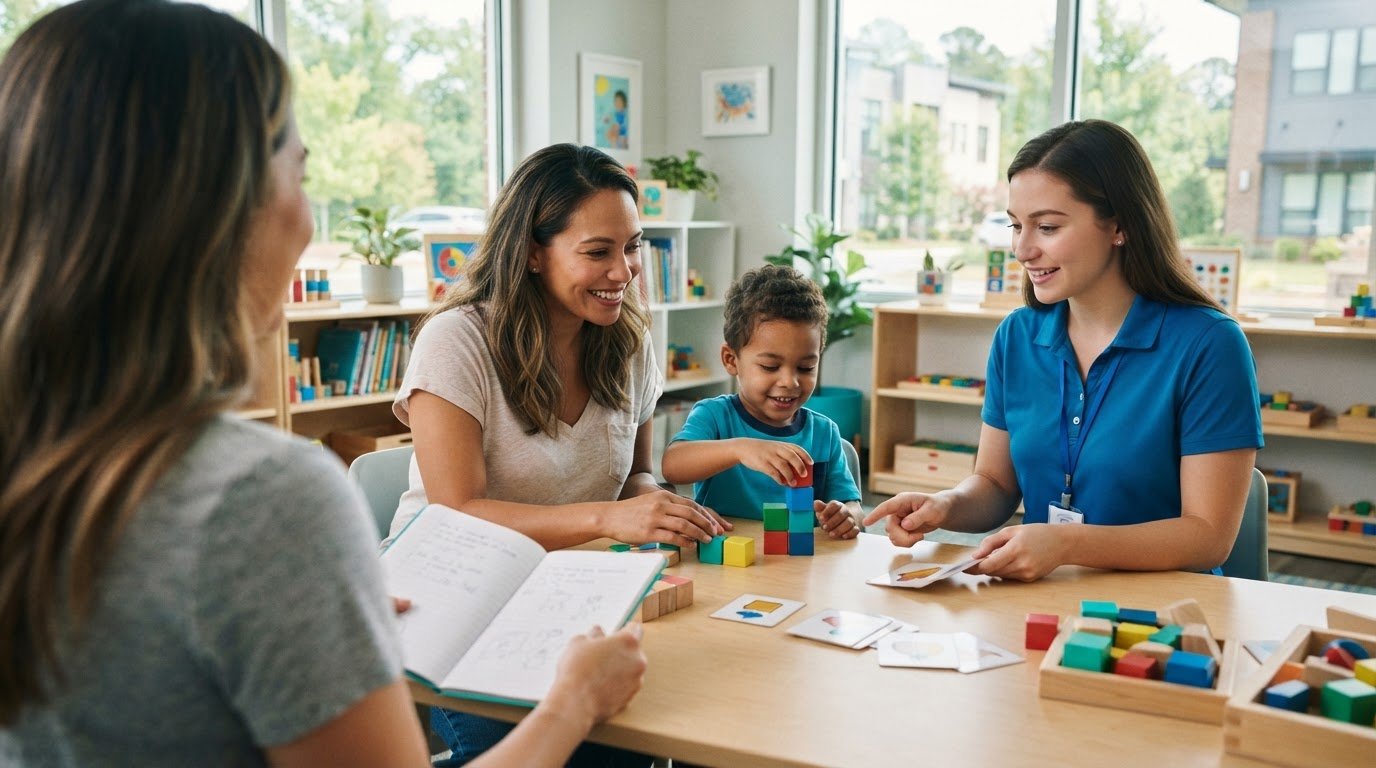
Ask how your child’s priorities and preferences can inform participation, and how family observations can contribute to individualized planning. Share what helps your child feel comfortable, what communication looks like at home, and which everyday interactions matter to your family. It’s also reasonable to discuss how the team will communicate about progress.
Clear goals make it easier to notice whether support is useful. Rather than focusing only on whether a child completed an activity, consider what changed in a meaningful situation. Did they communicate a choice, show interest in another person’s idea, or use a preferred way to ask for a pause? Progress may be gradual and can look different across settings.
Connecting group goals with everyday life
Practice becomes more relevant when it connects with family priorities beyond the group. If a child is working on expressing a preference, for example, the family might notice whether they use that communication during a familiar routine as well as in a group. Using a skill across relevant people, settings, or routines is called generalization. It isn’t automatic, so goals should reflect where the skill would matter to the child.
For goals involving participation beyond a clinic setting, Divergent Minds ABA offers community-based ABA therapy as part of its individualized support. Families in Cary, Apex, and Raleigh can consider how group support and other ABA services relate to their priorities. Bring your observations and questions to a conversation about your child’s goals.
Explore social skills groups for autistic children in Cary and nearby communities
Families in Cary, Apex, and Raleigh have different priorities when exploring autism support. Some are looking for opportunities for their child to connect around shared interests; others want to understand how group support fits alongside individualized services. Divergent Minds ABA is a BCBA-owned practice offering social skills groups and personalized, evidence-based ABA services. The team works with families toward meaningful goals based on each child’s needs, rather than assuming one approach suits everyone.
How Divergent Minds ABA supports individualized growth
Social skills groups are one part of the support Divergent Minds ABA provides. The practice also offers individualized ABA therapy in clinic, home, and community settings, with support shaped around the child and family’s needs. These settings provide different contexts for working toward goals, while family collaboration helps keep priorities connected to a child’s everyday life.
Divergent Minds ABA provides personalized, evidence-based care focused on helping children build confidence, independence, and lifelong skills. Families exploring local social skills groups for autistic children can learn more about social skills groups at Divergent Minds ABA and consider how group support relates to their child’s goals. For additional local context, the Cary social skills groups parent guide offers related guidance for families thinking through their next steps.
Take a comfortable next step with your family
You don’t need to have every question answered before starting a conversation. Share what your child enjoys, how they communicate, what feels important to your family, and what you hope support might address. These details give the discussion a thoughtful starting point and keep attention on your child as an individual.
From there, you can talk through priorities and consider which kind of support aligns with them. A group isn’t automatically the right fit, and no particular outcome is guaranteed. The next step can simply be a conversation about your child’s strengths, goals, and questions. Talk with our team about social skills support.
Take the next step at your family’s pace
The most helpful next step doesn’t need to be a big decision. It can be a conversation about what your child enjoys, what feels challenging, and what kind of connection they would like to build. Those details can help you explore whether social skills groups for autistic children align with your priorities while keeping your child’s comfort and individuality at the center.
Divergent Minds ABA is a BCBA-owned and operated practice offering personalized, evidence-based ABA services, including social skills groups for families in Cary, Apex, and Raleigh. The team works collaboratively with families to identify meaningful goals, without assuming every child needs the same path or outcome.
Bring your questions, hopes, and observations to the conversation. Contact Divergent Minds ABA to discuss social skills groups for your child.
Frequently Asked Questions
What do children do in social skills groups for autistic children?
Children take part in guided opportunities to practice interacting with others, though the format and focus can vary. For example, children might negotiate how to use shared materials or work through a misunderstanding during an activity. A group should make room for different communication methods and participation styles. Families can discuss how group support connects with a child’s goals rather than assume every group follows the same routine.
Are social skills groups good for every autistic child?
No. A group can be useful for some children and goals, but it isn’t necessary or suitable for everyone. Shared activities may offer a chance to practice with peers, while the group environment may feel demanding or less relevant for a particular child. Consider the child’s interests, communication, comfort, and family priorities. Support can also be individualized or combined with group learning when that better fits current needs.
How can I tell whether my child is ready for a social skills group?
There isn’t one readiness test or milestone that applies to every child. Notice how your child responds to opportunities to be near peers, take part in a shared activity, or communicate a choice in a group setting. Interest can look like approaching, watching with curiosity, or using another way to indicate participation. If those situations are difficult, that information can guide a conversation about support or a different starting point.
What skills can an autistic child practice in a social skills group?
Depending on the child’s goals, practice may include asking someone to clarify, repairing a misunderstanding, negotiating a change in an activity, or communicating a boundary. A child might also explore how to respond when a peer has a different idea. These are examples, not a required checklist. The useful question is whether a particular skill could make an interaction more comfortable or meaningful for the child in a real situation.
Can social skills groups help autistic children make friends?
A group may create opportunities to spend time with peers and discover shared interests, but it can’t guarantee friendship. Relationships develop through mutual interest, trust, and repeated positive interactions, often beyond a single activity or setting. A helpful goal might be supporting a child to show interest in another person or communicate what they enjoy doing together. Friendship should remain an invitation, not an outcome a child is expected to deliver.
What should I ask about a social skills group for my child?
Ask how the group’s purpose connects with your child’s priorities, how communication differences are supported, and how participation can respect your child’s boundaries. You might also ask how family observations inform goal-setting and what progress the team will discuss with you. These questions help clarify whether the approach feels appropriate without assuming a particular group structure or activity.
Are social skills groups available near Cary, Apex, or Raleigh, North Carolina?
Yes. Divergent Minds ABA offers social skills groups for families in Cary, Apex, and Raleigh, North Carolina. The practice also provides personalized ABA services in clinic, home, and community settings. Families can explore how group support relates to their child’s goals and discuss those priorities with the team.