
Social growth does not have to mean teaching your child to act more typical. It can mean helping them connect in ways that feel comfortable and worthwhile to them. Parents often want their child to feel included but may be unsure which skills to focus on or how to avoid turning practice into pressure. Improving social interaction in autism starts with the child’s priorities, communication style, interests, and boundaries, not a script to follow.
This article offers practical ways to identify meaningful interaction goals and create opportunities to connect at your child’s pace. You’ll learn how everyday routines can support communication, why strategies may need to change across home, school, clinic, and community settings, and how individualized professional support can help. Progress looks different for every child. Shared interest, communication, or connection can all be meaningful steps toward interactions that feel safe and rewarding.
What Improving Social Interaction in Autism Can Mean for Each Child
Social connection does not have one correct look. A child may enjoy being near others without joining their conversation, or communicate excitement through movement, a gesture, a device, or a few spoken words. Those differences do not make connection less real. The goal of improving social interaction in autism is to support communication and participation that matter to the child, not to correct autistic traits or teach a performance of “typical” behavior.
Meaningful participation is connection on the child’s terms, using communication and interaction that feel comfortable, useful, and worthwhile to them. Eye contact, fluent speech, and joining a group are not universal measures of social interest or success. A child might listen while looking away, share attention by bringing someone a favorite object, or choose a quiet exchange over a busy group activity. The overview of autism and social interaction provides broader context, but each child’s strengths and preferences are individual.
What can meaningful connection look like?
Notice what your child does when they feel safe and interested. They might invite you to build a favorite structure, laugh together over a familiar game, point to something they want to share, or use speech or augmentative and alternative communication (AAC) to comment or ask a question. Parallel play, where children play alongside one another, can also be a comfortable way to share space and interest without constant conversation.
The setting matters, too. Background noise, unpredictable activity, or a long interaction may make connecting harder for a child with particular sensory needs. A brief, quiet, one-to-one moment around a preferred interest may feel more accessible. Give your child time to respond, offer communication options that work for them, and treat a pause or choice to step away as useful information about their comfort.
Which social goals should come first?
Begin with your child’s interests, assent, comfort, and everyday priorities. Ask what would make a real situation easier or more enjoyable for them. A useful goal increases access, autonomy, or shared enjoyment. An adult’s preference for eye contact, stillness, or appearing sociable is not, on its own, a child-centered reason to teach a behavior.
Possible goals might include:
- Requesting a break, help, or more time using speech, a gesture, or AAC.
- Sharing an interest with a trusted person in a preferred way.
- Joining a favored activity with another child, even briefly or alongside them.
- Communicating “no” or “finished” so others can respect a boundary.
Keep goals flexible. If your child communicates discomfort, slow down and adjust the activity rather than treating participation as compliance. Families and professionals can identify priorities together, then find small opportunities to practice during routines your child already enjoys. Individualized ABA support, including social skills groups, can focus on personally meaningful goals and your child’s communication style.
How Social Interaction Skills Develop Through Safe, Meaningful Practice
There is no single timetable or sequence every child must follow. A useful goal starts with what your child wants or needs in daily life, then builds on their existing strengths. Useful practice begins with an interaction goal that matters to the child, not a behavior chosen simply because it looks typical. This keeps support focused on expanding communication, choice, comfort, or access to enjoyable activities.
How do professionals identify an interaction goal?
Goal-setting begins with listening and observation. A professional considers how your child communicates, what captures their interest, what they already do well, and which sensory conditions support or complicate interaction. They may look at routines such as play, getting ready, or spending time with family to notice when connection happens more easily and what changes when it feels difficult.
Context helps clarify what support may be useful. Does your child engage more readily with one familiar person than in a busy group? Do visual choices make it easier to express a preference? Family observations and your child’s own signals, including an AAC response, gesture, approach, or refusal, can inform priorities. The CDC’s guidance on autism treatments and interventions describes behavioral and social-relational approaches. Individualized support should shape goals around the child and their family.
What does supportive skill practice look like?
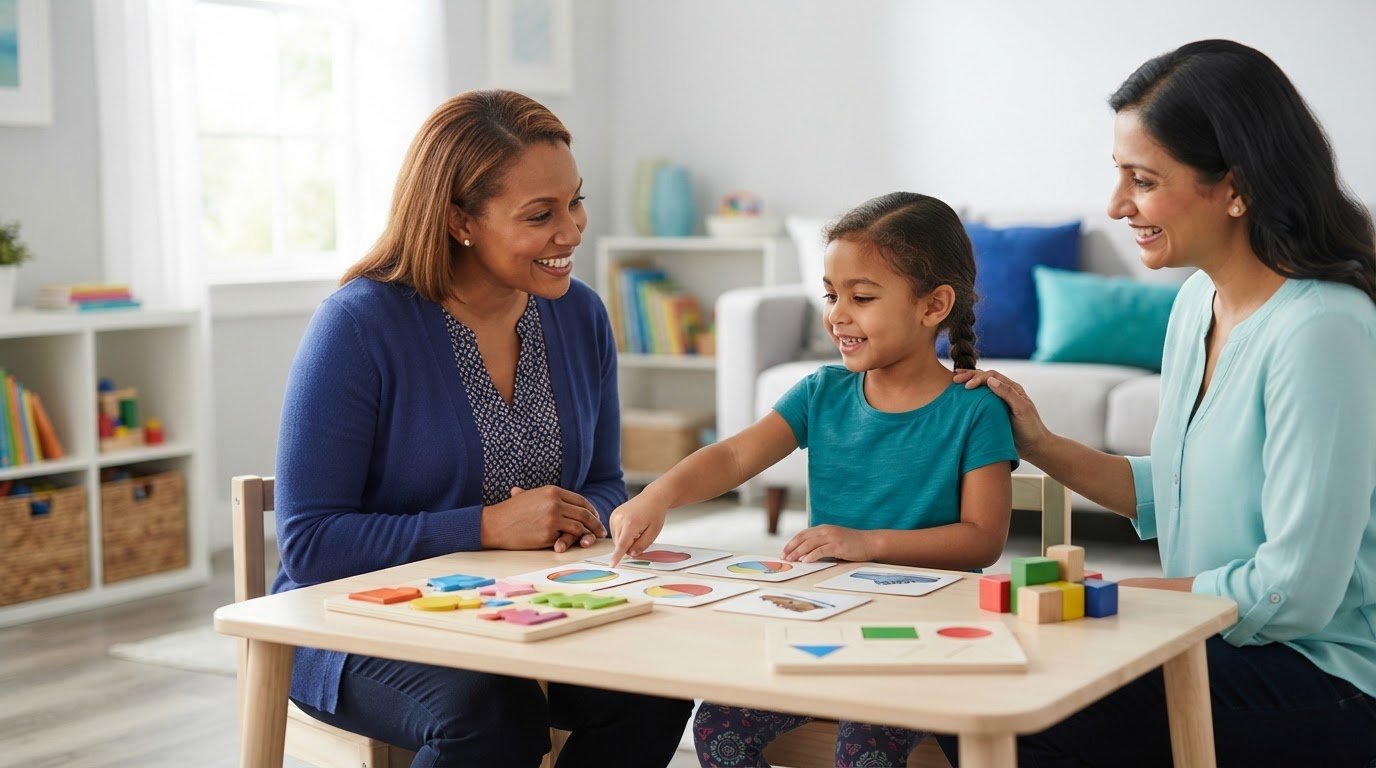
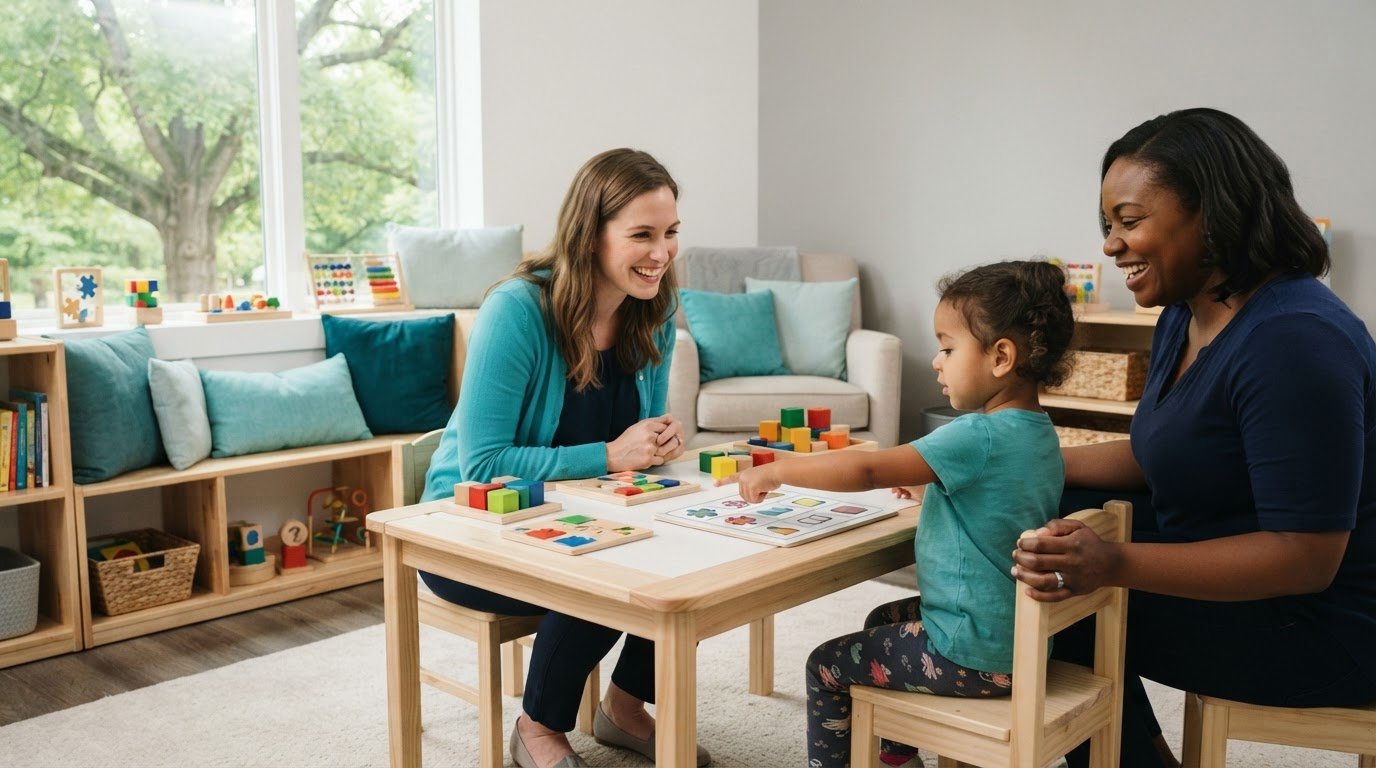
Once you select a goal, break it into manageable steps. If your child wants to continue a shared activity but needs help communicating, practice might begin with selecting a message on AAC or using a familiar gesture. An adult can model the message, offer a prompt when helpful, then give the child time to respond. As your child becomes more comfortable, prompts can be adjusted or gradually reduced.
Practice works best when it fits naturally into activities your child enjoys, rather than relying only on memorized scripts. You might model a comment during a favorite game, then respond warmly when your child communicates in their own way. Positive reinforcement can mean acknowledging the communication and making its natural purpose clear, such as pausing when your child asks for a break. The aim is not to reward compliance or insist on repeating a response.
Pay attention to assent throughout. A pause, turning away, refusal, or request for help may signal that the activity needs to change. Stop, offer choices, reduce demands, or return to practice another time. Progress might mean your child feels more at ease, communicates a preference more independently, or takes part in an interaction they value. It does not have to mean more eye contact, longer conversations, or participation in every group.
Share what you notice across routines so practice connects across settings without expecting identical behavior everywhere. Parent coaching can help caregivers align strategies with a child’s goals, communication, and everyday life.
How to Tell Whether Social Support Fits Your Child
A social goal should make life more accessible or satisfying for your child, not simply make them appear more socially typical. A plan focused on suppressing harmless movement, requiring eye contact, or expecting a child to join every group may prioritize adult expectations over the child’s comfort and needs. By contrast, learning to communicate “I need help” or choose how to take part in an activity can support autonomy and connection.
There is no single intervention or social goal that suits every autistic child. To judge whether support is a good fit, look beyond whether a behavior occurs. Consider whether your child seems comfortable, can participate in a way that works for them, and has a meaningful way to express preferences, boundaries, and needs. A quiet shared activity or a clearly communicated “no” may be more valuable than a longer interaction that leaves your child distressed.
How can families distinguish connection from masking?
Masking generally refers to hiding or changing traits and needs to meet social expectations. It can be difficult to know what a child is experiencing from outward behavior alone, so look at context rather than assuming that apparent participation means comfort. A child who seems composed during an interaction may need time and quiet afterward. Notice changes in energy, stress, or willingness to return to an activity.
Make room for your child to communicate discomfort in whatever way is accessible to them. That might mean using words, AAC, a gesture, or moving away. These signals should inform the plan, not be treated as obstacles to overcome. A supportive goal respects your child’s identity while helping them feel safe, understood, and able to participate by choice.
What does useful progress look like?
Progress is most meaningful when it connects to your child’s own priorities. Choose observable signs that show whether support is helping in everyday life, then review them together with your child and family. For example, consider whether your child can indicate a preference, ask for assistance, or take part in a favored shared activity with a manageable level of support.
A simple review can help keep goals practical:
- Comfort: Does your child appear at ease before, during, and after the interaction?
- Agency: Can they choose to begin, continue, pause, or stop?
- Communication: Can they express an idea or need through their preferred mode?
- Participation: Does the goal help them access an activity or relationship they value?
Look for change across real situations, while recognizing that comfort and communication can vary with the people, setting, and sensory demands involved. A skill that works in one context may need different support elsewhere. Review goals collaboratively and revise them when your child’s interests, abilities, or preferences shift. Individualized ABA planning and parent coaching can help families and professionals keep the focus on goals that serve the child. Improving social interaction in autism should mean greater access, choice, and connection, not pressure to conceal who a child is.
Practical Ways to Encourage Comfortable Social Interaction in Daily Life
Small, familiar moments can make interaction easier to approach. Instead of setting up a formal lesson, use an activity your child already enjoys and follow a simple rhythm: notice what interests them, create a low-pressure opportunity, follow their lead, then reflect on what felt comfortable. This approach can fit into ordinary family routines in Cary, Apex, or Raleigh without making every moment together feel like practice.
- Notice: Observe which activities, people, and settings invite your child’s interest.
- Offer: Make a small opening for interaction, such as placing a puzzle piece nearby or joining a familiar game.
- Follow: Respond to your child’s communication, whether it is a word, AAC message, gesture, movement, or choice to watch.
- Reflect: Consider whether the moment seemed enjoyable and what might make a similar opportunity easier next time.
How can caregivers create low-pressure opportunities?
Join your child’s preferred activity without taking over. If they are drawing, sit nearby and draw your own picture. If they are building, offer a piece and wait. Your child may invite you in, communicate an idea, or prefer to continue independently. Each response helps you understand what kind of interaction feels welcome.
Simple choices can give your child control: “More blocks or a break?” Ask once, then allow processing time instead of repeating the prompt quickly. Keep an activity brief and predictable if that supports comfort. There is no need to require speech or eye contact. A look toward an object, a gesture, AAC, or moving closer can all be ways to participate.
How can skills carry across settings?
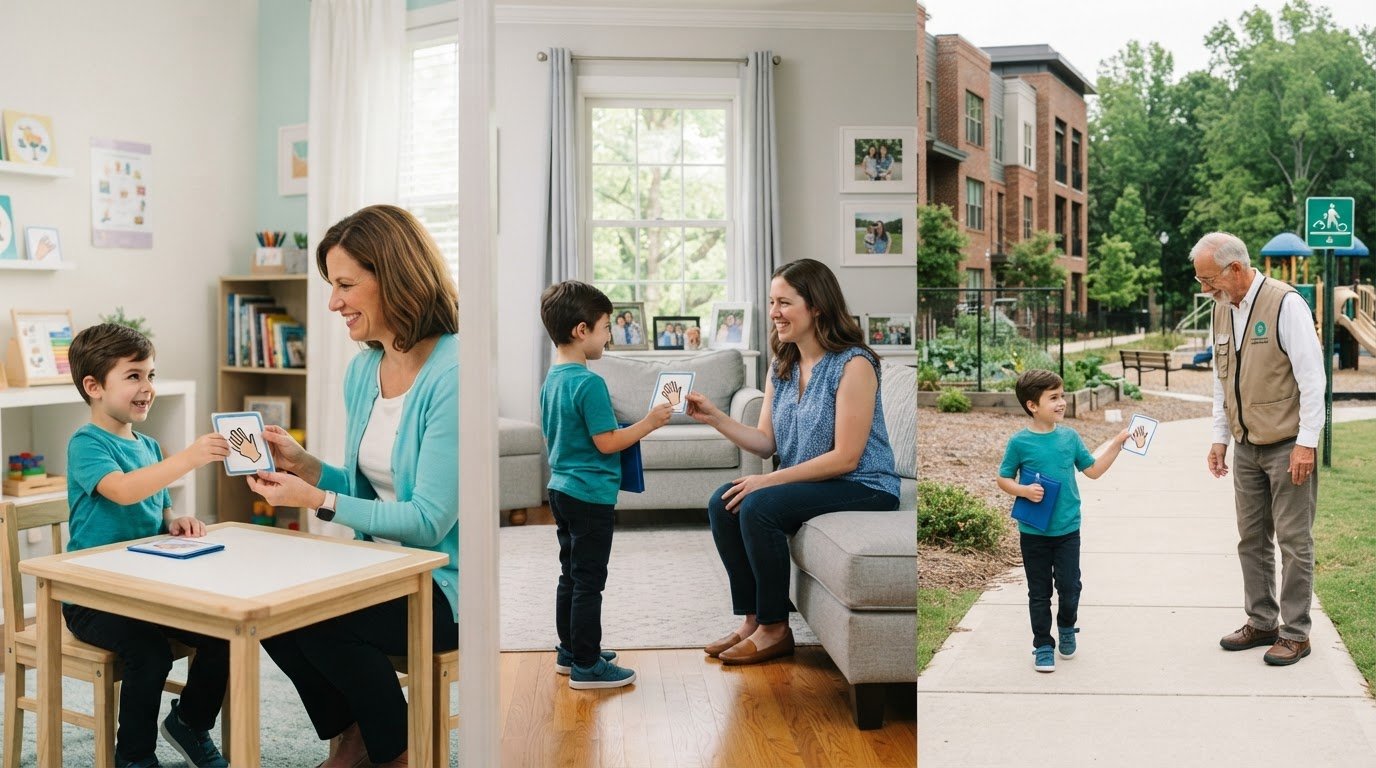
Start with familiar people and routines, then consider whether the same goal can be supported in other everyday situations. A child who uses a card to request help at home might use that communication during an outing, too, if the environment and timing feel manageable. The goal is a useful skill that can carry over, not identical performance in every place.
Caregivers, clinicians, and other support people can share consistent wording and agree on how to respond to your child’s communication. For example, if “break” means pausing an activity, everyone can honor that message rather than prompting your child to continue. Community-based ABA support connects individualized practice with everyday environments and routines.
After an interaction, note what helped: a quieter space, a familiar person, extra time, or a clear way to say “finished.” These observations can guide the next opportunity without turning family life into a checklist. To discuss individualized support for your child, connect with Divergent Minds ABA.
How Individualized ABA Can Support Social Interaction in Cary and Nearby Areas
Families in Cary, Apex, and Raleigh can look for support that begins with their child, not a preset idea of what social success should look like. Divergent Minds ABA is a BCBA-owned practice that creates individualized treatment plans around a child’s strengths, communication, interests, and family priorities. The family and clinical team can focus goals on interactions the child may find useful, comfortable, or enjoyable.
Improving social interaction in autism may involve support in different settings, depending on the child’s goals and routines. Clinic-based ABA provides structured opportunities to work on identified skills. Home-based support addresses interactions within familiar routines, while community-based ABA brings practice into everyday environments. These settings offer different contexts, not a promise that a skill will look the same in every place.
How can support settings match a child’s goals?
Start with where the goal naturally matters. If the focus is participating in a shared activity, a clinic setting can offer a structured chance to practice. If your child’s priority involves a routine at home or an outing with family, support in those environments can take the actual context, people, and demands into account. The family and clinical team can coordinate language and strategies so practice feels connected across settings.
Social skills groups give children opportunities to engage with peers around planned activities. The purpose and goals should remain individualized, rather than assuming every child needs the same kind of group participation. Divergent Minds ABA offers social skills groups as one part of a broader, child-specific support plan.
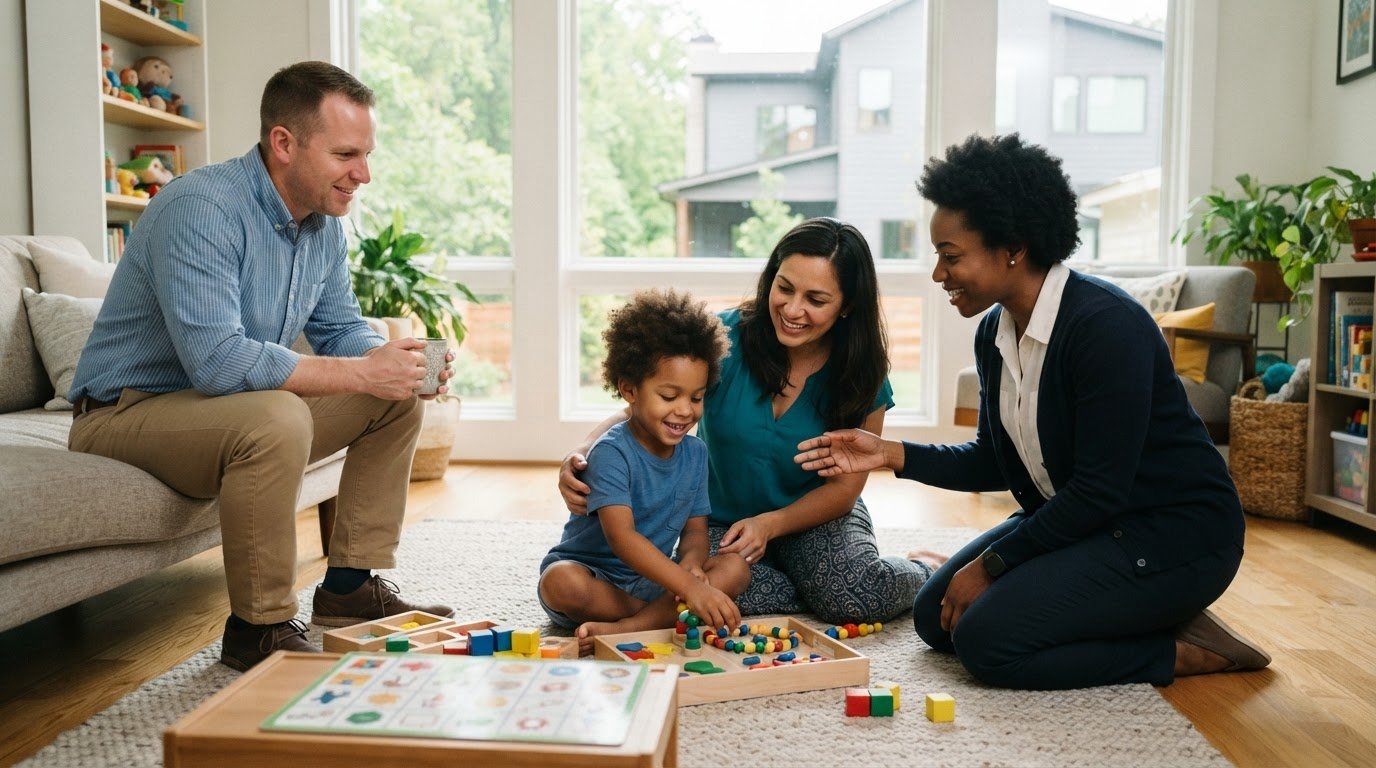
Family involvement helps connect clinical goals with daily life. Parent coaching can support caregivers as they consider how to respond to communication, make routines more supportive, and share useful observations with the clinical team. Alignment does not mean expecting your child to behave identically at home, in a clinic, and in the community. It means adults understand the goal and respond in ways that respect the child’s communication and comfort.
What can families expect from an individualized next step?
A first discussion can begin with what your family already knows: your child’s strengths, interests, preferred ways to communicate, sensory considerations, and situations that feel easier or harder. Describe what you hope will change in everyday life, while also identifying boundaries or approaches that do not feel right. The family and clinical team can then discuss priorities and support settings, with a plan built around your child rather than a one-size-fits-all approach.
Thoughtful support takes collaboration. If you’re ready to discuss your family’s goals, talk with Divergent Minds ABA about your child’s support.
Take the Next Step Toward Meaningful Connection
You do not need to have every goal figured out before seeking guidance. A helpful starting point is noticing what your child enjoys, how they communicate, and where they would like more choice or connection. Those observations can shape an individualized conversation about improving social interaction in autism, with your child’s comfort and priorities at the center.
Divergent Minds ABA’s BCBA-owned team works with families to develop individualized treatment plans. Clinic, home, and community settings, along with social skills groups and parent coaching, provide different ways to consider a child’s goals in context. The next step begins with listening to your family and identifying support that fits your child’s needs.
Talk with Divergent Minds ABA about your family’s goals. Meaningful progress can begin with one thoughtful conversation and grow at your child’s pace.
Frequently Asked Questions
How can I help my autistic child improve social interaction?
Start with one interaction your child would like to make easier, then notice what helps them communicate in that situation. For example, if asking a cousin to stop a noisy game is difficult, practice a clear message or signal together and make sure others respond to it. Improving social interaction in autism should increase your child’s ability to connect, make choices, and advocate for themselves, not add pressure to socialize more.
Does improving social interaction mean my child needs to make eye contact?
No. Eye contact is not required for a child to listen, understand, or care about an interaction. Some children find it distracting or uncomfortable, and looking away may help them focus. Instead of using gaze as a measure of engagement, notice how your child responds in their preferred way, such as answering, continuing an activity, using AAC, or showing understanding through their actions.
Can autistic children learn social skills without masking?
Yes. Social learning can focus on skills that support choice and self-advocacy, rather than hiding autistic traits to satisfy others. A child might learn ways to tell a trusted person they need clarification or want to change an activity. Adults can reinforce these messages by listening and adapting, so the child learns that communication is useful without being asked to conceal discomfort or imitate a particular style.
What social interaction skills should autistic children learn first?
There is no universal first skill. Consider what would help your child feel safer, more independent, or more included in a situation they care about. One child may benefit from a way to ask for clarification during a game; another may want to communicate that they prefer observing before joining. Prioritize skills that solve a real problem for your child rather than selecting goals based only on age expectations.
How can I tell if social skills therapy is helping my child?
Look for changes that matter in your child’s life, not just whether they perform a practiced response during a session. Are they using a skill in a situation where they want it? Can they show when they are comfortable or need support? Keep brief notes about the context, level of prompting, and your child’s response. Share patterns with the clinical team and revisit goals if your child seems distressed or the skill is not useful.
Are social skills groups helpful for autistic children?
They can be helpful for some children when the group’s activities and social demands fit the child’s interests and comfort. A group may offer a chance to share an activity with peers, while another child may prefer support in a smaller or more familiar setting. Consider whether your child has meaningful ways to participate, take a pause, or communicate preferences. Group attendance alone is not a measure of progress.
How can social interaction strategies carry over from therapy to home?
Ask the team to describe the goal in everyday language and identify what response supports it. If your child is practicing asking for clarification, family members can use the same simple cue during a board game or shared task, then allow time for a response. Share observations about what works at home so the team can adapt support. The aim is flexibility, not identical performance across settings.
When should families in Cary, Apex, or Raleigh consider professional support?
Consider support if social situations regularly limit your child’s access to activities they want, or if your family is unsure how to support communication without creating pressure. Divergent Minds ABA works with children and families on individualized ABA treatment planning through clinic, home, and community settings, as well as social skills groups and parent coaching. A conversation can help you describe your child’s priorities and discuss a practical next step.