
Daily living skills are learned through practice, not simply expected to appear with age. A practical approach to improving daily living skills in autism starts with one or two everyday goals that matter most, then teaches them with clear steps, communication supports, and consistent practice. The pace and supports should reflect the child’s strengths and needs.
When a routine that seems simple, such as getting dressed or putting away toys, requires repeated guidance, it can feel discouraging. That doesn’t mean a child can’t learn the skill. The task may need to be taught in smaller, more manageable steps. Steady practice can build confidence and independence, one step at a time.
Improving daily living skills autism often means making practice more accessible to the child. This article explains why everyday tasks can be challenging and how communication tools, visual schedules, task analysis, and household chores can support learning. It also covers practical ways to adapt routines for sensory sensitivities, distractibility, or difficulty following spoken directions.
1. Functional communication strategies and tools
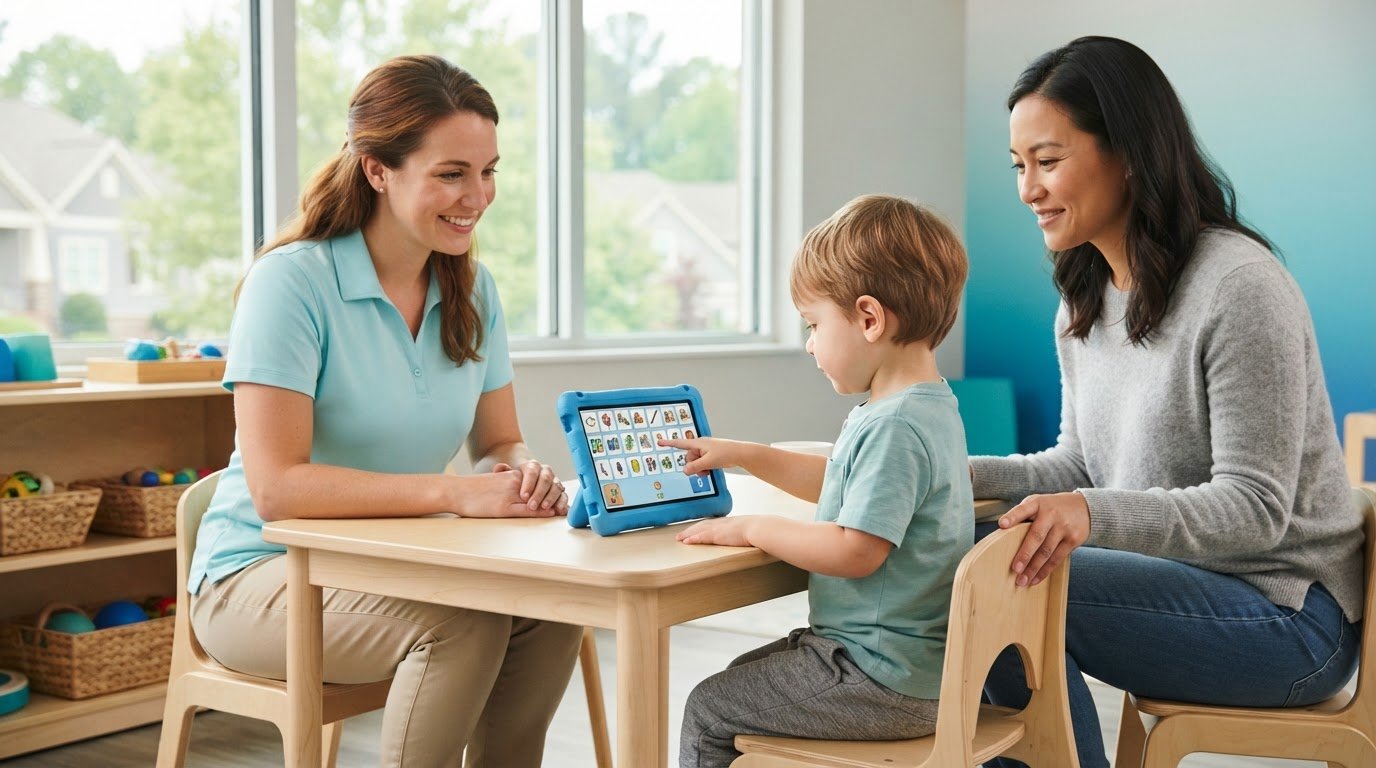
Communication supports can make everyday choices easier to express. A child who finds spoken language difficult might use augmentative and alternative communication (AAC), picture cards, gestures, or a choice board. During toothbrushing, for example, pictures for “toothbrush,” “toothpaste,” and “finished” can help the child communicate each need. Honor clear requests and allow time for a response.
Start with a familiar routine, such as getting dressed. Offer two visual choices, like a blue shirt or a green shirt, then wait for the child to point, speak, or select an option on a device. This gives the child an active role in the routine. The same approach can support requests for help, a break, or a preferred item.
For a practical overview of daily living instruction, watch this video:
Practice communication where the skill will be used. At home, a child can request a cup during snack time; at a store, they can indicate which item they need. Using familiar words, pictures, or device buttons in both settings connects communication with real activities. Keep the communication method accessible, including during transitions.
Community outings can support social participation through shared, manageable activities. At a library, a child might practice greeting a familiar staff member, asking where books belong, or requesting a quiet break. Reviewing a visual schedule before entering can help clarify what happens next. Choose outings that match the child’s interests, then build participation gradually.
Community safety requires direct teaching, not the assumption that a child will learn by watching. According to Autism Speaks, teaching community safety includes practicing pedestrian safety, recognizing signs and other safety markers, and becoming familiar with public transportation. At a crossing, practice stopping, looking for traffic, and waiting for a safe signal. Rehearse these steps under supervision in the actual setting.
Travel instruction can begin with a short, familiar route alongside a trusted adult. Practice identifying the bus stop, reading a route sign, and communicating when help is needed. Guidance with public transportation or other mobility options can support independent exploration. Keep the communication tool available throughout the trip, including while waiting or adapting to a change in plans.
Use a consistent approach across home and community practice: identify the task, give a clear prompt, and reinforce communication that meets the child’s needs. A child might signal “break” during brushing at home, then use the same signal during an outing. Practicing a useful skill in different settings can help the child apply it beyond one routine.
2. Are Daily Living Skills Hard to Learn?
They can be, but the level of difficulty varies by skill, setting, and available support. A child may manage dressing yet need instruction in meal preparation, money management, shopping, room organization, or transportation. These skills develop through teaching and practice, not simply through age or observation.
Daily living skills support independence by helping a person meet everyday needs and take part in family and community routines. Preparing a simple meal, keeping track of belongings, and following a hygiene routine all involve practical skills. Progress with one task can also support related steps, such as gathering ingredients before cooking.
Learning may take longer when a child has difficulty understanding spoken directions or imitating another person’s actions. A child might watch someone fold laundry but still need direct instruction: match the socks, fold each item, then put the clothes in a drawer. Distractibility or frustration can also interrupt practice, so a quieter space and shorter task may help the child stay engaged.
Daily living abilities don’t always match a person’s performance in other areas. In a study of autistic teens with average or above-average intelligence, half had daily living skills significantly below expectations for their age and IQ. About one fourth scored in a very low range. Autistic teens without intellectual disability have daily living skills about six to eight years behind those of their peers. These findings show why planning around observed abilities matters more than assumptions based on age or academic skills.
Build independence by choosing a meaningful routine and teaching its component actions. At lunch, a child might practice getting a plate, assembling a simple snack, and putting items away. An adult can demonstrate a step, prompt when needed, then gradually reduce help as the child gains skill. The goal is functional participation, not speed or perfect performance.
Occupational therapy or other professional support may help when a daily task remains difficult despite consistent practice, or when sensory, motor, communication, or safety needs interfere. Bring specific examples, such as trouble fastening clothes or completing handwashing, so support can focus on the task and its barriers. A BCBA can also assess current abilities and identify daily living goals that matter to the child and family.
Track what the child can do independently, which prompts help, and where the routine breaks down. For example, note whether a child can prepare cereal after gathering supplies but needs help pouring the milk. These details can guide the next teaching step and show how daily living skills develop over time.
3. Visual schedules, checklists, and task analysis
Evidence-based self-care instruction can combine task analysis, chaining, prompting, and visual supports. For handwashing, break the routine into actions, show each one, and guide the child through the sequence. Reinforce participation with specific feedback, such as “You turned off the tap.” Adjust prompts as the child becomes more independent. These methods offer a practical framework for improving daily living skills for autistic children.
Task analysis breaks a large activity into actions a child can understand and practice. For toothbrushing, steps might include picking up the toothbrush, adding toothpaste, brushing each area, rinsing, and putting supplies away. If the full routine feels difficult, teach one step at a time. Chaining links the steps, either from the first action forward or from the final action backward. For families improving daily living skills in autism, matching the teaching method to the child’s abilities can make practice more accessible.
A visual schedule shows what happens next. Use photos, simple drawings, or written words suited to the child’s communication and reading skills. A morning schedule might show getting dressed, brushing teeth, and packing a bag. Point to each picture as the activity begins, then mark it finished. This can support transitions with fewer verbal prompts.
Checklists provide portable reminders for routines with several actions. Place a handwashing checklist near the sink, or keep a hygiene list beside a teen’s toiletries. Keep each instruction brief, such as “wet hands” or “use soap.” If the list feels too long, divide it into smaller sections and teach one part before adding more.
A predictable order creates useful teaching opportunities. Keep the same sequence for putting on shoes, gathering a coat, and picking up a backpack before leaving. A color-coded calendar can show appointments or school activities, while a smartphone calendar or alarm can cue an older child. Choose formats the individual can access and understand.
Technology can support visual tools when it suits the task. A tablet may display a picture sequence for preparing a snack; a phone may show a checklist for packing sports gear. Keep the device available where the routine happens. If screens distract from the activity, use printed cards or a checklist near the supplies.
When a child skips a step, point to the visual cue before repeating spoken directions. For example, indicate “put toothpaste away,” pause, then give a brief prompt if needed. Recognize effort with feedback that suits the child. As skills grow, fade prompts gradually, moving from a gesture to the checklist alone.
Observe where the routine breaks down. If brushing stops after toothpaste, clarify the next step with a picture or repositioned supplies. Update the schedule when the task changes, while keeping familiar cues consistent across caregivers. Visual supports work best when they reflect the actual sequence and remain available where the skill is practiced.
4. Household chores
Household chores give children practical ways to contribute to family routines while developing useful skills. A child on the autism spectrum might help feed a pet, sort laundry, or put toys away. Familiar tasks encourage participation, rather than treating independence as one large goal. Choose chores that fit the child’s abilities and interests.
Make the task clear and manageable. For putting away groceries, a child could carry one item at a time and place it in a labeled cupboard. Keep supplies in a consistent household location, such as a laundry basket beside the bedroom door. Parents can show what “finished” looks like, then allow time for the child to complete the task.
Laundry offers several opportunities to practice sorting and organizing. Start by matching socks or separating clothes by color, size, or fabric. Once the child understands the categories, add a next action, such as placing each pile in a basket. If sorting is difficult, use two clearly different containers and show where one item belongs.
Dishwashing can also be taught in smaller steps. Begin with drying clean dishes and putting them in familiar cupboards, then introduce another suitable step as the routine develops. Keep the child’s role clear, such as drying plastic cups with a towel. Avoid making the task harder by changing the order or location before the current steps are familiar.
Simple care routines connect chores with everyday responsibility. For feeding a pet, mark a container to show how much food to use. For watering a plant, place a marked stick in the pot to indicate the target water level. These visual cues make the expected amount clear and help the child take part with less guesswork.
Putting toys away can become a predictable part of playtime. Set up labeled bins or designated areas, then invite the child to return one type of toy at a time. If the child enjoys it, parents can make cleanup a playful timed race while keeping the focus on completing the routine. Pair cleanup with a familiar event, such as putting blocks away before dinner.
Notice which parts the child completes independently and where support is still needed. If they gather laundry but forget the basket, keep it near the clothes hamper and practice that transition. Give a brief prompt, then reduce assistance as the sequence becomes familiar. Consistent household responsibilities help children understand their role and practice skills where they use them.
5. Autism-related challenges with acquiring daily living skills
Daily living skills can be difficult to learn for reasons that aren’t obvious from a child’s speech or school performance. Personal hygiene, meal preparation, and managing time or money each involve several actions. A child might understand why brushing teeth matters but struggle with the sequence, sensory experience, or spoken directions. Identifying the specific barrier helps adults choose a useful teaching approach.
Research findings show that abilities in one area don’t always predict daily functioning. In a study of autistic teens with average or above-average intelligence, half had daily living skills significantly below expectations for their age and IQ. About one fourth scored in a very low range. Autistic teens without intellectual disability have daily living skills about six to eight years behind those of their peers.
Communication and imitation can affect how a child learns a routine. A child with limited receptive language may not understand a direction such as “get ready,” while a child with weak imitation may not learn by watching someone make a snack. Break the task into clear actions, demonstrate each one, and allow time to respond. Distractibility or frustration can also interrupt practice.
Sensory sensitivities can make bathing, dressing, or brushing teeth uncomfortable. Accommodations may include a soft towel, a different toothbrush texture, or calmer lighting during grooming. Offer choices between suitable products, then notice which features make the routine easier to tolerate. The aim is to address discomfort while supporting the child’s participation.
Look closely at what happens before and during a difficult task. If a child leaves the bathroom when the hand dryer starts, sound may be a barrier; if they pause at the toothpaste step, the sequence may need clearer instruction. Reduce avoidable sensory demands, keep needed items accessible, and teach the next manageable action. These adjustments support participation without treating distress as deliberate refusal.
To understand a recurring challenge, note the setting, the instruction, the child’s response, and what happens afterward. For example, record whether a school-morning routine breaks down when clothes feel uncomfortable or when several directions come quickly. This can help adults distinguish between skill gaps, communication barriers, sensory needs, and environmental distractions.
Daily living skills develop at an individual pace, so compare a child’s current abilities with their own previous performance. A 16-year-old autistic high school student may have daily living skills closer to those of an 8- to 10-year-old. Teach life skills according to what the person can do now, then build the next step into home or school routines. A useful starting point is the task that matters most and creates the clearest barrier to participation.
Divergent Minds ABA: Clinic Based ABA Therapy
Divergent Minds ABA helps families turn daily living goals into individualized ABA teaching plans for children with autism. Clinic-Based ABA Therapy provides a structured setting to practice skills such as following routines, organizing belongings, and completing self-care steps. When a goal involves activities at home or in the community, Home-Based ABA Therapy or Community-Based ABA Therapy supports practice in those settings. Social Skills Groups provide opportunities to develop social participation.
Professional support may be useful when a child needs more than everyday reminders to learn a meaningful routine. Divergent Minds ABA tailors treatment to the child’s abilities, needs, and family priorities, with a focus on building confidence and independence through practical skills.
Visit Divergent Minds ABA’s website to learn more or get in touch.
Build a Next Step Around Your Child
Start with a shared priority: choose a daily task that would make a meaningful difference to your child’s participation and confidence. A focused plan for improving daily living skills for children with autism can turn that priority into teachable goals and help families notice progress that matters at home.
Divergent Minds ABA offers Clinic-Based ABA Therapy, Home-Based ABA Therapy, and Community-Based ABA Therapy. Families can consider which setting best connects with the skills their child is developing. The team works with families on individualized treatment plans that support confidence, independence, and lifelong skills.
Starting a conversation can help you explore which goals feel most important for your family and how ABA therapy may support them. Contact Divergent Minds ABA today to discuss a thoughtful next step for your child.
Every new skill can start with one meaningful opportunity to practice, then grow into greater participation over time.
Frequently Asked Questions
Are Daily Living Skills Hard to Learn?
Daily living skills can be challenging because a routine may combine communication, planning, movement, and sensory demands. Difficulty can vary between tasks: someone might dress independently but need support organizing a meal. Notice which part is difficult, such as starting, remembering the sequence, or finishing. This helps families choose a realistic next step and recognize progress without assuming one skill predicts all others.
What are life skills?
Life skills are practical abilities that help someone manage everyday activities and participate at home and in the community. They include self-care, preparing food, organizing belongings, shopping, managing money, and using transportation. They also involve making choices, asking for assistance, and adapting when plans change. For example, choosing a snack and finding the needed items combines decision-making with practical household tasks.
Which daily living skills are commonly challenging for autistic people?
Challenges vary, but personal hygiene, dressing, meal preparation, time management, and organizing belongings may need focused teaching. A task may be difficult because its steps are unclear, the environment is distracting, or a sensory feature causes discomfort. For instance, a clothing seam may make getting dressed harder. Identify the specific barrier rather than treating the whole routine as one problem.
How can visual schedules and task analysis support daily routines?
A visual schedule helps someone anticipate activities, while task analysis clarifies the actions within one activity. For packing a school bag, a checklist might show lunch, a water bottle, and a homework folder. The learner can mark each item after placing it inside. If one action remains difficult, teach that part separately, then connect it to the full routine as confidence and understanding develop.
How can parents teach autistic adults independent living skills?
Parents can collaborate with an autistic adult by asking which skill they want to work on and how they prefer to learn. For grocery shopping, they might plan a short list together, practice finding items, and decide how to handle an unavailable product. Respect the adult’s choices and privacy, and offer support that matches their preferences. Build on existing abilities instead of assuming age determines skill level.
What are effective ways to teach hygiene, dressing, cooking, and household chores?
Teach each activity in manageable parts and adapt materials to the learner. For dressing, lay out two comfortable outfit choices; for cooking, begin with a no-cook snack and practice gathering ingredients. Preferred products and clear directions may make a hygiene routine easier. For chores, assign a visible, concrete role, such as placing napkins on the table before dinner.
How can families use prompting and reinforcement while building independence?
Give the least intrusive prompt that helps the person continue, then pause to allow a response. If a child is learning to put away dishes, point to the cupboard before giving a verbal reminder. Acknowledge the action specifically, then reduce prompts as the routine becomes familiar. Families in Cary, Apex, and Raleigh can explore Parent Coaching with Divergent Minds ABA for support applying strategies at home.
What assistive technology or apps support daily living skills for autism?
Useful options include a smartphone calendar, alarms, timers, and digital checklists. A calendar can show an upcoming appointment, while an alarm can cue someone to begin getting ready. For a child who responds better to pictures, a simple photo sequence on a device may be easier to follow than written reminders. Choose a tool the person can use and keep it available during the routine.