
Kindergarten readiness is not one single skill. ABA therapy for kindergarten readiness in Apex can support a child in building communication, social, and daily independence skills through individualized goals and practice in everyday settings. The focus is on participating in routines, expressing needs, and connecting with others, one step at a time.
It’s understandable to wonder whether ABA therapy works and what that could look like as your child approaches school. Its value depends on whether the goals reflect your child’s needs and whether skills are practiced in meaningful settings, not just during structured activities. This article explains the skills ABA can support, how therapy may fit into home, school, and community routines, and what families can consider when planning for kindergarten.
Individualized ABA therapy for communication, social skills, and daily independence
Kindergarten readiness includes more than recognizing letters or following directions. Individualized ABA connects communication, social interaction, and daily living goals with routines a child encounters at home, in class, and in the community.
Social Interaction Skills
Social goals can include joining play, sharing materials, responding to peers, or asking for a turn. For example, a child might practice saying “Can I play?” during a preferred activity, then try the skill with a peer. Look for goals that describe the specific interaction a child is learning, rather than a broad target such as “be more social.”
Behavior analysis helps identify what makes an interaction easier or harder for an individual child. A plan might use visual cues, a short model of words to try, and supported practice during play. A useful measure is whether the child can use the skill in different situations, such as during a game at home and a group activity.
Daily Living and Adaptive Skills
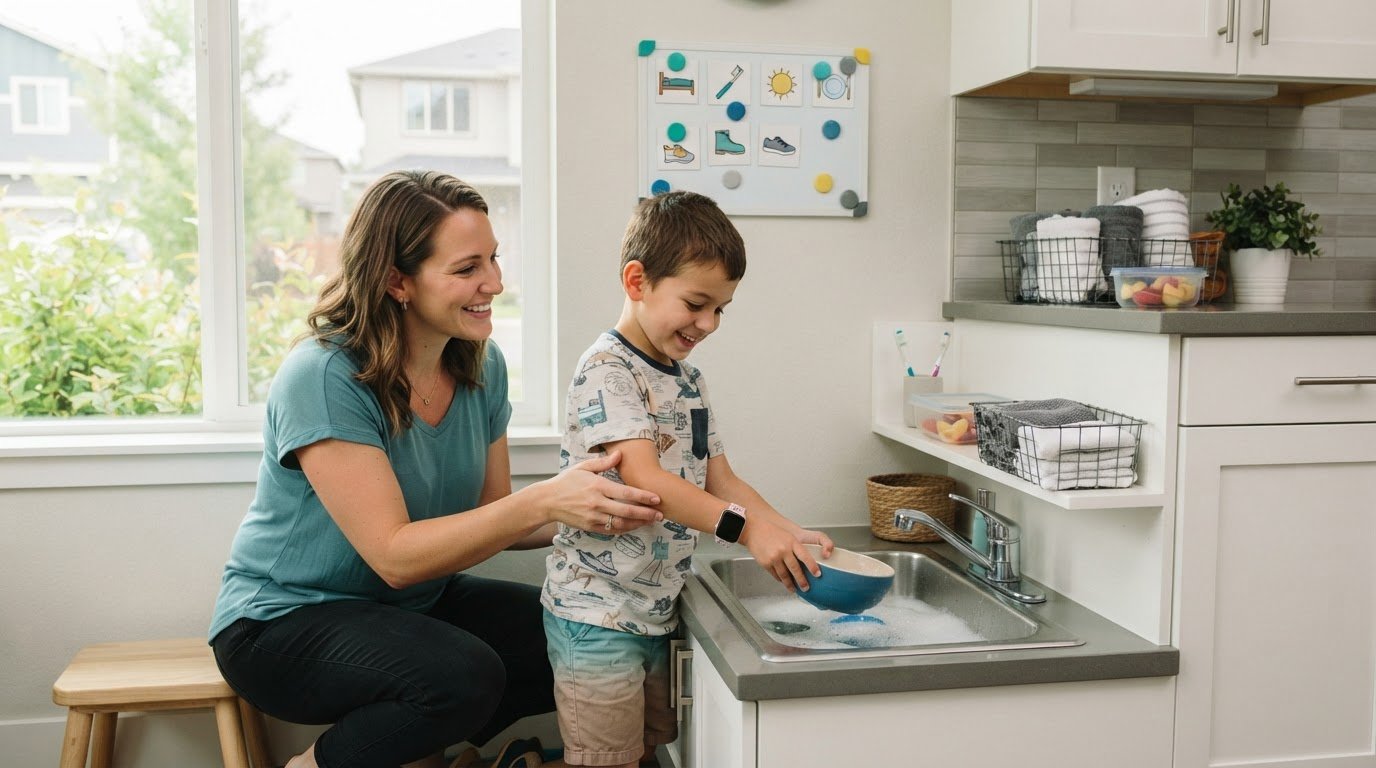
Adaptive goals build independence in practical routines. A child may practice putting belongings in a designated spot, washing hands, opening a lunch container, or asking for help with a difficult task. Each routine can be broken into manageable steps, with support adjusted as the child learns what to do next.
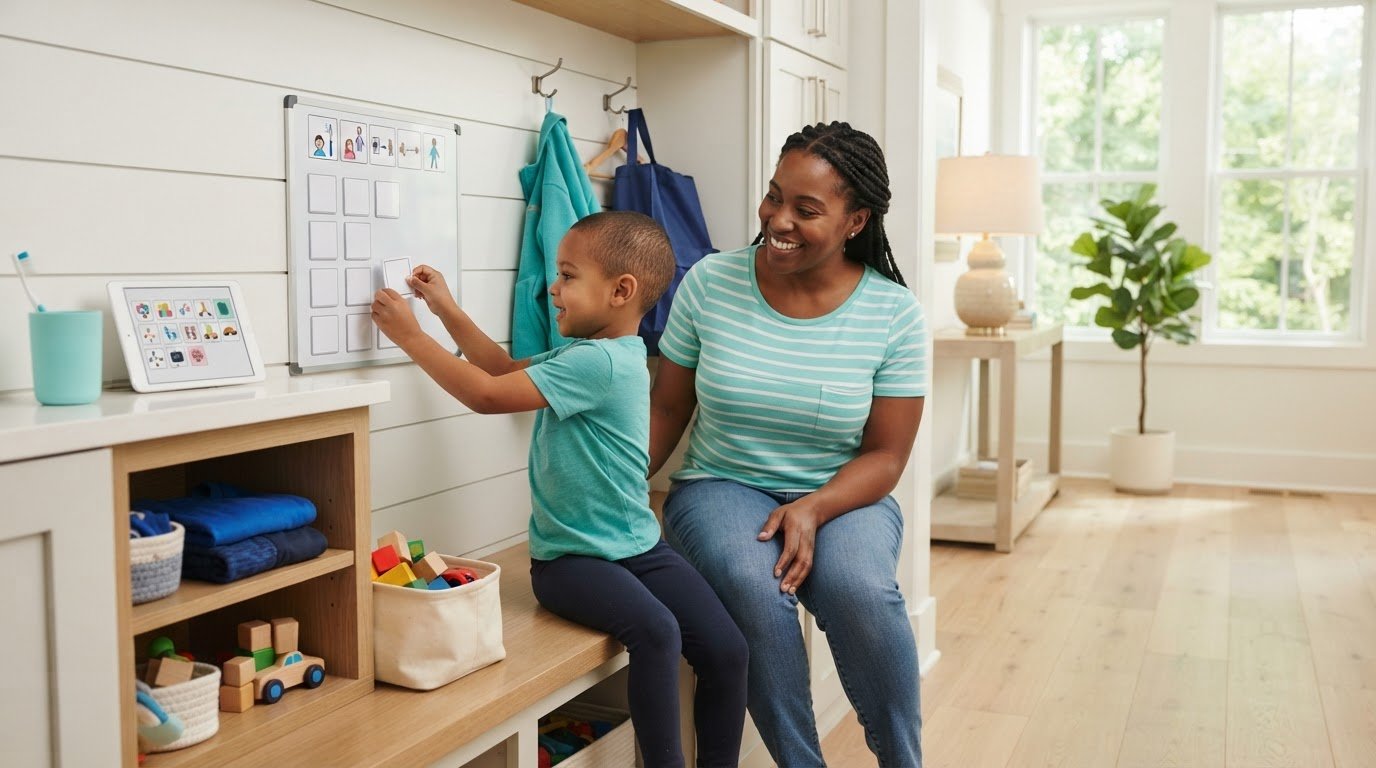
When reviewing daily living goals, consider whether they reflect your child’s needs and familiar routines. For instance, if getting ready takes several prompts, a visual sequence can show the order: hang up a backpack, put away a coat, then move to the next activity. Progress means the child can complete more of the routine while communicating needs and relying on fewer adult prompts.
School Routines and Transitions
Classroom readiness often involves moving between activities, following a group direction, waiting, and handling changes in routine. A child can rehearse a transition by checking a picture schedule, putting away one activity, and moving to the next. These concrete strategies make the steps easier to understand and practice.
Social readiness also includes communicating during busy moments. A child might learn to request a break, tell an adult that a task is difficult, or ask a peer for a turn. Consider whether practice reflects real school situations, such as lining up or cleaning up, rather than relying only on tabletop activities.
For a coherent plan, select goals that connect across settings. A request for help practiced during a home routine can also support participation in a classroom task. Families and educators can share which strategies work, what prompts the child uses, and where the skill is most useful. That information helps keep practice relevant while respecting the child’s pace and preferences.
How can ABA therapy help my child?
ABA can help children practice skills that support learning and participation. For a child preparing for kindergarten, goals might include asking for help, following a classroom direction, or communicating a need during group activities. Start with the child’s strengths, current skills, and the situations that make everyday routines challenging.
Support for autistic learners can connect behavioral strategies with educational routines. For example, a child who finds cleanup difficult might practice responding to a visual cue, putting materials away, and moving to the next activity. Families can share which prompts help at home, while educators can describe classroom expectations. These examples make goals more useful than broad aims such as “improve learning.”
Special education planning is separate from ABA treatment. Families can discuss specific classroom supports with the school team, such as a visual schedule, a consistent way to request help, or advance notice before transitions. These examples help adults coordinate around the child’s communication and participation needs without assuming one strategy suits every learner.
Early support can begin before an official autism diagnosis. Early intervention programs serve children from birth to age 3, according to the U.S. Department of Education. In North Carolina, the program is called the NC Early Intervention Branch. Families can explore developmental evaluations and early intervention while continuing to identify the child’s strengths and support needs.
ABA treatment and an autism evaluation have different purposes. ABA focuses on individualized learning goals; an evaluation considers whether a child meets diagnostic criteria. Families asking about an ADOS-2 assessment can discuss how it fits into the evaluator’s overall process and what other evidence informs conclusions. A named test is one part of a broader conversation, not a description of therapy goals.
Insurance is another practical consideration. ABA coverage typically requires an autism diagnosis, so families can clarify the evaluation and coverage process with their insurer. A useful sequence is to:
- Write down examples of communication, learning, or daily routines that concern you.
- Discuss developmental evaluation options and early intervention with the appropriate professionals.
- Ask the insurer what documentation it requires for ABA coverage.
- Share relevant evaluation information when planning individualized treatment goals.
This sequence separates diagnosis, educational planning, and intervention while keeping the child’s needs at the center. A clear example, such as difficulty asking for help during a group task, gives each conversation a practical focus.
Individualized ABA assessment and treatment plans
A useful plan starts with the child, not a preset list of kindergarten skills. An individualized assessment considers current strengths, learning needs, and routines that matter to the family. For example, a child who follows familiar directions at home may need support applying that skill in a group setting. The assessment connects these observations to practical treatment goals.
A Board Certified Behavior Analyst (BCBA) develops and oversees each child’s individualized ABA treatment plan. Registered Behavior Technicians (RBTs) provide direct therapy under BCBA direction and supervision. This structure links goal development with therapy sessions: the BCBA sets the clinical plan, while direct work gives the child opportunities to practice targeted skills.
Assessment is most useful when it identifies what happens before, during, and after a challenging task. A team might observe how a child responds to a new direction, what communication they use, and which supports help them continue. These details can guide personalized teaching, such as using a visual cue, modeling a response, or adjusting task steps.
Goals should describe an observable skill in a meaningful context. “Communicate independently” is broad; “ask for help when a classroom task is difficult” gives adults a skill to teach and notice. A treatment plan can also explain how progress will be reviewed and how prompts may change as the child learns. Families can contribute examples from important home routines.
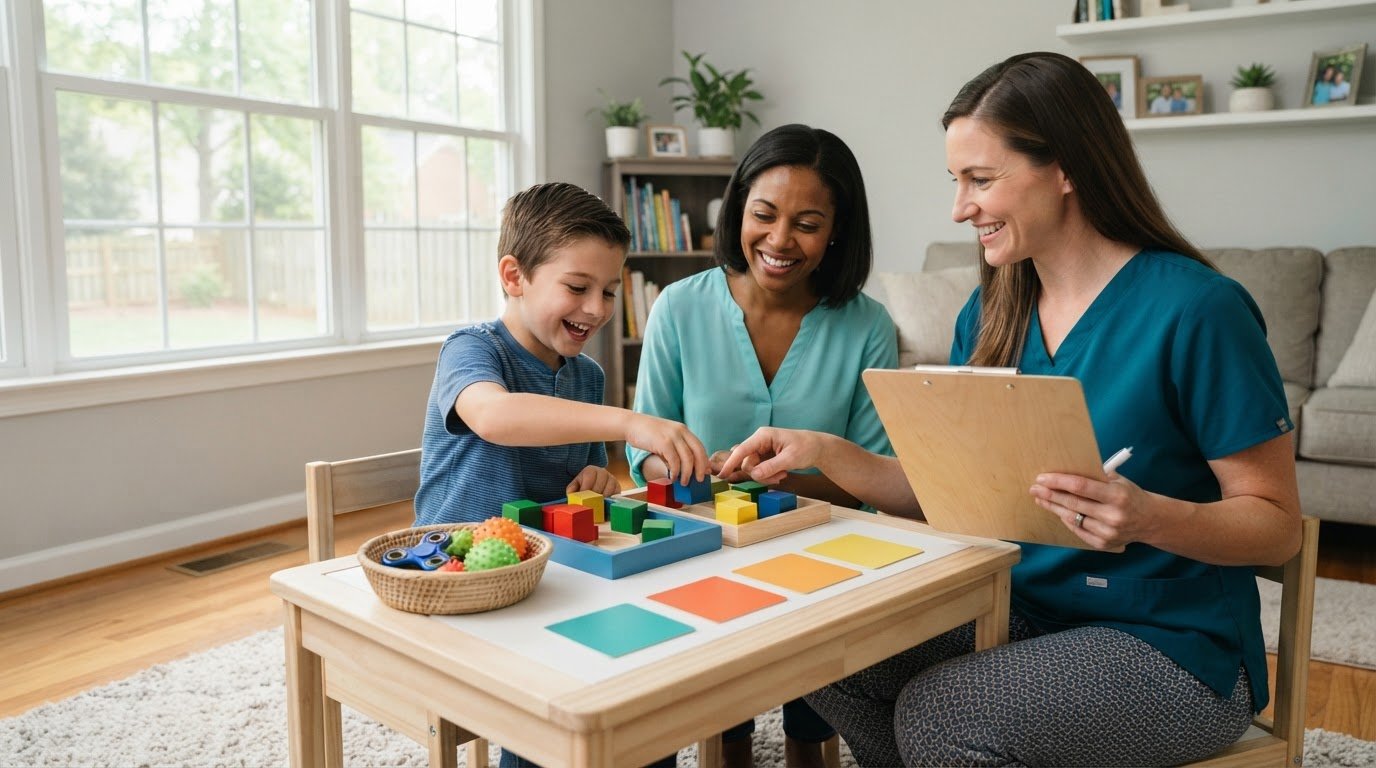
For center-based ABA therapy, the clinic setting can provide structured opportunities to practice skills with planned activities and support. A child might work on responding to a group direction, moving between activities, or communicating with an adult during play. Clinic-based ABA therapy can connect these practice opportunities with goals chosen for that individual child.
Individualized plans also consider how skills transfer beyond a therapy session. If a child practices following a visual sequence in the clinic, caregivers can share whether similar cues help with a home routine. This information can help the team adapt teaching and make practice more relevant across settings, rather than treating a skill as useful only in one room.
Families can review a plan for clear goals, examples of how each skill will be taught, and a way to discuss progress with the BCBA. Coverage questions are separate from clinical planning, and insurers determine their own documentation processes. Keeping these conversations distinct helps families understand both the child’s learning priorities and the practical steps connected to treatment.
What Is ABA School Readiness?
ABA school readiness means applying individualized learning goals to the routines, communication, and participation a child encounters at school. For parents in Apex, this can include coordination between caregivers and school teams around practical skills.
Kindergarten Readiness Skills
Useful goals reflect real classroom activities, such as following a group direction, asking for help, waiting for a turn, or moving between tasks. Parents can look for skills that support participation without treating one definition of readiness as right for every child. An evaluation of current strengths and needs can help identify which skills matter most before kindergarten begins.
Practice can connect a skill to a familiar example. A child might follow a visual cue to put away a toy, then use a similar cue during classroom cleanup. This applies ABA strategies to a school routine while keeping the goal observable and relevant.
Family and School Collaboration
Parents and caregivers can share which prompts, schedules, or communication supports help at home. They can also discuss school priorities with the child’s treatment team, then coordinate strategies with educators when appropriate. For a family in Wake County, the Wake County Public School System is the relevant district context for those school conversations.
Coordination can focus on one routine at a time, such as entering class or asking for a break. Families should keep educational planning distinct from ABA treatment; each process has its own purpose and participants.
Choosing a School Readiness Provider
For families in Apex, relevant ABA options include clinic-based, home-based, and community-based services. Look for individualized goals, a clear way to review progress, and practical examples of how skills connect with school routines. The setting matters, but goals and collaboration also shape how relevant practice is to a child’s day.
Ask how the treatment plan addresses your child’s strengths, communication, and classroom-related needs. A useful answer describes specific targets, such as following a transition cue, rather than promising a broad outcome or assuming every child needs the same approach.
Program Length and Frequency
There isn’t one schedule for every kindergarten-readiness program. General ABA therapy ranges for children ages 5-12 are 15-30 hours per week; intensive ABA typically involves 20-40 hours per week over two or more years. These figures describe general service patterns, not a required schedule for every child preparing for school.
The individualized plan, goals, and child’s needs shape session frequency. Families considering after-school, evening, or weekend routines can include those constraints in scheduling discussions. The key is to understand how planned sessions support targeted skills and fit alongside school and family routines.
In-home, school, and community-based therapy
Skills become useful when children can apply them beyond a therapy activity. In Apex, a child might practice asking for help at home, then use the same communication strategy during a school task. Applied Behavior Analysis can be tailored to the environment, the child’s goals, and opportunities in everyday routines.
At home, practice can build on routines already familiar to the child. For example, a caregiver might support a child in following a picture schedule to get ready, put away belongings, or move from play to dinner. These moments let the child practice skills in context, while the family can share which prompts make each step easier.
School routines bring different demands. A classroom may involve group directions, shared materials, and transitions between activities. Even when therapy does not take place at school, families can discuss useful strategies with educators, such as a consistent visual cue or a clear way to request help. Shared language can help adults support a skill across environments.
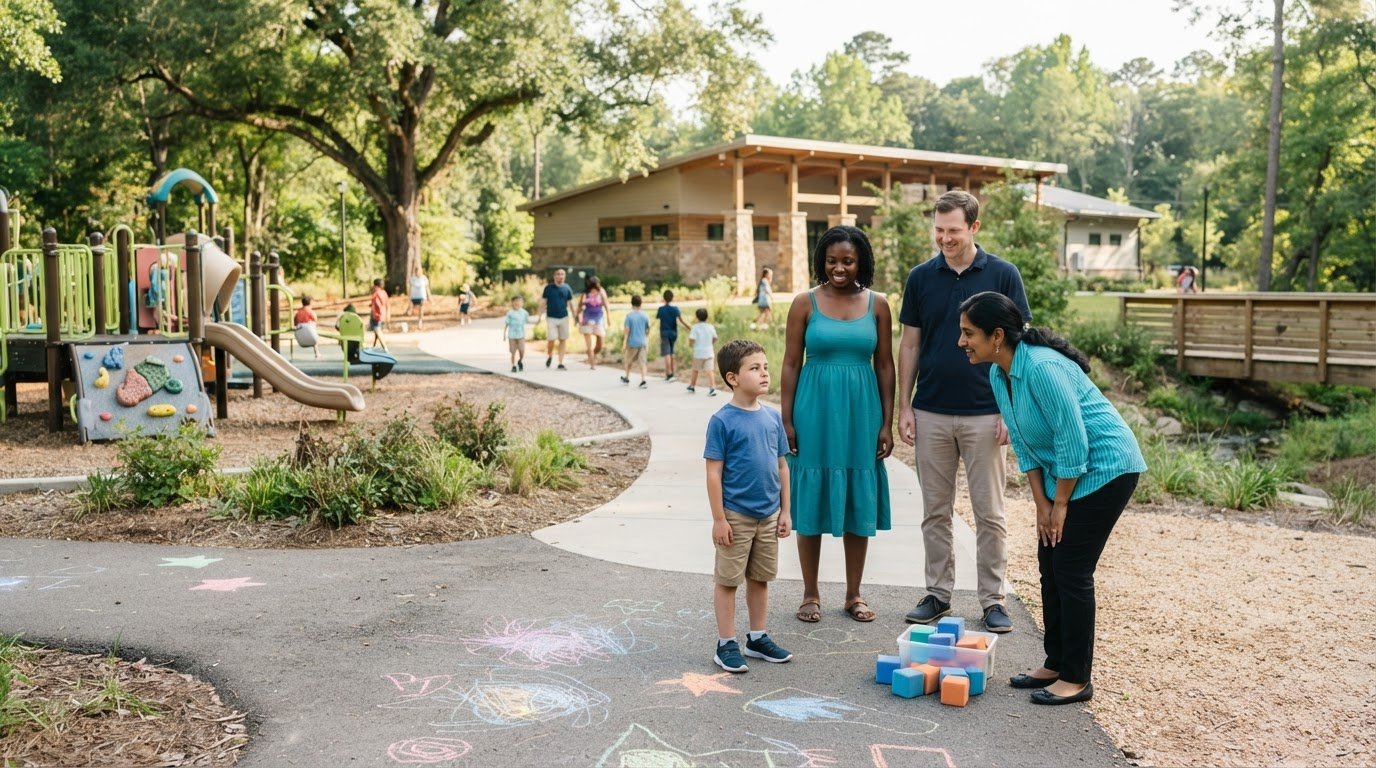
Community activities offer another setting for practice. A visit to a playground, library, or local gathering can create opportunities to greet someone, wait, follow a direction, or ask for a turn. Families can choose a manageable activity and focus on one goal, then notice which supports help the child participate. The aim is meaningful practice, not perfect performance.
Progress across settings depends on more than repeating the same exercise. A child may ask for help at home but need a picture cue in a noisier environment. Caregivers can note the setting, task, and support that worked. These examples help the treatment team tailor future practice instead of assuming a skill transfers automatically.
Families can consider three questions when comparing settings: Where does the child need the skill? Which adults can support practice there? What environment makes learning accessible? For example, if transitions are difficult in several routines, practice can begin with one predictable change at home. Adults can then coordinate a similar cue for other settings when appropriate.
Home and community practice can complement clinic sessions by connecting goals with real routines. The best setting is the one that supports the child’s individualized goals and creates useful opportunities to develop independence. Families in Apex can discuss how home or community-based ABA can fit those priorities with home-based ABA therapy or community-based ABA therapy.
Divergent Minds ABA: Clinic Based ABA Therapy
Divergent Minds ABA provides individualized, evidence-based ABA therapy for children with autism, including Clinic-Based ABA Therapy for communication, social interaction, and independence goals. Clinic-based sessions offer a structured environment to practice skills such as following a group direction or shifting between activities. Home-Based ABA Therapy, Community-Based ABA Therapy, and Social Skills Groups provide additional settings for personalized practice.
Families can turn to Divergent Minds ABA to discuss how individualized ABA goals may support their child’s kindergarten preparation. The conversation can focus on the child’s strengths, current needs, and routines that matter to the family.
To discuss your child’s goals and next steps, contact Divergent Minds ABA or visit divergentmindsaba.com.
Take the Next Step at Your Child’s Pace
Kindergarten preparation can begin with one practical priority: identifying what would help your child feel more capable in everyday learning. Families considering ABA therapy for kindergarten readiness in Apex can use that priority to guide a conversation about goals, settings, and the skills that matter most to their child.
Divergent Minds ABA provides Clinic-Based ABA Therapy, Home-Based ABA Therapy, and Community-Based ABA Therapy. These settings give families different ways to connect individualized goals with a child’s routines and surroundings. The next step is to share what you’ve noticed, including situations that feel easy for your child and moments when extra support could help.
Reach out to talk with Divergent Minds ABA about your child’s goals. A thoughtful conversation can help your family consider a path forward, one meaningful step at a time.
Frequently Asked Questions
Does ABA therapy work?
ABA therapy can help a child learn and practice specific skills through individualized teaching and observation. Its usefulness depends on whether goals connect with the child’s needs and everyday life. For example, a family might focus on helping a child communicate discomfort in a noisy classroom. Progress can be reviewed through observable changes in that skill, rather than broad expectations about how a child should behave.
What If My Child Doesn’t Have an Official Autism Diagnosis Yet?
You can pursue developmental evaluation or early intervention before an official autism diagnosis. Early intervention programs serve children from birth to age 3, according to the U.S. Department of Education. In North Carolina, the program is called the NC Early Intervention Branch. ABA insurance coverage typically requires an autism diagnosis, so evaluation and coverage steps may follow different timelines.
What Is the Best Age to Start ABA Therapy?
ABA therapy may begin as early as 18 months, and starting ideally between ages 2 and 4 is recommended. Age alone doesn’t determine a child’s goals or schedule. Families can consider what the child is finding difficult now, such as communicating during play or adapting to a new routine. Those examples help focus conversations about developmental support and individualized priorities.
What is ABA therapy and how can it support kindergarten readiness?
Applied Behavior Analysis, or ABA, uses observation and individualized teaching to build useful skills. For kindergarten preparation, goals might include asking an adult to explain an unfamiliar direction or communicating a need during a busy activity. Families considering ABA therapy for kindergarten readiness in Apex can identify which school-related situations are most challenging and use those examples to guide goal discussions.
What kindergarten readiness skills can ABA therapy help children develop?
ABA goals may address communication, social interaction, and adaptive skills relevant to a child’s routines. A practical example is learning to tell an adult when a classroom material is difficult to use, rather than leaving the activity without communicating. The child’s strengths and support needs guide which skills to prioritize. Readiness does not require every child to develop identical skills at the same pace.
How do ABA providers in Apex assess a child's kindergarten readiness?
A BCBA develops and oversees each child’s individualized ABA treatment plan, while RBTs provide direct therapy under BCBA direction and supervision. Assessment can consider how the child responds to different tasks, instructions, and supports. Families can bring examples from daily life, such as difficulty understanding a group direction, to connect the plan with situations the child may encounter at school.
Does insurance or Medicaid cover ABA therapy in North Carolina?
Coverage depends on the plan. ABA coverage typically requires an autism diagnosis, while insurance policies determine their own documentation and authorization processes. Divergent Minds ABA works with a variety of insurance providers and assists with benefits verification. For Medicaid, families can ask their plan which ABA benefits and documents apply to their child, rather than assuming coverage is the same across plans.
How can families access early intervention or ABA services in Wake County?
Families can explore developmental evaluation and early intervention through North Carolina’s NC Early Intervention Branch, which serves children from birth to age 3, according to the U.S. Department of Education. ABA is a separate service with its own individualized treatment planning. In Wake County, families can organize their next steps by noting developmental concerns, gathering relevant evaluation information, and identifying routines where support could help.