
Progress isn't always a sudden breakthrough. To know how to know if ABA therapy is working, look for measurable changes in communication, independence, behavior, or the ability to use skills in everyday settings. With quality ABA guided by a certified BCBA, signs of improvement should be visible within 8-12 weeks.
It makes sense to want a clear timeline and practical signs to look for. Progress can be gradual, so small changes in daily routines may matter as much as bigger milestones.
This guide explains what progress can look like in everyday skills and behavior, how goals and session data help track change, and what to review when progress feels slow. You’ll learn to recognize meaningful steps forward without expecting every child’s progress to look the same.
1. Daily living skills and independence
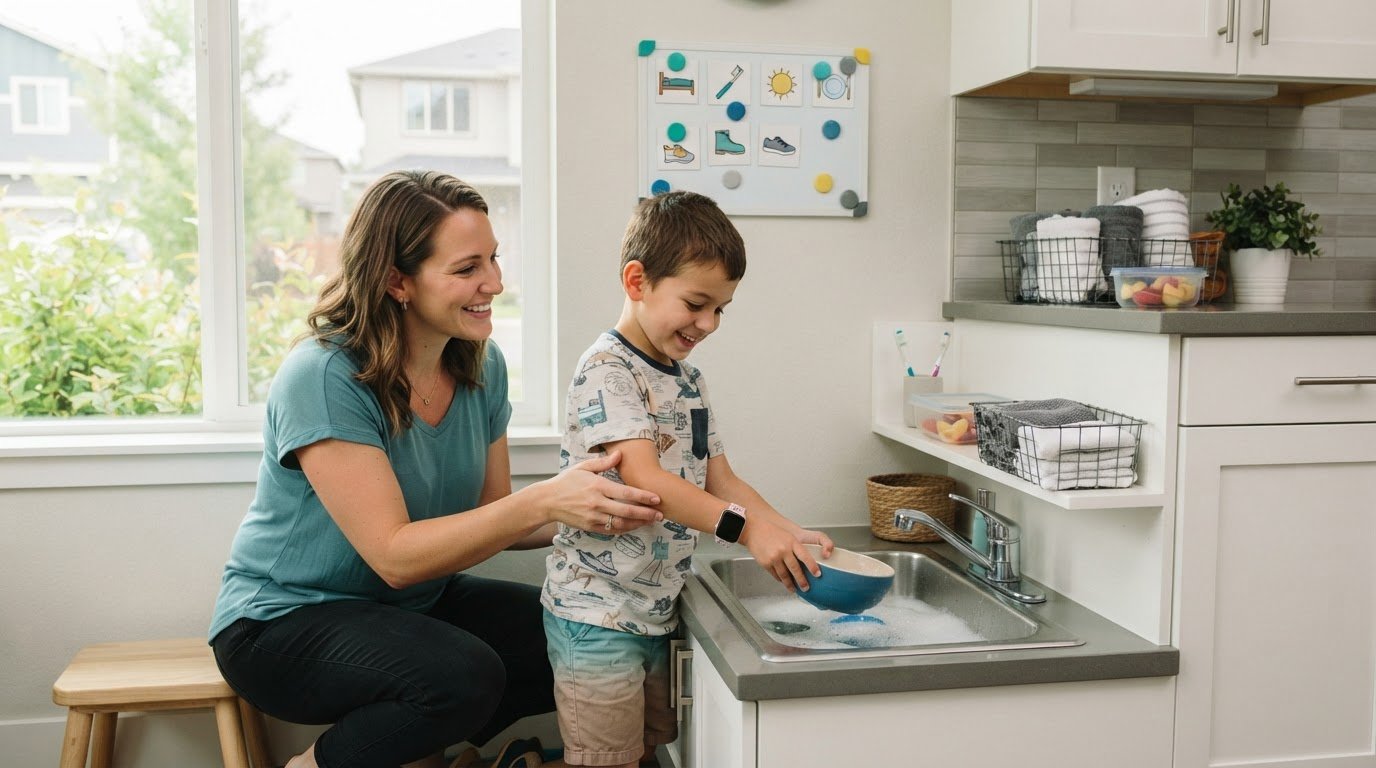
Look for skills that help a child take part in everyday routines with less support. Washing hands, putting on shoes, asking for help, or choosing a snack can all signal practical progress. For example, a child who once needed repeated prompts to put on shoes may begin doing so after one reminder. That change matters because it gives the child more control over a familiar part of the day.
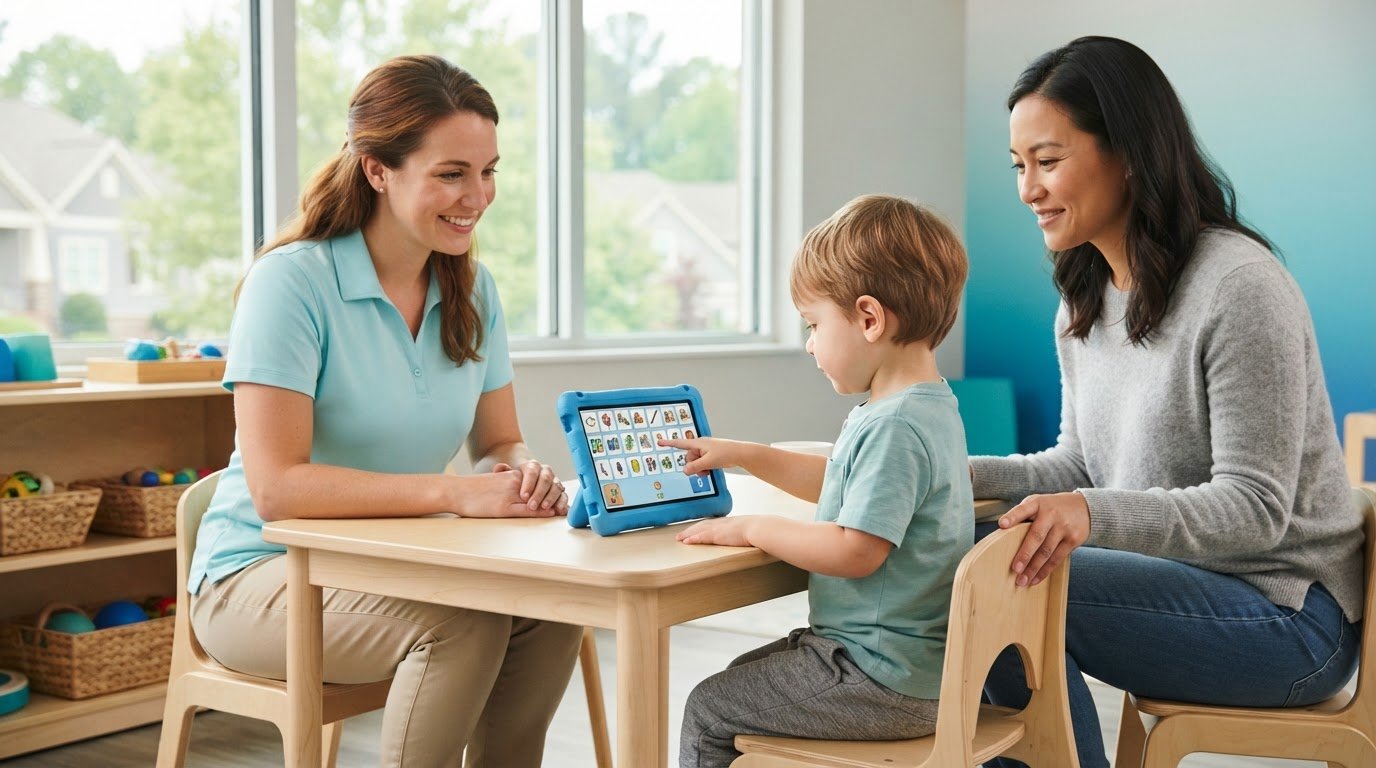
Progress also means using a learned skill beyond the clinic. A child might practice requesting a toy during a session, then use the same communication skill at home or in the community. Social Skills Groups can offer opportunities to practice taking turns with peers. Seeing a skill in different places and with different people suggests the child is learning to apply it, rather than responding only to one therapist or routine.
Families help carry learning into daily life. Ask the treatment team to demonstrate a strategy, then try it during a predictable routine, such as getting ready to leave home. A visual schedule can show the steps, while offering a choice between two cups at dinner gives the child a clear way to communicate a preference. These small, repeatable moments provide practice outside therapy and help caregivers notice which supports work.
Track specific examples instead of relying on a general impression of improvement. Note the skill, setting, prompts needed, and what happened. For handwashing, record whether the child completed each step independently, needed a visual cue, or required hands-on support. Share these observations with the therapist alongside session data. If a skill appears at the clinic but not at home, that difference can guide practice across settings.
Daily living skills may begin to strengthen around six months into ABA therapy, though progress can appear earlier or later and may be gradual. Look for a pattern across everyday routines, not one isolated success. A child may first complete one step independently, then manage more of the routine with fewer prompts. Communication and social engagement matter, too: asking for a break or bringing a toy to share can support participation and independence.
Use these practical signs to make observations more specific:
- Initiation: Does the child begin a familiar task, such as putting shoes by the door?
- Prompting: Are fewer reminders needed to follow a bedtime routine?
- Generalization: Does the child use a request with a family member as well as a therapist?
- Participation: Does the child take a turn or communicate a choice during a shared activity?
A useful picture of progress combines therapy data with concrete examples from home and community routines. Together, these observations show whether new skills are becoming part of the child’s daily life.
2. Reducing the frequency, intensity, or duration of problem behaviors
Behavior change is more informative when it’s measured in specific ways. Track how often a behavior occurs, how intense it is, and how long it lasts. For example, a hypothetical record might show daily tantrums decreasing from 5-6 to 1-2, or episodes lasting more than 30 minutes becoming 5-10 minutes. These are examples, not goals every child should meet. A clear baseline helps show whether a particular plan is changing the pattern.
Context matters, too. Record what happened before the behavior, what the child did, and what followed. If distress often begins when a favorite television show ends, note whether a warning, visual timer, or transition choice changes the response. A child handing over the remote without a major meltdown may signal improved transition skills. Reviewing these details helps the team identify triggers and support the child earlier.
Effective Applied Behavior Analysis should teach useful alternatives, not focus only on stopping behavior. If a child throws an item to request help, a replacement skill might be handing over a help card or saying “help.” Reinforce that communication promptly so it becomes a practical way to get support. The aim is meaningful learning: the child gains a safer or more effective response that serves a similar purpose.
Positive reinforcement supports learning by recognizing an appropriate response. For example, when a child asks for a break instead of pushing materials away, a therapist can honor the request and praise the communication. Punishment for doing something “wrong” is a warning sign; care should prioritize positive strategies, safety, and understanding the behavior’s function. When a child becomes dysregulated, de-escalation and attention to early signs can help adults respond before distress grows.
A behavior may temporarily increase during an extinction burst, when a behavior that was previously reinforced rises after that reinforcement is removed. But not every increase is an extinction burst, and an increase should not be ignored. Track changes in frequency, intensity, and duration, and share them with the BCBA. Any response plan should account for safety and teach an alternative, rather than simply waiting out distress.
Direct implementation may involve a registered behavior technician (RBT) working under a BCBA’s supervision. RBT certification requires 40 hours of training; candidates also need a high school diploma, pass an exam, and complete an evaluation of relevant skills. Ask how session data captures behavior and replacement skills, such as independent requests, so progress reflects more than fewer visible incidents.
If records show rising distress or no useful replacement skill emerging, review the data and plan with the BCBA. Families looking for guidance on discussing those observations can connect with the ABA team.
3. How Long Does ABA Therapy Take to Show Results?
There’s no single timeline for every child with autism. Progress depends on individualized goals, starting skills, attendance, and how often a child practices in familiar routines. Early changes may involve rapport or basic communication; a larger daily living goal can take longer to develop. Professionals use measurable objectives to distinguish a new skill from a one-time success.
A baseline gives the team a starting point for comparison. Before teaching a goal, record what the child currently does, what support is needed, and where it happens. For example, if the goal is to request a preferred item, note whether the child requests independently, responds to a prompt, or doesn’t yet make a request. The treatment plan then identifies the skill to build and how progress will be measured.
ABA progress isn’t directly comparable with progress in other autism therapies because each approach may target different skills and use different measures. Compare the child’s changes with their own baseline and goals, rather than treating one therapy’s timeline as the standard for another.
Progress may be minimal during the first 1-4 weeks as a child becomes familiar with the therapist and routine. During weeks 4-12, children often show bigger gains, and signs in communication, behavior, independence, or generalization should appear within 8-12 weeks with quality ABA from a certified BCBA. These are useful checkpoints, not identical milestones for every child. If consistent therapy produces no measurable progress in any area after 3-4 months, that warrants a close review of goals and strategies.
Session data makes progress easier to review. Therapists record information during each session, then track specific, measurable goals weekly. A report might show whether a child completed a task independently, needed prompts, or used a skill across settings. Families can share observations from home, too, since a skill that appears only in therapy may need more practice in the child’s everyday routine.
Review progress with the BCBA monthly or quarterly. Ask: “What baseline are we comparing with?” “Which goals changed, and what session data shows that?” “Does the skill generalize beyond therapy?” “What will we adjust if progress stalls?” Clear answers connect the report to the child’s goals and make the next steps understandable.
For parents wondering how to know if ABA therapy is working, look for a consistent pattern in the data and examples from daily life. Small steps matter when they show a developing skill, fewer prompts, or use in a new setting.
4. ABA therapy plans and individualized assessment
An individualized plan starts with the child, not a preset list of targets. A Board Certified Behavior Analyst (BCBA) considers strengths and challenges, then selects skills to introduce or modify and behaviors to change or replace. For example, if a child struggles to ask for help, the plan may teach a functional request while addressing behavior that occurs when a task feels difficult.
Parents can assess individualized, evidence-based practice by asking how each goal relates to their child’s needs and what data guides teaching. A clear answer identifies the target skill or behavior, the strategy being used, and how the team will measure change. The BCBA should explain why the strategy fits the child and how the family can share observations.
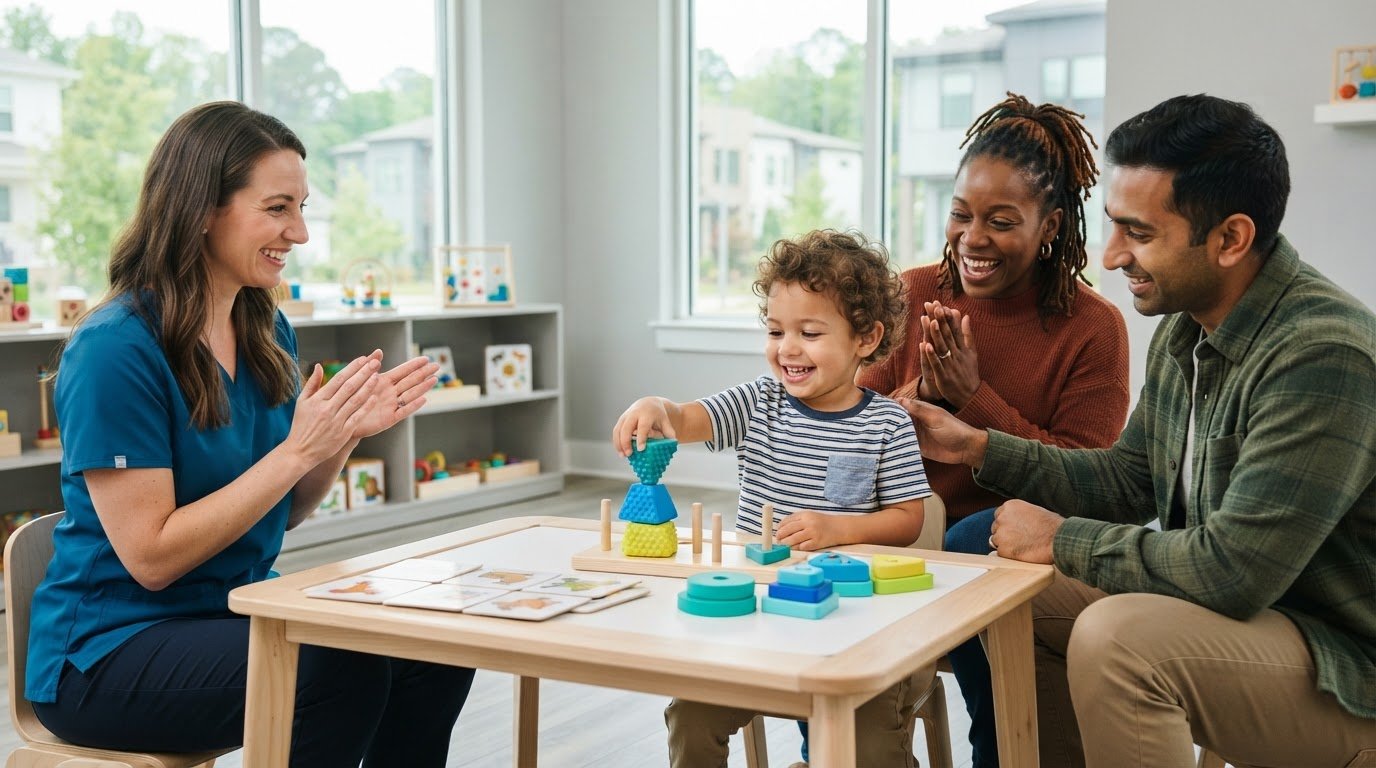
Session activities should align with the goals. A child might practice communication through play, take part in a structured activity, then use guided practice for a daily routine. Effective treatment also considers skill gaps that may contribute to challenging behavior. If a child has difficulty communicating discomfort, teaching an appropriate request may address an important part of the problem.
Not every behavior needs to be reduced. Self-stimulatory behavior, for example, isn’t automatically a treatment target unless it interferes with learning or safety. Parents can ask what a goal is intended to improve and how it supports the child’s participation, autonomy, or wellbeing. This keeps success tied to useful skills, rather than appearance or compliance alone.
Plans need review when progress stalls, behavior increases, goals no longer fit, or strategies fail to work across settings. A formal reassessment every 6-12 months can help evaluate changing strengths and needs. Between reassessments, the BCBA can use current data and family observations to adjust teaching, prompts, or practice opportunities. If a child uses a skill in the clinic but not during a home routine, the plan may need more generalization practice.
Parents can prepare for a plan review by bringing specific examples and asking:
- Which current goal does this example relate to, and what progress data supports that conclusion?
- What skill is the child learning, and how will the team teach it?
- What replacement skill will address the need behind a challenging behavior?
- How will the team know whether a strategy works beyond the therapy setting?
- What changes will happen if data shows a goal or approach isn’t helping?
These questions connect the treatment plan to daily life. When parents understand the goal, teaching strategy, and progress measure, they can share relevant observations and take part in decisions about the child’s next learning steps.
5. What If Progress Is Slow?
Progress can be gradual, and families may notice changes in different places first. A caregiver might see a new request at home, while a teacher notices easier transitions at school. Compare observations against the same treatment goal: what happened, what support was needed, and whether the skill appeared again. This gives the BCBA useful context beyond therapy sessions.
Communication can develop in small, observable steps. A child might move from single words to two-word phrases, then use three-word requests. One parent example described a child who started ABA at age 2 and made three-word requests by age 4. That example illustrates one path, not a schedule every child follows. Families can record new words, gestures, or independent requests and share them during progress reviews.
School observations can offer another view of a child’s skills. Ask caregivers and educators to describe specific moments, such as asking for a turn, following a classroom direction, or moving between activities. A brief note about the setting and prompts used helps distinguish an emerging skill from an established one. The BCBA can compare those observations with therapy data and consider how goals apply across environments.
Home practice can also show whether a skill is carrying over. Use a strategy demonstrated during therapy in a familiar routine, such as prompting a child to request help while opening a snack. Record whether the child communicates independently, uses a gesture, or needs a verbal cue. Parents don’t need to turn every interaction into a session; one clear example from an ordinary routine can inform the team’s next teaching step.
Some improvements are easy to miss when families look only for major milestones. A child making eye contact with a family member for two seconds, sharing a toy, or tolerating a small change in routine can offer useful information about engagement and flexibility. Note what happened before and after, then discuss whether the moment connects to an existing goal. Small observations are most helpful when they’re specific and repeatable.
If you’re wondering whether progress is happening, bring examples from home, school, and sessions to the next review. Ask which goals those examples relate to, what the data shows, and what practice could help the skill generalize. This keeps the conversation focused on your child’s needs, rather than comparisons with another child’s pace.
- Record: the skill, setting, prompt, and outcome.
- Compare: observations from family, school, and therapy.
- Discuss: what the examples suggest about current goals and teaching strategies.
For help discussing your child’s progress observations and next steps, contact the ABA team.
Divergent Minds ABA: Clinic Based ABA Therapy
Divergent Minds ABA provides personalized, evidence-based ABA therapy for children with autism, with goals shaped around each child’s strengths and support needs. Clinic-Based ABA Therapy offers a structured setting to practice skills, while Home-Based ABA Therapy and Community-Based ABA Therapy support learning in everyday environments. Social Skills Groups give children opportunities to practice interacting with peers.
If you’re reviewing progress and want help connecting therapy goals with daily life, these services can support the next steps toward communication, independence, and participation. The right setting depends on the skills being developed and where your child needs to use them.
To learn more, visit Divergent Minds ABA and get in touch.
Take the Next Step With a Clear Progress Conversation
Your observations can help shape what comes next. Bring a question about your child’s goals, a skill you’d like them to develop, or a setting where practice feels challenging. That gives the conversation a practical focus and connects therapy planning with your family’s priorities. If you’re still considering how to know if ABA therapy is working, use the question to start a discussion about what progress means for your child.
Divergent Minds ABA offers Clinic-Based ABA Therapy, Home-Based ABA Therapy, and Community-Based ABA Therapy. These settings provide different contexts for building and practicing skills as part of an individualized plan. A thoughtful next step is to discuss which setting and goals align with your child’s needs.
Contact Divergent Minds ABA to begin that conversation. Each small, meaningful step can help your child build toward greater confidence and participation.
Frequently Asked Questions
How Long Does ABA Therapy Take to Show Results?
Some children show early changes in rapport or basic communication within two to four weeks, while other goals take longer. Weeks 4-12 can bring more noticeable gains, and progress in communication, behavior, independence, or generalization should be visible within 8-12 weeks with quality ABA guided by a certified BCBA. Consider the child’s goals, attendance, starting skills, and whether the skill is used outside sessions.
What Are the Signs That ABA Therapy Is Working?
Look for skills your child uses more independently and comfortably in everyday situations. They might ask for help before becoming frustrated, wait briefly for a turn, or move to the next activity with less support. Notice whether your child seems engaged during sessions and can communicate preferences or request a break. A useful sign is improvement that supports participation and choice, not simply a change adults find convenient.
What If Progress Is Slow?
Bring specific examples to the BCBA and review whether the current goals and teaching strategies still fit. Check the baseline, attendance, prompt level, and whether the child has opportunities to practice between sessions. If consistent ABA shows no measurable progress in any area after 3-4 months, the plan deserves a focused review. A stalled target can be adjusted, broken into smaller steps, or taught in a different context.
What Measurable Goals Should ABA Therapy Track?
Goals should describe an observable skill or behavior and how the team will recognize change. For example, track whether a child independently asks for a preferred activity, follows a familiar instruction, or completes a task with fewer prompts. Define the setting and support level, too. “Communicates more” is difficult to assess; recording the communication method and circumstances makes the goal clearer for families and the treatment team.
What Data Show That ABA Therapy Is Working?
Useful data connect a goal to observable events, rather than relying on a general impression. Depending on the target, records may show how often a behavior occurs, how long it lasts, what prompts a skill required, or whether the child completed a task independently. Compare the pattern with the baseline and review changes over time. Session notes should help explain which strategies supported learning and what the team may adjust.
How Do Parents Know If Skills Learned in ABA Generalize to Home and School?
Notice whether your child uses a skill with different people, materials, or routines. A request practiced with a therapist might also happen with a parent at snack time or with a teacher during class. Ask caregivers and educators to describe the situation and support used, then compare those observations with therapy records. A skill that appears only under one exact condition may need more practice across settings.
What Are Signs ABA Therapy Is Not Working or Goals Need to Change?
Review the plan if progress stalls, behavior increases, a goal no longer fits your child’s needs, or a skill doesn’t carry over into daily settings. Consider the data alongside family observations, rather than relying on a single session. Ask what the team will change, how the new approach will be measured, and whether the goal still supports your child’s communication, independence, or participation.
What Are Signs of Harmful or Distressing ABA Therapy?
Notice whether your child seems unhappy, tense, disengaged, or unable to communicate a need during sessions. A plan centered on punishment for mistakes is a warning sign; effective support should use positive reinforcement and teach useful skills. Self-stimulatory behavior isn’t automatically a treatment target unless it interferes with learning or safety. Families in Cary, Apex, and Raleigh can raise these observations through Parent Coaching and discuss the plan with the BCBA.