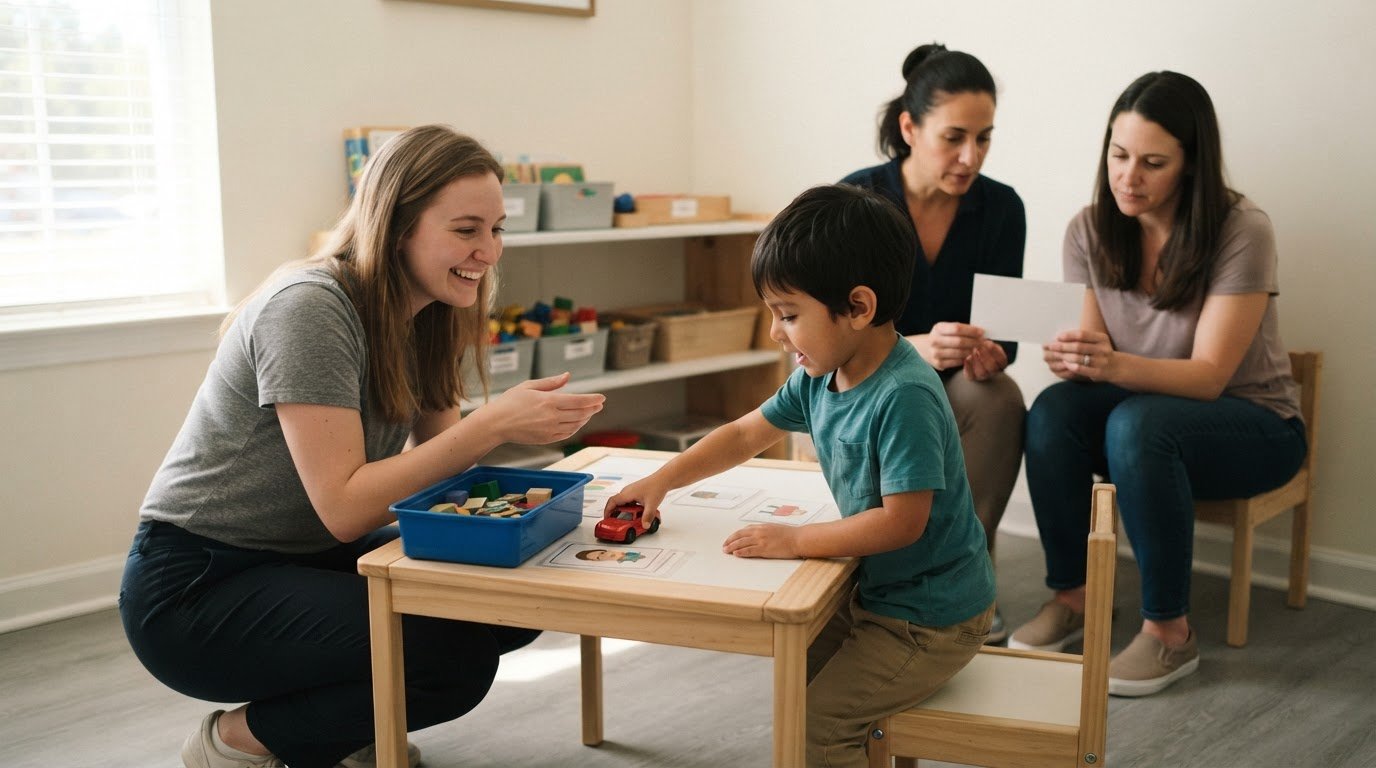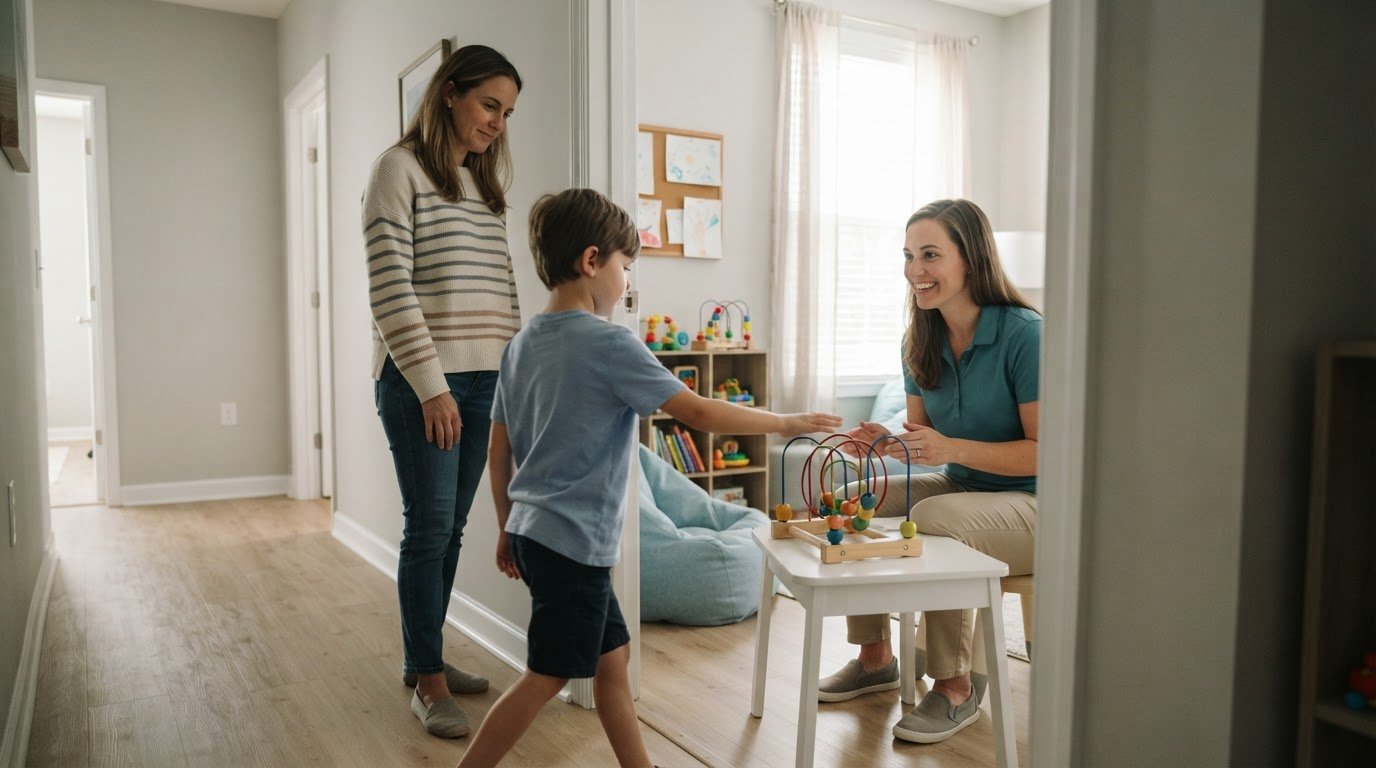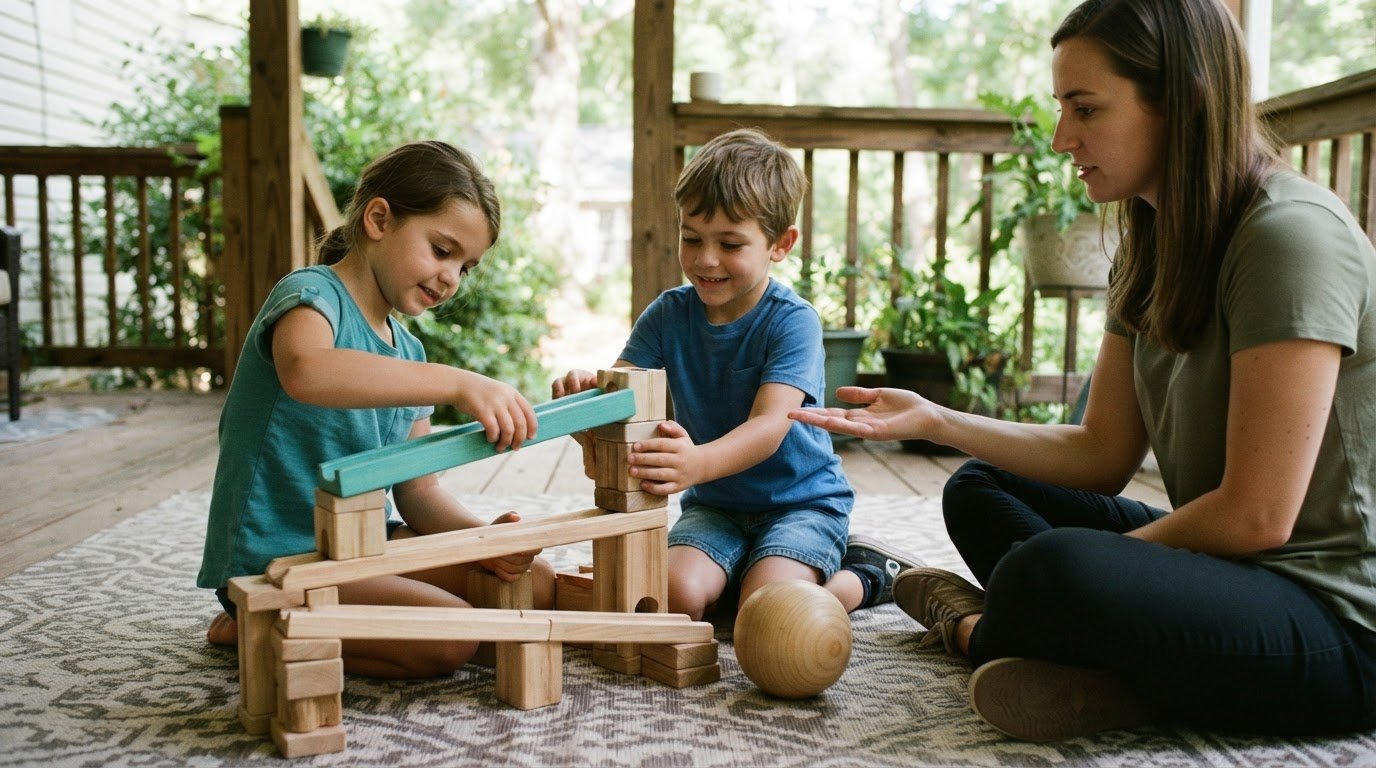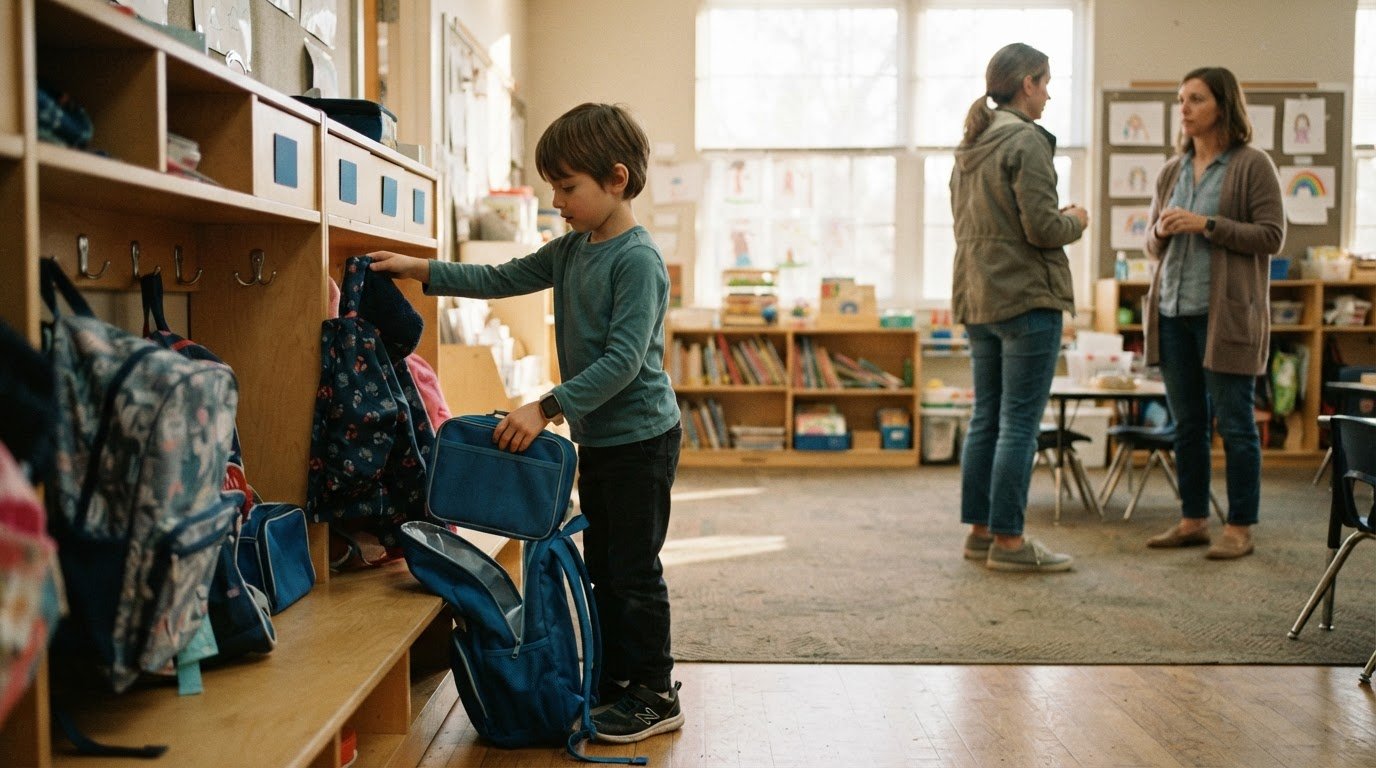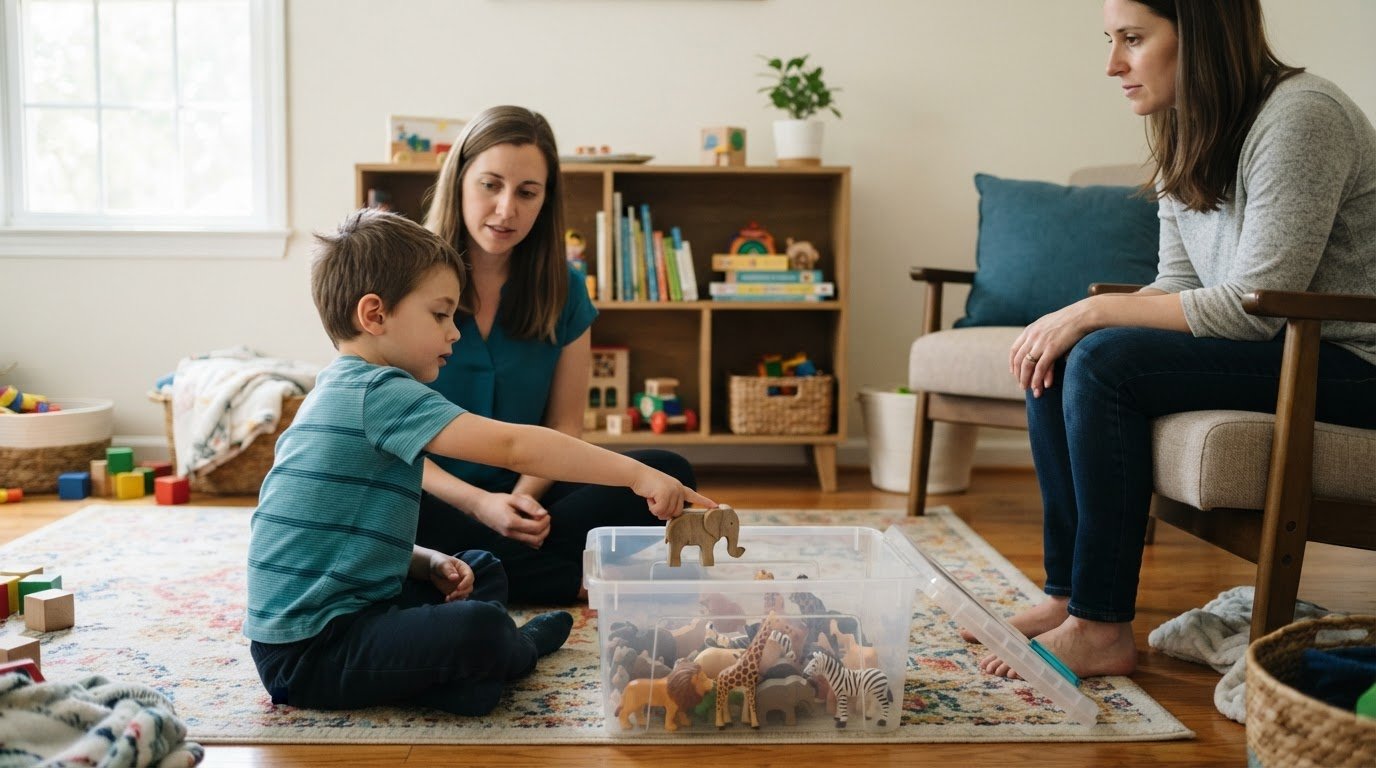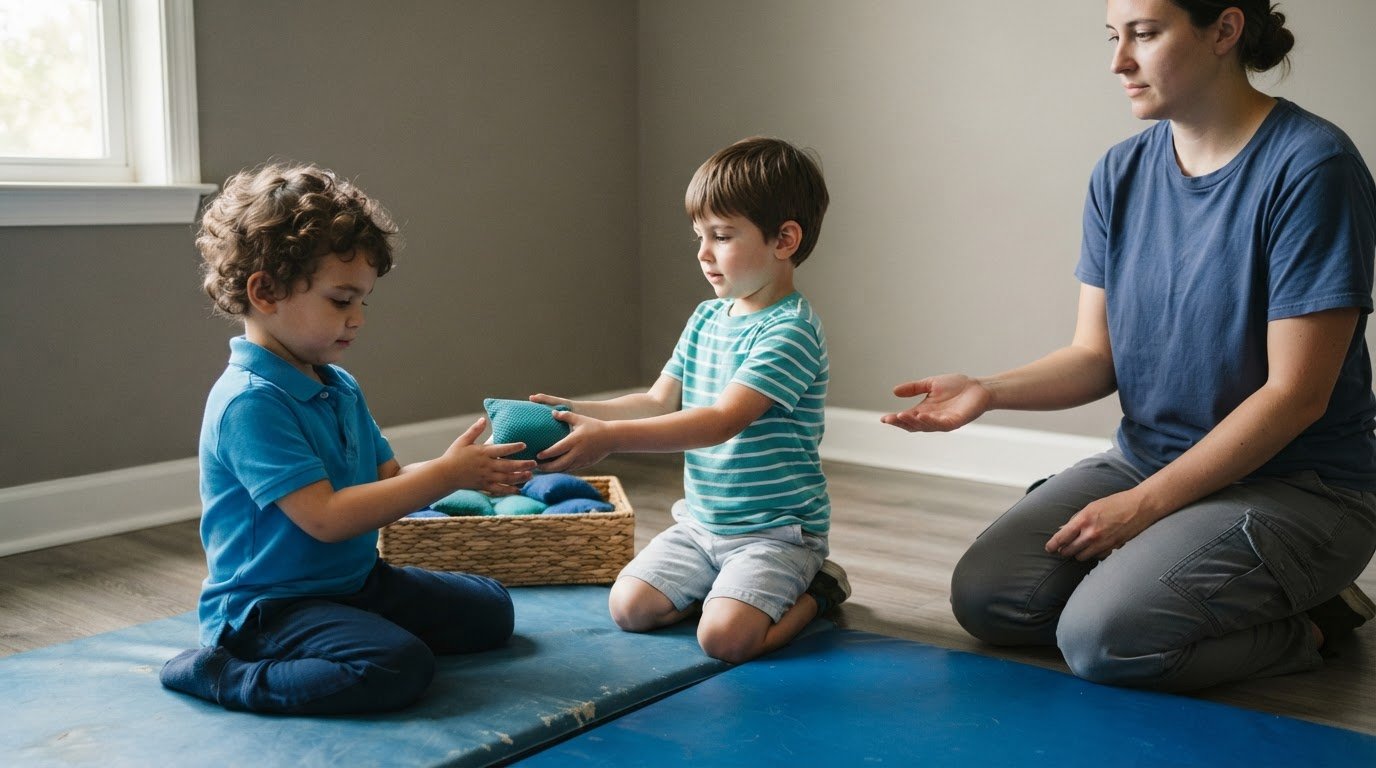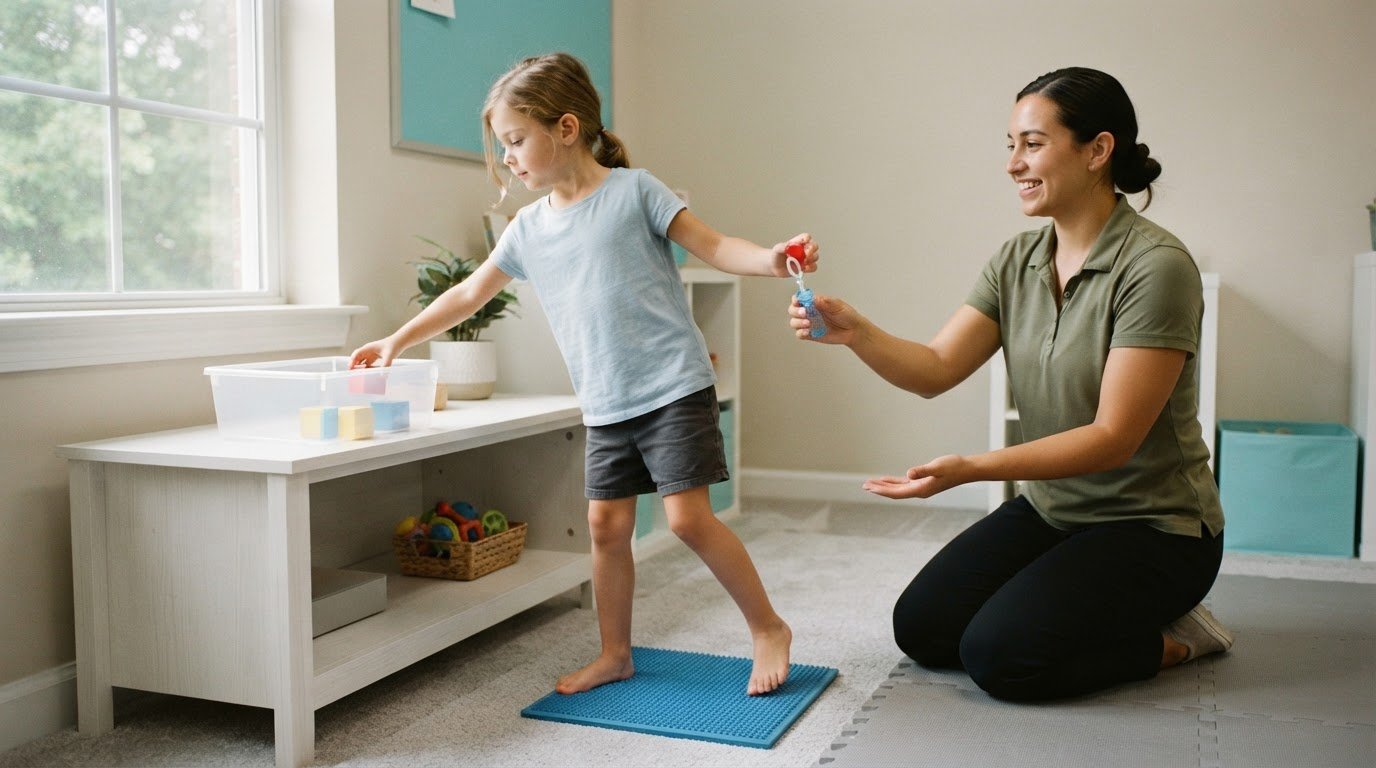

Small everyday changes can reveal meaningful progress. To understand how to track ABA therapy progress at home, focus on one or two skills at a time and record one to three observations each day. Note what your child did, how much help they needed, and whether the skill appeared during a familiar routine.
It can be hard to tell whether a new skill is becoming part of daily life or appears only during therapy. Simple, consistent observations help you notice changes in communication, self-care, and independence without turning family routines into tests.
This guide explains what ABA data tracking measures, how to observe communication and daily living skills, and how to share useful notes with your child’s therapy team. You’ll also learn how home observations can show whether a skill carries over across people and settings, making small steps forward easier to recognize and discuss.
Home observations of communication and daily living skills
Choose familiar daily routines as observation points and record one to three specific observations each day. A brief, consistent record can show how communication and daily living skills develop at home.
-
Observe Skills in Daily Home Routines
Watch for communication and self-care during meals, bedtime, play, or transitions. Record what your child does, the situation, and the help provided. For example, note whether your child asks for a preferred item, follows an instruction, or completes a handwashing step. Track one or two behaviors at a time to keep observations manageable. Don’t turn a routine into a test: capture what happens naturally and keep notes discreet to protect your child’s privacy and dignity.
-
Set Observable Therapy Goals
Work with your child’s therapist to define goals using actions you can see and record. “Communicates more” is broad; “asks for help during a routine” describes an observable response. Agree on what counts as success, what support is allowed, and when you’ll record the skill. A task analysis can break a complex activity, such as getting dressed, into smaller steps. Track which steps your child completes independently instead of treating the whole routine as one result.
-
Share Home Observations With the ABA Team
Bring specific examples to conversations with the ABA team, including what happened before and after a behavior. A notebook, binder, or digital tracker can help you share daily notes with the therapists involved in your child’s care. Include the routine, your child’s response, and any prompts or assistance. For instance, note whether a request happened independently or after a verbal cue. Keep records focused, private, and useful for discussing therapy goals.
- Use one consistent format for each observation. A simple entry might include the date, routine, skill, and support needed. For a visual snapshot, rate cooperation or frustration on a 1-to-5 scale, and use the same meaning for each rating. Add a short description so the number has context. A rating alone cannot show what happened, but paired with a concrete example, it can help reveal patterns across daily routines.
- Review notes for small changes, not just completed goals. Compare how much help a task required, whether a communication attempt occurred, or whether a skill appeared in another routine. A journal can capture new challenges alongside gains, such as playing with a sibling for 10 minutes. Share relevant patterns with the therapy team, rather than drawing conclusions from one difficult or successful day. Consistent observations make it easier to discuss progress and next steps together.
How is Progress Measured in ABA Therapy?
ABA progress is measured through changes in skills, behavior, independence, and use across situations. Parents can record one to three observations each day. Keep records discreet and share them only with professionals involved in your child’s therapy to protect privacy and dignity.
-
Record Progress for Therapist Review
After each home therapy session, write a clear observation that includes the activity, response, and challenge. Note whether a skill happened independently, with a prompt, or not yet. This helps distinguish an emerging ability from a consistently mastered goal. Reviewing notes weekly can reveal patterns that a single session may not show. Keep descriptions factual, such as whether your child followed a direction independently, rather than labeling them cooperative or difficult.
-
Review Data Sheets and Session Notes
Ask to review the ABA team’s data sheets regularly, then compare the recorded targets with your home observations. Session data may track frequency, duration, prompt levels, or percentage correct. Registered Behavior Technicians collect real-time information during sessions, while Board Certified Behavior Analysts analyze data to guide clinical decisions. Look at the goal being measured, the support used, and changes over time. If a graph or term is unclear, ask the therapist to explain it.
-
Identify Signs for Goal or Strategy Review
Share persistent lack of measurable change, rising challenging behaviors, or skills that don’t carry over between environments with the BCBA. These patterns may signal that the goal, teaching steps, or support needs review. Progress may also slow during illness, family transitions, or routine changes. Describe what changed and when instead of assuming the strategy has failed. A BCBA can use the data to adjust goals or supports and help children build independence through applied practice.
-
Discuss Progress and Therapy Plans
Use regular conversations with therapists to review achievements, challenges, and next steps in your child’s development journey. Ask which goals are mastered, whether skills generalize at home or school, and what plan adjustments are being made. Discuss which skills to prioritize and how they fit daily routines. Treatment plan reviews are often provided every 3 to 6 months, while short weekly check-ins can keep observations current. To discuss how caregiver input can support this process, connect with Divergent Minds ABA.
Work with your child’s therapist to establish clear, measurable goals that align with the overall treatment plan. Regular progress checks, ideally after each home therapy session, can help caregivers make timely adjustments. ABA therapists collect data during sessions, and parents can ask to review the data sheets regularly.
Caregivers can also record home therapy sessions on a digital camera or smartphone, then review their child’s responses and behaviors and share recordings with therapists for feedback. Many families review ABA progress weekly using notes. Short weekly check-ins give caregivers and therapists time to discuss successes and challenges.
What Is ABA Therapy Data Tracking?
ABA data tracking turns observations into consistent records of behavior and skills. A chart can show whether a response changes across sessions, routines, or levels of support.
-
Track Behavior During Consistent Routines
Choose a familiar routine, such as dinner, bedtime, or a transition, and observe one defined behavior. Note the situation and what happened instead of relying on a general impression. For example, record whether a challenging behavior occurred when play ended. Comparing similar routines can reveal patterns. Avoid changing several conditions at once, which makes it harder to understand what the observation reflects.
-
Measure Behavior Frequency and Duration
Count each occurrence when measuring how often a behavior happens. For example, record each request for help during a session. To measure duration, note when an activity or behavior begins and ends. Use the same clear definition every time so entries remain comparable. If your child stays engaged longer during a familiar activity, record the observed duration rather than describing the change only as an improvement.
-
Use ABC Charts and Behavior Measures
An Antecedent-Behavior-Consequence chart records what happened before a behavior, the behavior itself, and what followed. For example, note a direction, your child’s observable response, and the next event. Keep descriptions neutral: “cried during the transition” is more useful than “was difficult.” Parents learning how to track ABA therapy progress at home can use ABC notes to organize observations for discussion with the therapy team.
-
Measure Skills and Behavior Over Time
Review records across sessions to see whether a skill changes consistently. Depending on the goal, track frequency, duration, prompt level, or percentage correct. A small change, such as attending for longer, is worth noting when measured consistently. Skill mastery depends on the goal’s established success criteria, so discuss repeated patterns with the therapist instead of drawing conclusions from one session.
A notebook, spreadsheet, or simple printable chart can capture the date, routine, target, and measure. You don’t need a specific app to begin collecting organized observations. To learn how to track ABA therapy progress at home, use the same fields each time and describe actions plainly. To reduce bias, record what you directly observed, including progress and challenging moments, without guessing at intent or leaving out difficult examples.
Encouraging skill generalization across people and settings
A learned skill is more useful when your child can apply it with different people and in natural situations. Track where communication, self-care, and social skills appear beyond therapy.
-
Track Skills Across Home and School Routines
Record whether a skill occurs in more than one routine, such as following directions at home and school. Note who gave the instruction, what was asked, and what support your child needed. For example, compare responding to a familiar direction from a parent with responding to a teacher. Share these observations with the therapy team, since home notes can help assess whether learning carries across environments. Remember that routines may differ in important ways.
-
Track Communication, Self-Care, and Social Skills
Choose examples from each skill area, then document what your child actually does. Communication may include requesting help or responding to a question; self-care may involve completing a step while getting dressed. For social skills, note whether your child initiates play with a peer during a session. Record the context and level of assistance, too. These details help families and therapists distinguish an independent response from one that follows a prompt.
-
Check Skill Carryover at Home
Observe a skill during the home routine where it would naturally be useful. If your child learned to request a break during therapy, notice whether they make that request during homework or play. Record whether they use the skill independently, with a cue, or not in that situation. A skill mastered in therapy but absent at home may need more generalization practice or caregiver coaching. Discuss the pattern with the therapist rather than assuming the learning has disappeared.
-
Practice Skills at Home and in the Community
Build practice into familiar activities, then observe whether the same skill appears with different people. Your child might greet a family member at home and another person during a community outing. Keep the goal consistent while noting changes in setting, partner, and support. For children with autism, meaningful progress includes using learned skills in natural situations, not only repeating them in one place. Avoid adding demands that make everyday interactions feel like tests.
- Review the record for patterns across settings, not isolated successes. A simple checklist can mark whether a communication, self-care, or social skill appeared at home, school, or in the community. Bring examples to the therapy team, including situations where the skill didn’t occur. Comparing these examples helps identify where practice may be useful and helps families recognize steps forward in daily life.
Benefits of tracking ABA progress at home
Home observations add everyday context to clinical data. They help families record how skills appear beyond structured sessions.
- Connect therapy targets with meaningful moments. A request practiced during a session may appear later when your child needs help with a preferred activity. Record what happened and whether the request was independent. This gives the therapist a specific example to consider, rather than a general impression that communication is improving. Small observations can show how learning fits into everyday family life.
- Notice patterns that a single session may not reveal. Compare responses across different days, people, or activities, and note which conditions were similar. For example, your child might follow an instruction with one adult but need support from another. That contrast helps identify where a skill is becoming reliable and where practice may still help. Patterns make progress easier to discuss clearly.
- Bring concrete examples to meetings with the ABA team. A note such as “my child asked for help before leaving the activity” gives everyone a shared event to discuss. Include the situation and support provided so the team can interpret the observation alongside session data. Parent input can help clinicians understand whether a goal is useful in daily life, not only during structured teaching.
- Recognize gains that broad measures may overlook. Your child may try a new instruction, begin an interaction, or complete a familiar step with less support. These moments matter because progress can involve greater independence, clearer communication, or a skill appearing in a new setting. Record the specific action rather than judging the whole day as successful or unsuccessful. This keeps attention on observable development.
- Use home records to support thoughtful clinical decisions. If notes show that a skill occurs only under one condition, share the pattern with the therapist. The team can consider whether the goal needs a different teaching step or broader practice. Home observations don’t replace professional data; they add context about routines and people that sessions may not capture. Together, they can guide useful conversations about next steps.
Keep tracking manageable and focused on your child’s goals. Discuss home progress with the ABA team to connect daily observations with therapy planning.
Divergent Minds ABA: Home Based ABA Therapy
Divergent Minds ABA provides personalized, evidence-based Home-Based ABA Therapy for children with autism. This may be a natural next step when you want therapy goals connected to communication, independence, and daily routines at home. Families can share observations about emerging skills, challenging situations, and support that helps their child participate. The team works closely with families to create individualized treatment plans focused on confidence and lifelong skills. When learning also needs practice in other environments, Clinic-Based ABA Therapy and Community-Based ABA Therapy offer additional settings. Home progress notes can inform conversations about goals and how skills are developing in everyday situations.
Contact Divergent Minds ABA to discuss home-based ABA therapy for your child.
Turn everyday observations into a shared next step
Make home observations part of an ongoing conversation about your child’s goals. A thoughtful approach to how to track ABA therapy progress at home can help you share useful context, including which skills matter most in your family’s daily life. You don’t need to capture every moment. Focus on information that clarifies where your child is building independence and where support could be adjusted.
Divergent Minds ABA offers Home-Based ABA Therapy, alongside Clinic-Based ABA Therapy and Community-Based ABA Therapy. These settings provide different ways to support skill development across a child’s everyday environments. Sharing your priorities and observations can begin a discussion about the approach that fits your family’s needs.
Contact Divergent Minds ABA to talk about next steps for your child. Each observation can help make the path forward clearer, one meaningful skill at a time.
Frequently Asked Questions
What skills and behaviors should parents track during ABA therapy at home?
Track skills tied to your child’s current goals, such as asking for help, following directions, dressing, or joining play. Include behaviors that affect participation in everyday activities, and describe what happened rather than judging it. For example, note whether your child asked for a break before leaving a task. A focused record helps the therapist connect observations to your child’s treatment goals.
How do you collect ABA data at home using frequency, duration, and interval recording?
Frequency records how many times a defined behavior occurs, while duration records how long it lasts. Interval recording divides an observation period into sections and notes whether the behavior occurred during each one. For example, a parent might mark whether a child stayed engaged during each part of a play activity. Use the method that matches the goal, and ask the therapist to explain the team’s preferred definitions.
What is an ABC behavior log, and how do you use it at home?
An ABC log captures the antecedent, behavior, and consequence: what happened beforehand, the observable behavior, and what followed. At home, record the sequence around a specific event, such as a transition away from a favorite activity. Include the words or actions involved without guessing at intent. Reviewing several entries with the therapist can help identify patterns and guide discussion of supportive strategies.
How can parents measure skill progress and generalization outside therapy sessions?
Record whether a target skill appears with different people and in different situations. For instance, note if your child uses a communication skill with a parent during dinner and with another caregiver during play. Include whether the response was independent or needed a cue. Compare examples over time and share them with the therapist, who can help assess whether the skill carries into everyday life.
How should parents share home ABA data with their child's BCBA or therapist?
Share concise, dated notes using the communication method you have with your therapy team. Group observations by goal, and include the setting, what occurred, and any support provided. Families in Cary, Apex, and Raleigh can bring a few representative examples to a progress discussion instead of an unfiltered record of every moment. This keeps the conversation focused on patterns, questions, and practical next steps.
What should parents do if home ABA data shows regression or increased challenging behavior?
Share the pattern with your child’s BCBA or therapist, including when it began and what changed around that time. Note relevant context, such as illness, family transitions, or a disrupted routine, and describe the behavior objectively. Don’t change therapy goals based on one difficult day. The team can review the records, consider possible influences, and discuss whether adjustments to the plan or supports are appropriate.
What privacy and safety rules apply to recording ABA therapy data at home?
Collect observations discreetly and keep records private to protect your child’s privacy and dignity. Share them only with professionals involved in your child’s therapy.
What free ABA data tracking apps and printable charts are available for parents?
A notebook, spreadsheet, or simple printable chart can track the date, routine, target, and measure. You don’t need a specific app to begin.