
The most effective behavioral support doesn't just teach a child how to follow a script; it teaches them how to navigate the world with their own unique voice. If you've been searching for clinical ABA therapy Cary, you've likely encountered a mix of hope and hesitation. It's natural to feel anxious about transitioning your child into a new environment, especially when you're faced with complex clinical terminology or outdated reputations of "robotic" teaching methods. You want a program that respects your child's personality while providing the structure they need to thrive.
We understand that your ultimate goal is functional independence and lasting confidence for your family. This article will help you discover how clinical ABA therapy in Cary provides a structured, evidence-based path to those milestones through a collaborative, hands-on approach. We'll explore what a typical daily routine looks like in a professional clinic setting and why choosing a BCBA-owned practice ensures a higher standard of personal accountability. You'll also gain clarity on the latest 2026 North Carolina insurance mandates and Medicaid regulations, ensuring you feel empowered to make the best choice for your child's future.
Understanding Clinical ABA Therapy in Cary: More Than Just a Center
Clinical ABA therapy Cary is a deliberate choice for families seeking a focused, evidence-based approach to development. Unlike other settings, a clinic provides a structured, intensive environment specifically designed to minimize distractions and maximize learning opportunities. By utilizing the principles of Applied Behavior Analysis (ABA), clinicians can create a high-density learning environment where every interaction is an opportunity for growth. In Wake County, where healthcare standards are exceptionally high, this evidence-based framework ensures that every intervention is rooted in proven behavioral science.
While home-based therapy offers comfort, clinical settings provide unique benefits that are difficult to replicate in a domestic environment. One of the primary advantages is the immediate access to social peer interaction. Within a clinic, children aren't just working with an adult; they are engaging with peers in a supervised, therapeutic context. This allows us to integrate Natural Environment Teaching (NET) within the clinical framework, where we use the child's natural interests and play to build functional skills in a setting that mimics the complexities of the real world.
Why a Dedicated Clinic Environment Matters
Precision is the hallmark of a high-quality clinic. By having complete control over environmental variables, our Board Certified Behavior Analysts (BCBAs) can collect precise data and adjust interventions in real-time. This level of oversight ensures that your child’s time is used effectively. It allows for a level of consistency that is often the catalyst for significant breakthroughs in communication and behavior.
A center-based setting also offers:
- Social peer modeling: Children learn by observing others, and the clinic provides a safe space for social skills groups.
- Specialized resources: From sensory-regulated rooms to diverse learning materials specific to our Cary facility, the environment is built to support various needs.
- Reduced distractions: Unlike a busy home, the clinic is optimized for focus, which is often essential for mastering new, complex skills.
The Goal: From Clinic to Community
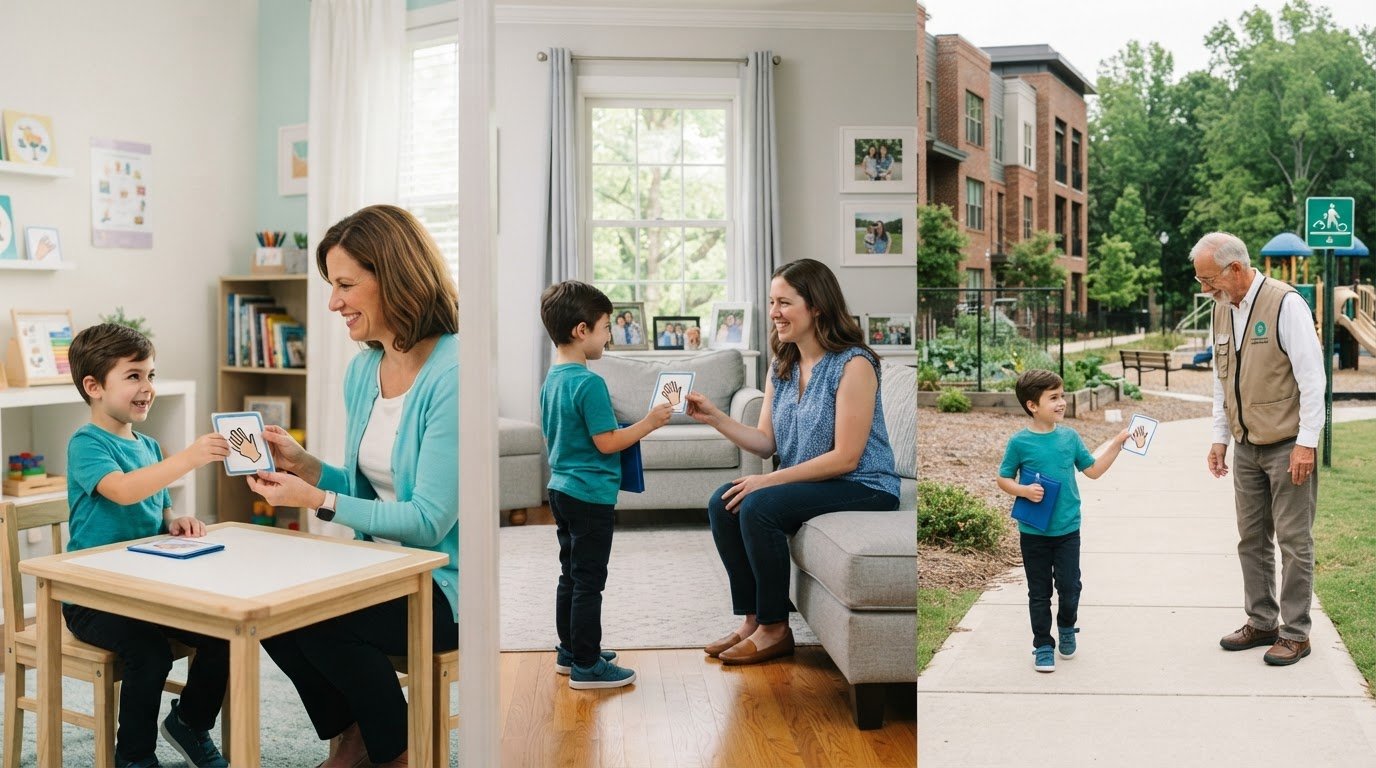
We view the clinic as a vital training ground. The ultimate objective isn't just success within our walls, but functional independence in the community. Every skill mastered here is designed with generalization in mind, ensuring that progress follows your child to school, the playground, and home. We don't just want to see growth in our sessions; we want to see it in your everyday life.
This transition is guided by an Individualized Treatment Plan (ITP). These plans are not static documents; they are dynamic roadmaps that evolve as your child grows. By focusing on the "why" behind behaviors and building foundational skills in a controlled setting, we prepare every child to step into their community with newfound confidence and capability. It's a collaborative journey that begins in the clinic but leads to a lifetime of opportunity.
The Anatomy of a Clinical Session: Evidence-Based Progress in Action
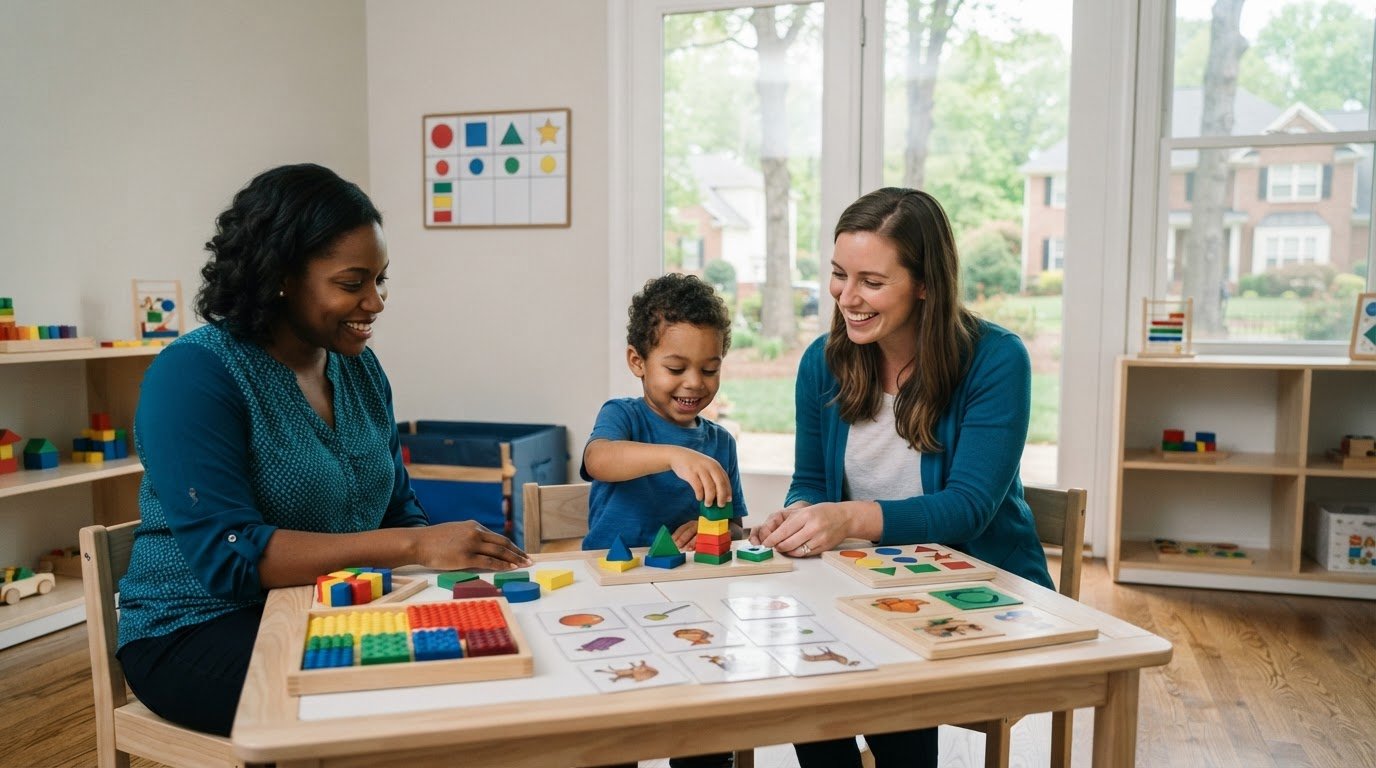
A clinical session is a meticulously orchestrated environment where every interaction serves a specific purpose. Within the framework of clinical ABA therapy Cary, this begins with a dedicated 1:1 partnership between a Registered Behavior Technician (RBT) and your child. This isn't just supervision; it's a dynamic engagement where the RBT implements a personalized program designed by a Board Certified Behavior Analyst (BCBA). Every response, whether it's a successful communication attempt or a behavioral challenge, is tracked in real-time. This data-driven approach is what defines evidence-based best practice treatment, allowing the clinical team to see exactly when a child has mastered a skill or when a teaching strategy needs adjustment.
The session balances two primary teaching styles to ensure comprehensive growth. Discrete Trial Training (DTT) provides the structured repetition needed to master complex tasks by breaking them into small, manageable steps. Conversely, incidental learning captures natural moments of interest to teach skills in context. When challenging behaviors arise, we utilize empathic strategies. Instead of focusing solely on compliance, we look for the "why" behind the behavior, using supportive techniques to prevent meltdowns and help the child regain a sense of calm and control.
A Day in the Life of a Learner
The morning begins with a gentle transition into the clinic. We focus on "pairing," where the RBT establishes a positive connection by engaging in the child’s favorite activities. This sets the motivation for the day. From there, the schedule moves into skill acquisition blocks. These periods focus on critical milestones such as functional communication, self-care routines, and cognitive development. Play is never separate from learning; it is the primary vehicle for reinforcement. By using high-interest activities, we ensure that hard work feels like a series of shared successes.
The Crucial Role of the RBT and BCBA
In a high-quality clinical setting, the relationship between the RBT and BCBA is vital. The RBT is the hands-on practitioner, while the BCBA provides the high-level clinical oversight. Frequent supervision hours are the gold standard for clinical ABA therapy Cary, ensuring the program remains responsive to your child’s needs. Positive reinforcement is the engine of behavioral change, focusing on rewarding desired actions to build confidence and skill. This collaborative effort ensures that every session moves your child closer to functional independence.
BCBA-Owned vs. Large Chains: Why Personalized Oversight Matters
Clinical quality should never be sacrificed for corporate scale. For many families, the search for clinical ABA therapy Cary leads to a crossroad between large, private-equity-backed chains and smaller, clinician-owned practices. The difference often lies in where the accountability starts. In a BCBA-owned practice, the person overseeing your child's program is the same person who understands the nuances of behavioral science, not a distant executive focused on quarterly margins. This ownership model prioritizes clinical outcomes over volume, ensuring that every child receives the sophisticated, individualized care they deserve.
At Divergent Minds ABA, our philosophy centers on celebrating neurodiversity. We move beyond outdated models that prioritize rigid compliance. Instead, we focus on building functional skills that honor the individual's personality. This collaborative approach creates a partnership where you aren't just a client; you're a vital part of a team dedicated to your child's progress. Because we are local and clinician-led, we can maintain high clinical standards and lower staff turnover, providing the stability your child needs to reach their potential.
Clinical Integrity in Every Decision
Ownership directly influences the daily experience of both staff and students. In a BCBA-owned practice, caseload sizes are carefully managed to prevent therapist burnout. Quality care requires presence. It demands a clinician who knows your child's name, their favorite reinforcer, and their specific hurdles. Our "Compassionate ABA" model moves away from the rigid, "one-size-fits-all" approach often found in larger organizations.
Families also benefit from direct access to leadership. When complex cases arise, the owner is often personally involved in the clinical strategy. This level of oversight ensures that we remain a steady, guiding hand throughout your journey. According to the CDC, ABA is a recognized evidence-based treatment for people with ASD, but we believe its success depends entirely on the empathy and expertise of the person delivering it.
Personalized Care vs. Cookie-Cutter Programs
Large chains frequently rely on standardized templates to maintain consistency across hundreds of locations. While this works for business efficiency, it often misses the nuances of a child’s unique personality. A local clinic has the flexibility to adapt protocols in real-time based on what is actually working for the learner. We don't just follow a manual; we follow the child. These small, personalized adjustments are often the catalyst for the "small wins" that eventually lead to lifelong independence and confidence.
Preparing Your Child for Success: The Intake and Assessment Process
The journey toward progress begins with a clear, supportive roadmap. When you first reach out regarding clinical ABA therapy Cary, our goal is to transform a complex clinical process into a series of manageable, transparent steps. This transition starts with an initial inquiry where we verify insurance and gather essential documentation. Following this, we conduct a Functional Behavior Assessment (FBA). While some centers focus only on the initial autism diagnosis, an FBA is a deeper clinical tool. It allows us to understand the "why" behind specific behaviors. By identifying the function of a behavior, whether it's for communication, sensory needs, or avoidance, we can build a strategy that supports your child's development rather than just managing symptoms.
Once the assessment is complete, we develop an Individualized Treatment Plan (ITP). This isn't a static document. It's a collaborative effort that incorporates your family's goals and your child's unique strengths. We believe your input is vital because you know your child best. This leads directly into the pairing process. Building a genuine bond between the child and their therapist is our priority before any formal teaching begins. A strong foundation of trust is the only way to ensure lasting, meaningful progress.
Navigating Insurance and Logistics in Cary
Understanding the financial and administrative side of care is often a significant stressor for families. In North Carolina, we work with common providers like Blue Cross Blue Shield NC and Aetna to streamline this process. You'll need to have your child’s diagnosis reports and referral letters ready to establish "Medical Necessity" for services. Under 2026 North Carolina regulations, initial assessments must be conducted in-person to ensure the highest clinical accuracy. Additionally, service plans exceeding 16 hours per week require review and reauthorization every three months. We stay ahead of these administrative shifts so your child's care remains uninterrupted.
Building the Foundation of Trust
The "Pairing" phase is a non-negotiable part of our clinical philosophy. We don't jump into intensive work on day one. Instead, we focus on making the clinic a place of joy and safety. By pairing the therapist with the child’s favorite activities, we establish the trust necessary for long-term success. During this time, we also begin the process of parent coaching. We want you to feel confident in the milestones we set together, tracking progress from week to week with complete transparency. If you're ready to start this collaborative journey, contact our Cary clinic today to begin the intake process.
Partnering with Divergent Minds ABA: Your Local Cary Clinic
Success in behavioral development is rarely a solo endeavor. At Divergent Minds, we believe that high-quality clinical ABA therapy Cary is most effective when it bridges the gap between expert clinical authority and heartfelt empathy. Our commitment isn't just to the hours spent within our center; it's to the lifelong skills of independence and confidence your child carries into the world. We view every family as a collaborative partner, ensuring that the progress we celebrate in our sessions translates into meaningful changes at home and in the community.
Beyond the Clinic Walls
True independence means being able to navigate the real world with ease. While our Cary facility serves as a focused training ground, we actively integrate community-based ABA to ensure skills are generalized in natural settings across Apex and Raleigh. Whether it's practicing social cues at a local park or managing transitions during a family outing, our clinicians are there to guide the process. Our social skills groups further enhance this by providing a safe, guided environment where children can build genuine connections with their peers, turning learned behaviors into natural social interactions.
Take the Next Step with a BCBA-Owned Practice
Choosing the right provider is a significant decision that often comes down to a feeling of trust and alignment. We encourage you to trust your intuition and seek a partner who values your child’s individuality as much as you do. As a BCBA-owned practice, we offer a level of personal accountability and clinical integrity that large corporate chains often struggle to match. We invite you to visit our Cary location for a personalized tour and consultation. Seeing our environment first-hand and meeting our dedicated team is the best way to visualize the potential for your child's growth. Every journey begins with a single step, and we're here to walk that path with you as a steady, guiding hand.
Empowering Your Child’s Journey Toward Independence
Choosing the right environment for your child's development is a decision rooted in both science and heart. You've seen how a structured, center-based approach provides the social opportunities and data-driven precision necessary for meaningful growth. By prioritizing a BCBA-owned practice, you ensure that clinical integrity and personalized care remain at the forefront of every session. We've explored how the intake process and individualized treatment plans create a clear, supportive roadmap for your family’s unique needs.
If you're ready to see how clinical ABA therapy Cary can transform your child’s daily life, we're here to guide the way. Our practice is BCBA-owned and operated , focusing on personalized evidence-based plans that celebrate each child's potential. We also accept major NC insurance providers to make high-quality care accessible for families in our community.
Schedule a Tour of Our BCBA-Owned Cary Clinic today to explore our center and meet our compassionate team. Your child’s progress is our shared goal, and we're honored to be your partner in this transformative journey.
Frequently Asked Questions
How many hours of ABA therapy does my child need each week?
The number of hours recommended for your child depends entirely on their unique needs and goals. Typically, intensive clinical ABA therapy Cary involves 25 to 40 hours per week for comprehensive programs, while focused interventions may require 10 to 20 hours. Under 2026 North Carolina regulations, any plan exceeding 16 hours per week requires a clinical review every three months to ensure the level of care remains appropriate for your child.
Is clinical ABA therapy in Cary covered by insurance?
Most private and state-regulated health insurance plans in North Carolina are required by law to cover ABA therapy under Senate Bill 676. At Divergent Minds ABA, we accept multiple insurance providers, including Blue Cross Blue Shield NC and Aetna, to support local families in Cary, Apex, and Raleigh. We recommend contacting your provider to verify specific benefit details, as coverage specifics can vary based on your individual policy.
What is the difference between an RBT and a BCBA?
A Registered Behavior Technician (RBT) provides the direct, one-on-one therapy with your child during their daily sessions. In contrast, a Board Certified Behavior Analyst (BCBA) is the clinician who designs the treatment plan, analyzes data, and supervises the RBT’s work. Because Divergent Minds is a BCBA-owned practice, our analysts are deeply involved in every case, ensuring that the clinical strategies remain sophisticated, effective, and perfectly aligned with your child's progress.
Will my child only learn to follow orders, or will they learn to think for themselves?
Our goal is to foster functional independence and self-advocacy, not just rigid compliance. We utilize a Whole Child approach that celebrates neurodiversity and encourages children to use their voices to express needs and make choices. By focusing on critical thinking and problem-solving skills, we empower our learners to navigate their communities with confidence. We don't just teach children to follow instructions; we teach them how to interact meaningfully with the world around them.
Can I stay with my child during their clinical ABA sessions?
While clinical sessions are typically 1:1 to minimize distractions and maximize learning, we view parents as vital collaborative partners. We encourage active participation through our parent coaching sessions, where you'll learn to implement strategies used in the clinic at home. While you may not stay in the room for every hour of therapy, we maintain an open-door policy for consultations and regular progress reviews to ensure you feel connected to your child's journey.
How long is the waitlist for ABA therapy in Cary, NC?
Waitlist times can vary based on your child's schedule and the specific level of care required. The demand for high-quality clinical ABA therapy Cary is high, and North Carolina’s 2026 shift toward closed provider networks has impacted availability across the region. We encourage families to begin the intake process as early as possible. Contacting us directly allows us to provide the most current information regarding our current openings in the Cary and Apex areas.
What happens if my child has a meltdown during a session?
If a meltdown occurs, our team uses empathic, evidence-based strategies to help your child regain a sense of safety and calm. We don't view these moments as simple bad behavior but as a form of communication. By referring to the Functional Behavior Assessment (FBA), our RBTs and BCBAs identify the underlying trigger and provide the support your child needs to regulate their emotions. Our priority is always your child's emotional well-being and physical safety.
How do you measure progress in clinical ABA?
Progress is measured through continuous, real-time data collection during every session. We track specific milestones outlined in your child’s Individualized Treatment Plan (ITP), such as communication attempts, social interactions, and self-care skills. This data is reviewed weekly by our BCBAs to determine if a teaching strategy needs adjustment. Families receive regular reports and attend progress meetings to ensure everyone is aligned on the child’s growth and the path toward functional independence.