
A session is more than a series of activities: each response can help shape what comes next. Understanding what a BCBA does during sessions means looking at how they assess a child’s needs, guide individualized teaching, observe progress, and use session data to inform next steps.
It’s natural to wonder what session data captures and how it connects to everyday progress. BCBAs use observations and recorded responses to see which strategies are helping, where a child may need more support, and whether teaching should be adjusted.
This article explains how BCBAs plan sessions, teach and generalize skills, assess individual needs, and track progress. You’ll see how these elements work together through play, daily routines, and different settings, with a focus on skills that support a child’s development.
Individualized treatment plans and therapy schedules
Each ABA therapy session follows an individualized treatment plan, not a standard script. A BCBA assesses a child’s strengths, support needs, and goals, then develops a behavior plan describing which skills to teach and how. Goals should matter in daily life, such as asking for help, joining play, or completing a routine with greater independence.
Before the first session, the clinical team gathers information to make teaching more responsive. A BCBA’s initial assessment may include caregiver interviews, the child’s participation when possible, assessment tools, and medical information. Caregivers can also share relevant changes, such as illness, allergies, sleep, or a different home routine. These details help the team understand behavior in context and plan appropriate activities.
There’s no universal ABA session length or weekly schedule. A child’s schedule may range from a few hours per week to upwards of 40 hours. Early ABA therapy is often provided for 20-40 hours per week, but that range isn’t a prescription for every child. A BCBA weighs assessment results, age, treatment goals, daily routines, the child’s needs, and the family’s circumstances when determining recommended hours.
Hours may change as a child develops skills, reaches goals, or has different support needs. For example, a child working on communication might benefit from practice during play and everyday routines. The BCBA can review progress and adjust the treatment plan or schedule to reflect those goals. Families and the clinical team discuss how the plan fits the child’s life.
BCBA-led sessions and RBT-led ABA sessions serve different roles. The BCBA develops and oversees the treatment plan, and may work directly with the child or supervise an RBT. The RBT carries out planned teaching strategies and records session data, while the BCBA uses observations and progress information to guide clinical decisions.
When challenging or unsafe behavior occurs, the BCBA follows the child’s behavior plan, observes what is happening, and guides the team’s response. The plan helps staff respond consistently while supporting the child’s safety and teaching appropriate skills. The BCBA can review the approach if session data or observations suggest changes may be needed.
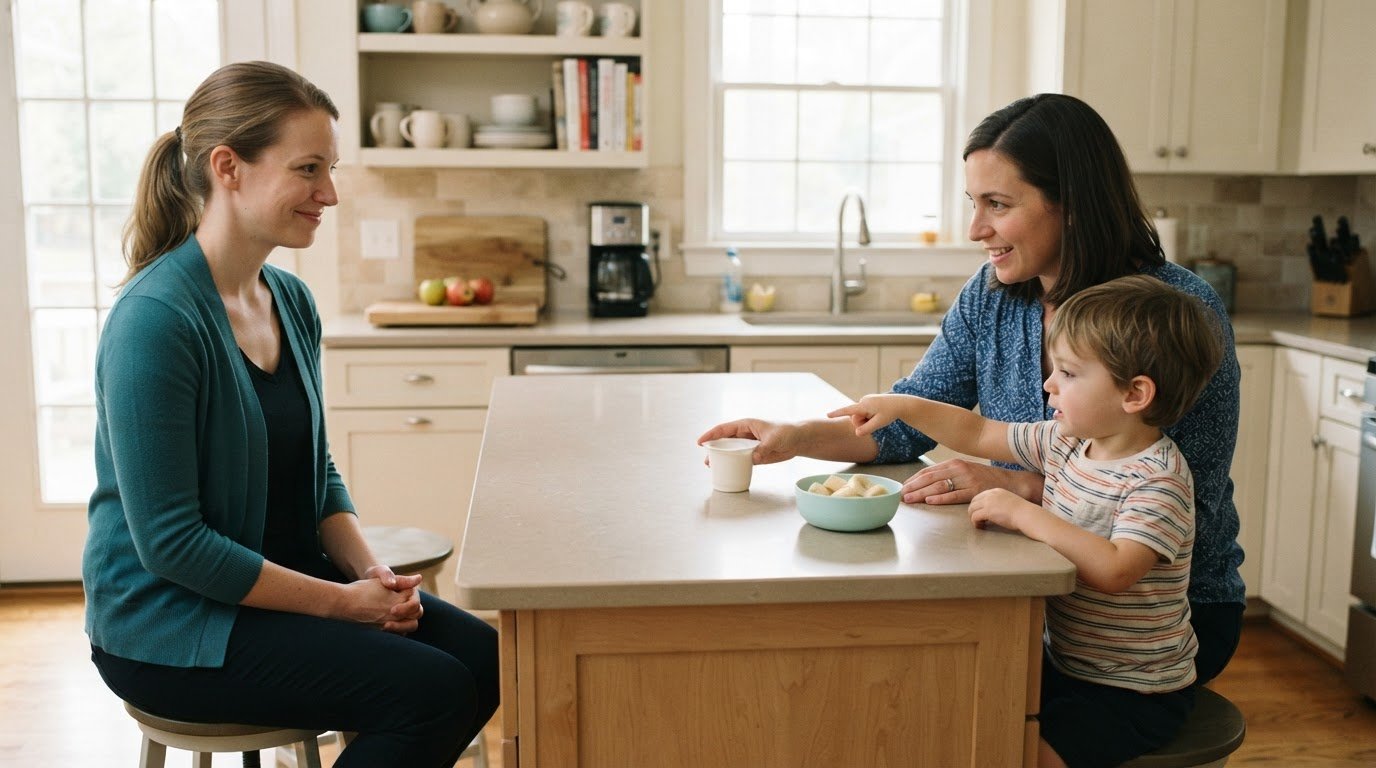
BCBA observations and family meetings are guided by the child’s plan, progress, and clinical needs, rather than a fixed schedule. During in-home ABA sessions, a parent or caregiver is present. Caregivers can use the first few minutes to tell the therapist about changes, then ask questions about the plan and practice strategies with guidance. Sharing this information helps connect session goals with home routines.
Teaching skills during daily routines
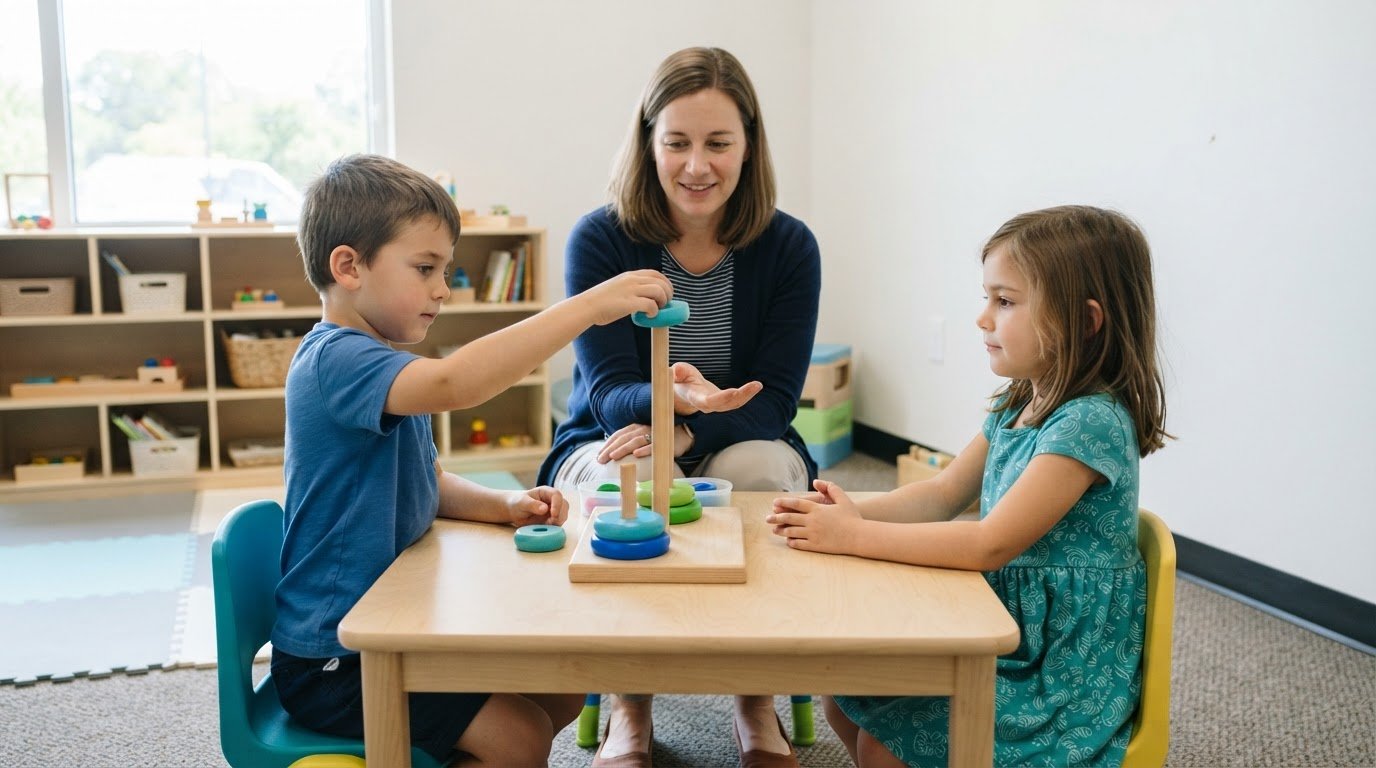
Everyday activities give children practical opportunities to use new skills. During ABA therapy, a BCBA may plan structured learning, play, communication practice, daily living tasks, and real-world practice around the child’s goals. A snack, for example, can create opportunities to request a preferred item, follow a direction, or complete a familiar step.
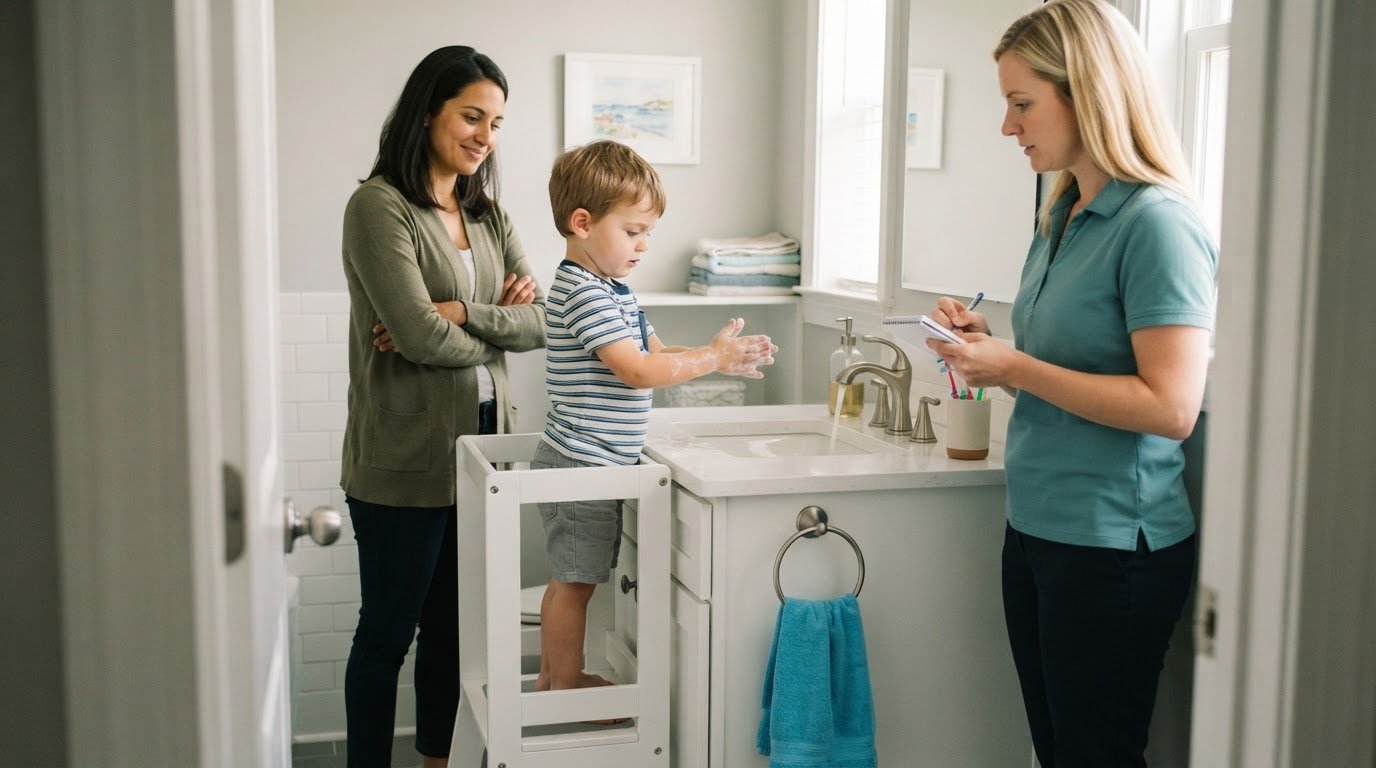
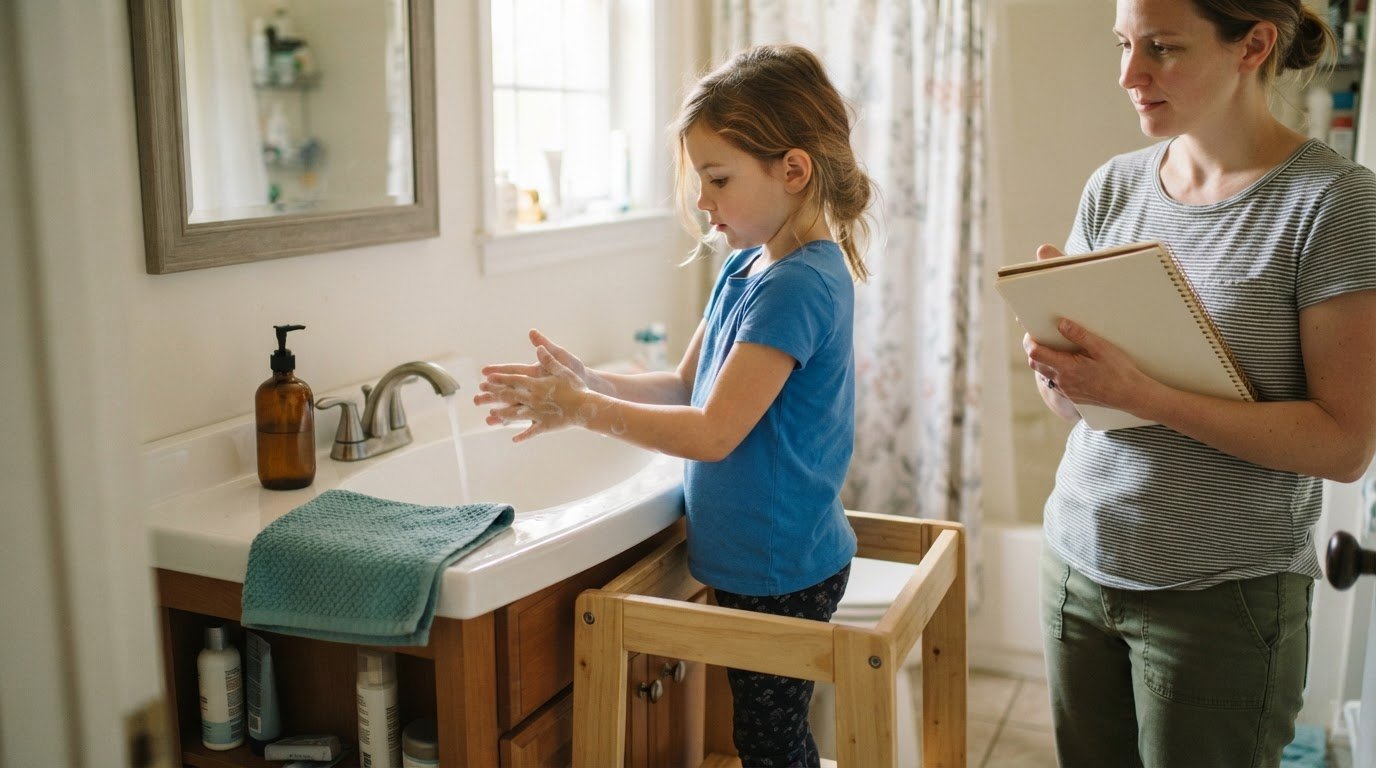
The therapist breaks a larger goal into teachable actions. For brushing teeth, the child might practice getting a toothbrush, putting toothpaste on it, and returning it afterward. The BCBA can use prompting, modeling, positive reinforcement, and repeated practice to support each step. As the child responds, the therapist observes what level of help is useful and adjusts the teaching approach.
Preparation starts with information about the child’s routines and preferences. Caregivers can share which activities are familiar, which transitions are difficult, and what the child enjoys. Before therapy begins, families may set aside favorite objects or activities so the clinical team can use them to build rapport. This doesn’t mean withholding comfort or essential items; caregivers and the team can discuss appropriate preferences.
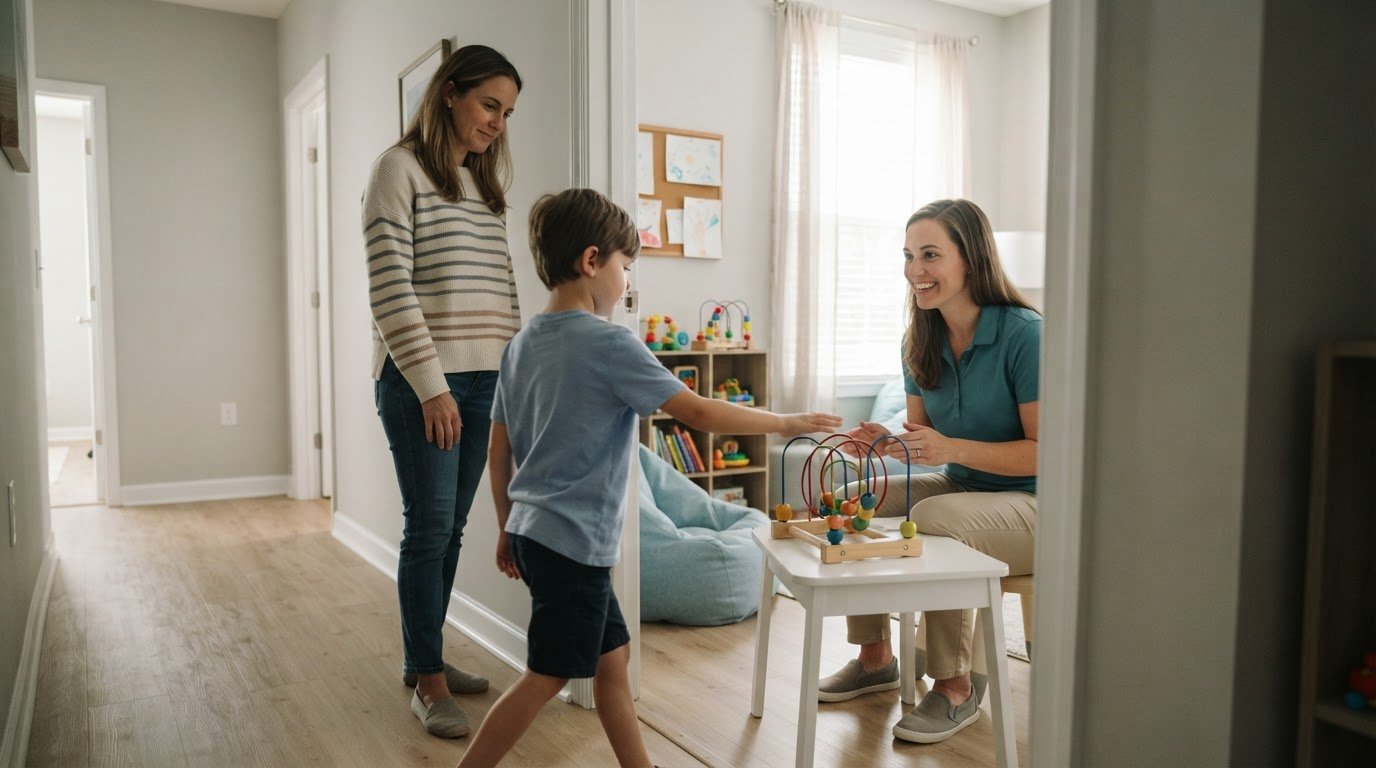
Familiarity develops through a steady, understandable sequence. A session might begin with a greeting, move into a preferred play activity, then include communication practice and a daily living task. The therapist can introduce an activity with a clear cue, model what to do, and give the child time to respond. A predictable pattern helps the child recognize what comes next while allowing activities to reflect their needs.
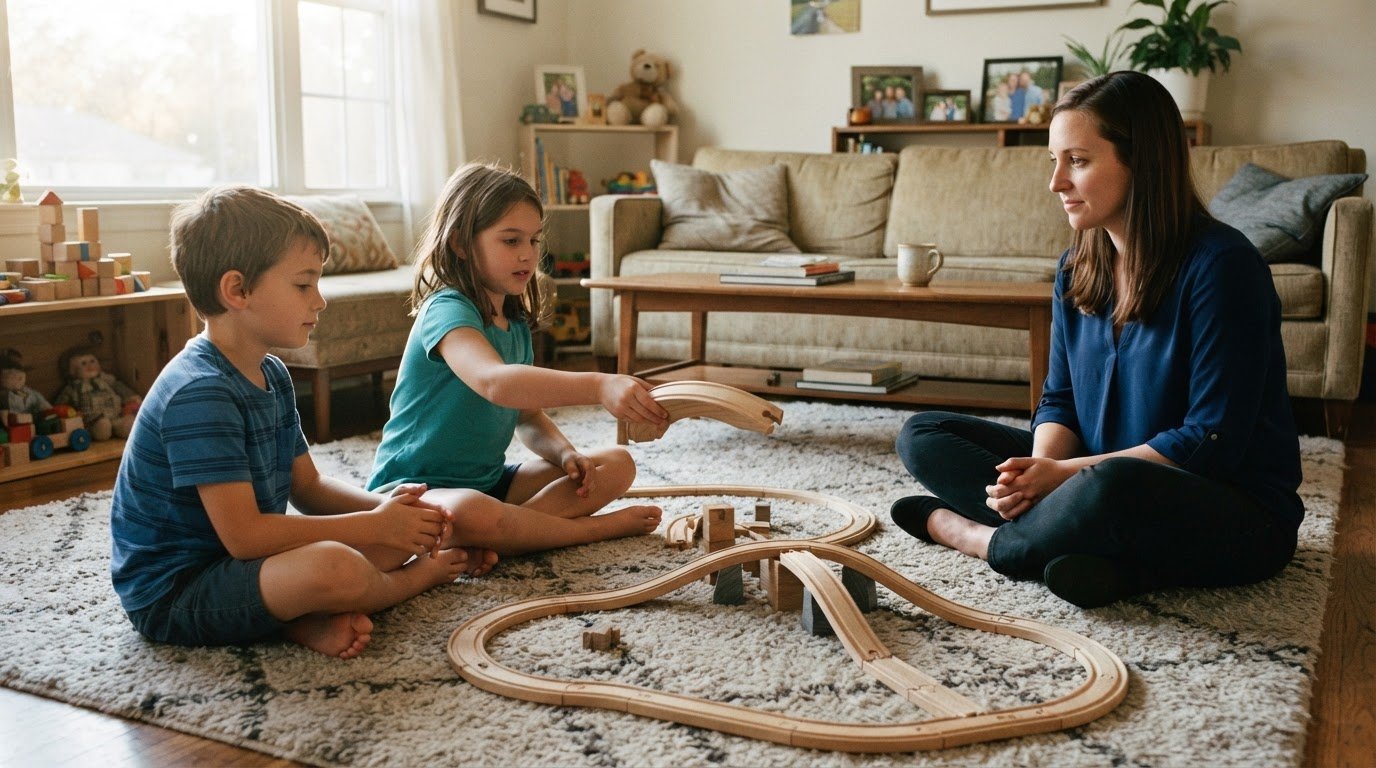
Transitions can feel difficult when a child doesn’t know what will happen next. A therapist can prepare the child by naming the upcoming activity, offering a simple choice, or using a familiar transition routine. For example, the child might put away blocks before moving to a table activity. The BCBA observes the child’s response and can adapt the sequence or support if the transition makes participation difficult.
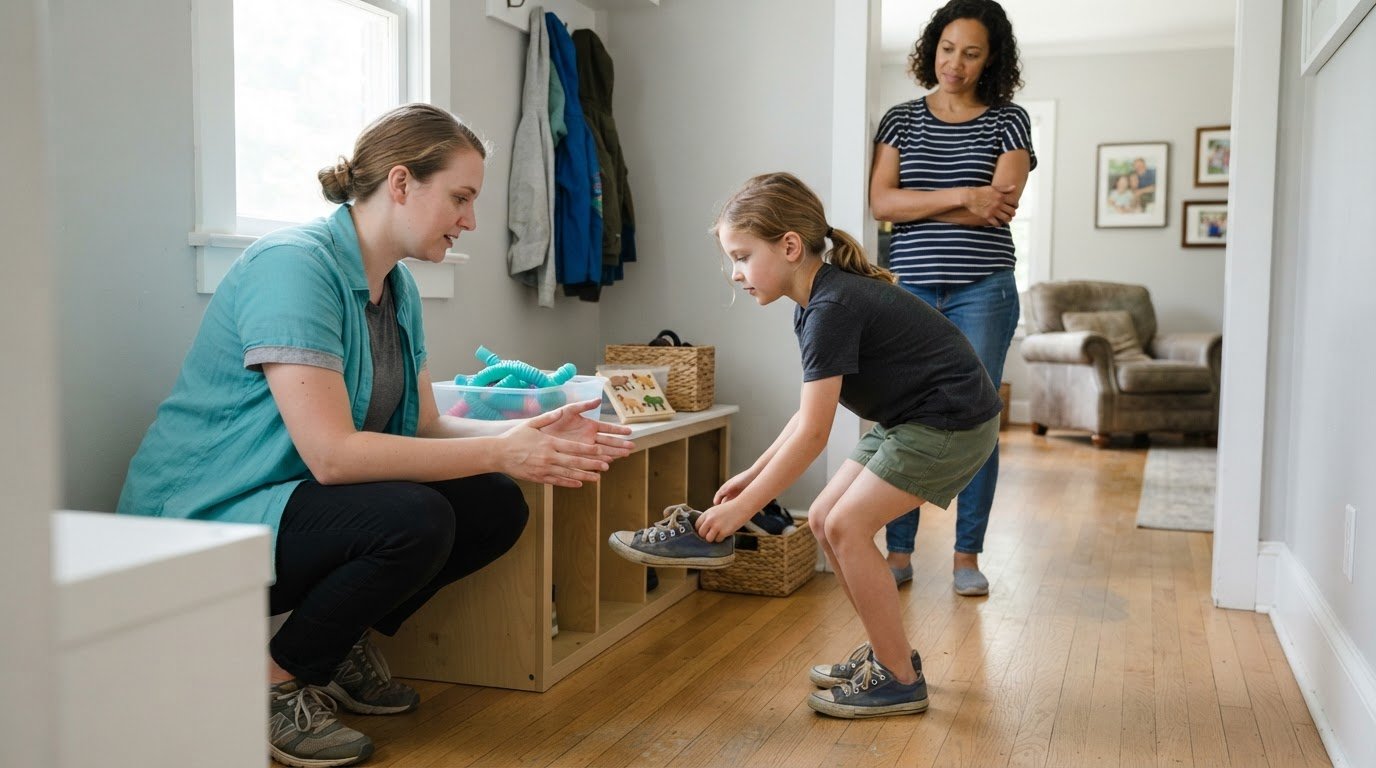
Routine should support learning, not become a rigid script. If a child practices putting on a coat only in one therapy setup, the skill may not carry naturally into leaving home. The clinical team can build practice into relevant daily activities and consider how the child uses the skill in other situations. Caregivers can share what works at home, helping connect session practice with real routines.
For home-based therapy, a clean, organized area can help make activities easier to begin and materials easier to find. Families who want to discuss how daily routines can support therapy goals can talk through routine-based therapy support.
Generalizing skills across home, school, and community settings
A skill is more useful when a child can use it beyond the therapy room. A BCBA plans for generalization by considering where the skill matters, who will be present, and what materials are available. If a child learns to request a break during a table activity, practice may later include asking during play, at home, or in a community setting. The words, people, and surroundings can vary while the goal stays consistent.
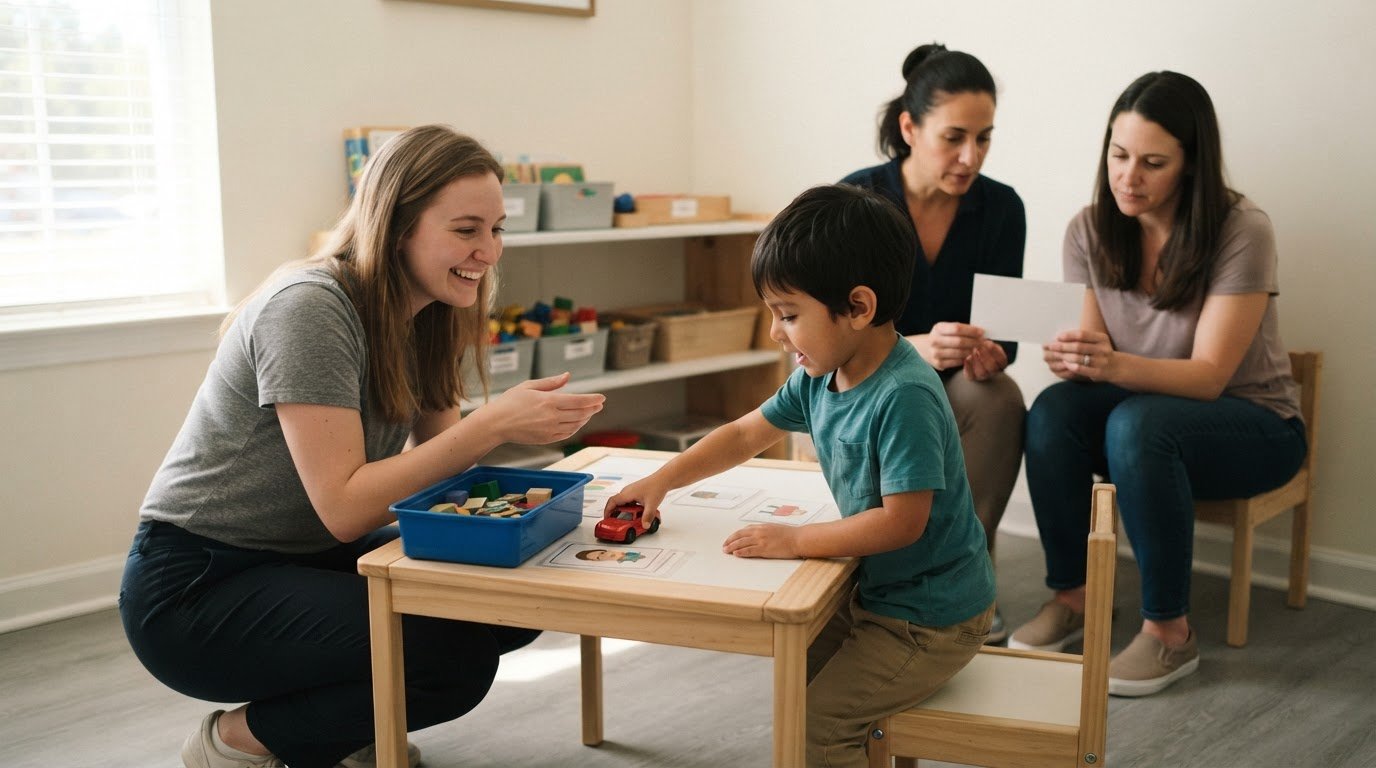
Structured teaching can help a child learn a new skill before practicing it in busier settings. In Discrete Trial Training, or DTT, the therapist gives a clear instruction, allows the child to respond, then provides feedback or reinforcement. For example, the therapist might show a picture and ask the child to identify it. Repeated opportunities let the team observe responses and identify when prompts or materials may need adjustment.
DTT practice alone doesn’t show whether a skill transfers naturally. The BCBA may vary the examples, instructions, and learning partners, then observe whether the child responds outside the original setup. A child who identifies a cup at a table might practice recognizing cups in different rooms or choosing one during snack. Gradually changing these conditions helps the team see which parts of the skill are stable.
Parents can share where a skill would make daily life easier. If a child is learning to ask for help, the family might describe moments such as opening a snack container or finding a toy. The clinical team can use those examples to connect teaching with meaningful routines. Parents may also practice strategies during activities while the BCBA provides feedback and considers how the child responds outside structured instruction.
Retention means a child continues using a skill after learning it, including when time has passed or the activity changes. The team can revisit a goal during later sessions and observe whether the child still responds independently. If a child once followed a cleanup direction but now needs prompts, that change is useful information. It may signal that the skill needs renewed practice, a clearer cue, or a different level of support.
Regression should be understood through careful observation, not a single moment. The BCBA can review session notes and data, consider changes in setting or routine, and discuss what parents see at home. For example, a child might use a communication skill with one therapist but not during a noisy group activity. Comparing situations helps the team identify what supports success and plan practice across settings.
Generalization is an ongoing part of treatment planning. The BCBA analyzes how a child responds across people, activities, and environments, then updates teaching opportunities to fit the goal. A request practiced in a quiet session can be observed during play or a community outing, where materials and distractions differ. Progress is measured by whether the skill becomes useful in situations that matter to the child.
BCBA assessment and personalized treatment planning
Assessment gives treatment a clear starting point. Before ABA services begin, a BCBA evaluates a child’s current skills, strengths, and support needs. The process may include caregiver interviews, the child’s participation when possible, assessment tools, and review of medical information. For example, a caregiver may describe how a child communicates during meals, while observation shows which prompts help during a clinic activity.
The BCBA uses that information to identify goals with practical value. A goal might focus on requesting help, communicating a choice, or participating in a daily routine. Goals should make a meaningful, positive difference in the child’s life, rather than exist only to complete an exercise. The analyst then develops a personalized ABA plan describing the target skills and teaching approach.
A written behavior plan explains what the team will teach and how they’ll respond during treatment. It may outline prompting, reinforcement, and ways to practice a skill across activities. For instance, a communication goal could involve teaching a child to request a preferred item, then recording whether the child responds independently or needs support. Clear procedures help the team provide consistent instruction.
Assessment continues after services begin. The BCBA reviews session observations and progress information to see whether teaching is working as intended. If a child isn’t responding to a particular prompt, the analyst may examine how the instruction is delivered or whether the activity fits the goal. The BCBA also provides clinical direction and may handle evaluations and insurance reports connected with care.
Supervision is part of that clinical oversight. In the described model, a BCBA supervises an RBT for at least 5% of the RBT's total monthly hours. That figure describes the stated supervision benchmark, not a universal U.S. legal requirement. During supervision, the BCBA can observe the RBT, review implementation, discuss concerns, and provide feedback.
What are the BCBA supervision requirements for ABA services in the United States? The stated benchmark is at least 5% of the RBT's total monthly hours under BCBA supervision. It shouldn’t be presented as a single nationwide legal rule.
Families contribute information that can sharpen assessment and planning. A caregiver might explain that a child uses a skill at home but not during group activities. The BCBA can consider that difference when selecting goals and planning practice. As the child develops new skills or needs change, the analyst can review and adjust the treatment plan so instruction remains relevant.
Collecting session data to track progress
Session data gives the BCBA a clearer picture than memory alone. During an activity, a therapist may record whether a child responds independently, uses a prompt, or doesn’t yet complete the target skill. For example, data on requesting help can show whether the child communicates during play, a routine, or only after a cue. These observations connect treatment decisions to what happens in sessions.
Useful data starts with a clear definition of the skill or behavior being observed. If the goal is to follow a direction, the plan should clarify what counts as a response. The therapist then records the child’s response consistently across opportunities. A record might distinguish an independent response from one supported by a verbal prompt, giving the BCBA information about the help the child currently needs.
Data can describe different features of a response, depending on the treatment goal. The team may track how often a behavior occurs, how long it lasts, or whether a child completes a task independently. For example, when a child practices putting away materials, the therapist can document which steps the child completes and where prompts are needed. The BCBA can use those details to identify the next teaching target.
RBTs collect session data while carrying out the ABA plan and communicate with the BCBA after services begin. The BCBA may observe the child and how staff provide support, then compare those observations with the session record. If a child’s responses change during an activity, the BCBA can consider both the teaching procedure and setting before interpreting the pattern.
Graphs can make patterns easier to review over time. A BCBA may compare recorded responses across sessions to see whether a child is gaining independence, staying at a similar level, or responding differently under certain conditions. One difficult session doesn’t explain a trend by itself. Reviewing repeated observations helps the analyst decide whether to continue a teaching approach or consider adjusting prompts, reinforcement, goals, or other plan elements.
When challenging behavior occurs, the team can record observable details alongside the child’s response to support. For example, session notes may describe the activity underway, the direction given, what the child did, and how staff responded. This context helps the BCBA examine patterns without relying on labels alone. The analyst can then review whether implementation or other variables may be affecting the behavior plan.
Families can add useful context by sharing changes they notice at home, such as a communication skill appearing during meals. When caregiver observations and session data point to the same skill, the BCBA can consider how to support practice across settings. To discuss how progress data informs individualized ABA treatment, connect with the clinical team.
Divergent Minds ABA
Divergent Minds ABA helps families understand how individualized ABA sessions connect assessment, teaching, and progress tracking. This BCBA-owned and operated practice provides personalized ABA therapy for children with autism, with care shaped around each child’s needs and meaningful goals.
Families can choose Clinic-Based ABA Therapy, Home-Based ABA Therapy, or Community-Based ABA Therapy, as well as Social Skills Groups. These settings create opportunities to work on communication, daily living, and social skills in contexts that matter to the child. Parent Coaching can help caregivers understand strategies and support their use in everyday routines.
If you’re considering ABA support for your child, contact Divergent Minds ABA to discuss your family’s needs and next steps.
Take the Next Step Toward Individualized Support
Understanding what a BCBA does during sessions can help you decide which questions matter most for your child. Consider the skills your family hopes to build and where your child would benefit from practicing them. Those priorities can guide a conversation about whether Clinic-Based ABA Therapy, Home-Based ABA Therapy, or Community-Based ABA Therapy feels most relevant.
Divergent Minds ABA works with families to develop personalized, evidence-based support for children with autism. A conversation can help you explore how your child’s goals, routines, and learning needs may shape an ABA program. You don’t need every question answered before taking that step. Sharing what matters in everyday life is a useful place to begin.
Contact Divergent Minds ABA to discuss your child’s needs and possible next steps. With thoughtful guidance and family collaboration, meaningful progress can grow one skill at a time.
Frequently Asked Questions
What About Data Collection?
Data collection records how a child responds to teaching and support during ABA sessions. A therapist might note whether a child requests a preferred activity independently, after a verbal cue, or not yet. These details help the clinical team distinguish emerging skills from consistent ones. Caregiver observations can add context, such as whether the same request happens during meals or play at home.
What does a BCBA do during a typical therapy session?
A BCBA may observe the child, provide direct teaching, or supervise the therapist implementing the plan. The exact mix depends on the session’s goals and clinical needs. For example, a BCBA might watch a communication activity, model a prompt for the therapist, then discuss how the child responded. This combination of observation and guidance helps keep teaching aligned with the child’s individualized goals.
How does a BCBA assess a client's skills and behavior during sessions?
A BCBA observes what the child does in specific activities and considers the context around each response. For example, the analyst may compare how a child follows a direction during quiet play and during a group activity. Caregiver input can clarify whether that difference also appears at home. Looking across situations helps the BCBA understand where a skill is reliable and where more teaching may help.
How does a BCBA create and adjust behavior intervention plans?
A BCBA builds a behavior intervention plan around assessment findings, meaningful goals, and the support strategies the team will use. The plan gives therapists a shared approach to teaching and responding. As the child’s needs or responses change, the BCBA reviews observations and session records. For instance, if a prompt isn’t helping a child begin a task, the analyst may consider another teaching approach.
How does a BCBA train and supervise an RBT during sessions?
A BCBA supports an RBT by explaining procedures, modeling a teaching strategy, observing implementation, and giving feedback. For example, the BCBA may demonstrate how to pause after an instruction so the child has time to respond. The analyst can then observe the RBT using the same approach and discuss consistency. This guidance helps the team follow the child’s plan while adapting to the session’s needs.
What data does a BCBA collect during sessions, and how is it used?
Session records may track independent responses, prompt levels, task completion, or patterns in challenging behavior. The relevant measures depend on the treatment goal. If a child is learning to complete a routine, the team might record which steps happen independently and which need support. A BCBA reviews these observations over time to identify meaningful patterns and decide whether teaching procedures or goals need adjustment.
How do BCBAs teach communication, social, and daily living skills?
BCBAs arrange practice around the child’s goals, using activities that make each skill useful. Communication practice might involve requesting a break; social learning might involve taking turns in a game; daily living practice might include organizing personal items. Teaching can include modeling, prompts, and positive reinforcement. Divergent Minds ABA supports children and families in Cary, Apex, and Raleigh through individualized ABA services and Social Skills Groups.