
What if the right support could make everyday communication, routines, and social moments feel more manageable? Autism resources for families in Apex, NC can include family guidance, caregiver coaching, and individualized support for communication, social, behavioral, and adaptive skills. The most helpful approach connects these areas to a child’s needs and the goals that matter at home and in the community.
It’s understandable to want practical guidance, not just general information. This article explains how family involvement and skill-building support can work together, what different service settings offer, and how families can consider next steps. You’ll find an overview of local support options and ways consistent strategies across everyday settings can help children build confidence and independence over time.
Family guidance and parent involvement
Family guidance connects a child’s treatment goals with the priorities caregivers see in everyday life. During intake and assessment, families can describe what already works, what feels challenging, and which skills matter most. For example, a caregiver might explain that a child enjoys family meals but has difficulty joining conversations. That context helps shape goals around meaningful participation and the child’s communication style.
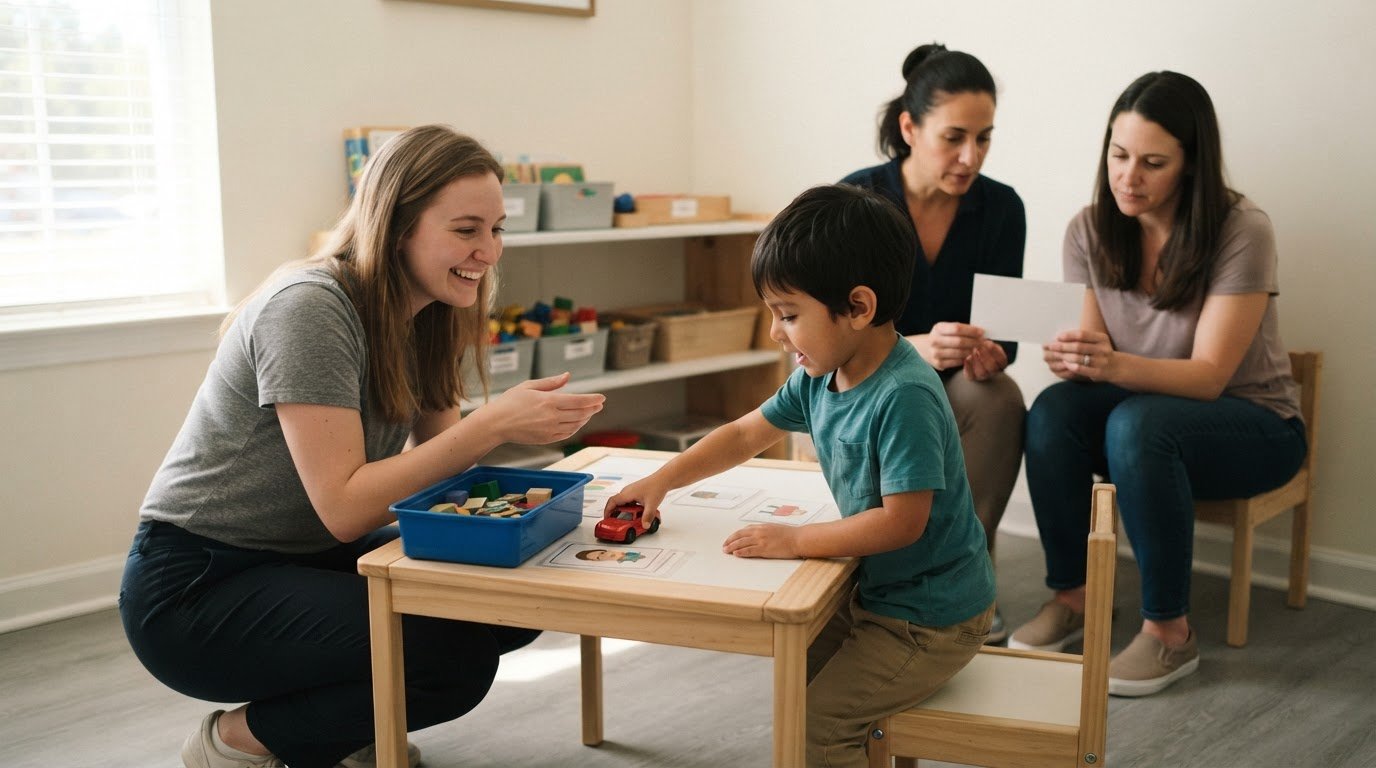
Parent Coaching can give caregivers structured practice with strategies for daily routines. A provider might model how to offer a clear choice, then support a caregiver as they try it during an activity. If a child is choosing a book, the caregiver could show two options and allow time to respond. Speech, pointing, or another communication method can all make the choice clear.
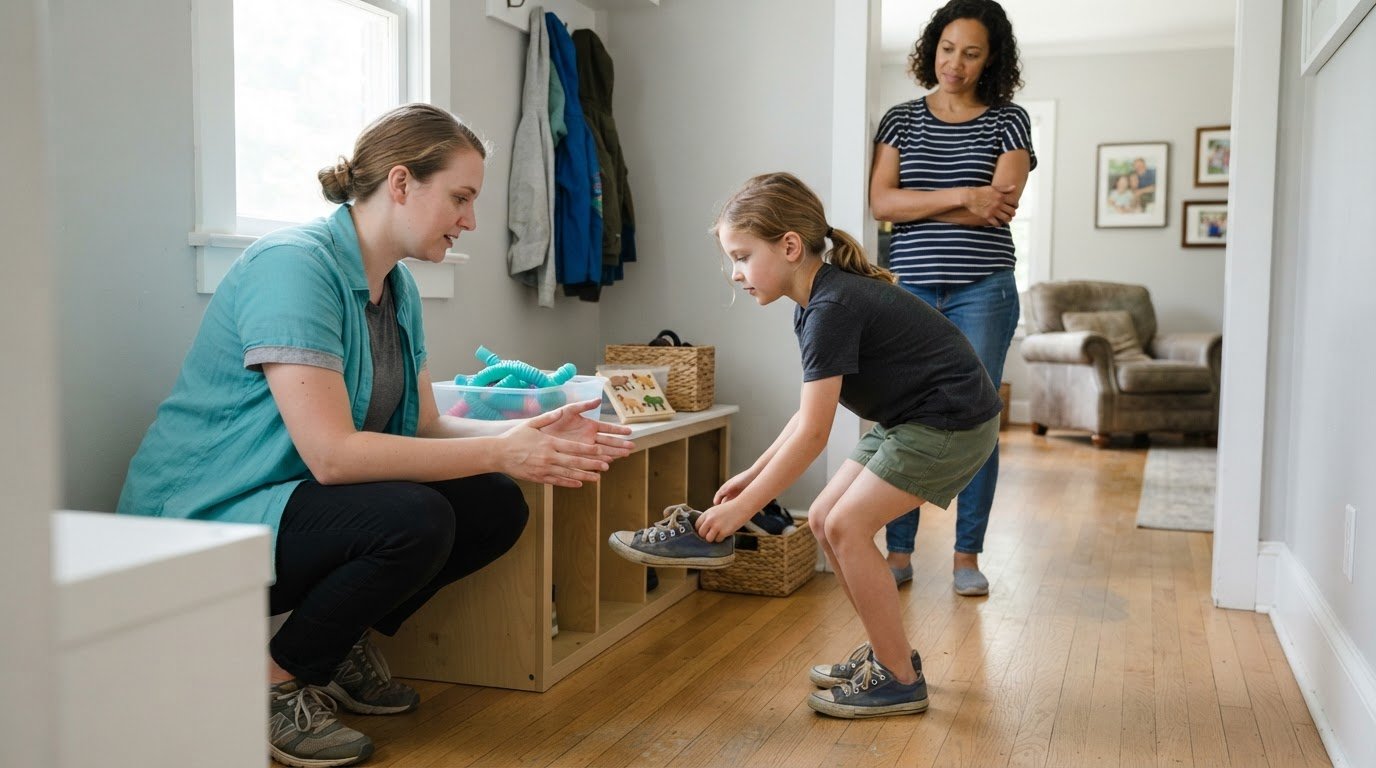
Home strategies should fit the family’s routines rather than add unnecessary tasks. Caregivers can choose one moment that already happens each day, such as putting belongings away after school. They can use a consistent cue, allow the child time to respond, and notice which part of the routine needs support. These observations give the family and treatment team practical information for adjusting goals.
- Start with a family priority. Choose a goal that supports participation, such as joining a sibling’s game.
- Agree on a useful cue. A brief phrase or visual reminder can make expectations clearer.
- Notice the child’s response. Record whether the child starts, continues, or completes the activity.
- Share what you observe. Bring examples from home to a session or treatment-plan discussion.
Parent coaching can help caregivers apply strategies with guidance and feedback. It gives families room to discuss how an approach fits their child, routines, and priorities. Parent coaching can support shared planning around practical goals, such as helping a child participate in a household routine. Caregivers contribute their knowledge of the child, while professional guidance helps connect that knowledge with treatment goals.
Consistency across people can make a skill easier to practice, while still allowing the approach to adapt to each setting. A child may respond to a visual reminder at home and a spoken cue during a familiar community activity. Caregivers can share which supports help so strategies remain responsive rather than rigid. Progress may look like a new attempt, a clearer request, or greater participation in a routine.
For parent support groups and family events in Apex or Wake County, local school and community event calendars can help families find relevant gatherings. Listings can show the intended audience and event details, helping caregivers choose options that fit their family’s interests and needs.
According to the North Carolina General Assembly, an annual limit on adaptive behavior treatment under applicable North Carolina health plans may apply up to age 18 and adjusts each year. Families can include coverage questions in treatment planning and discuss how goals relate to the child’s support needs.
Families can use coaching conversations to clarify what support feels useful and what they would like to try next. They might bring an example of a routine that went smoothly, along with one that felt difficult, and discuss what the child communicated in each situation. Applied behavior analysis can help individuals improve communication, decrease unsafe behavior, and become more independent at home, school, work, and in the community. Families can consider which areas connect with their priorities and discuss them with the treatment team. The aim is to identify support that is meaningful for the child and workable for the people involved.
When reviewing a strategy, caregivers can describe what they tried, how the child responded, and whether it fit the setting. They can also ask how to adjust a cue or offer another way for the child to communicate. If a strategy is difficult to use consistently, that is useful information for planning, not a failure. Sharing observations can help caregivers and professionals agree on a practical next step, then revisit whether it supports the child’s participation and independence.
Family guidance and caregiver training
Caregiver coaching helps families use practical support during everyday routines. In North Carolina, families can connect learning goals with specific moments, such as getting ready for school or sharing a game. A caregiver might practice offering two clear choices when a child selects clothes. The child can respond by speaking, pointing, or using another communication method. The strategy should respect the child’s preferences and support participation.
Applied behavior analysis, or ABA, uses observation and individualized strategies to build useful skills. Caregiver guidance can help translate a treatment goal into a routine that feels natural at home. For example, if a child is learning to request help, a caregiver can pause briefly during a familiar activity to make room for that request. The child’s response helps the team consider whether the prompt was useful or needs adjustment.
Coaching is most useful when it includes demonstration, practice, and feedback. A caregiver can observe a strategy, try it during a session, then discuss what felt comfortable and what was difficult. For a handwashing routine, practice might focus on one step, such as turning on the faucet. Breaking a routine into clear actions makes it easier to see where support helps and where the child can act independently.
- Choose a functional goal. Practice asking for a preferred toy, waiting briefly during a shared activity, or putting away one item after play.
- Agree on a cue. Use a short phrase, gesture, or visual reminder consistently for the selected skill.
- Observe the response. Notice whether the child starts the step, completes it, or needs another kind of prompt.
- Review the approach. Share observations with the care team so strategies can be adjusted to the child’s learning.
A registered behavior technician may demonstrate a planned strategy during therapy, while caregiver practice helps connect it with home routines. The goal is not to expect parents to act as clinicians. Instead, families learn agreed approaches and use them in ways that fit daily life. If a child responds differently at home than during a session, that observation can guide discussion about the setting, timing, or wording of a prompt.
Consistency does not mean using identical routines everywhere. A child may communicate differently at a quiet kitchen table than in a busy store. Caregivers can keep the goal consistent while adapting support to the environment. For instance, a picture cue may help with a transition at home, while a short spoken reminder works better elsewhere. The useful measure is whether the child can participate and communicate with appropriate support.
Caregiver learning can also help families recognize meaningful progress. A child who once needed several reminders may begin a familiar step after one cue. Recording a brief observation, such as “put shoes by the door after the picture prompt,” gives the team a concrete example to discuss. These details can help refine individualized strategies while recognizing the child’s effort and changing needs.
Families who want help connecting caregiver practice with a child’s treatment goals can discuss caregiver training options in the context of their daily routines.
Autism articles and resources
Useful autism information helps families connect service details with decisions about treatment, coverage, and daily support. As you review guidance, note the goals that matter for your child, such as communicating a need or participating in a familiar routine. Use those goals to shape questions about what an intervention includes and how progress will be observed.
North Carolina Medicaid funds ABA for children and adults, with no age cap. Children under 21 enrolled in North Carolina Medicaid pay no copay for ABA therapy. North Carolina’s autism coverage law, § 58-3-192, requires most large-employer, fully insured health plans to cover autism treatment, including ABA; it doesn’t apply to self-funded employer plans. The NC Innovations Waiver is a separate program with its own eligibility criteria and covered supports.
Coverage varies by program and plan. For a useful starting point, gather the child’s diagnosis information, current treatment goals, and insurance details before discussing services. For example, a plan may request clinical documentation explaining the recommended treatment and the skills it addresses. Knowing which coverage route applies can clarify what paperwork or authorization steps come next.
For North Carolina Medicaid, a child’s autism diagnosis must be made by a licensed psychologist, licensed psychological associate, or physician using an accepted assessment tool such as ADOS-2. Medicaid accepts a provisional autism diagnosis for children under age three, provided the final diagnosis follows within six months. Eligibility and wait times for other programs depend on their individual criteria and processes, including the information needed to establish eligibility and the next available program steps.
Costs for autism evaluations and therapies depend on the service, coverage, and individual treatment needs. Medicaid, private insurance, and the NC Innovations Waiver are distinct routes for understanding financial support, with different coverage terms and eligibility. Families can organize questions around the service being considered, required documentation, and whether the plan requires authorization before treatment begins.
Make resource reading practical by using each article or program page to answer a specific question. A simple review process can help:
- Name the decision. Identify whether the immediate need involves evaluation, treatment, coverage, or daily support.
- Check the program described. Separate North Carolina Medicaid guidance from private-plan and waiver information.
- Connect the information to a goal. For communication support, identify the everyday skill the child is working toward.
- Bring a real example to intake. Describe a situation, such as difficulty requesting a break during an activity.
Families considering therapy in Apex can use these notes to discuss individualized goals and settings where learning may be practiced. Evidence-based intervention should relate to the child’s strengths, support needs, and everyday routines. Caregivers can ask how progress is observed and how strategies can adapt across settings. A focused conversation turns general reading into clearer questions about a child’s assessment and treatment plan.
What autism services and support organizations are available for families in Apex, NC?
Families in Apex can approach support through several routes, depending on the need. WCPSS Child Find is a local contact for families with school-related developmental concerns. The listed phone number is 919-431-7700. Families can explain the concern, share the child’s age and school context, and ask what referral steps apply. For example, they might describe difficulty communicating needs during classroom routines.
The Autism Society of North Carolina offers autism information and family resources. Its materials can help caregivers understand service terms, prepare questions, and identify goals for communication, participation, or independence. Families can bring a specific example to a discussion, such as a child finding transitions difficult after recess. A concrete situation makes it easier to explain what support would be useful.
North Carolina Medicaid is another route families may explore for covered autism services. The NC Innovations Waiver is a separate program with its own eligibility process and covered supports. These programs serve different purposes, so families can organize questions around the child’s current needs, coverage, and type of support under consideration. For instance, a question about therapy coverage differs from one about other disability supports.
Schools and healthcare providers address different parts of a child’s support needs. A school conversation can focus on learning and participation during the school day. A clinical discussion can focus on treatment goals and how skills develop across routines. Families can keep a short record of examples, such as a communication strategy that works at home but not in a noisy group. That detail can help each team understand the setting.
It can help to sort local autism resources into practical categories before making calls. For families comparing autism resources for families in Apex NC, these distinctions can clarify where to begin:
- School-related concerns: Contact WCPSS Child Find at 919-431-7700 and describe the educational concern clearly.
- Autism information: Use Autism Society of North Carolina resources to clarify terms and prepare family questions.
- Coverage questions: Identify whether the family is asking about North Carolina Medicaid, private insurance, or the NC Innovations Waiver.
- Daily skill goals: Write down one example involving communication, social participation, behavior, or adaptive routines.
Before a conversation, gather relevant details in one place. A brief note can include the child’s strengths, the situation that prompted the call, and what the family hopes will change. For example, “My child can follow the morning routine with picture cues, but needs support when plans change” is more useful than a broad statement about difficulty. Keep relevant school or clinical documents together, then bring what the organization requests. This preparation can make local autism resources for families in Apex NC easier to navigate.
Families can also ask how information will be used and what the next step involves. A clear answer should distinguish an initial conversation from an assessment, referral, or service plan. That distinction helps caregivers know what action follows and which organization is responsible. If the first contact cannot answer a question, ask which program or team handles that topic.
For help connecting a child’s goals with individualized autism support, talk with a family support team about practical next steps.
For school-related developmental concerns, families can contact WCPSS Child Find at 919-431-7700 and ask about referral steps. They can also discuss treatment goals and how skills develop across routines with a healthcare provider.
WCPSS Child Find is a local contact for school-related developmental concerns. Families can describe the concern and ask about referral steps. School conversations can focus on a child’s learning and participation during the school day.
Recommended ABA service frequency and length can be discussed in light of assessment findings and observations. Families can ask how those recommendations relate to the child’s needs.
Divergent Minds ABA
Divergent Minds ABA helps families turn autism-related goals into individualized support for children. Its ABA services address skills that can matter across daily routines, communication, social interaction, and independence. Clinic, home, and community settings offer different contexts for practicing skills, while Social Skills Groups provide opportunities to build interaction with peers.
Families may consider this support when they want structured guidance connected to a child’s strengths and needs. The next step is to share the goals that matter most, such as asking for help, joining an activity, or managing a familiar routine. Contact Divergent Minds ABA to discuss support for your family.
Take the next step at your family’s pace
The most useful next step is one that fits your child’s needs and your family’s priorities. As you consider autism resources for families in Apex, NC, focus on the skills your child is ready to build and the settings where support could fit naturally. A clear starting goal can turn broad hopes into a practical conversation about individualized care.
Divergent Minds ABA offers Clinic-Based ABA Therapy, Home-Based ABA Therapy, and Community-Based ABA Therapy. These settings provide different contexts for working toward meaningful skills with a child’s needs in view. Families can share what they hope to address and discuss which kind of support aligns with those goals.
Contact Divergent Minds ABA to talk about a next step for your family. Each thoughtful conversation can help clarify the path ahead, one goal at a time.