
The most meaningful ABA therapy goals for preschoolers in Cary are not just skills to check off a list. They are individualized goals that build communication, social connection, independence, and participation in everyday routines, based on each child’s strengths and support needs.
Families often want to know what therapy looks like in practice and whether new skills can carry over beyond a session. That is a practical concern: progress matters most when a child can use a skill in daily life. This article explains how preschool ABA therapy can support communication, play, self-care, and learning, and how assessment helps shape specific, useful goals.
You’ll also learn how goals can be practiced in clinic, home, and community settings, how families can collaborate with the clinical team, and what to consider when choosing a provider near Cary. The focus is individualized progress that respects each child and their family’s priorities.
Communication and social skills
Communication goals can help a preschooler express needs, respond to others, and take part in routines. Social goals may include sharing attention, imitating actions, and taking turns with one peer.
Preschool Communication and Language Goals
Preschool communication and language goals build practical ways for children to understand and express themselves. A goal might teach a child to combine two to three words to request a snack, toy, or help. Functional communication matters because it gives children clearer ways to make choices and participate in daily activities.
Spoken words aren’t the only way to communicate. A child may use signs, picture cards, or a communication device to request a preferred item. For example, a measurable goal could be requesting with a word or picture in 8 of 10 opportunities. The intervention focuses on a method the child can use meaningfully in their environment.
Goals can also address understanding language. A preschooler might practice following a one- or two-step instruction, such as “get your shoes” or “put the cup on the table.” A provider can observe whether the child responds during familiar routines, then adjust teaching as skills develop. These examples make progress easier to describe than a broad goal such as “improve language.”
Joint Attention and Imitation
Joint attention means sharing focus with another person on an object or activity, while imitation means copying an action or sound. Both skills can support communication by helping children notice, respond to, and learn from social exchanges.
A joint-attention goal might involve looking toward an object an adult points to in 7 of 10 opportunities. An imitation goal could involve copying a simple play action, such as rolling a toy car after an adult demonstrates. Responding to a caregiver calling the child’s name within 3 seconds is another concrete communication example.
Social goals may involve waiting for a turn during a simple game with one peer, responding to social cues, or initiating an interaction. These targets should support useful participation, not require harmless traits to look different. Social skills groups can give children opportunities to practice taking turns and engaging with peers in a shared activity.
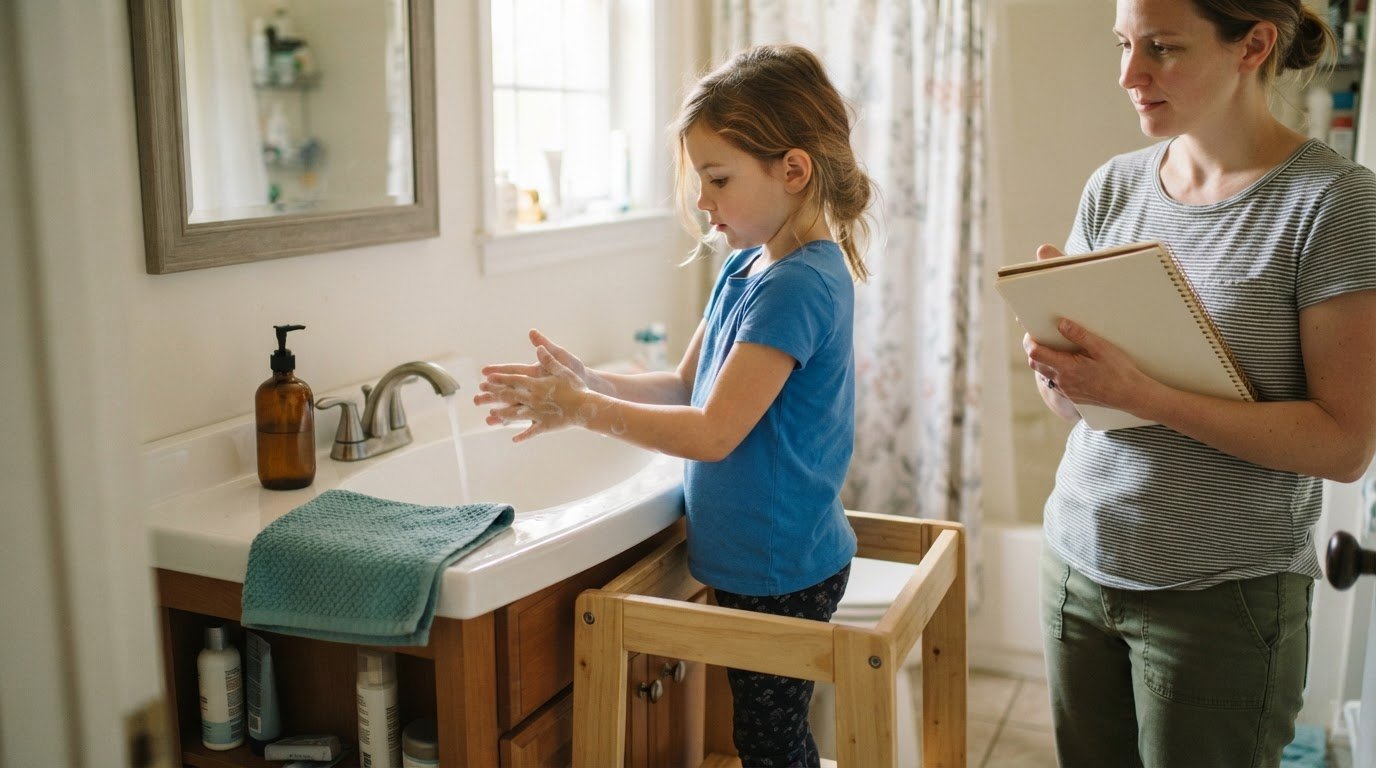
Self-help goals can connect communication with everyday independence. A child might request help with a clothing step, wash hands with prompting, or begin toilet-training steps. Early intervention and preschool ABA goals are most useful when they involve skills that matter in the child’s daily routines and relationships.
Independence and generalizing skills across settings
Independence grows when a child can use practical skills in everyday routines. Goals can connect activities at home, in the classroom, and in the community.
Preschool Readiness and Early Academics
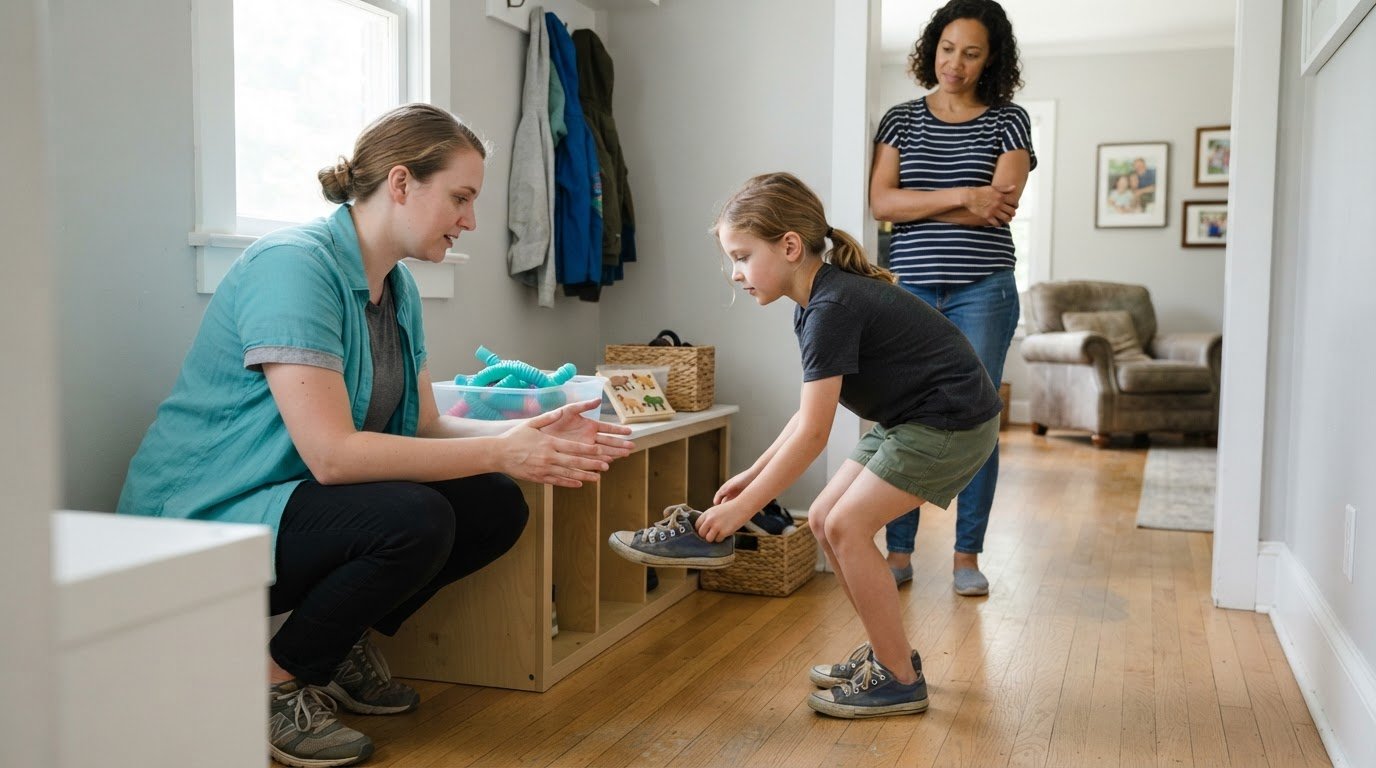
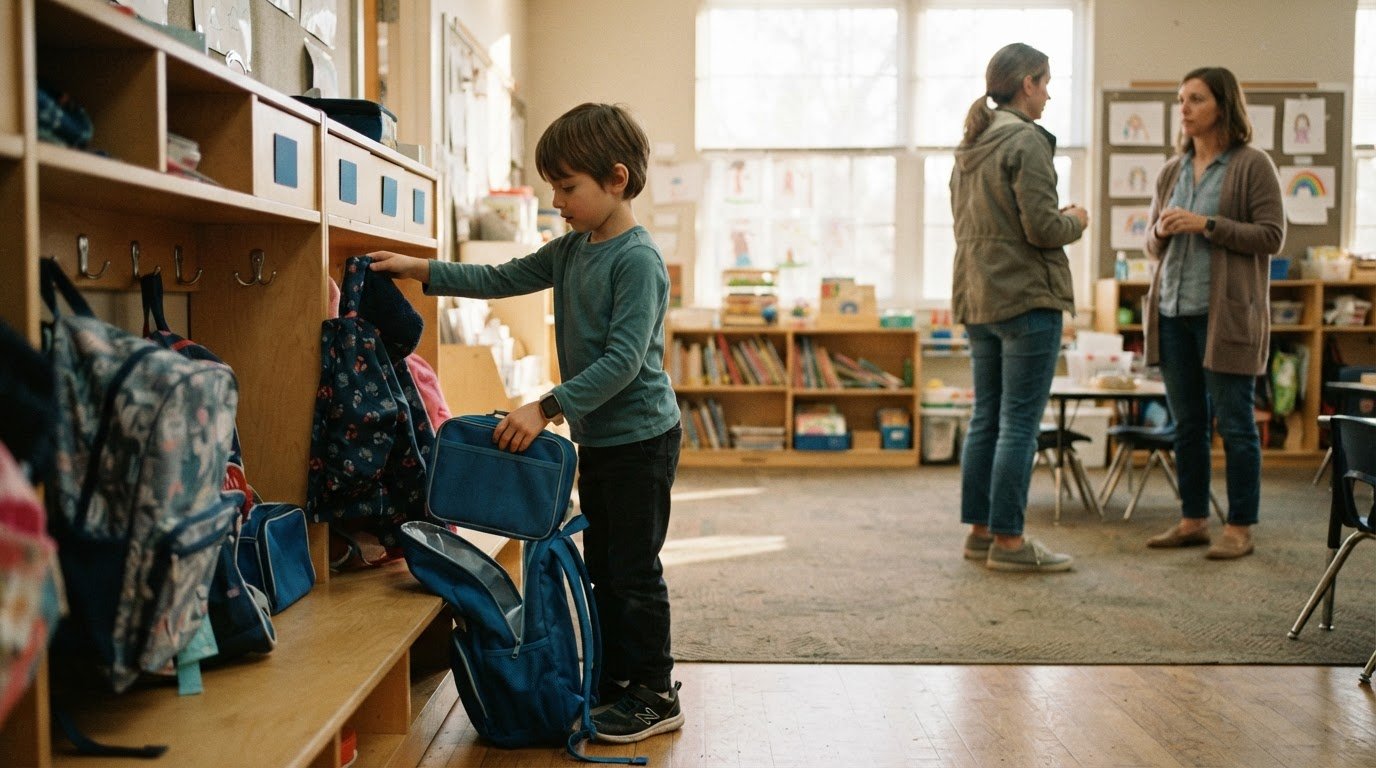
Preschool readiness means developing skills that help a child participate in classroom routines and learning activities. For a child approaching kindergarten, goals might include following a direction, moving between activities, or managing personal belongings.
These skills support participation, not a demand that every child learn the same way. A Board Certified Behavior Analyst can identify which routines matter to the child and family, then break each goal into manageable steps. For example, getting ready to leave may involve putting on a coat and gathering a backpack.
Daily living goals can build independence alongside learning. Practicing dressing or eating independently gives a child more ways to participate in preschool routines. A plan can focus on steps the child is ready to learn, with support adjusted as skills develop.
Generalizing Skills Across Home and School
Generalizing a skill means using it with different people and in different environments, rather than only during a therapy activity. It matters because a skill is most useful when a child can apply it in real routines.
A child might learn to put away toys during a session, then practice the same routine at home or in a classroom. Caregivers and the clinical team can use consistent cues and encouragement while adapting support to each setting. The goal is to use the skill, not to make every routine identical.
When challenging behavior interferes with learning or social participation, the team can look at what happens before and after it. They can then teach an alternative skill, such as asking for help or requesting a break. Family involvement can help reinforce that skill across daily environments.
Play and Positive Peer Interactions
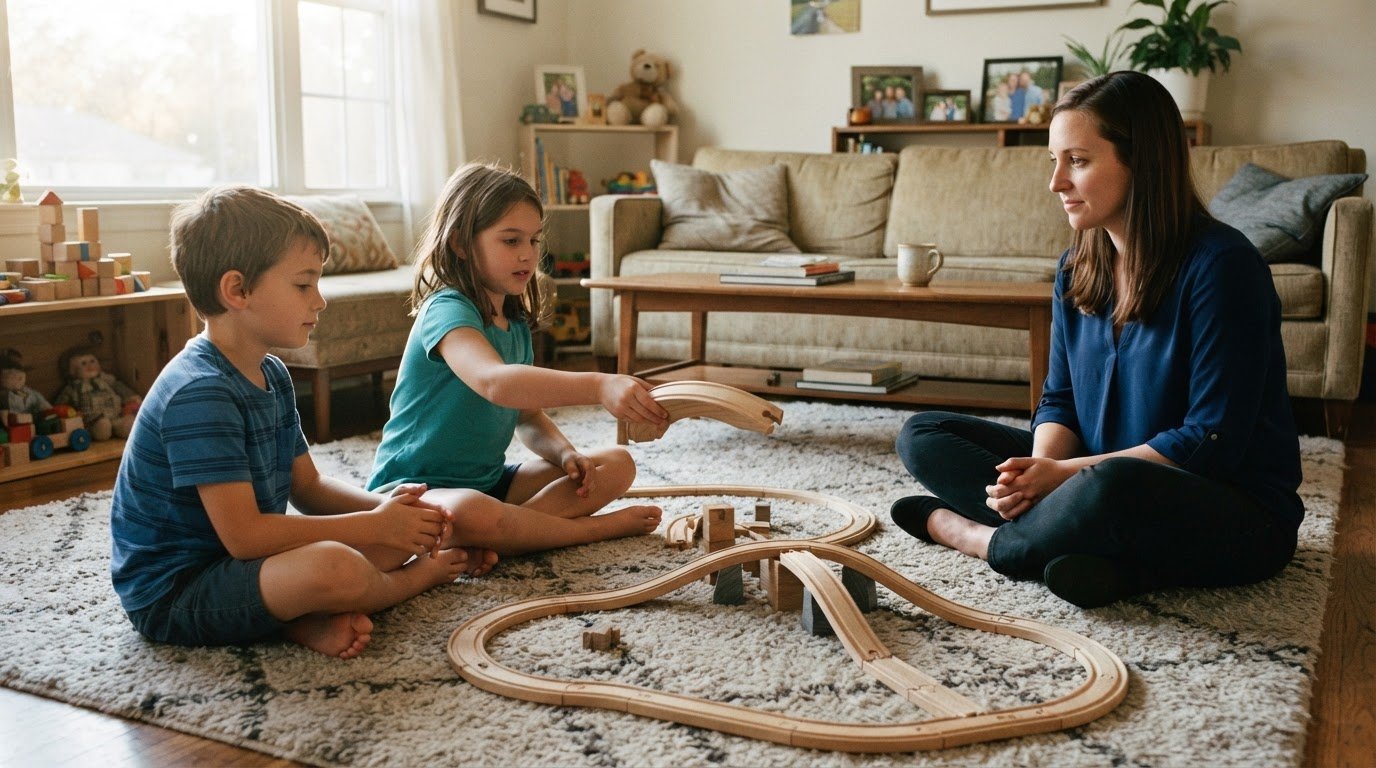
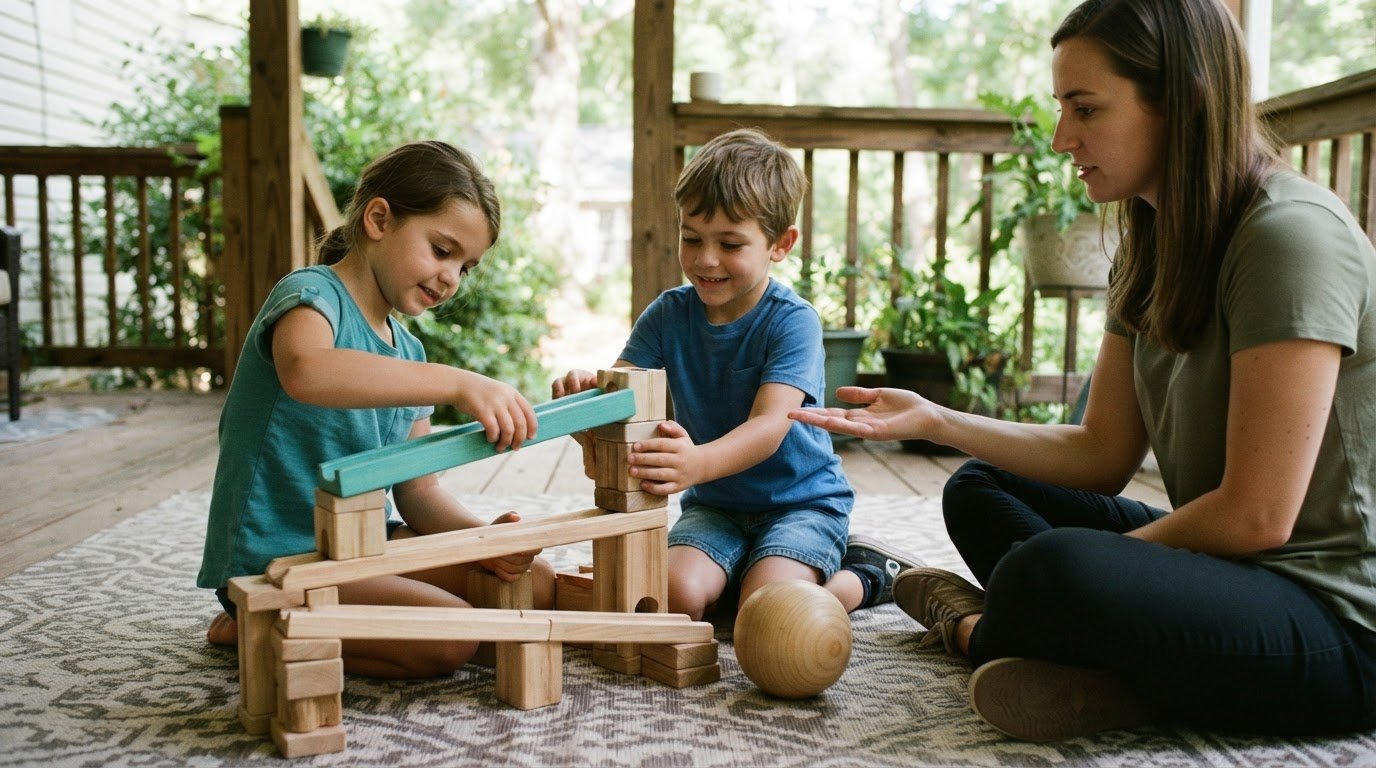
Play goals build ways to explore activities and engage with peers. For a preschooler, this might mean joining a shared building activity, offering a toy, or responding when another child invites them to play.
Practicing with peers can help a child use social skills beyond one-to-one teaching. Shared games also create natural opportunities to communicate, wait, and respond to another person’s ideas. Social Skills Groups provide structured opportunities to practice positive peer interactions.
Progress can be described through observable actions, such as joining an activity or staying engaged with a peer. The clinical team and family can consider whether each goal supports the child’s choices, independence, and participation. To discuss goals across home, school, and play, contact Divergent Minds ABA.
What Does ABA Therapy Look Like for Preschoolers?
Preschool ABA combines individualized teaching with play and everyday routines, using observation to track learning. Goals should not prioritize compliance or appearance over a child’s communication, choice, and participation. Harmless traits should not be targeted simply because they look different.
Individualized and Measurable Goals
Individualized, measurable goals describe a skill that matters to a child and how progress can be observed. This helps parents understand what teaching is intended to support and whether the goal fits their priorities. A sample goal for a 3-year-old is following a two-step direction during a daily routine in 8 of 10 opportunities. The specific target should reflect the child’s abilities and needs.
Everyday-Life Goals and Treatment Plans
An everyday-life goal teaches a skill the child can use in routines, play, or education. A treatment plan connects those goals to the child’s strengths, learning needs, and family priorities. A Board Certified Behavior Analyst assesses skills and works with parents to shape an individualized plan. This process helps keep goals relevant to a child with autism spectrum needs.
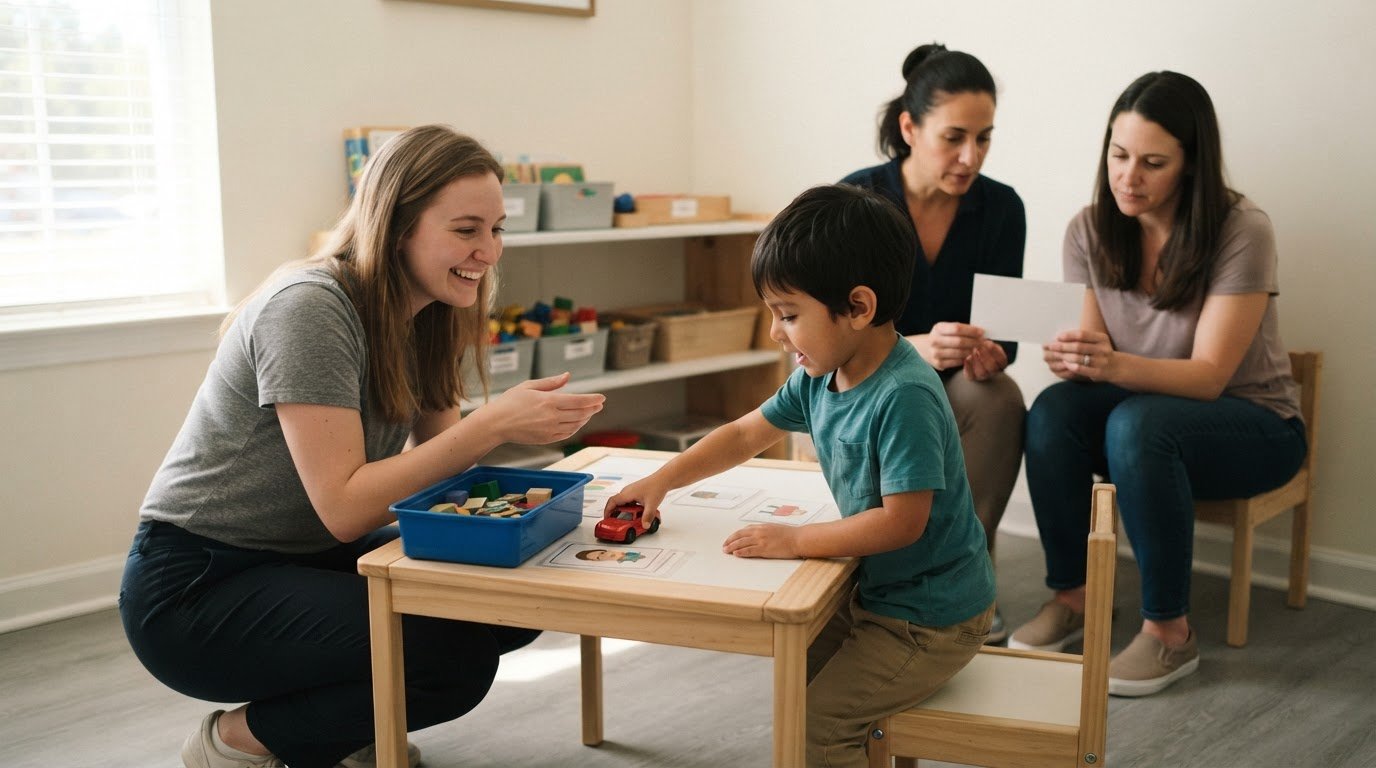
Teaching can happen through structured activities or natural environment teaching, which incorporates learning into everyday play. The approach depends on the goal. A child practicing a new play routine might learn through play materials, while another skill may need a more structured teaching opportunity. Activities can change after five or ten minutes to match the child’s engagement and the learning task.
Goals should be observable, useful, and developed with the child and family. “Be ready for school” is broad; a clearer target describes a specific routine, such as putting away a finished activity before moving to the next one. The team can record whether the child completes the step, what support helps, and whether the skill is becoming more independent.
Positive reinforcement and ongoing data collection help the team understand how a child responds to teaching. If progress stalls, the clinical team can review the goal, teaching approach, and supports rather than assuming the child is not trying. Plans are reviewed and can be adjusted, expanded, or changed as the child develops and family priorities evolve.
Clinic-Based ABA Therapy can provide a structured setting for learning, while Home-Based ABA Therapy can connect goals with familiar routines. Home-based support places practice within activities that already matter to the family. Across settings, individualized planning keeps the focus on skills that support meaningful participation, not simply completing tasks in one teaching space.
Assessment and treatment planning
A Board Certified Behavior Analyst (BCBA) assesses a preschooler’s current skills, strengths, and support needs. The findings guide goals that connect learning with the child’s routines and family priorities.
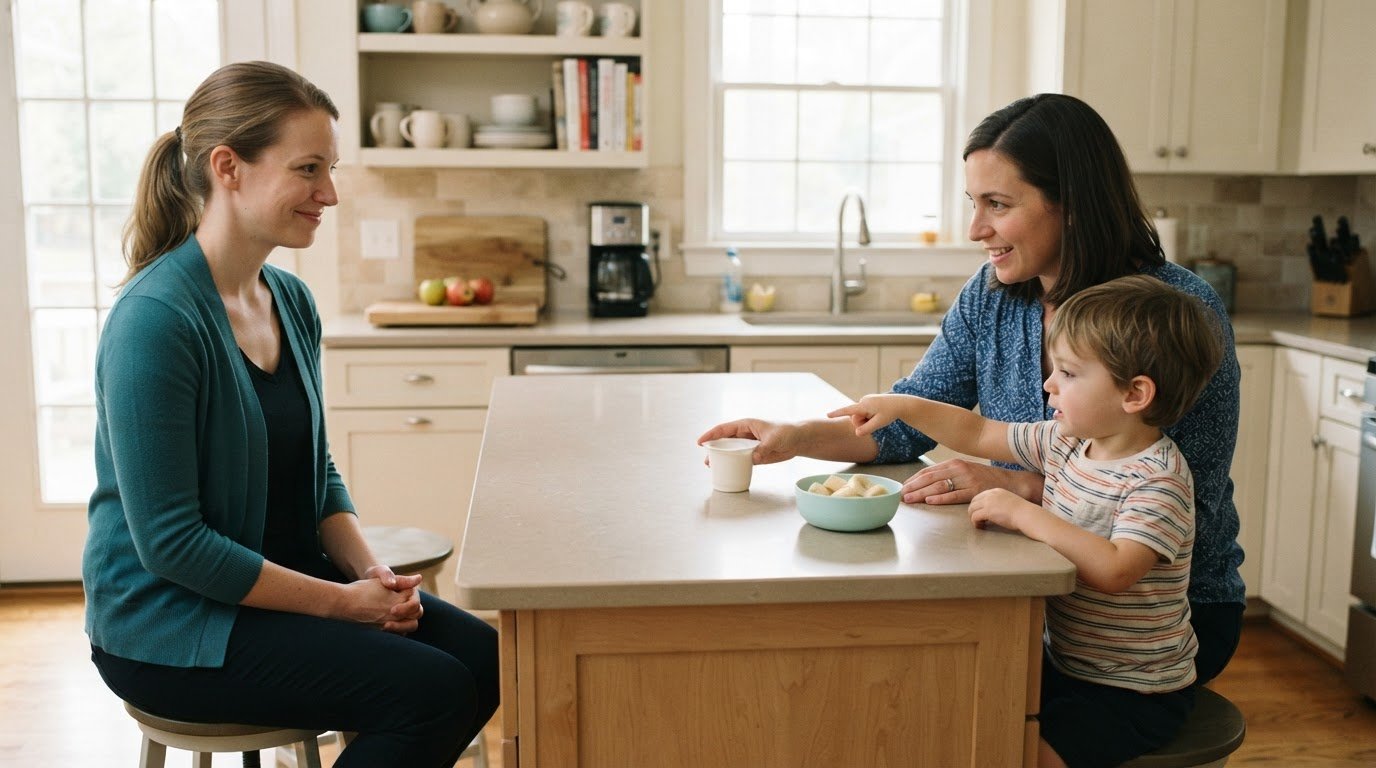
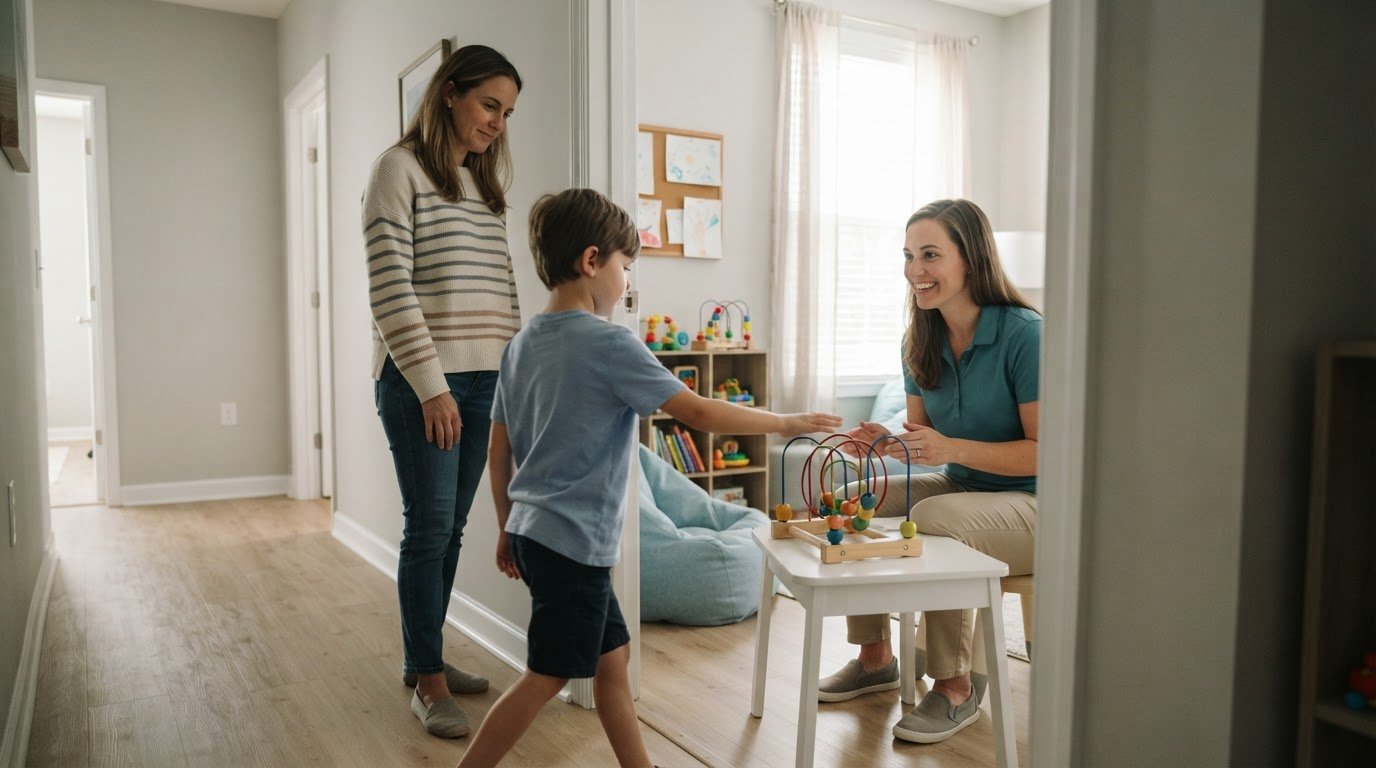
Assessment can include observing how a child communicates, plays, follows directions, and manages daily activities. The BCBA may consider what happens during a transition, such as moving from a preferred toy to snack time. Parents’ observations add context about whether the same skill appears at home, in the clinic, or elsewhere.
Planning turns those observations into practical teaching targets. A broad concern like “transitions are difficult” can be explored by identifying a specific routine and the support that helps. The plan might teach the child to move to the next activity using a visual cue, spoken reminder, or another individualized prompt.
Goals should be observable and meaningful. The team can record what the child does, how much support is needed, and whether the skill occurs in daily routines. This information helps distinguish a skill that appears during structured teaching from one the child can use with different people and materials.
Pivotal Response Treatment (PRT) is a naturalistic ABA approach that uses a child’s interests and everyday activities as part of teaching. For example, if a child is interested in a toy train, the clinician can build learning opportunities around playing with it. The child’s motivation helps shape the interaction, while the clinician creates chances to practice communication or engagement.
PRT may suit goals that can be practiced during play and routine interactions. It does not replace individualized planning: the BCBA still considers the child’s specific needs and how progress will be observed. A structured activity may fit one target, while a play-based opportunity may better suit another.
Treatment planning continues as the child develops. The clinical team reviews progress information with family input, then decides whether a goal remains useful, needs a different teaching approach, or should be adjusted. For example, if a child completes a familiar routine with support, the next focus may be reducing prompts or practicing with another caregiver.
Parents can share which goals matter most at home, such as smoother transitions or greater participation in dressing. Their input helps connect clinic teaching with everyday priorities. A plan should also protect the child’s communication, choice, and comfort. Goals should not target harmless differences simply because they appear unusual.
Choosing an ABA provider near Cary
A strong fit begins with goals that connect a child’s developmental needs to everyday life. For families in Cary, the useful comparison is how assessment, teaching, family collaboration, and progress review work together.
In North Carolina, ABA insurance coverage depends on the family’s specific health plan, including its eligibility and authorization terms. Provider requirements and coverage are separate matters, so one policy’s benefits should not be assumed to apply to another family.
Look for a process led by a Board Certified Behavior Analyst (BCBA) that connects assessment findings to an individualized plan. For example, if a child struggles to move from play to a meal, the plan should identify the routine, the skill to build, and how progress will be observed. Goals should support communication, choice, safety, and participation, rather than focusing only on compliance.
A session should have a clear purpose while remaining responsive to the child’s interests and needs. Families can expect the clinical team to explain what teaching is intended to address, how the child’s response is observed, and how new skills relate to home or school routines. A structured activity may fit one goal; play-based teaching may suit another.
Progress information should guide decisions. For instance, a team might track whether a child completes a routine independently, with a prompt, or not yet. That record can help clarify whether the teaching approach needs adjustment. The team should also make space for parents’ observations, such as a skill appearing at home but not during a clinic session.
Family collaboration matters because caregivers know which routines are most important and what support fits daily life. A plan for a child with autism should explain goals in understandable terms and make room for family priorities. It should also respect the child’s communication and harmless differences, rather than treating every difference as a behavior to change.
Practical fit matters, too. Clinic-Based, Home-Based, and Community-Based ABA Therapy connect teaching with different environments and routines. The relevant setting depends on the goals and where the child needs to use those skills. A family’s schedule and ability to participate in planning also shape what arrangement works.
Before services begin, families should understand how assessment informs goals, how progress is reviewed, and how the team involves caregivers. Discuss your child’s ABA goals and next steps.
Divergent Minds ABA
Divergent Minds ABA helps families connect a preschooler’s strengths and support needs with individualized ABA goals. Its team develops evidence-based treatment plans focused on communication, independence, and participation in everyday life. Families can turn to the practice for support with skills at home, in the clinic, in the community, or with peers.
Clinic-Based, Home-Based, and Community-Based ABA Therapy offer different settings for practicing meaningful skills. Social Skills Groups can provide opportunities to engage with peers. The right goals begin with understanding what matters to the child and family, then shaping support around those priorities.
For a conversation about your child’s goals and possible next steps, contact Divergent Minds ABA.
Take the Next Step Toward Meaningful Goals
The next step can be a conversation about what you hope your child can do more comfortably and confidently in everyday life. Sharing a routine that feels difficult, a new skill your child is showing, or a preschool priority can help focus the discussion. These details provide a starting point for considering which ABA therapy goals for preschoolers in Cary may fit your family.
Divergent Minds ABA provides Clinic-Based, Home-Based, and Community-Based ABA Therapy. Considering where your child feels most ready to learn can help shape a thoughtful conversation about support and goal setting. The aim is to keep the child’s needs and family priorities central as you consider next steps.
Reach out when you’re ready to discuss your child’s needs and possible goals. Contact Divergent Minds ABA today to start the conversation. Each step toward understanding your child’s priorities can help make future support more personal and purposeful.
Frequently Asked Questions
At what age should ABA therapy start?
ABA therapy can start as early as 18 months, but there isn’t one age when it suddenly becomes beneficial for every child. The decision depends on the child’s needs and development, family priorities, and clinical recommendations. For families considering ABA therapy goals for preschoolers in Cary, the key is whether support can address useful skills now, such as communicating needs or participating in everyday routines.
How Does ABA Therapy Work for Children With Autism?
ABA therapy uses observation and individualized teaching to help children with autism build skills for daily life. A clinician may notice that a child leaves an activity when a transition begins, then teach and reinforce a helpful way to move to the next routine. The team tracks the child’s response and uses that information to guide teaching. Family input helps connect practice with the child’s life beyond sessions.
How many hours of ABA does a preschooler need?
There isn’t one weekly schedule that fits every preschooler. Some children receive 10 to 15 hours of ABA therapy per week, while others receive 25 to 40 hours per week. A BCBA recommends intensity based on assessment, including the child’s current skills, support needs, and treatment goals. The family’s priorities and what feels manageable also inform planning, so a schedule should reflect both clinical needs and family circumstances.
What is ABA?
ABA stands for Applied Behavior Analysis, an approach that teaches skills by observing behavior and its context. For children with autism, therapy can focus on communication, daily living, learning, and social participation. Teaching may use positive reinforcement and ongoing observation to understand how a child responds. For families in Cary, Apex, and Raleigh, ABA is a way to plan support around a child’s strengths and practical goals.
What are common ABA therapy goals for preschoolers?
Common goals include expressing needs, taking part in play, following directions, managing transitions, and building self-care skills. The priority depends on which skills would make a meaningful difference in the child’s day. For example, a goal might support participation in a preschool arrival routine or help a child ask for assistance during an activity. Goals should serve communication, choice, safety, and everyday participation.
How are individualized ABA goals chosen for preschool children?
A BCBA assesses a child’s strengths and existing skills, then works with the family to identify useful priorities. The team can consider where a skill is needed, what the child already does, and what support helps them participate. A goal should describe an observable action, such as beginning a familiar routine after a cue. The team reviews progress and revises goals as the child’s skills and priorities change.
What communication goals can ABA therapy address in preschoolers?
Communication goals can help a preschooler request an item, ask for help, or express a choice. A child may communicate with spoken words, signs, picture cards, or a device, depending on what works for them. Goals can also address understanding directions or responding during interactions. The practical aim is to give the child an effective way to communicate across activities, rather than making spoken language the only measure of progress.
What social skills and play goals are used in preschool ABA therapy?
Social and play goals may support sharing an activity, taking turns, imitating a play action, or responding to a peer’s invitation. For instance, a child might practice adding a block to a shared tower after another child places one. Goals should help a child participate and connect in ways that are useful to them. They should not target harmless differences just because a child plays or interacts differently.