Imagine your child standing in the kitchen, clearly needing something, yet unable to find the words or signs to tell you what it is. The resulting meltdown isn't just about a missed snack; it's the sound of a child who feels unheard. In central North Carolina, where approximately 1 in 39 children is diagnosed with autism, this struggle is a daily reality for many families. When you search for ABA therapy for nonverbal autism Apex, you aren't just looking for a service. You're looking for a way to bridge the gap between your child's inner world and the people who love them.
We know the weight of the silence. It's natural to feel anxious about "factory-style" clinics that prioritize billable hours over your child's unique personality. You deserve a partner who values clinical precision as much as human connection. This article explains how personalized, BCBA-owned ABA therapy empowers nonverbal children to build functional communication and lasting independence. We will explore the transition from frustration-based behaviors to meaningful expression through AAC and signs, while highlighting how a collaborative, family-centered approach ensures your child's voice is finally heard.
Understanding Nonverbal Autism Support in Apex, NC
Communication is more than vocal speech. It's the ability to share a need, a thought, or a feeling with another person. For many children in our community, nonverbal autism means the desire to connect is present, but the tools are missing. This is where ABA therapy for nonverbal autism Apex provides a critical bridge. By utilizing the evidence based principles of Applied Behavior Analysis, we help children move beyond silence into meaningful, functional interaction. Our approach focuses on the intent behind a child's actions, turning every gesture or look into a potential building block for communication.
A common myth suggests that focusing on alternative communication methods, such as signs or pictures, will stop a child from ever speaking. In reality, these tools lower frustration and often pave the way for vocal speech by teaching the core value of interaction. In Apex, parents might notice early signs that a child needs specialized support. These signs often include a lack of pointing to show interest, limited eye contact, or intense frustration when they can't express a simple need. Recognizing these indicators early allows us to implement a more proactive, BCBA-led strategy that honors the child's current abilities while reaching for new milestones.
The Importance of Early Intervention in Wake County
The developmental window between 18 months and 5 years is uniquely pivotal for nonverbal learners. During these years, the brain is exceptionally receptive to forming new pathways for learning and social engagement. As families prepare to enter the Wake County Public School System, having a foundation in home based ABA therapy or clinic services can make the transition much smoother. Our team works to ensure that your child isn't just a face in a classroom but an active participant with the skills to succeed. Early intervention in Apex sets the stage for lifelong independence by ensuring children have the fundamental tools to navigate their world with confidence.
Setting Realistic and Empathetic Communication Goals
We shift the primary focus from merely "talking" to "communicating" effectively. Success isn't measured only by vocalizations; it's measured by a child's ability to advocate for themselves and their needs. This process begins by identifying an individual's unique strengths, such as a keen visual memory or a strong drive for physical play. Through parent coaching, we ensure that these goals aren't just clinical benchmarks on a chart. They're real-life victories that the whole family celebrates together. We treat the family as a partner, ensuring that the progress made in clinic based ABA therapy translates directly to your dinner table and weekend outings.
Functional Communication Training (FCT): Giving Your Child a Voice
Functional Communication Training, or FCT, stands as a cornerstone of evidence-based treatment for autism. It isn't simply about teaching a child to repeat sounds. Instead, FCT focuses on "manding," which is the behavioral term for making requests. When a child learns that a specific action or word consistently gets them what they want, their world opens up. Our BCBAs in Apex specifically design these programs to fit your child's daily life, ensuring they can ask for a favorite toy or a drink of water whether they're at our clinic or in your living room. Utilizing ABA therapy for nonverbal autism Apex means prioritizing these functional wins every single day.
The core philosophy of FCT is efficiency. We identify what a child is trying to achieve through their current behavior and provide a more effective, socially appropriate replacement. This might involve vocalizations, but it frequently includes signs or picture cards. By making communication the most reliable path to getting their needs met, we empower the child to interact with their environment with purpose and clarity.
Building the Foundation: From Gestures to AAC
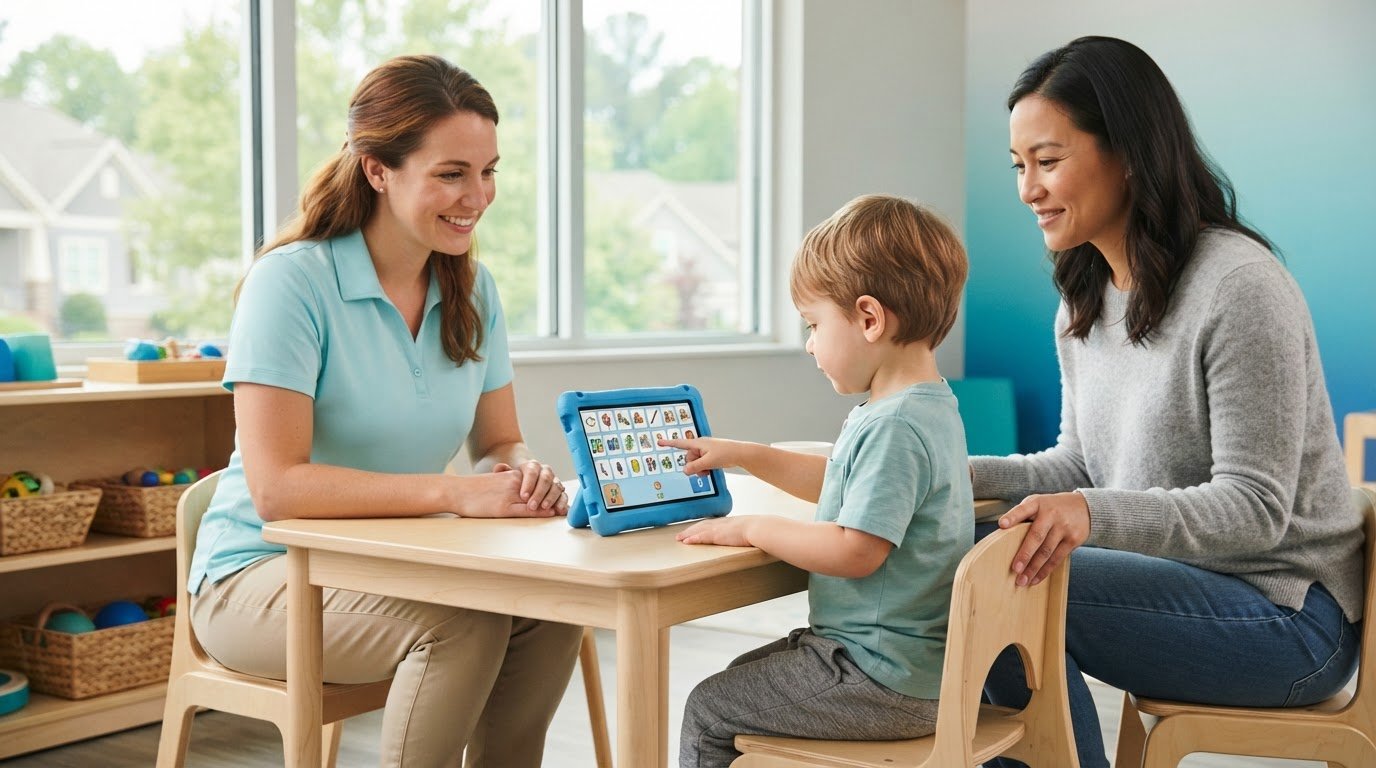
We begin by observing how your child currently communicates. Many start with "leading," taking a parent's hand to an object, or simple pointing. We bridge these natural gestures toward more robust systems like Augmentative and Alternative Communication (AAC) devices. These might include specialized apps on an iPad or physical picture boards that allow for more complex expression. Our therapists provide hands-on support to ensure these high-tech tools become a natural extension of the child. It's vital that this "voice" remains portable, moving seamlessly between home based ABA therapy and community outings in Apex.
Reducing Challenging Behaviors Through Communication
Challenging behaviors often stem from a profound sense of powerlessness. When parents seek out ABA therapy for nonverbal autism Apex, they're often looking for relief from intense meltdowns that happen without warning. If a child cannot say "I'm overwhelmed," a meltdown becomes their only available tool to stop the stimulus. By teaching essential safety phrases like "I need a break" or "all done," we give them a more efficient way to control their environment. Providing a child with a reliable way to express their needs directly reduces the frequency and intensity of challenging behaviors. This shift transforms the family dynamic through parent coaching, moving from constant crisis management to mutual understanding. If you're ready to explore these communication strategies for your family, connect with our clinical team today to learn more.
Clinic vs. Home-Based ABA: Which Setting Fits Your Apex Family?
Deciding on the right environment for ABA therapy for nonverbal autism Apex is a deeply personal choice. It requires balancing clinical recommendations with the specific sensory needs of your child. Evaluating your child’s sensory needs is a primary step in our assessment. For children who are easily overstimulated, the quiet, predictable nature of a home setting may be the best starting point. Conversely, for those who seek sensory input, the specialized equipment in our clinic can provide the necessary stimulation to keep them engaged in learning. We work with families to evaluate which setting, or combination of settings, will most effectively support their child's unique communication journey.
Clinic-Based Success: Socialization and Structure
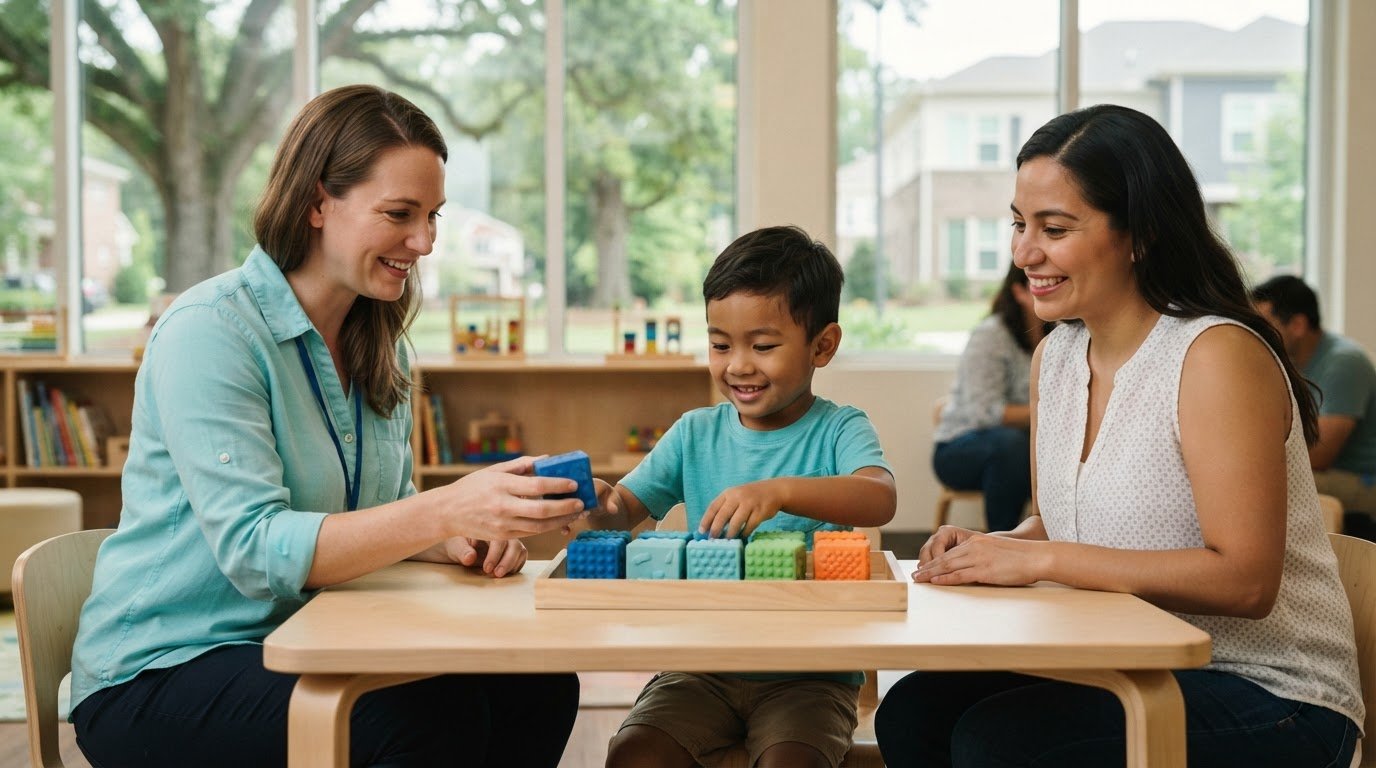
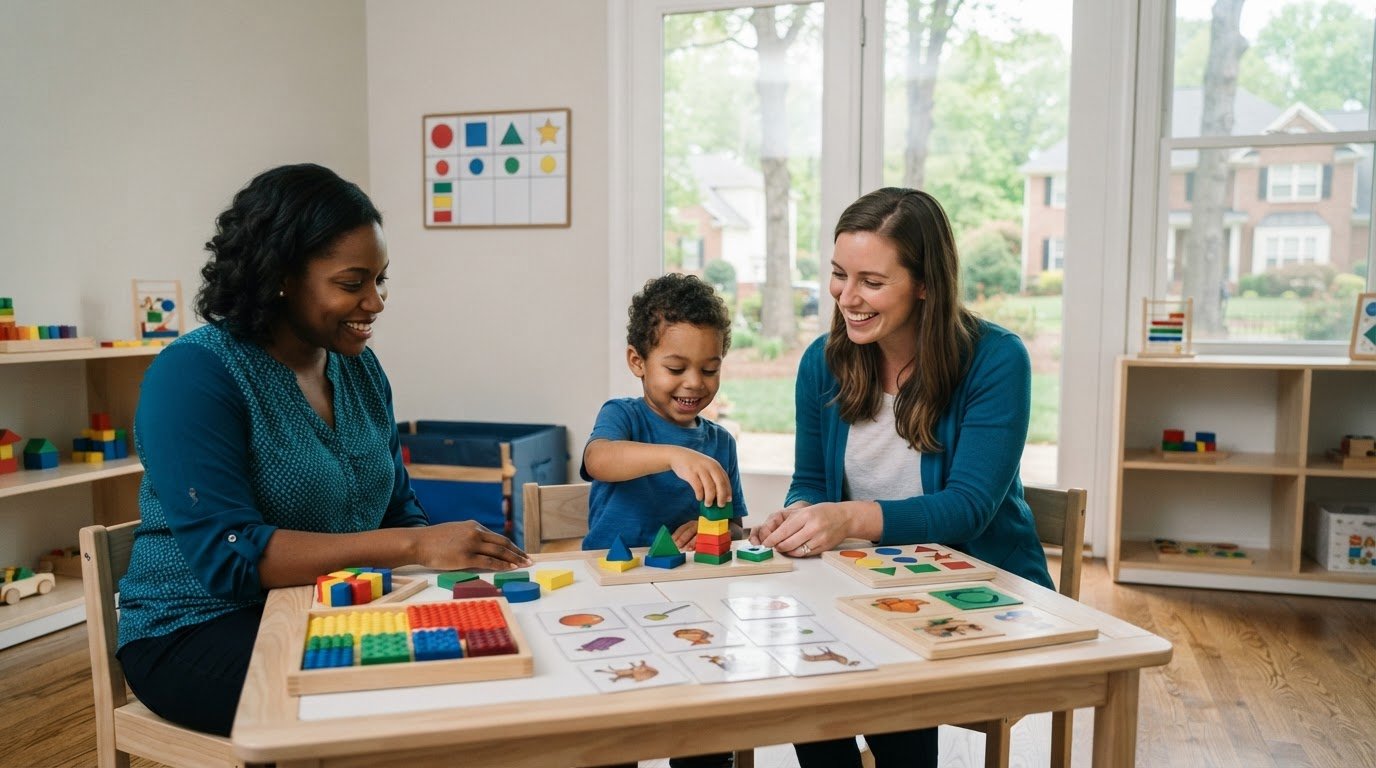
Clinic-Based ABA Therapy offers a highly controlled environment where distractions are minimized. This structure is often ideal for intensive Functional Communication Training (FCT) because it allows for rapid repetition and immediate reinforcement. Within our Apex clinic, children have access to diverse sensory equipment and specialized tools that might not be available at home. Perhaps most importantly, the clinic setting provides natural opportunities for peer interaction. Through Social Skills Groups, nonverbal learners can practice greeting others or sharing space in a supportive, professionally supervised atmosphere. These peer connections are vital for building social confidence early on.
Home-Based Mastery: Real-World Communication
While clinics provide structure, Home-Based ABA Therapy is essential for ensuring that skills translate to the real world. A child might learn to use an AAC device at a desk, but the true goal is for them to use it during mealtime, bath time, or play. Teaching communication in these natural settings reduces the stress of transitions and makes the learning process feel like a part of daily life. This setting also allows us to integrate siblings into the process. When a brother or sister learns how to prompt or respond to their nonverbal sibling, the entire family's communication dynamic begins to shift. Generalizing communication skills in a natural setting ensures that your child can express their needs whenever they arise.
Many families find success with a hybrid model. This approach combines the social immersion of the clinic with the practical application of home-based care. It ensures that progress isn't confined to a single room but becomes a permanent part of your child's life. We help you navigate these options to find the perfect fit for your family's routine and your child's specific developmental path.
Choosing the Right ABA Provider in Apex: A Parent’s Checklist
Selecting a provider is a pivotal decision that shapes your family's daily life and your child's future. For families seeking ABA therapy for nonverbal autism Apex, the quality of clinical oversight directly determines the trajectory of progress. Individualized attention is a clinical necessity for children who communicate through non-traditional means. When you tour a center, prioritize understanding the BCBA-to-student ratio. A low ratio ensures that a Board Certified Behavior Analyst is frequently present to update programs, analyze data, and pivot strategies the moment your child reaches a new milestone.
Navigating insurance and accessibility in North Carolina requires a provider who is well-versed in local regulations. With the 2026 updates to NC Medicaid Clinical Coverage Policy 8F, including requirements for in-person assessments and frequent reauthorizations for intensive plans, administrative transparency is vital. You should also ensure the provider aligns with a neurodiversity-affirming philosophy. This means they should view nonverbal communication as a valid, valuable form of expression while working to expand your child's toolkit. Ask these specific questions during your tour:
- How do you incorporate AAC devices into the child’s natural environment?
- What is the average tenure of your Registered Behavior Technicians (RBTs)?
- How often will I meet with my child's BCBA to review progress?
- Can you explain your process for transitioning between clinic and home settings?
The BCBA-Owned Advantage
There is a significant difference between a corporate-managed clinic and a practice that is BCBA-owned and operated. In a BCBA-owned setting, clinical decisions are made by experts who are deeply invested in the science of behavior rather than corporate profit margins. This model fosters personalized accountability and encourages long-term relationships between therapists and families. You aren't just another case number; you are a partner in a collaborative journey. This direct oversight ensures that the high standards of clinic based ABA therapy are maintained with a personal, heartfelt touch.
Parent Coaching: Ensuring Success Beyond the Session
Progress shouldn't stop when the therapist leaves or the clinic doors close. This is why parent coaching is the essential "secret sauce" for nonverbal progress. We teach you how to prompt and reinforce communication during the thousands of small moments that happen at home each week. Whether it's learning how to model signs during breakfast or using an iPad app to request a favorite show, these skills empower you to be your child's best advocate. Beyond our sessions, Apex offers a growing network of community resources for autism families, and we are here to help you connect with those local supports. If you are ready to build a customized communication plan for your child, reach out to our Apex team today to schedule a consultation.
Personalized Support at Divergent Minds ABA in Apex
Divergent Minds ABA is a BCBA-owned practice. We prioritize individualized care for every learner. Our commitment to the Apex and Cary community is rooted in our belief that every child deserves a voice. Unlike corporate clinics that often focus on volume, our boutique model ensures that your child receives direct oversight from experienced clinicians. Our specialized ABA therapy for nonverbal autism Apex focuses on unlocking potential through communication plans tailored to your child's specific environment and strengths. We blend clinical excellence with a deep sense of empathy to create a supportive space for growth.
Our approach is grounded in the latest behavioral science. We design each plan to meet your child where they are today while building toward a more independent tomorrow. This involves a rigorous, data-driven strategy for clinic based ABA therapy and home based ABA therapy. By maintaining a focus on functional outcomes, we ensure that every hour of therapy contributes to your child's ability to express themselves and navigate their world with confidence.
A Compassionate Path to Progress
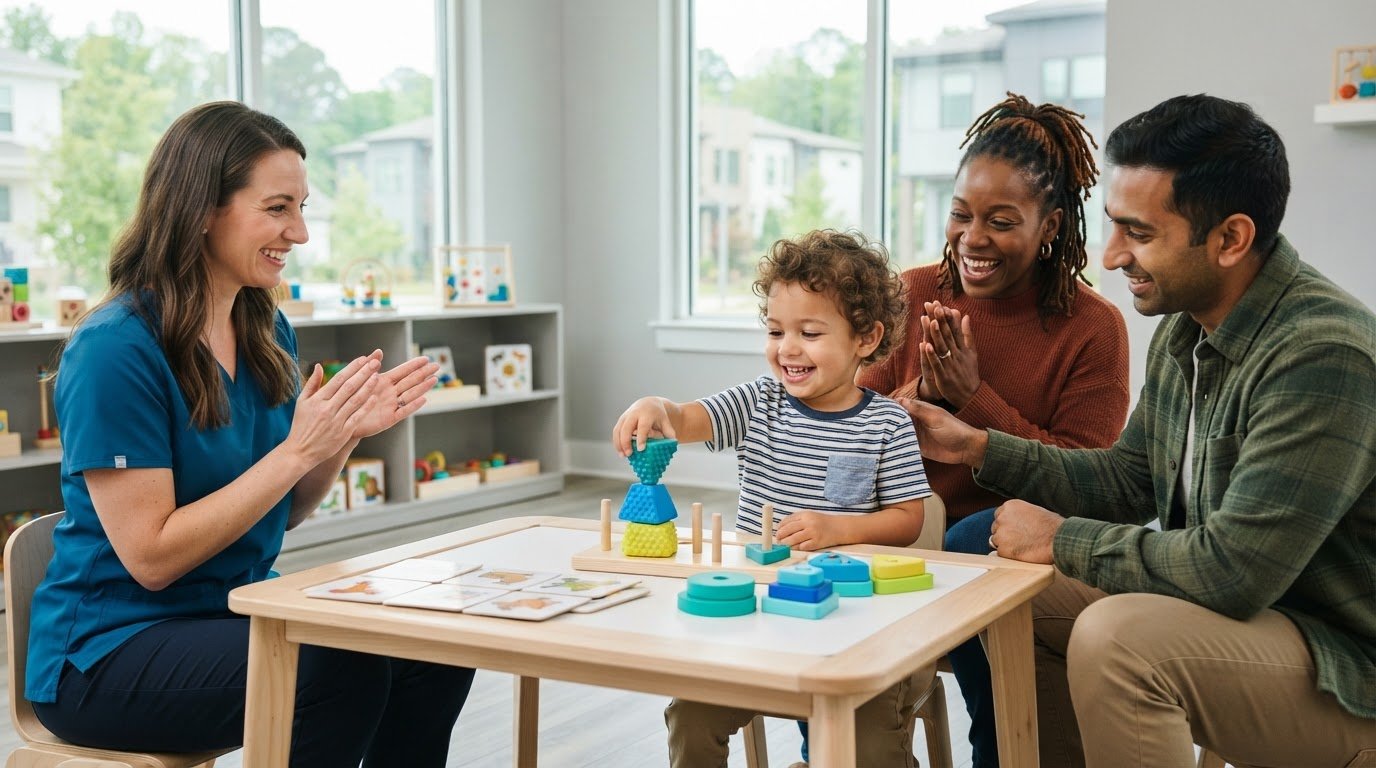
Success in nonverbal communication is built on a foundation of incremental progress. We celebrate the first time a child uses a sign for "help" or the moment they successfully navigate a transition using their AAC device. These small wins are the milestones that lead to lifelong independence. Our team maintains a collaborative approach with local Apex pediatricians and specialists to ensure your child's care is holistic and coordinated. We invite you to join a community that sees your child’s full potential and works tirelessly to help them reach it.
Getting Started in Apex
Taking the first step is often the most difficult part of the journey. Our intake process is designed to be clear and supportive, moving from the initial assessment to the first therapy session with transparency. During your initial clinical consultation, please bring any previous evaluation reports and your insurance information. We accept multiple insurance providers and handle the verification process to reduce the administrative burden on your family. Whether you are interested in community based ABA therapy or essential parent coaching, we are here to guide you. Our Apex and Cary location serves as a welcoming hub for families ready to begin this transformative process.
Empowering Your Child’s Journey Toward Communication
Unlocking a child's voice requires more than just clinical intervention; it demands a partnership built on trust and expertise. We have discussed how functional communication training serves as a bridge between silence and expression, and why a BCBA-owned practice provides the accountability your family deserves. Whether your child thrives in a structured clinic or needs the familiarity of home, the right support system makes all the difference. Choosing specialized ABA therapy for nonverbal autism Apex means choosing a future where your child can advocate for their own needs and celebrate their unique progress.
Our team is proud to be BCBA owned and operated, serving families across Apex, Cary, and Raleigh with evidence-based communication strategies. We don't just focus on behaviors; we focus on the human connection that communication makes possible. You don't have to navigate this complex path alone. Schedule a Consultation with our BCBA-Owned Team in Apex today to begin building a personalized roadmap for your child's success. We believe in the potential of every learner and look forward to supporting your family’s growth with compassion and clinical excellence.
Frequently Asked Questions
Is ABA therapy effective for nonverbal children?
ABA is highly effective because it breaks down complex communication into manageable, repeatable steps. Clinical research consistently shows that intensive intervention helps nonverbal children gain functional independence and social awareness. By focusing on individualized treatment plans, a BCBA-owned practice ensures that every goal is rooted in the child's specific needs. This approach reduces frustration-based behaviors and builds a reliable foundation for social engagement within the Apex community.
How does ABA help a nonverbal child communicate?
ABA helps by teaching "manding," which is the behavioral term for making requests. We identify what specifically motivates your child and teach them that a certain sign, gesture, or icon results in getting that item. This creates a powerful, direct link between their actions and their environment. Over time, these simple requests evolve into more complex communication, allowing the child to express feelings and make meaningful choices.
Will my child ever talk if they start ABA therapy?
The primary goal is functional communication, whether that involves vocal speech, signs, or assistive technology. While ABA therapy for nonverbal autism Apex often leads to increased vocalizations, we prioritize giving your child a reliable "voice" first. Lowering the barrier to communication often reduces the physiological stress that can hinder vocal development. We celebrate every milestone, from the first purposeful sign to the first spoken word.
What is the difference between ABA and speech therapy for nonverbal autism?
Speech therapy typically focuses on the physical mechanics of speech production and language structure. In contrast, ABA focuses on the social function and behavioral motivation behind communication. We look at why a child wants to communicate and how to make that process successful across different settings. Many families in Wake County find that combining both therapies provides a holistic, whole-person approach to their child's developmental growth.
How many hours of ABA does a nonverbal child typically need?
Every child receives a unique recommendation based on their initial clinical assessment. Some learners benefit from focused intervention, while others require more intensive support to reach their goals. In North Carolina, treatment plans exceeding 16 hours per week are currently subject to monthly clinical reviews under 2026 Medicaid policy updates. Our BCBAs work closely with you to determine a schedule that balances clinical necessity with your family's routine.
Does insurance in North Carolina cover ABA therapy for nonverbal autism?
Yes, North Carolina requires most state-regulated private health insurance plans to cover ABA therapy under Senate Bill 676. Additionally, NC Medicaid covers these services through Clinical Coverage Policy 8F. As of 2026, assessments must be conducted in person, and reimbursement rates are protected through June 30, 2026. We accept multiple insurance providers and assist families in navigating these complex coverage requirements to ensure your child receives consistent care.
Can ABA therapy be done at home in Apex?
Yes, Divergent Minds provides Home Based ABA Therapy for families throughout the Apex area. Delivering services in your child's natural environment allows us to teach communication skills during real-life routines like mealtime, bathing, or play. This setting is particularly beneficial for generalizing skills and reducing the stress often associated with transitions. Our therapists work directly in your home to ensure that progress translates into your family's daily life.
What is an AAC device, and will my child use one in ABA?
An AAC device is any tool that helps a child communicate without vocal speech, such as an iPad with specialized communication software. We frequently integrate these devices into ABA therapy for nonverbal autism Apex to provide an immediate, portable way for children to express themselves. Using an AAC doesn't stop vocal development; instead, it often encourages it by reducing communication frustration. Our team provides hands-on training for parents to ensure everyone feels confident.