
The most effective therapy for your child shouldn't feel like a rigid clinical checklist. You've likely spent hours researching, only to feel overwhelmed by conflicting advice and the fear of choosing a path that feels too restrictive. It's natural to feel anxious when the stakes are this high, especially when you want a program that celebrates your child's individuality rather than trying to change it. We understand that you need a partner who values your family's unique dynamics as much as you do. Our goal is to provide the steady, guiding hand you need during this pivotal time.
This guide clarifies the various types of ABA therapy for autism to help you find the personalized path where your child will truly thrive. We'll move past the jargon to provide a clear roadmap for treatment settings and styles. By exploring how clinic, home, and community-based services work together, you'll gain the confidence to select a provider that turns clinical goals into real-world growth. From social skills groups to parent coaching, you'll discover how a collaborative approach creates lasting independence for your child and your entire family.
Understanding the Landscape of ABA Therapy Options
Progress begins with understanding. Applied behavior analysis is a scientific discipline that focuses on how learning takes place and how behavior is influenced by the environment. Understanding the various types of ABA therapy for autism is the first step toward finding a fit that feels right for your family. While early iterations of this field often relied on repetitive, rigid table-work, the science has evolved significantly. Today, practitioners prioritize child-led, play-based interventions that feel natural rather than clinical. This evolution ensures that therapy isn't something children just endure; it's something they enjoy. A Board Certified Behavior Analyst (BCBA) acts as your steady, guiding hand, crafting a unique path that respects your child's personality while pushing for meaningful growth.
The Core Goal: Independence and Confidence
Building a foundation for the future is the heart of every program. We focus on enhancing communication, social interaction, and daily living skills to help your child move through the world with ease. By providing specific communication tools, therapy directly reduces the frustration often caused by being misunderstood. It gives your child a literal and figurative voice. Modern ABA serves as a collaborative bridge between a child's current skills and their future independence. Whether we are working in one of our clinic settings or in the comfort of your home, the focus remains on personal empowerment.
Evidence-Based Support vs. Emerging Interventions
Selecting the right treatment requires looking past the noise of unproven alternative therapies. Peer-reviewed research is the bedrock of our practice because it ensures the interventions we use are both safe and effective. The Council of Autism Service Providers (CASP) released their ABA Practice Guidelines, Version 3.0, in April 2024 to maintain these high standards. The CMS ABA Toolkit released in August 2026 also highlights the importance of highly individualized, medically necessary care. We rely on data-driven progress tracking to ensure your child is meeting their milestones. This transparency allows us to pivot when necessary and celebrate every incremental victory with you. When exploring different types of ABA therapy for autism, looking for a foundation in clinical evidence is the best way to protect your child's well-being.
ABA Therapy Settings: Choosing Between Clinic, Home, and Community
Environment is more than a backdrop; it's a tool for growth. When considering the various types of ABA therapy for autism, the setting determines how effectively a child can apply what they learn to their daily life. The CDC provides a helpful overview of autism treatment and intervention services, noting that behavioral approaches like ABA are foundational. We often combine different environments to ensure a child doesn't just learn a skill in a vacuum but can use it everywhere. A multi-setting approach allows for a balance between focused learning and real-world application.
Clinic-Based ABA for Focused Skill Building
A clinical setting offers a level of structure that is hard to replicate elsewhere. For many families, clinic-based ABA therapy is the ideal starting point for intensive early intervention. These spaces are designed to minimize distractions, allowing for focused skill acquisition. Your child gains access to specialized sensory equipment and, perhaps most importantly, a peer-rich environment. This social setting allows them to practice turn-taking and play in a controlled, supervised way. It's a safe harbor where a BCBA can provide constant oversight to ensure every moment is a learning opportunity.
Home and Community-Based ABA for Real-World Success
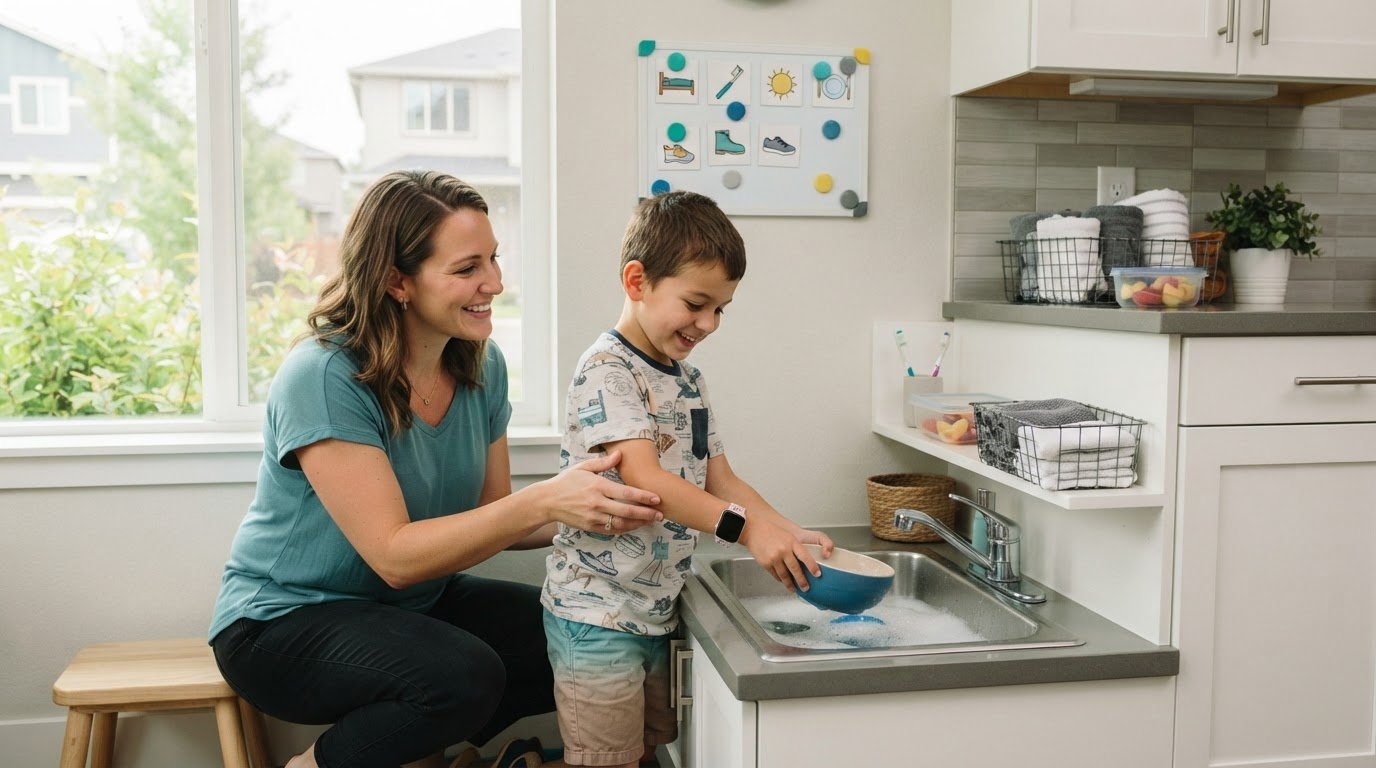
Learning must travel. While a clinic provides focus, home-based ABA therapy ensures that skills are generalized in the child's most natural space. Practicing a morning routine or mealtime manners in the actual kitchen where they happen makes the progress feel real and sustainable. Similarly, community-based ABA services take these lessons into the world. We help children navigate the sensory input of grocery stores or the social dynamics of local parks. By addressing behaviors exactly where they occur, we can effectively reduce meltdowns and build genuine confidence in public spaces.
Choosing between these types of ABA therapy for autism depends on your child's current goals and your family's needs. You can learn more about local options in our guide on ABA Therapy in Cary: What to Expect and How to Choose. Balancing these settings with Natural Environment Teaching (NET) ensures that therapy feels like life, not a chore. If you're ready to discuss how these services can support your child, we invite you to reach out to our team for personalized guidance.
Integrating ABA with Complementary Autism Treatments
Therapy is most effective when it addresses the whole child. While we've discussed how settings like the home or clinic impact learning, true growth often requires a multidisciplinary approach. ABA acts as a foundational framework that supports and reinforces the goals set by other specialists. For instance, if a child is working on fine motor skills in Occupational Therapy, an ABA program can incorporate those specific tasks into daily routines to ensure they are practiced consistently. This synergy creates a unified language of support that surrounds your child throughout their day.
A multidisciplinary team ensures that every angle of development is covered, from sensory processing to complex communication needs. To better understand the scope of these interventions, it's helpful to ask, What is Applied Behavior Analysis? and how does it adapt to different needs? When we coordinate with Speech and Language Pathologists, we help bridge the gap between learning a sound and using it to express a need. This collaborative effort reduces the confusion for the child. Exploring the various types of ABA therapy for autism allows families to see how these services function as a cohesive unit rather than isolated appointments.
Social Skills Groups: Transitioning to Peer Interaction
Peer interaction is the ultimate goal for many families. While one-on-one sessions build foundational skills, social skills groups provide the necessary bridge to real-world friendships. In these guided sessions, children practice turn-taking, empathy, and conversation in a safe environment. It's a space where guided play helps school-aged children build social confidence. These groups allow children to apply their individual progress within a dynamic social setting, turning clinical successes into meaningful connections with their peers.
Parent Coaching: Empowering the Family Unit
Progress shouldn't stop when the therapist leaves. We believe that parent coaching is essential for maintaining growth outside of scheduled therapy hours. This isn't just about training; it's about empowering you to understand the "why" behind your child's behaviors. By learning these strategies, you can foster a calmer, more supportive home life. This process builds a collaborative partnership between you and your BCBA. When parents are equipped with the right tools, they become the most influential advocates in their child's journey, ensuring that the different types of ABA therapy for autism lead to lasting, family-wide success.
How to Choose the Right ABA Path for Your Child
Selecting from the various types of ABA therapy for autism is a deeply personal journey. It requires a balance of clinical needs, family logistics, and a shared vision for your child's future. The process begins with obtaining a formal diagnosis. This is a critical first step, as nearly all insurance providers require a diagnostic report to authorize and cover behavioral services. Once you have this documentation, you can begin to identify your child's primary goals. Focus on the areas that will make the most immediate impact on their quality of life, such as functional communication, social interaction, or daily living skills.
Your family's logistical needs are equally important. Consider your daily schedule and how therapy hours will fit into your routine without causing burnout. Interview potential providers about their clinical philosophy to ensure it aligns with your values. Finally, review your insurance coverage and check for local availability in Cary, Apex, or Raleigh. This structured approach helps transform a complex decision into a manageable roadmap for success.
Vetting Your Provider: The BCBA-Owned Difference
A BCBA-owned practice often feels different from a corporate-run clinic. Clinical ownership typically leads to higher quality care because the leadership is directly invested in the science and the outcomes rather than just the bottom line. This model often results in lower staff turnover, providing your child with the consistency they need to thrive. When interviewing a provider, ask about their therapist-to-child ratios and how frequently a BCBA will be involved in direct supervision. Watch for red flags, such as a "one-size-fits-all" curriculum or a lack of transparency regarding data. You deserve a partner who views your child as an individual with unique potential.
Navigating Logistics in Wake County
Intake should not be a mystery. For families in Cary and Raleigh, the process involves initial assessments, insurance verification, and goal-setting sessions. Balancing therapy hours with school schedules and extracurriculars is a common challenge that requires open communication with your provider. You might find that a hybrid approach works best, combining clinic-based ABA therapy with sessions at home. For a deeper look at local options, you can read our In-Home ABA Therapy in Cary, NC: A Comprehensive Family Buying Guide. This flexibility ensures that the different types of ABA therapy for autism adapt to your life, not the other way around.
Finding the right path is easier with a knowledgeable guide by your side. If you are looking for a collaborative partner to support your family's journey, we invite you to contact us today to explore our personalized programs.
Personalized ABA Therapy in Cary, Apex, and Raleigh
Divergent Minds ABA serves as a dedicated resource for families in Cary, Apex, and Raleigh. We believe that effective therapy must be as unique as the child receiving it. Our BCBA-owned practice focuses on delivering evidence-based care that prioritizes long-term independence. By integrating various types of ABA therapy for autism, we ensure that your child has the tools to succeed in every environment they encounter. We don't just look at behavior; we look at the potential for growth and the celebration of every incremental step forward. Small wins are the milestones that lead to lifelong success.
Our commitment to the local community means we understand the specific needs of families in Wake County. We offer a flexible framework that includes clinic-based ABA therapy, home-based services, and community integration. This comprehensive approach ensures that the skills your child builds in a controlled setting are successfully transferred to the real world. We are proud to be a local partner in your child's development.
A Collaborative Partner in Your Journey
We maintain a hands-on, family-oriented philosophy that sets us apart from corporate providers. Because we are BCBA-owned and operated, clinical quality is always our primary focus. Your child is an individual, not just a number on a spreadsheet. We take the time to build a partnership with you, ensuring that our goals align with your family's vision. Divergent Minds ABA is a steady, guiding hand for families navigating the complexities of autism therapy. We are here to provide the expertise and the empathy required to help your child thrive.
Get Started with Divergent Minds ABA
Starting therapy should be a moment of hope, not a source of stress. Our intake process is designed to be simple and supportive, helping you move from the initial inquiry to the first session with clarity. We work closely with you to maximize your insurance benefits, ensuring your child receives the comprehensive coverage they deserve. Our team accepts multiple insurance providers to make these essential services accessible to as many local families as possible. We invite you to take the next step toward your child's independence. Contact Divergent Minds ABA today to discuss the best therapy path for your child.
Building a Brighter Future for Your Child
Finding the right path for your child's development is a journey of discovery and growth. You now have the tools to distinguish between various settings and the knowledge to prioritize evidence-based, child-centered care. Understanding the different types of ABA therapy for autism is the first step toward creating a supportive environment where your child can excel. Whether that path leads to the clinic, your home, or the local community, the focus remains on building lasting independence through meaningful, steady progress.
At Divergent Minds ABA, we provide a steady, guiding hand through every stage of this process. As a BCBA-owned and operated practice, we specialize in individualized treatment plans that celebrate each child's unique personality. We are proud to serve families in Cary, Apex, and Raleigh with a hands-on, compassionate approach that turns clinical goals into real-world success. You don't have to navigate this complex landscape alone.
Contact Divergent Minds ABA to Start Your Personalized Therapy Journey. Your child's potential is limitless; we're here to help them reach it with confidence and care.
Frequently Asked Questions
What is the most effective type of ABA therapy for autism?
Effectiveness depends on the individual child's needs rather than a single "best" type. Research suggests that a combination of different types of ABA therapy for autism , such as Natural Environment Teaching (NET) and structured interventions, creates the most robust outcomes. We prioritize individualized plans that adapt to your child's unique learning style. This flexible approach ensures that skills learned in one setting transfer seamlessly to others, promoting real-world independence.
How many hours of ABA therapy does a child typically need?
Therapy hours are determined by a clinical assessment and the specific goals of your child. While the 2025 average for children on Medicaid was 17.33 hours per week, some children benefit from 10 hours while others require 30 or more for intensive early intervention. We work closely with families to find a balance that supports growth without overwhelming the child's schedule. Each plan is tailored to ensure medical necessity and meaningful progress.
Can my child receive ABA and Speech Therapy at the same time?
Yes, receiving ABA and Speech Therapy concurrently is often highly beneficial for a child's development. Our BCBAs frequently collaborate with Speech and Language Pathologists to ensure that communication goals are consistent across all environments. This multidisciplinary approach helps your child practice their new vocal or alternative communication skills during daily ABA sessions. Coordinating these services creates a unified language of support that effectively accelerates functional progress.
Is ABA therapy covered by insurance in North Carolina?
Yes, North Carolina mandates insurance coverage for the treatment of autism, including ABA therapy. At Divergent Minds ABA, we accept multiple insurance providers to help local families in Cary, Apex, and Raleigh access the care they need. It's important to verify your specific plan's benefits, as coverage details like age limits or copays can vary. Our team assists families through the intake process to maximize their available benefits and reduce stress.
What is the difference between clinic-based and home-based ABA?
The primary difference lies in the level of structure and the opportunity for generalization. Clinic-based therapy provides a controlled, peer-rich environment ideal for focused skill acquisition and social interaction. Home-based therapy focuses on applying those skills in a natural setting, such as practicing routines in your own kitchen. Many families find that utilizing both types of ABA therapy for autism offers the most comprehensive path to independence and confidence.
What age is best to start ABA therapy for a child?
Starting as early as possible is generally recommended to take advantage of critical developmental windows. Early intervention typically begins between the ages of two and five, focusing on foundational communication and social skills. However, ABA is effective for children of various ages as long as the goals are developmentally appropriate. We focus on creating personalized plans that meet your child exactly where they are, regardless of when they start their journey.
Does ABA therapy help with social skills for older children?
Yes, ABA therapy is highly effective for building social competencies in older children and adolescents. We utilize social skills groups to help older children practice complex interactions like empathy, conversation, and conflict resolution in a guided environment. These sessions bridge the gap between one-on-one learning and real-world friendships. The focus shifts toward building the independence and social confidence necessary for navigating school and community settings successfully during the teenage years.
How do I know if an ABA provider is the right fit for my family?
The right provider should feel like a collaborative partner who values your family's unique input. Look for a BCBA-owned practice that offers transparency in data and prioritizes individualized treatment plans over a standard curriculum. Ask about their experience serving the Cary, Apex, and Raleigh communities to ensure they understand local resources. A good fit is a provider who acts as a steady, guiding hand while celebrating every small win with you.