
What if the choice between two essential supports isn't a competition, but a collaboration designed to unlock your child's full potential? Families often feel overwhelmed by technical jargon and the pressure to choose the perfect intervention while juggling complex schedules. It's natural to worry that picking one path might mean missing out on another critical piece of your child’s development. Understanding the balance of ABA therapy vs occupational therapy is the first step toward a more integrated approach to care.
We believe that growth is a shared journey where every incremental win deserves celebration. This guide clarifies the nuances of both fields, showing you how these distinct disciplines work in harmony to foster lasting independence. We'll explore how specific behavioral strategies and sensory-motor skills build on one another. By the end, you'll have the clarity needed to assemble a multidisciplinary team in Cary or Apex that truly puts your child’s unique needs at the center of the plan. You deserve a clear path forward, and we're here to help you build it.
Understanding the Core Philosophies: What are ABA and Occupational Therapy?
Growth is not a race; it is a series of small, intentional steps toward a brighter future. When exploring the differences between ABA therapy vs occupational therapy, it’s helpful to see them as two sides of the same coin. Both are evidence-based practices designed to foster independence, yet they approach a child’s development from distinct vantage points. Applied Behavior Analysis (ABA) is the scientific study of learning and behavior, focusing on how environmental changes can improve socially significant skills. Conversely, Occupational Therapy (OT) is a holistic healthcare profession that empowers individuals to master the "occupations" of childhood, such as playing, dressing, and learning. While their methods differ, their shared heartbeat is a commitment to improving your child’s quality of life.
To better understand how these two fields intersect, watch this helpful video:
The Science of ABA: Building Social and Communication Skills
ABA focuses on the "why" behind every action. By identifying the four functions of behavior—sensory, escape, attention, and tangibles—clinicians can understand what a child is trying to communicate through their actions. We use positive reinforcement to encourage helpful skills while gently reducing those that might hinder progress. This structured approach is often most effective in a clinic-based ABA therapy setting, where consistent routines and social opportunities help children generalize new skills. It’s about building a toolkit for life, one successful interaction at a time.
The Art of OT: Sensory Processing and Functional Life Skills
Occupational therapy approaches development through the lens of physical and sensory integration. OTs look at how a child’s body processes information from the world around them, ensuring they feel regulated and ready to engage. This often involves developing fine motor skills for writing or gross motor skills for playground navigation. An OT doesn't just teach a skill; they often adapt the environment to fit the child’s unique sensory profile. When looking at ABA therapy vs occupational therapy, you'll find that OT provides the physical and sensory foundation that allows the behavioral gains made in ABA to truly flourish in everyday settings.
ABA vs. OT: Key Differences in Therapeutic Focus
Precision matters. While both therapies aim for independence, they view the child through different lenses. A Board Certified Behavior Analyst (BCBA) focuses on observable behaviors and the environment's impact on them. In contrast, a Registered Occupational Therapist (OTR/L) examines the biological and sensory systems that drive those behaviors. Understanding the distinctions within ABA therapy vs occupational therapy helps families prioritize their next steps. To understand what occupational therapy is in a clinical sense, one must look at how the body interacts with physical tasks. ABA therapy is often highly structured, utilizing repeated trials to build mastery, while OT is typically task-oriented, focusing on the successful completion of daily activities. These professionals undergo different training paths, but they share a common goal of empowering your child to navigate their world with confidence.
Targeting Behaviors vs. Sensory Integration
Understanding the "why" is essential for choosing between ABA therapy vs occupational therapy. ABA manages the response to a situation; OT manages the sensory input that creates the situation. For instance, if a child feels overwhelmed by a loud classroom, an ABA program might teach them to use a functional communication phrase to ask for a break. Conversely, an OT might provide a "sensory diet" involving heavy work or noise-canceling headphones to prevent the child’s nervous system from reaching that point of overwhelm. Both strategies are vital, but they address different parts of the same challenge. This distinction ensures that we aren't just treating a symptom, but supporting the whole child.
Social Communication vs. Motor Coordination
The path to connection often requires both social understanding and physical ability. ABA excels at breaking down complex interactions into manageable steps within social skills groups, where children practice conversational turn-taking and reading social cues. OT focuses on the physical mechanics required for those same interactions, such as the motor coordination needed to catch a ball during a game or the fine motor control required to use a pencil in class. Because every child is unique, individualized treatment plans are the cornerstone of both disciplines. These plans ensure that every hour of therapy is tailored to your child's specific strengths and growth areas. If you're feeling uncertain about which path to prioritize first, you can reach out to our team for a professional consultation to discuss your family's specific goals.
Daily Living Skills: How ABA and OT Compare
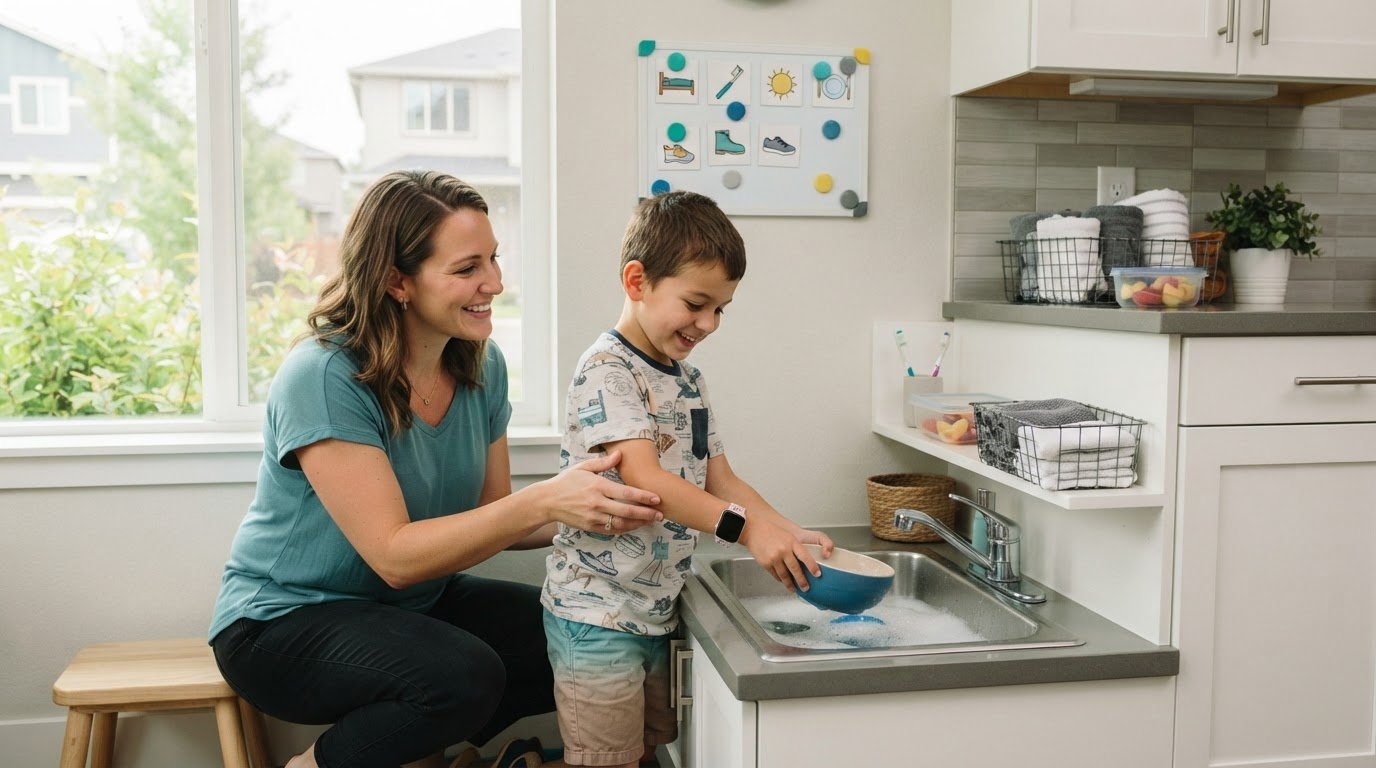
Independence begins at home. For many families, the ultimate goal of any intervention is to help their child navigate the essential Activities of Daily Living (ADLs) with confidence and ease. These tasks include everything from brushing teeth to sitting at the dinner table. When looking at ABA therapy vs occupational therapy, it's clear that most children benefit from a dual approach. While one therapy focuses on the behavioral routine, the other addresses the physical or sensory barriers that might make the task difficult. Our home-based ABA therapy is specifically designed to facilitate this growth, allowing your child to practice these vital skills in the environment where they matter most. Through consistent parent coaching, we ensure that families feel empowered to maintain these strategies long after the session ends.
Self-Care: Dressing, Grooming, and Feeding
Success in self-care requires both a plan and the physical ability to execute it. In an ABA program, clinicians use task analysis to break down a complex activity like dressing into small, achievable steps. We might first focus on just pulling up socks, providing positive reinforcement for each successful attempt. Occupational therapists complement this by looking at the sensory and motor components. They might address a child's aversion to the texture of certain fabrics or work on the fine motor strength needed to manage a zipper. When these two fields collaborate, the morning routine transforms from a point of stress into a celebration of autonomy. We don't just want the task done; we want your child to feel the pride of doing it themselves.
Academic and Community Readiness
Transitioning from the home to the classroom or the neighborhood requires a specific set of "learning to learn" behaviors. ABA therapy focuses on building the foundational skills needed for success in a group setting, such as following multi-step directions, sitting for short periods, and attending to a teacher. At the same time, an OT works on the physical mechanics of the school day, including handwriting, using scissors, and navigating the physical layout of a classroom. To ensure these skills translate to the real world, community-based ABA therapy provides opportunities to practice in local Cary parks or stores. This integrated approach ensures that your child isn't just learning skills in a vacuum but is actively developing the tools they need to engage with their community. We believe every child deserves the chance to explore their world with a sense of belonging and capability.
Choosing the Right Path for Your Child in Cary, NC
Decision-making is a heavy responsibility. When you're looking at ABA therapy vs occupational therapy, the goal isn't just to choose a service, but to identify the most significant barriers to your child's daily success. A professional assessment serves as your roadmap; it determines the necessary hours and specific therapy types required for meaningful progress. Choosing a BCBA-owned practice ensures that clinical integrity remains the priority, fostering a culture where evidence-based care and family collaboration go hand in hand. Rather than viewing this as a debate of one versus the other, we encourage families to see it as building a comprehensive support system tailored to their unique needs. This integrated perspective ensures that every facet of your child's development is addressed with professional expertise.
Choosing a BCBA-owned clinic offers professional accountability that is vital for long-term trust. It means your child's care is overseen by someone deeply invested in the science and ethics of the field, ensuring that treatment remains individualized. This leadership style promotes a multidisciplinary mindset, making it easier to coordinate with OTs and other specialists to ensure your child receives holistic support. We view ourselves as a collaborative partner rather than a distant service provider, walking alongside your family through every milestone.
When to Prioritize ABA Therapy
Certain challenges require the intensive, data-driven approach that ABA provides. If your child struggles with safety-related behaviors, such as elopement or self-injury, ABA is often the primary recommendation. It's also highly effective for addressing significant deficits in functional communication, helping children find their voice. For many families in Cary, starting with an intensive early intervention program of 20 to 40 hours per week creates a strong foundation for future learning and social engagement.
When to Prioritize Occupational Therapy
OT is often the first choice when the primary barriers are physical or sensory. If severe sensory processing issues interfere with your child’s ability to remain regulated, an occupational therapist can provide the necessary tools for integration. This discipline is also essential for children with significant delays in fine or gross motor coordination, such as hand strength or balance. Additionally, if your child faces feeding challenges related to oral-motor delays, OT offers specialized support that addresses the underlying physical mechanics of eating.
The right support system makes all the difference in your family's journey. If you're ready to take the next step, reach out to our team in Cary to discuss your child's specific profile and how we can help.
The Collaborative Model: Why a Team Approach Wins
Success isn't found in a vacuum. It's built through a unified front. When families look at ABA therapy vs occupational therapy, they shouldn't feel forced to choose a side. Instead, the most effective outcomes happen when BCBAs and OTs coordinate their goals to support the whole child. For instance, a behavior analyst can help a child develop the focus needed for a fine motor task, while the occupational therapist ensures the child’s sensory system is regulated enough to learn. This collaborative model involves sharing data and occasionally co-treating to ensure that strategies used in our Cary clinic are reinforced across all therapeutic settings. At Divergent Minds ABA, we prioritize this multidisciplinary awareness because we know your child’s growth is a collective effort. By aligning our behavioral strategies with the sensory foundations laid by an OT, we create a more stable environment for your child to reach their milestones.
Bridging the Gap with Parent Coaching
Managing multiple therapy schedules can feel like a full-time job. It's easy to feel overwhelmed by competing recommendations or complex clinical language. Our approach to parent coaching is designed to bridge the gap between clinical sessions and your daily life in Apex or Raleigh. We help you turn complex clinical strategies into sustainable home routines that actually work for your family, ensuring that progress doesn't stop when the therapist leaves. This partnership doesn't just improve your child's skills; it builds your confidence as their primary advocate. You don't have to be a therapist to support your child's development; you just need the right tools and a steady, guiding hand to show you the way. We empower you to see every interaction as an opportunity for growth and connection.
Starting Your Journey at Divergent Minds
Choosing a provider is an act of trust. As a BCBA-owned and operated practice, Divergent Minds ABA maintains a high standard of professional integrity and clinical excellence. We focus on individualized care that respects your child’s personality while pushing for meaningful progress. Our leadership ensures that every treatment plan is grounded in the latest behavioral science while remaining deeply empathetic to the family experience. If you're ready to explore how a multidisciplinary approach can benefit your family, we invite you to reach out for a consultation at our Cary clinic. For a deeper look at the various ways we support our families and the different settings where we provide care, read our pillar guide on Types of ABA Therapy for Autism: A Family Guide. Together, we can build a path toward independence and a future full of potential.
Building a Foundation for Lasting Growth
Choosing the right support is a significant milestone in your family's journey. You now understand that the choice between ABA therapy vs occupational therapy isn't about picking one winner; it's about creating a balanced environment where your child can thrive. We've explored how behavioral consistency and sensory regulation work together to foster independence in daily activities. By prioritizing a collaborative, multidisciplinary approach, you ensure that every hour of therapy contributes to your child's long-term success. Every child’s path is unique, and the most effective care respects their individuality while providing evidence-based tools for development.
At Divergent Minds ABA, we are proud to be a BCBA-owned and operated practice serving families across Wake County. We believe in providing personalized, evidence-based treatment plans that celebrate every incremental win. Our team is dedicated to compassionate, family-oriented care that places your child’s unique needs at the center of everything we do. If you're ready to take the next step toward a brighter future, we invite you to Schedule a Consultation at Our Cary ABA Clinic. Your child has incredible potential, and we're here to help them reach it.
Frequently Asked Questions
Can my child receive both ABA and OT at the same time?
Yes, your child can and often should receive both therapies simultaneously. Many families in the Cary and Apex area find that a combined approach addresses the whole child more effectively than a single intervention. While ABA works on social communication and behavioral routines, OT supports the sensory and motor foundations necessary for those skills to stick. We coordinate with local OTs to ensure that your child’s schedule remains manageable and their goals stay aligned.
Is ABA therapy better than occupational therapy for autism?
Neither therapy is inherently better, as they address different developmental needs. The choice between ABA therapy vs occupational therapy depends on your child's specific barriers. ABA focuses on the science of learning and behavior to improve social significance. OT concentrates on the physical and sensory systems required for daily living. Most comprehensive treatment plans for autism in Wake County include a blend of both to ensure the child develops both the behavioral skills and the physical capability to succeed.
How do I know if my child needs OT or just more ABA?
Identifying the primary barrier to your child's success is the best way to determine the next step. If your child struggles with following directions or communicating their needs, they may benefit from more ABA. If the challenge is physical, such as holding a pencil or tolerating the texture of clothing, OT is likely needed. We recommend a professional assessment at our Cary clinic to help distinguish between behavioral responses and underlying sensory or motor delays that require specialized support.
Does insurance in North Carolina cover both ABA and OT?
Yes, insurance plans in North Carolina generally cover both therapies. State mandates require fully insured private plans to cover ABA for autism, and Medicaid provides coverage for both ABA and OT through the Early and Periodic Screening, Diagnostic, and Treatment (EPSDT) benefit. It's important to verify your specific plan's deductibles and authorization requirements. We accept multiple insurance providers to help families in Raleigh and Cary access the evidence-based care their children deserve without unnecessary financial stress.
What should I look for in a Cary ABA provider when my child is also in OT?
Prioritize a provider that emphasizes collaboration and professional integrity. A BCBA-owned practice often has a deeper commitment to clinical coordination with other specialists. You should look for a team that is willing to share data and goals with your child’s occupational therapist. This partnership ensures a unified approach, preventing your child from receiving conflicting strategies. Open communication between your Cary-based providers is essential for creating a cohesive and effective treatment environment that supports your child's growth.
How many hours of therapy does a child with autism typically need?
The number of hours depends entirely on your child’s individualized treatment plan. ABA therapy typically involves 10 to 40 hours per week of intensive intervention to build foundational skills. In contrast, occupational therapy sessions are usually shorter, lasting 45 to 60 minutes and occurring one to three times per week. Our team works closely with you to determine a schedule that promotes significant progress without overwhelming your child or your family's daily routine in the Apex or Raleigh area.
Can an ABA therapist work on sensory issues?
An ABA therapist focuses on the behavioral response to sensory input rather than the internal processing itself. For example, we can teach a child to use a functional communication phrase to ask for a break when a room is too loud. However, we don't provide sensory integration therapy, which is the specialized domain of an occupational therapist. By working together, we manage the behavior while the OT addresses the underlying sensory system, providing a holistic solution for your child.
What is the first step to starting therapy in the Raleigh-Durham area?
The first step is typically obtaining a formal autism diagnosis from a qualified professional, as we don't provide diagnostic evaluations. Once you have a diagnosis, you can reach out to us for an initial clinical assessment. We'll discuss your child’s strengths and challenges to create a personalized plan. Families in the Raleigh-Durham area can then choose between clinic, home, or community-based settings to start building the skills their child needs for a more confident and independent future.