You watch from the park bench as your child stands at the edge of the sandbox, watching other children build a castle together. They want to join in, but the invisible barrier of social anxiety keeps them frozen, unsure of how to take that first step. It's a heavy feeling for any parent to witness, especially when you worry that your child might be ignored or misunderstood by their peers. You aren't alone in these concerns, and you certainly aren't wrong for wanting a therapy that feels natural rather than robotic. Effective ABA therapy for peer interaction isn't about teaching a child to mask who they are; it's about giving them the tools to navigate the social world with ease and authenticity.
We understand that building social confidence is a journey that requires both clinical expertise and deep empathy. In this guide, we'll show you how evidence-based techniques help children move beyond hesitation to form genuine, lasting connections. We will break down the four-step Behavioral Skills Training process, offer practical strategies for your next playdate, and explain the transition from individual sessions to group settings. You'll discover how a collaborative, family-centered approach can turn those quiet moments at the playground into opportunities for real friendship and growth.
Understanding Peer Interaction and Social Anxiety in Autism
Peer interaction is the complex dance of initiating a conversation, responding to a friend's question, and sustaining a game over time. For many children with autism, this isn't just a challenge; it's a source of profound anxiety. This stress often grows from a lack of predictable social rules or a history of confusing interactions that left them feeling isolated. As a parent, it's natural to worry about your child sitting on the sidelines or being excluded. These feelings are valid and highlight why a structured approach like Applied Behavior Analysis (ABA) is so effective. By breaking down unwritten social rules into clear, achievable steps, we help children navigate their world with more confidence.
Utilizing ABA therapy for peer interaction allows us to transform high-stress social moments into predictable learning opportunities. We focus on the specific skills a child needs to feel safe and successful among their age-mates. By removing the guesswork from socializing, we empower children to move from the role of a spectator to an active participant in their own lives.
To better understand this concept, watch this helpful video:
Why Traditional Socializing Can Be Overwhelming
Group settings like the busy playgrounds in the Raleigh area can quickly become a sensory minefield. The loud shouts, moving equipment, and unpredictable movements of other children often trigger a fight-or-flight response. We often talk about a child's social battery, which drains much faster when they have to process sensory input and social cues simultaneously. Common triggers for anxiety include not knowing how to join a game in progress, struggling with the rapid-fire nature of peer conversation, or fearing an unexpected change in play rules.
The Role of ABA in Reducing Social Stress
Structure is the greatest antidote to anxiety. When a child knows what to expect, their stress levels drop, allowing them to focus on learning. Through social skills groups, we create a controlled environment where children can practice without the fear of getting it wrong. We build a success history by celebrating small wins, like a single successful turn in a game or a brief moment of eye contact. ABA therapy for peer interaction focuses on these incremental gains to foster long-term independence.
Social reinforcement in peer play occurs when a child's interaction leads to a naturally rewarding outcome, such as a peer smiling back or continuing the game. This positive feedback loop is the foundation of behavioral growth, turning daunting social tasks into rewarding experiences that a child actually wants to repeat.
How ABA Therapy Builds Social Skills: A 4-Step Process
Social mastery doesn't happen by accident. We utilize Behavioral Skills Training (BST), a structured, evidence-based framework that ensures every new social behavior is learned thoroughly and safely. This approach aligns with CDC guidance on autism interventions, which highlights the effectiveness of behavioral treatments in fostering independence. We always begin with 1:1 support to build a foundation of trust before transitioning to Social Skills Groups. By moving at the child's individual pace, we avoid the burnout and frustration that can occur in less structured environments.
Using ABA therapy for peer interaction allows us to turn complex social "unwritten rules" into clear, manageable actions. We focus on the specific skills your child needs to feel confident and connected. Our goal is to move beyond clinical repetition toward genuine, natural social engagement.
Step 1: Instruction and Modeling
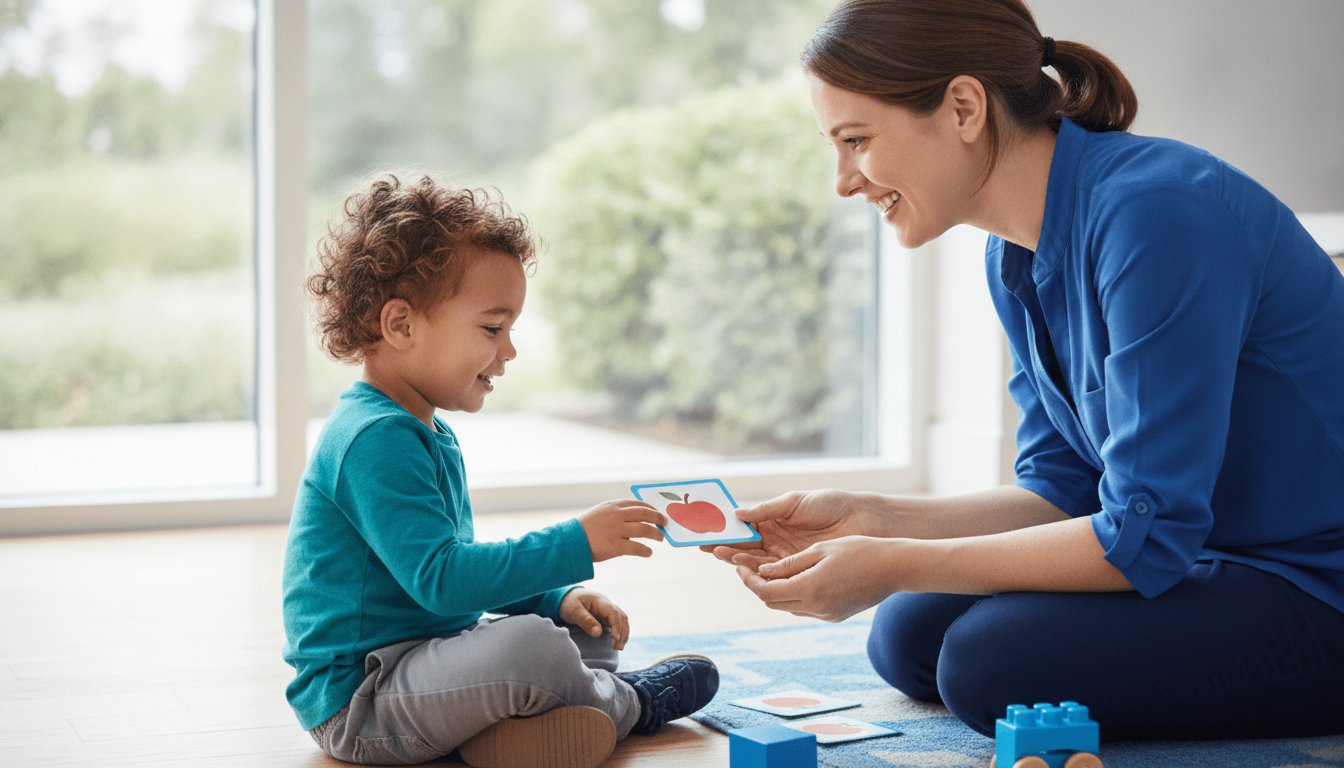
We start by clearly explaining the social goal in a way the child can easily grasp. If we're teaching how to join a group game, we provide simple, vocal instructions. We don't just talk about the skill; we show it. Through video modeling or therapist role-play, the child sees exactly what success looks like in a real-world scenario. It's vital that the child understands the "why" behind the action, such as how asking to play helps a friend know they are welcome. This clarity reduces the mystery of social dynamics.
Step 2: Rehearsal and Feedback
Once the concept is clear, the child begins to practice. We rehearse the skill in a safe, controlled environment, such as our Cary clinic or the child's home. Immediate, positive feedback is essential during this stage. We celebrate every successful attempt to build a history of social wins. If a child makes a mistake, we use gentle error correction to refine their response without causing stress. This repetition builds the muscle memory needed for the child to eventually use the skill without therapist prompting.
Step 3: Generalization to Real-World Settings
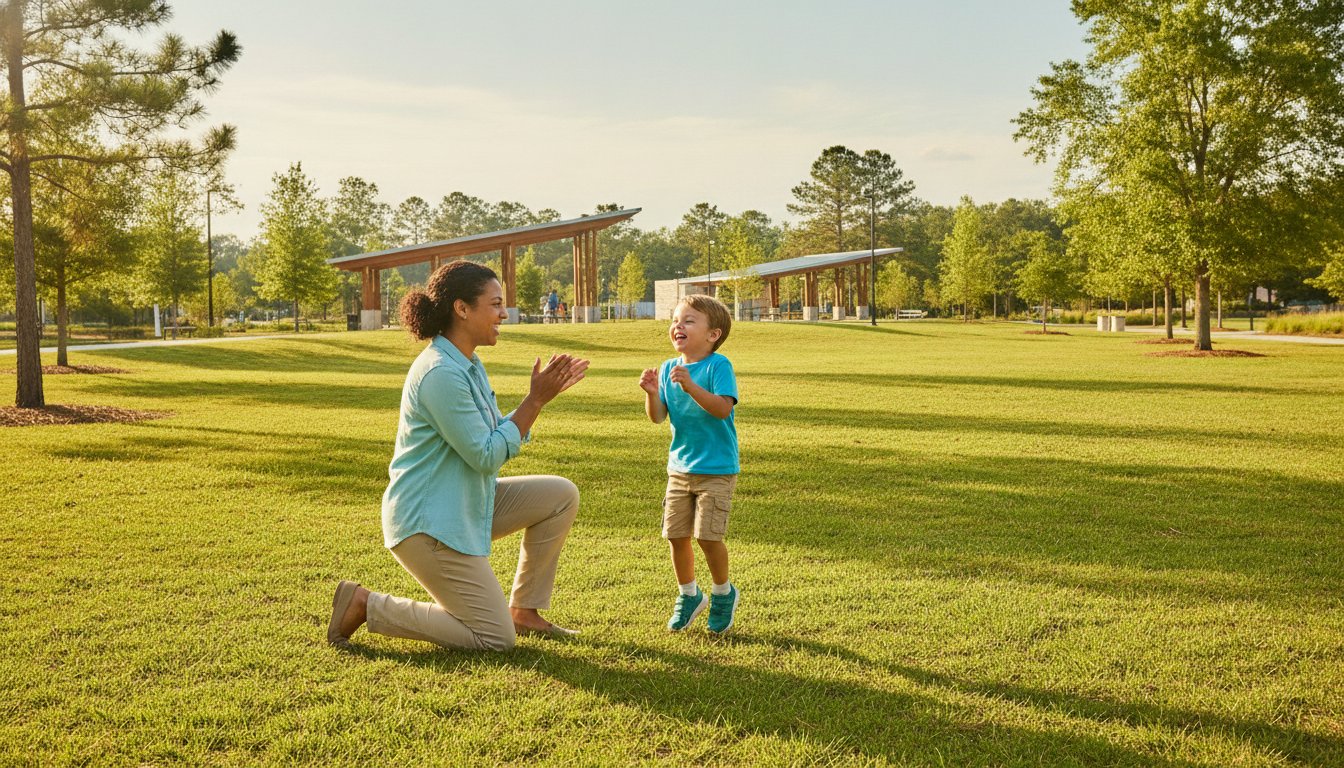
A skill isn't truly mastered until it works outside the therapy room. We move practice into the natural environment through Community Based ABA. Practicing at local Cary parks or libraries ensures the skill "sticks" in the places where your child actually plays and lives. Our BCBAs carefully monitor these sessions to ensure the child feels supported as they apply their new tools in the community. If you're curious about how this process could help your family, reach out to our clinical team to discuss a personalized plan.
Clinic, Home, or Community: Choosing the Right Setting for Social Growth
Every environment offers distinct advantages for a child learning to navigate the social world. While one setting might focus on the initial acquisition of a skill, another provides the necessary challenge to ensure that skill survives in the real world. A hybrid approach is often the most effective strategy for social development. It allows our clinical team to tailor the environment to your child's current level of confidence. For a deeper look at one of these options, you can explore our In-Home ABA Therapy Cary NC guide. We believe in meeting the child where they are, whether that's in a structured clinic or a busy park.
Clinic-Based: The Controlled Social Laboratory
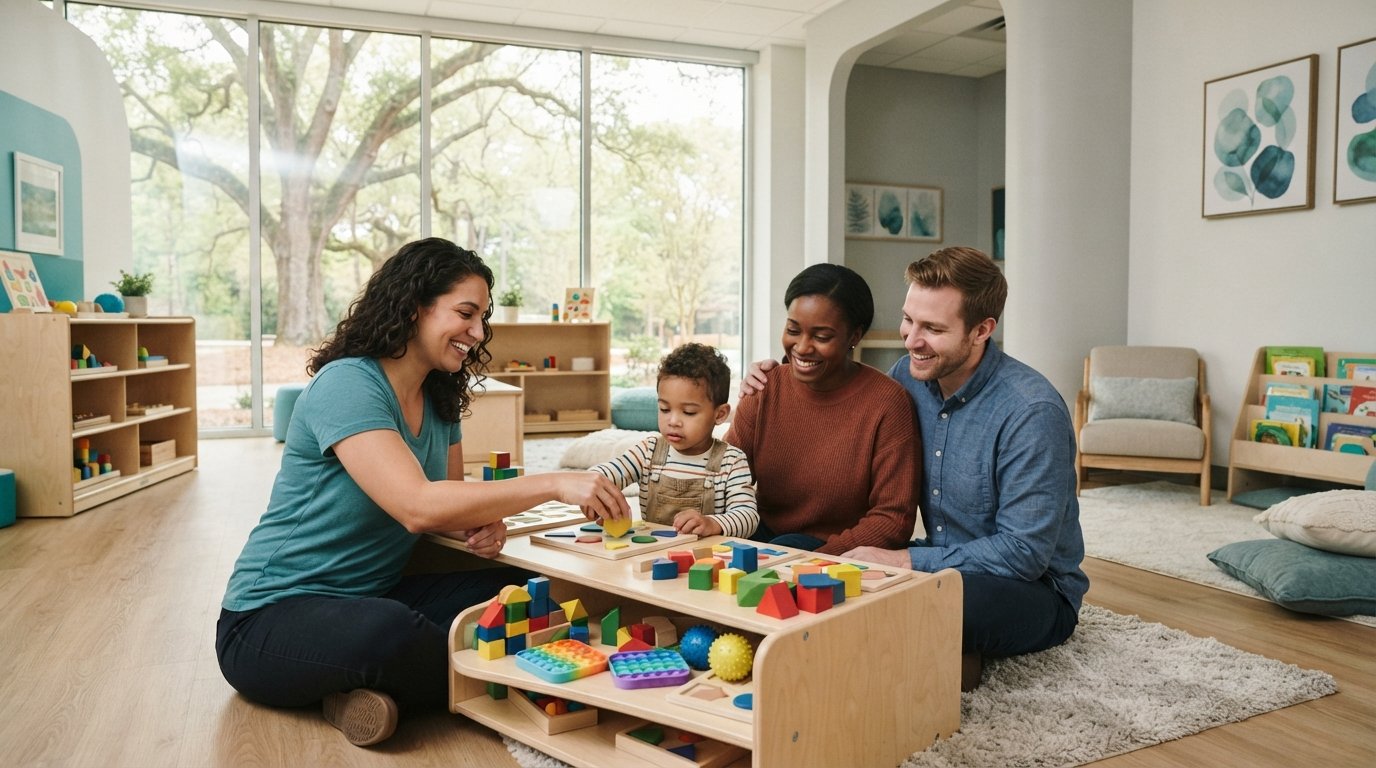
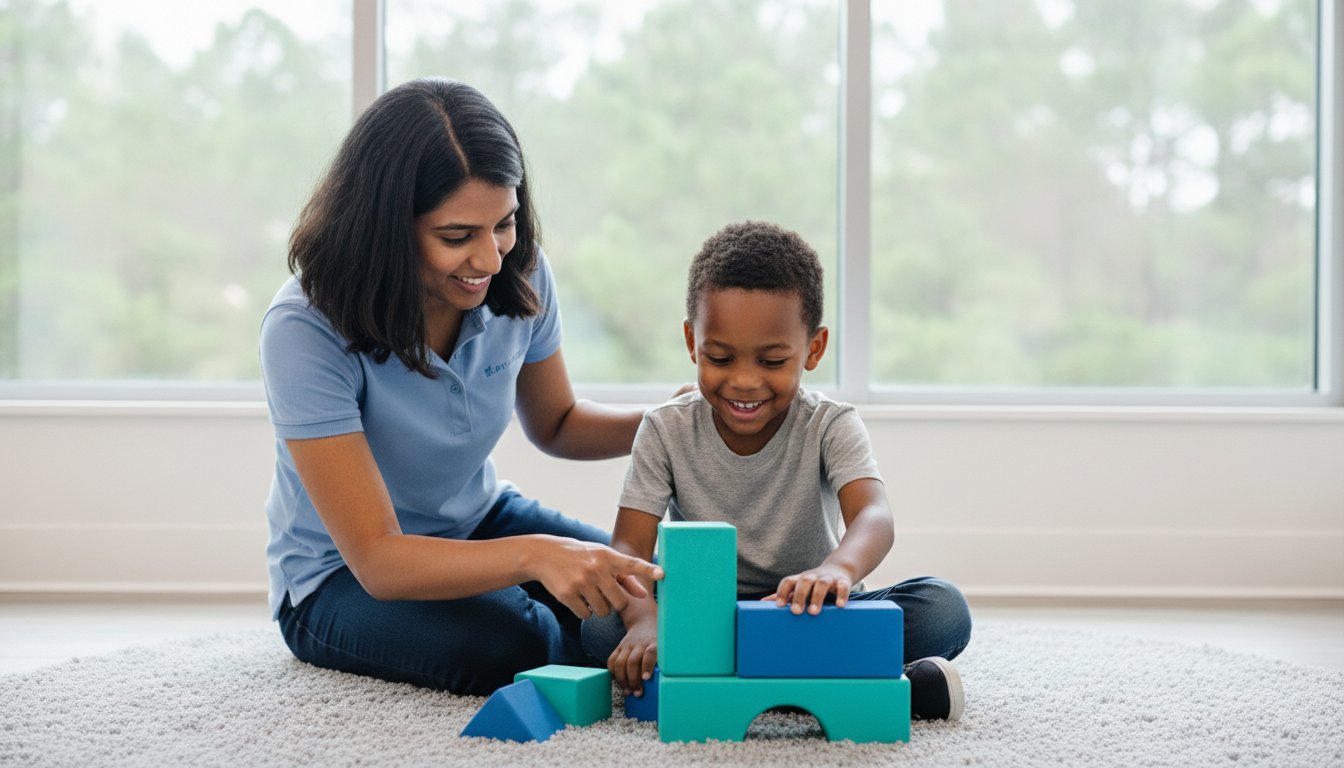
Some parents worry that a clinic setting feels artificial compared to a natural playground. However, Clinic Based ABA Therapy serves as a vital social laboratory. In this sensory-friendly space, we reduce outside distractions to focus purely on social learning. It provides a supervised environment where children have immediate access to peer groups. This controlled setting is where we use ABA therapy for peer interaction to teach the foundational mechanics of play. Professionals who meet the standards of the Behavior Analyst Certification Board guide these sessions, building the baseline confidence your child needs for more complex settings.
Home and Community: Testing Skills in the 'Wild'
Once a child feels secure in their skills, we move the focus to the natural environment. Home Based ABA Therapy is particularly effective for fostering sibling interactions and family routines. It's the perfect place to practice sharing toys in a space where the child already feels safe. From there, we transition to the community. Practicing social skills at the Apex Nature Park allows the child to test their abilities in the "wild." The ultimate goal is fading prompts. We want your child to interact independently at a local library or a neighborhood birthday party. This transition ensures that ABA therapy for peer interaction leads to lifelong, functional habits.
Practical Strategies for Parents to Support Peer Interaction
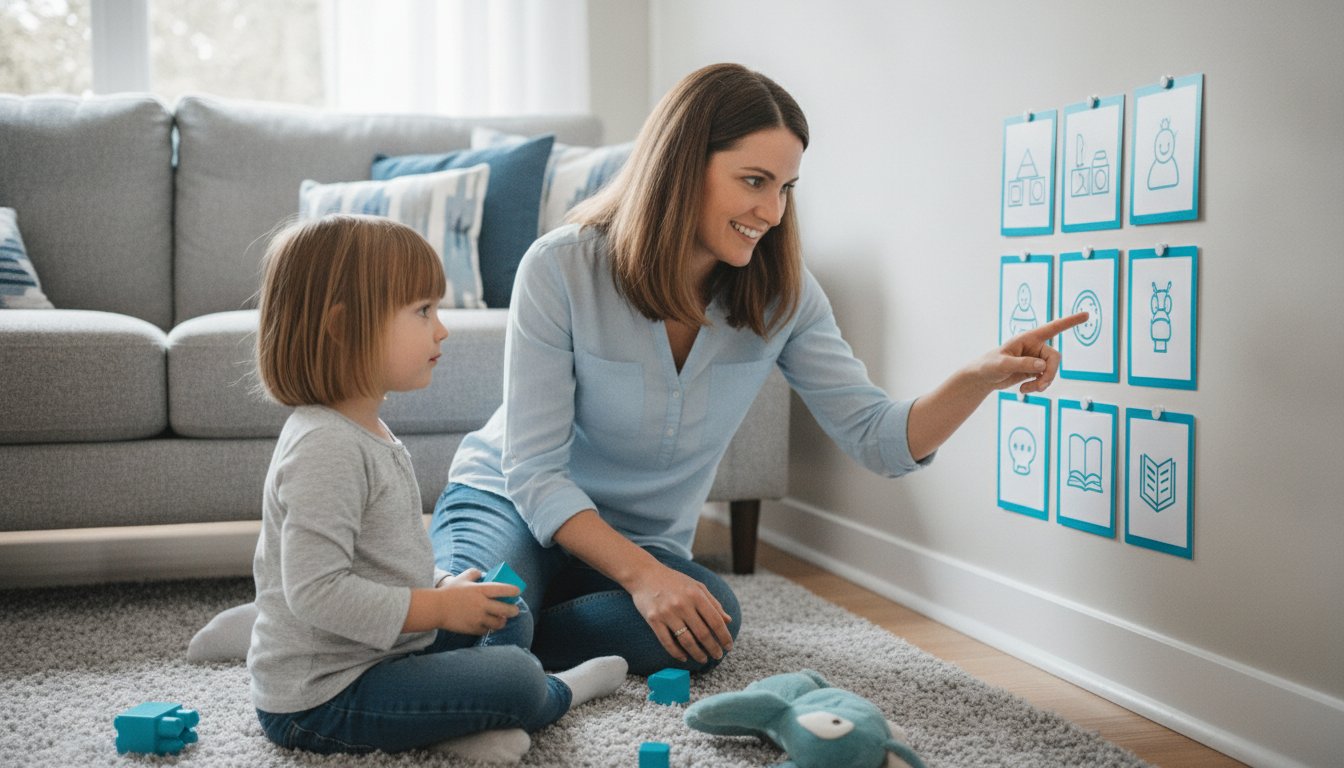
Parents play a pivotal role in bridging the gap between clinical sessions and real-world friendships. While therapists provide the foundational tools, you are the primary facilitator of the social opportunities where these skills truly come to life. Success in the community often depends on preparation and predictability. Using visual schedules to outline a social outing helps your child understand exactly what to expect, which significantly lowers anticipatory anxiety. For those looking for deeper guidance on these techniques, exploring Autism Parent Coaching in NC can provide the professional support needed to master these strategies at home.
Implementing ABA therapy for peer interaction within your daily routine turns every trip to the store or visit from a neighbor into a learning moment. We encourage parents to view themselves as collaborative partners in this process. Your involvement ensures that the progress made in the clinic translates into meaningful, lifelong social independence.
Setting Up a Successful Playdate
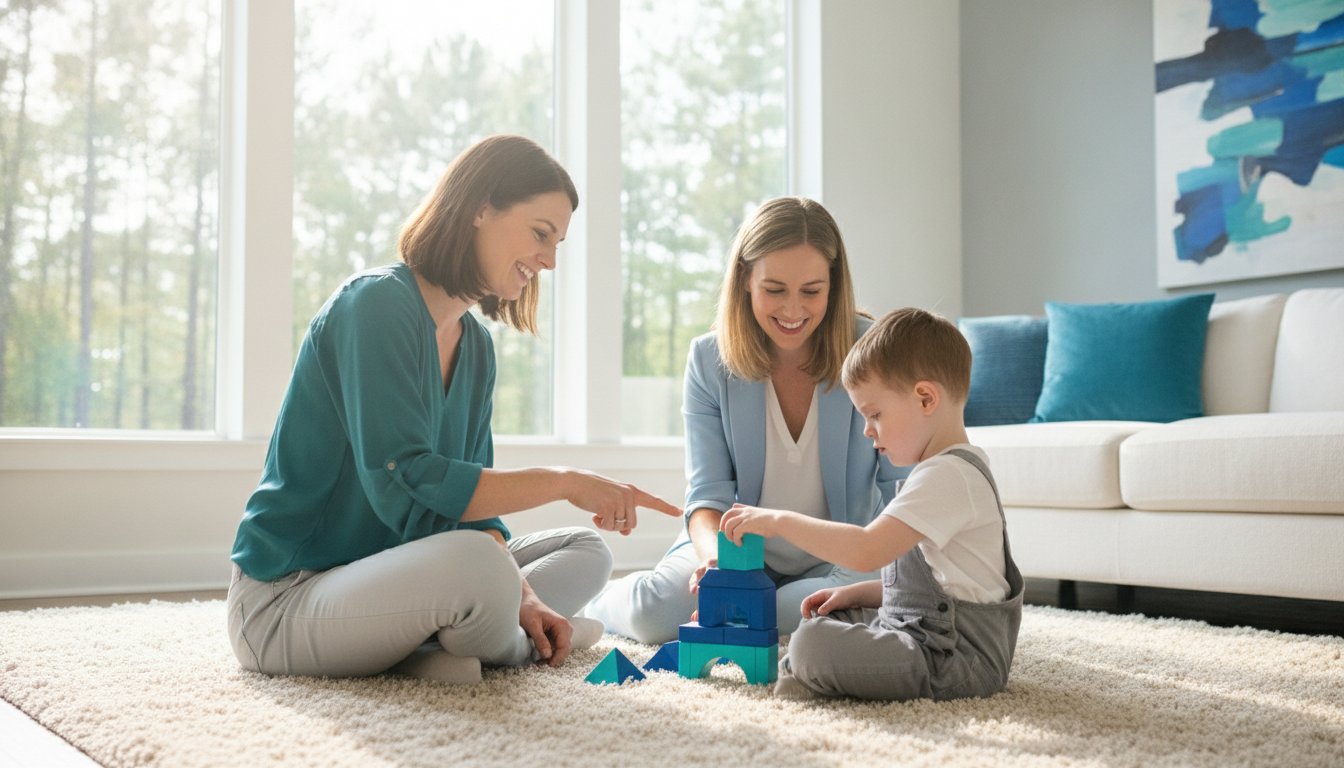
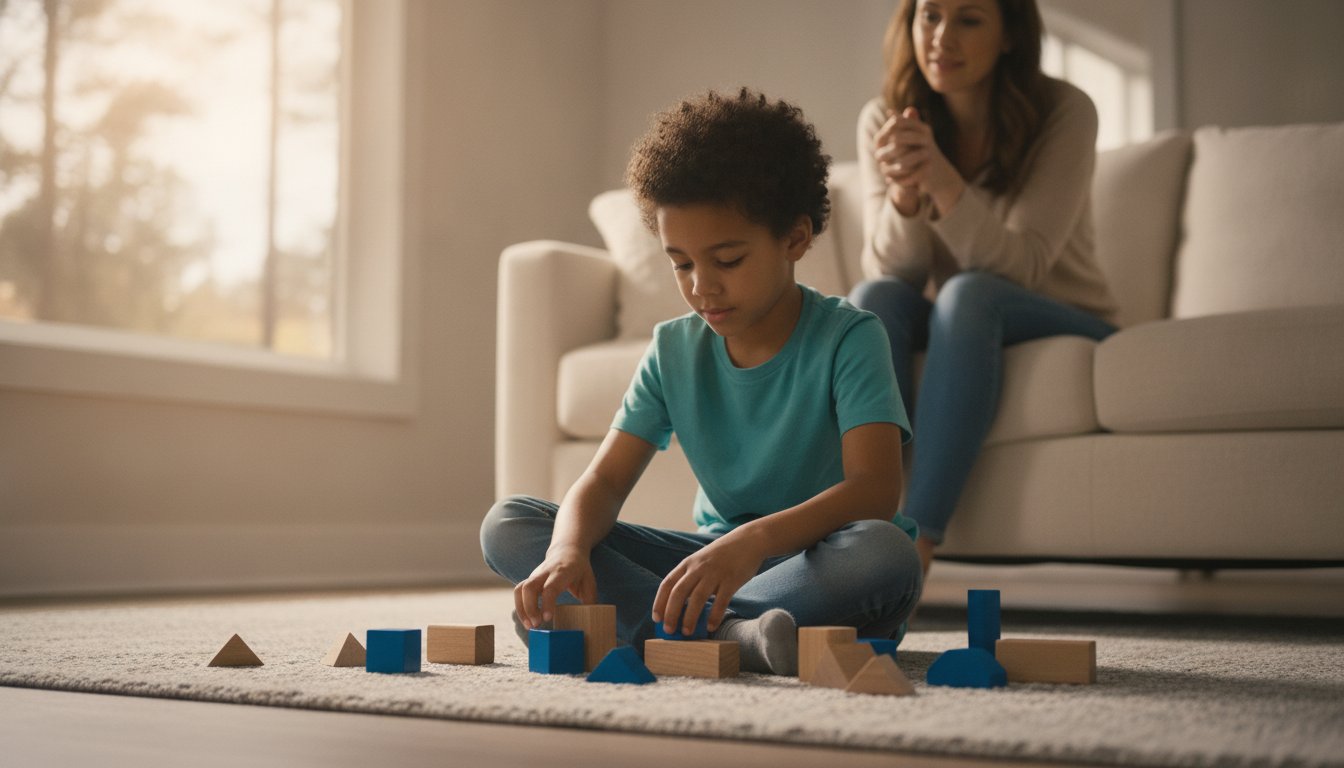
A successful playdate begins with a structured environment. Choosing a familiar place, such as your living room or a favorite local park, reduces the sensory load on your child. We recommend starting with short, defined sessions that have a clear start and end time. Selecting high-interest activities, like building blocks or a specific craft, encourages children to engage in parallel or cooperative play. Parallel play is a foundational social step where a child plays alongside a peer without direct interaction, allowing them to acclimate to another person's presence in a low-pressure way. As your child's confidence grows, you can gradually introduce more collaborative tasks.
Using Positive Reinforcement at Home
Positive reinforcement is the engine that drives behavioral growth. It's essential to praise "social bravery" whenever you see it, whether that's your child making brief eye contact, sharing a favorite toy, or simply staying in the same room as a peer. Use a reward system that aligns with your child's specific interests to make these wins feel significant. We suggest collaborating closely with your BCBA to ensure that the rewards you use at home align with the clinical goals established during therapy. This consistency helps the child understand that their social efforts are valued across all settings. If you're ready to start building a personalized social plan for your child, contact our team today to schedule a consultation.
The Divergent Minds Approach: BCBA-Owned Social Excellence
Clinical leadership makes a significant difference in the quality of care your family receives. Because Divergent Minds ABA is BCBA-owned and operated, every program is designed with high standards and a deep understanding of behavioral science. Our approach to ABA therapy for peer interaction isn't about fitting a child into a rigid box or forcing neurotypical masking. Instead, we focus on neuro-affirming practices that respect your child's authentic self. We believe that social growth should never come at the cost of a child's identity. Our small-group dynamics in our Cary clinic are carefully managed to ensure that no child feels overwhelmed or lost in the crowd. We prioritize a calm, reliable environment where genuine friendships can bloom through shared interests and mutual respect.
The personality of our practice is that of a knowledgeable guide. We aren't a distant service provider; we're a collaborative partner invested in your child's personal success. By focusing on the human element of behavioral science, we help children build the lifelong skills needed for independence. Our goal is to see every child move from a place of social hesitation to a state of confident, genuine connection with their peers.
Individualized Peer Interaction Plans
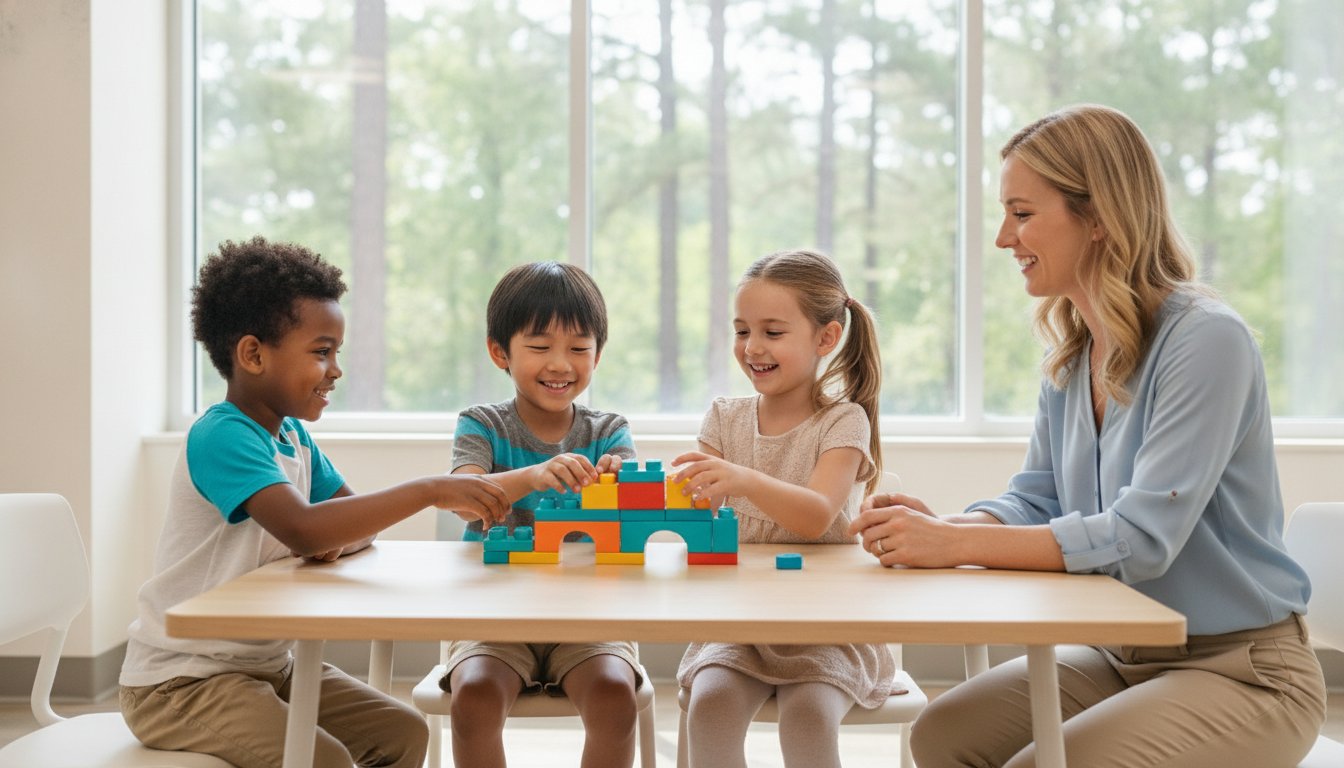
We don't believe in one-size-fits-all social training. Before your child joins a group, we conduct a thorough assessment to determine their specific social baseline. This allows us to match children in our social skills groups based on their age, ability levels, and personal interests. If your child loves building complex structures or exploring nature, we find peers who share those passions to make interaction feel natural and rewarding. Our BCBAs use continuous data tracking to monitor progress, ensuring that the skills learned are actually leading to greater independence and confidence in real-world scenarios.
Start Your Journey in Cary, Apex, or Raleigh
Building social confidence is a collaborative journey, and we are here to be your steady, guiding hand. We serve families throughout Wake County, including Cary, Apex, and Raleigh, providing accessible care through multiple insurance providers in North Carolina. Whether you are looking for clinic-based support or community integration, our team is ready to help your child reach their full potential. You don't have to navigate these social challenges alone. The path to meaningful friendship starts with a single step toward professional, empathetic support. Contact Divergent Minds ABA today to schedule your initial consultation and discover how we can build a brighter, more connected future for your child.
Empowering Your Child's Social Future
Building social confidence is a transformative journey that moves beyond simple play skills toward genuine, lifelong independence. By utilizing evidence-based ABA therapy for peer interaction , we help your child navigate the complexities of the social world with a clear, predictable roadmap. Whether we're practicing in the calm reliability of our clinic or generalizing skills at a local Cary park, our focus remains on respecting your child's authentic self while fostering the connections they deserve. This structured approach ensures that every new skill is learned thoroughly and applied naturally in everyday life.
As a BCBA-owned and operated practice, we provide specialized social skills groups for all ages that prioritize both clinical excellence and heartfelt empathy. We're proud to serve the Cary, Apex, and Raleigh communities, offering the steady guidance needed to turn social hesitation into social mastery. Every incremental win is a vital step toward a more connected and confident future. You don't have to navigate this path alone; we're here to be your collaborative partner in your child's growth.
Ready to build your child's social confidence? Contact us today.
Frequently Asked Questions
Is ABA therapy effective for social anxiety in children with autism?
ABA therapy is highly effective for reducing social anxiety by replacing uncertainty with predictable social frameworks. We use evidence-based strategies to break down complex interactions into manageable steps, which lowers stress levels for children. By building a history of successful social wins in our Cary clinic, children gain the confidence needed to engage with others. Our neuro-affirming approach ensures that your child feels safe while developing these vital skills at their own individual pace.
How long does it take to see progress in peer interaction skills?
Progress in peer interaction skills is highly individualized and depends on your child's specific baseline and goals. While some families notice small, incremental changes within the first few months, mastering complex social dynamics is a long-term journey. We focus on consistent growth through daily practice and data-driven adjustments. Our BCBAs work closely with you to track progress across home, clinic, and community settings, ensuring that every milestone is celebrated along the way.
Can ABA therapy help my child make friends at school?
ABA therapy directly supports the development of skills needed to form school friendships, such as turn-taking, sharing, and initiating conversation. We practice these interactions in our social skills groups to prepare children for the playground and classroom. By using ABA therapy for peer interaction , we help children generalize these behaviors to school environments. Our goal is to provide the tools for genuine connection, allowing your child to navigate school social circles with increased independence.
What happens in a typical social skills group session at your Cary clinic?
A typical session in our Cary clinic involves structured peer play designed to target specific social goals. We use Behavioral Skills Training, which includes clear instruction, modeling, rehearsal, and immediate feedback. Children are matched with peers of similar ages and interests to encourage natural engagement. These sessions are supervised by experienced clinicians who ensure a sensory-friendly environment, allowing children to practice social skills without feeling overwhelmed by the distractions often found in larger group settings.
Does insurance cover ABA therapy for social skills and peer interaction?
Most private insurance plans in North Carolina cover ABA therapy for social skills when it's deemed medically necessary for an autism diagnosis. As a BCBA-owned practice in Cary, we accept multiple insurance providers to help make these services accessible for local families. We recommend contacting your provider to verify your specific benefits for social skills groups and 1:1 intervention. Our team can also assist in navigating the documentation required to ensure your child receives the support they need.
What if my child is non-verbal? Can they still participate in peer interaction training?
Non-verbal children can absolutely participate in peer interaction training. Social engagement includes many non-vocal behaviors, such as parallel play, gesturing, eye contact, and using augmentative and alternative communication (AAC) devices. We tailor our ABA therapy for peer interaction to meet your child's specific communication style. Our focus is on fostering meaningful connection and shared experiences, ensuring that every child has the opportunity to interact with their peers in a way that feels authentic to them.
How do I know if my child is ready for a social skills group?
Readiness for a social skills group is determined through a clinical assessment by one of our Board Certified Behavior Analysts. Generally, a child is ready when they have established foundational skills, such as following simple instructions and maintaining basic engagement in a 1:1 setting. We look for a baseline level of comfort that allows the child to benefit from a small-group dynamic. If your child isn't quite ready, we start with individual therapy to build that necessary foundation.
Will ABA therapy make my child's social interactions look 'robotic'?
Modern, neuro-affirming ABA therapy avoids the "robotic" outcomes often associated with older methods. Our approach focuses on naturalistic teaching and respecting your child's authentic self. We don't force rigid scripts; instead, we provide a framework that allows children to express their own personality while navigating social situations. By practicing in diverse settings like home and the community, we ensure that interactions feel genuine and flow naturally rather than appearing forced or overly rehearsed.